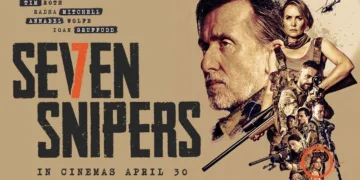










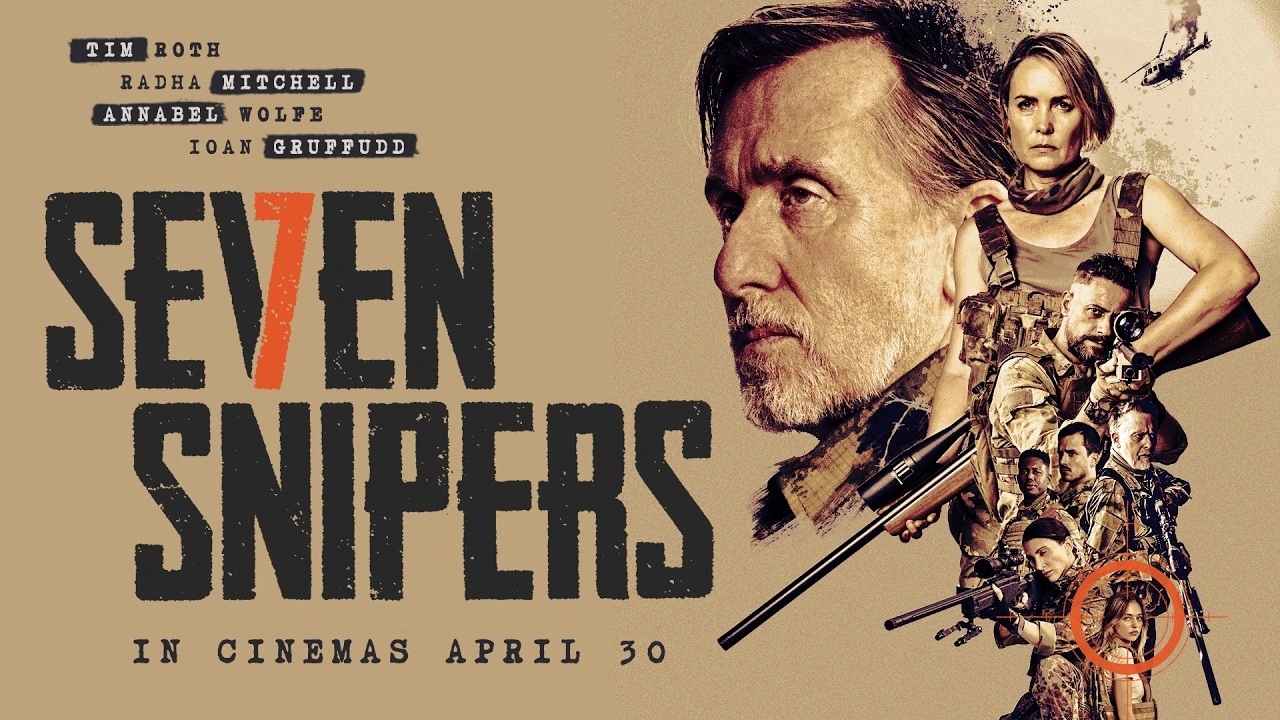

Seven Snipers has the sort of premise that can sell itself in a single sentence: a retired elite sniper is found by an old enemy and must gather former sharpshooters to protect her daughter. Directed by Sandra Sciberras, the Australian action thriller places Kris “Voodoo Child” Hendricks on a remote farm, far from the violence she once lived inside. Her teenage daughter, Anja, sees only the restrictions, secrecy, and strange severity of her mother’s life. Kris sees threat angles, wind direction, and the possibility of death arriving before anyone hears the shot.
That disconnect gives the film its strongest dramatic entry point. The rural setting strips the action down to distance, patience, and exposure. Open fields become traps. Barns become cover. Brush becomes a hiding place for The Dragon, a feared marksman from Kris’s past who has finally found her.
The film has a clean hook and a few sharp bursts of tension. Its problem is simpler and harder to fix: a sniper story thrives on stillness, while a feature film needs movement.
The Mechanics of a Story Built on Waiting
The opening stretch of Seven Snipers works because it trusts implication. Kris’s reaction to a stranger arriving at her property tells us plenty before the script explains anything. She does not behave like a paranoid farmer. She behaves like someone who has rehearsed this moment for years. That is solid visual storytelling, and the film benefits whenever it lets behavior carry the exposition.
Anja’s rebellion gives the early scenes a useful domestic friction. She wants ordinary teenage freedom. Kris treats ordinary freedom like tactical negligence. The movie understands the irony: Anja thinks her mother is controlling, while Kris knows their life has been built around a delayed attack.
Once The Dragon enters the picture, the story shifts into siege mode. Kris calls in old sniper colleagues, and the premise briefly feels like pulpy genre heaven. Then the limitations show. Snipers, by nature, are solitary figures. They hide, wait, and kill from afar. Turning that into a group-action structure requires narrative gymnastics, and Seven Snipers occasionally lands in positions that feel arranged by the screenplay rather than earned by character choice.
The strongest sequences keep The Dragon unseen. A sound in the grass, a pause before movement, a body dropping without warning: those moments understand the genre’s appeal. The weaker stretches turn the story into a pattern of hiding, missing, repositioning, and thinning the cast. The backstory between Kris and The Dragon gives the film needed emotional weight, yet it arrives in fragments that do not always clarify the stakes as much as intended.
Kris Carries the Film, While the Ensemble Gets Picked Off
Radha Mitchell gives Seven Snipers its most persuasive element. As Kris, she carries the weariness of someone who survived war and then spent years waiting for war to knock at the door. Mitchell makes her physically credible without overplaying toughness. She moves like a person trained to stay alive, and she speaks like someone who has learned that every confession costs something.
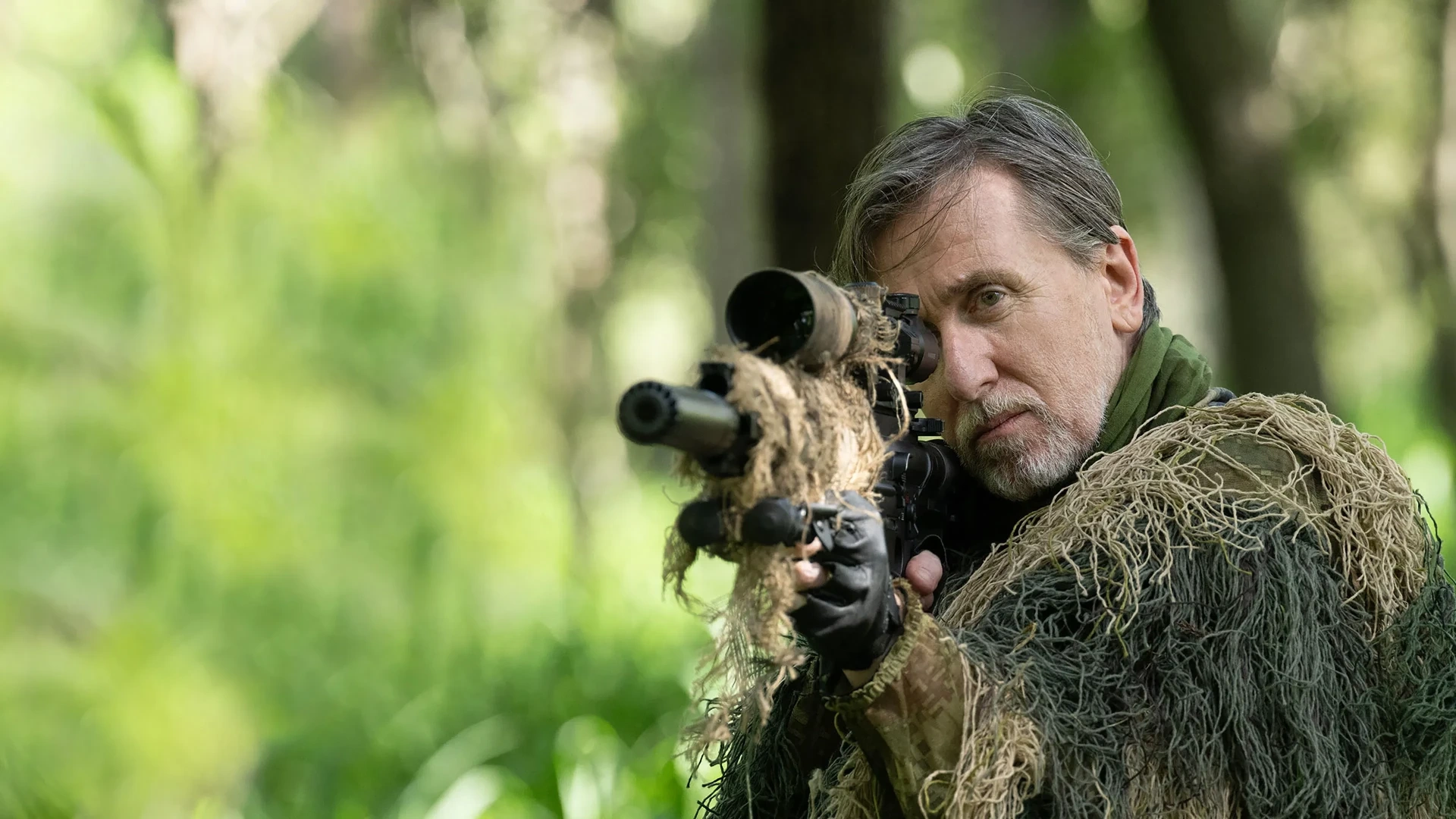
Her scenes with Anja create the film’s main emotional thread. Anja’s frustration is easy to understand: she has been raised inside rules she cannot decode. The difficulty is that the writing does not always give her enough interior shape. Too often, she becomes the reason Kris must hesitate, run, explain, or panic. That function is useful to the plot, but it leaves Anja feeling thinner than the story needs her to be.
The supporting snipers face a similar issue. Ioan Gruffudd’s Milk has the richest dramatic potential, especially through his connection to Kris and Anja, yet the film leaves much of that potential sitting in the chamber. Other members of the team add flashes of energy and texture, with a few sharp moments of camaraderie, fear, and professional focus. Still, many of them register less as characters than as names waiting for The Dragon’s scope to find them. For a film titled Seven Snipers, that is a fairly bold way to make arithmetic feel like a threat.
Tim Roth’s Dragon is a mixed presence. The film builds him well through rumor and aftermath. He works best as an absence, a figure the characters fear before they can see him. Roth plays him with a relaxed, almost casual menace, which can be effective in small doses. At times, though, the performance feels too muted for the legend surrounding him. The script calls him death in camouflage. The screen gives us a man who sometimes seems mildly inconvenienced by his own vendetta.
Silence, Sightlines, and an Uneven Final Shot
Sandra Sciberras shows a strong feel for space. The farm is never treated as simple scenery. It is a tactical field, full of possible cover and fatal exposure. The camera often uses long sightlines, scope views, and low movement through grass to make the landscape feel hostile. The most effective scenes turn distance into suspense, which is exactly where a sniper thriller should live.
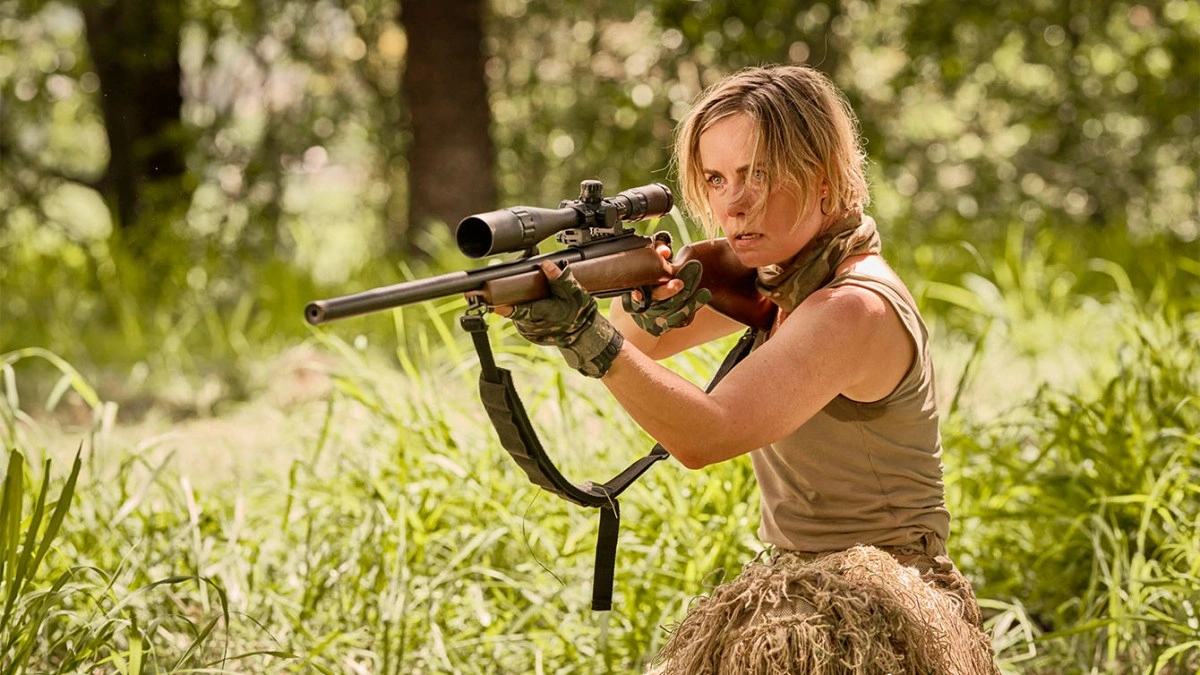
The sound design helps. Wind, insects, breath, and distant movement often do more for the tension than the gunfire itself. The film’s best passages feel close to survival horror, with characters afraid to move because movement means visibility. That restraint is valuable, especially in a modestly budgeted action film where spectacle has clear limits.
Those limits do show. Some effects and crashes have a rough edge, and the staging can occasionally make spatial relationships harder to follow. Still, the film often compensates through patience and atmosphere.
The finale brings Kris and The Dragon back into direct focus, which gives the conflict a cleaner dramatic shape. It also introduces one of the film’s stronger visual ideas for making a sniper duel cinematic. Yet the logic of the shootout strains under scrutiny. These are elite marksmen, until the plot needs them to become unusually generous with missed opportunities.
Seven Snipers is lean, tense, and sometimes frustrating. It has a sharp setup, a strong lead performance, and a setting used with real purpose. It also has underwritten supporting characters and a central concept that cannot always carry the full runtime. The result is a genre piece with enough atmosphere to hit several targets, and enough misfires to keep it from landing cleanly.
Seven Snipers is an intense Australian action-thriller that premiered on April 30, 2026. The film follows a former elite military sniper who has established a quiet life with her daughter on a secluded Australian farm. Her peaceful existence is shattered when a ruthless warlord from her past hunts her down, forcing her to reunite with her old sharpshooter squad for a high-stakes battle to the death. Audiences can watch the action feature on major premium video-on-demand platforms, including Apple TV and Amazon Prime Video, where it is available to rent or purchase.
Where to Watch Seven Snipers (2026) Online








Full Credits
Title: Seven Snipers
Distributor: Paramount Pictures, Saban Films
Release date: April 30, 2026
Rating: R
Running time: 87 minutes
Director: Sandra Sciberras
Writers: Andrew O’Keefe
Producers and Executive Producers: Compton Ross, Ian Kirk, Grant Hardie, Phil Hunt, Tristan Barr, Sandra Sciberras, David Redman, Jason McNab, Charlie Kemball, Radha Mitchell, Ioan Gruffudd, Ryan Kwanten, Robert Kindness, Loretta Kindness
Cast: Radha Mitchell, Tim Roth, Annabel Wolfe, Ioan Gruffudd, Ryan Kwanten, Lee Tiger Halley, Damien Ryan, Bianca Wallace, Charles Cottier, Pacharo Mzembe
Director of Photography (Cinematographer): Andrew Conder
Editors: Stephanie Liquorish
Composer: Mike Forst
The Review
Seven Snipers
Seven Snipers delivers a tense, compact thriller built on silence, distance, and danger hidden in plain sight. Radha Mitchell gives the film a strong center, and Sandra Sciberras uses the isolated farm setting with real tactical purpose. The action has bite, especially in its opening stretch and final duel, but thin supporting characters and some strained plot logic keep the film from fully hitting its target.
PROS
- Strong lead performance from Radha Mitchell
- Effective use of the Australian farm setting
- Tense sniper sequences built around silence and patience
- Solid atmosphere and survival-thriller tension
- Clear, direct genre premise
CONS
- Supporting snipers lack depth
- Anja sometimes feels like a plot device
- The Dragon’s menace is stronger in theory than on screen
- Mid-film pacing becomes repetitive
- Final shootout has questionable logic