









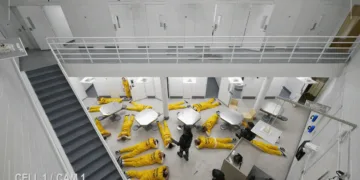
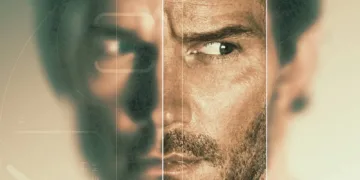
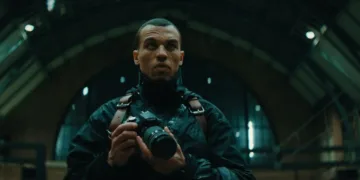










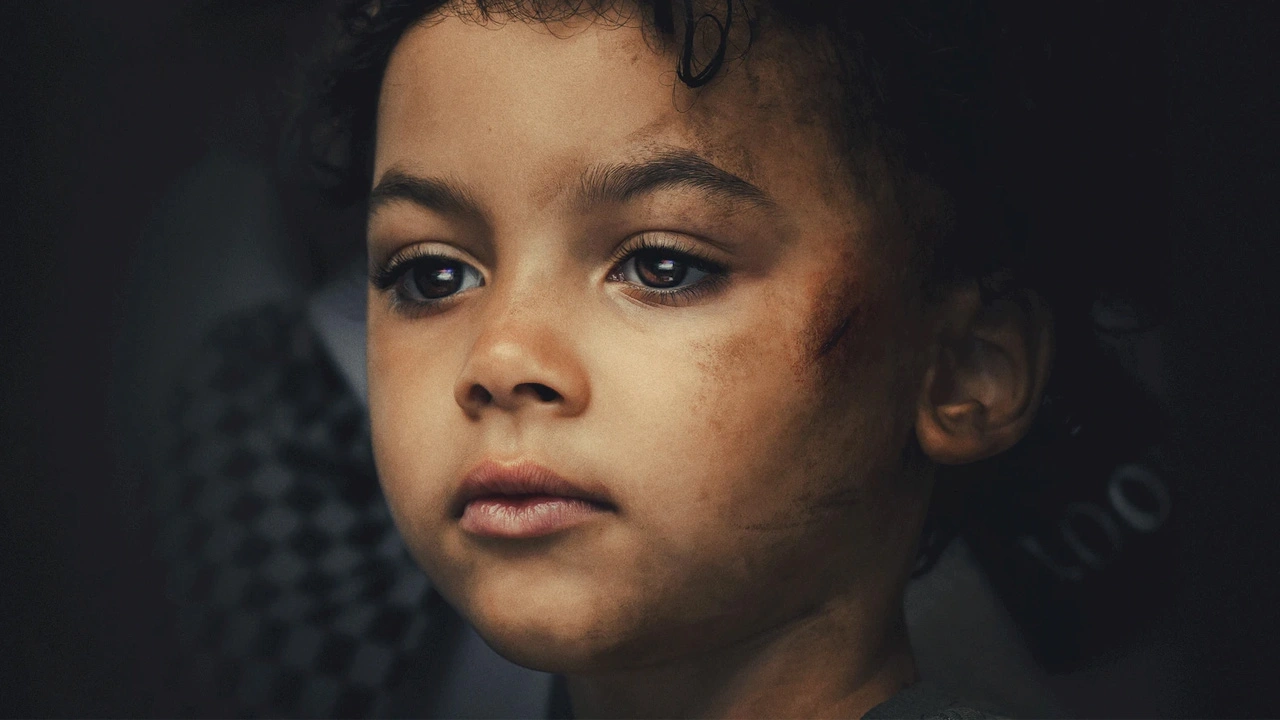

The Witness enters familiar true-crime territory with a perspective that feels sharply aware of the genre’s recent moral fatigue. Netflix’s three-part drama revisits the 1992 murder of Rachel Nickell, who was killed on Wimbledon Common while walking with her toddler son, Alex. He survived the attack, left as the only person who saw what happened, too young to understand the violence and too young to explain it.
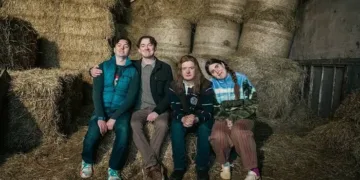
The series, written by Rob Williams and directed by Alex Winckler, resists the usual gravitational pull of the investigation. Its emotional focus rests with Alex and his father, André Hanscombe, whose life collapses into grief, parenthood, public scrutiny, and fear. The story moves between the immediate aftermath in 1992 and a later period in Spain, where André is raising teenage Alex under the shadow of a past they cannot fully escape.
That shift matters. The Witness treats the murder less as a puzzle than as a permanent injury. Its central question is not who committed the crime. It asks how a child grows around a trauma he can barely name, and how a father protects him without turning protection into another form of confinement.
The Aftermath Becomes the Story
A less thoughtful version of The Witness might have placed the detectives at the center, arranging the case into a sequence of clues, errors, suspects, and revelations. This drama makes a stronger, riskier choice. The police investigation remains present, yet the series keeps returning to the domestic wreckage left behind.
André is grieving Rachel, raising Alex alone, fielding pressure from authorities, and learning in real time that fatherhood has become a crisis-management role with no training manual attached. Parenting rarely comes with a handbook. Parenting after national tabloid fixation apparently comes with photographers outside the door.
Alex’s position gives the series its most painful ethical tension. As the title character, he may hold vital information. As a child, he has no safe way to carry that burden. Adults want him to talk, draw, remember, produce something useful.
The problem is that each attempt risks turning him into a tool of the investigation rather than a child in need of care. The Witness is at its best when it sits inside that discomfort. It understands that the language of justice can sound noble while placing impossible demands on the vulnerable.
The dual timeline gives the drama a useful emotional shape. In 1992, Alex is silent, confused, and surrounded by adults who project meaning onto every gesture. In the early 2000s, he is older, angrier, and resistant to being treated as a walking archive of violence.
Meeting teenage Alex early helps the show connect the original trauma to later behavior: secrecy, risk-taking, defiance, and a strong refusal to let his mother exist only through police statements. His refusal to eat meat, for instance, becomes a personal act of remembrance, small in scale yet deeply revealing.
The structure has limits. The time shifts sometimes underline the point too heavily, arranging scenes so the viewer can clearly see the trauma switch being flipped. A dinner-table clash over fish, for example, lands with force, yet it also feels slightly overdesigned. The series can be blunt in the moments where restraint would sting harder.
Spain gives the drama one of its strongest metaphors. André and Alex have left Britain, yet they have not escaped. They live with secrecy, fear, and a packed bag near the door, a detail that says almost everything about their lives. Survival has become permanent readiness. For Alex, adolescence unfolds inside that emergency posture, so ordinary rebellion carries the weight of inherited panic.
Grief, Control, and the Father-Son Wound
André Hanscombe is the emotional anchor of The Witness, and the series wisely refuses to make him an easy figure. He is loving, frightened, devastated, and often wrong. He wants to protect Alex, help the investigation, preserve Rachel’s memory, and keep the press away. Those aims do not sit comfortably together. They grind against each other until his choices begin to wound the person he is trying hardest to save.
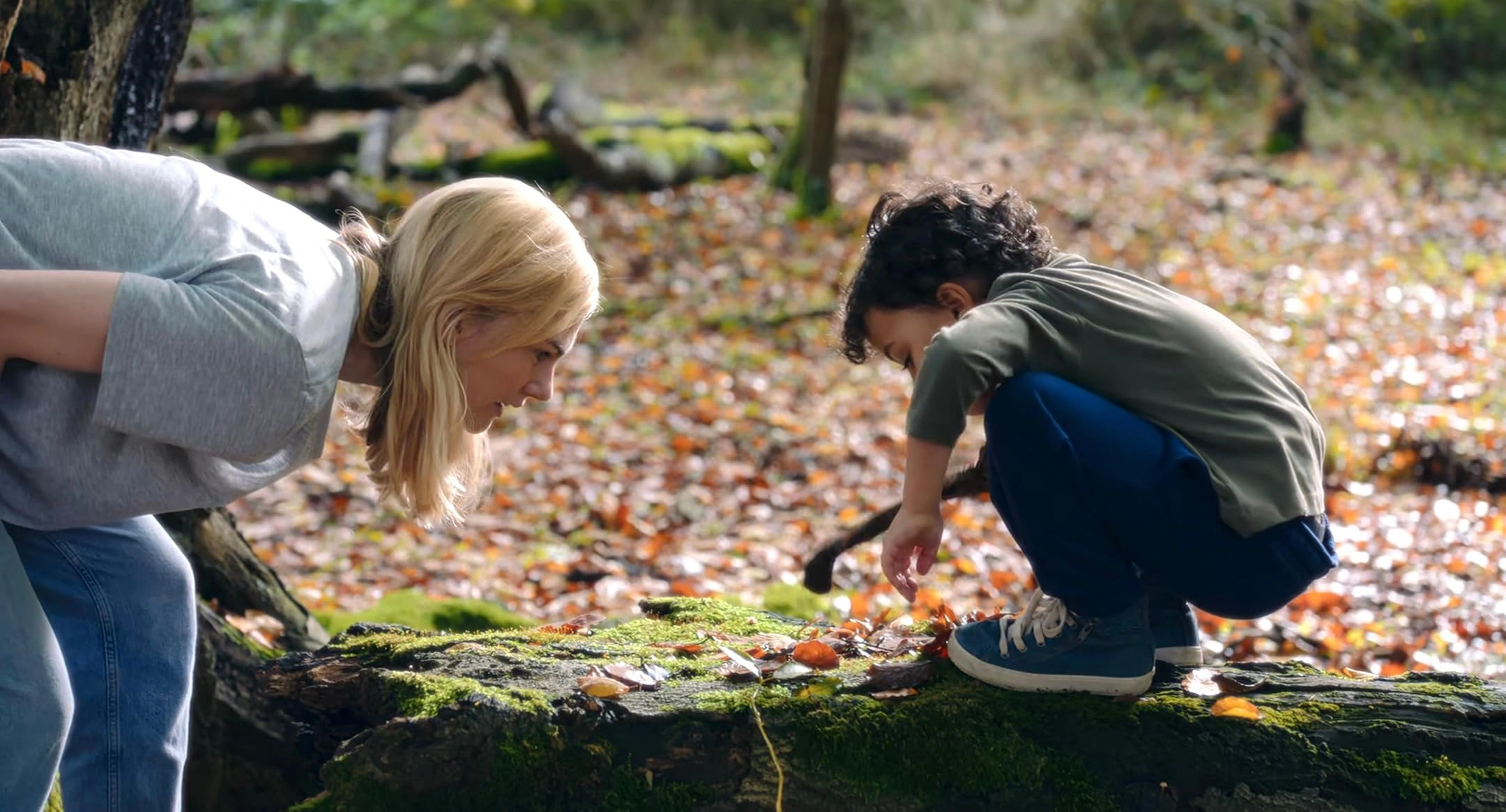
Jordan Bolger gives André a raw, burdened presence. His face often seems caught between exhaustion and a fight-or-flight response, which suits a man whose life has become a series of defensive gestures. Bolger carries the role across different stages with conviction, helped by strong work from the hair and makeup departments.
He conveys a father trying to manufacture stability from dread. The performance can feel boxed in by the writing at times, since André is asked to remain sad, tense, and afraid for long stretches. Still, Bolger gives the drama its central pulse.
The series is unusually honest about André’s flaws. He can become impatient with young Alex. He can push too hard. He can mistake control for safety. These are not treated as betrayals of his grief, but as expressions of it. That honesty gives The Witness its moral texture. The show understands that victims’ families are often flattened into symbols by public discourse. Here, André is allowed to be sympathetic and frustrating within the same scene.
Alex, played as a young child by Jahsaiah Williams and later by Max Fincham, is written as someone shaped by absence and unwanted attention. Young Alex is defined through silence, confusion, and the terrifying inadequacy of adult interpretation. Teenage Alex is sharper and harder to contain. He resents being treated as evidence. He wants to honor Rachel through values and behavior rather than repeated emotional excavation. He also wants space from a father whose love arrives wrapped in surveillance.
Fincham brings volatility and vulnerability to the older Alex, catching the awkward mix of teenage self-destruction and buried hurt. Some scenes make him feel older than the character’s likely age, which slightly weakens the realism. Still, his best moments give the series a tense emotional charge, especially in scenes where Alex’s anger is clearly masking a desire to be seen outside the crime.
Rachel Nickell remains a limited presence, appearing mostly through memory, absence, and the ideals Alex tries to carry forward. That choice has a cost. The series sometimes leaves her underdrawn as a person, which can make the emotional orbit feel incomplete. Yet the restraint also suggests a conscious refusal to turn her death into repeated spectacle. In a genre that often mistakes suffering for depth, that restraint has value.
Trauma, Media, and the Public Ownership of Grief
The most socially pointed aspect of The Witness is its depiction of grief under public consumption. The series understands true crime as a cultural machine, one that transforms private catastrophe into shared obsession. In the early 1990s, that machine runs through tabloids, photographers, headlines, and shouted questions. In the streaming age, the same hunger has simply changed costume. The trench coat has become a thumbnail.
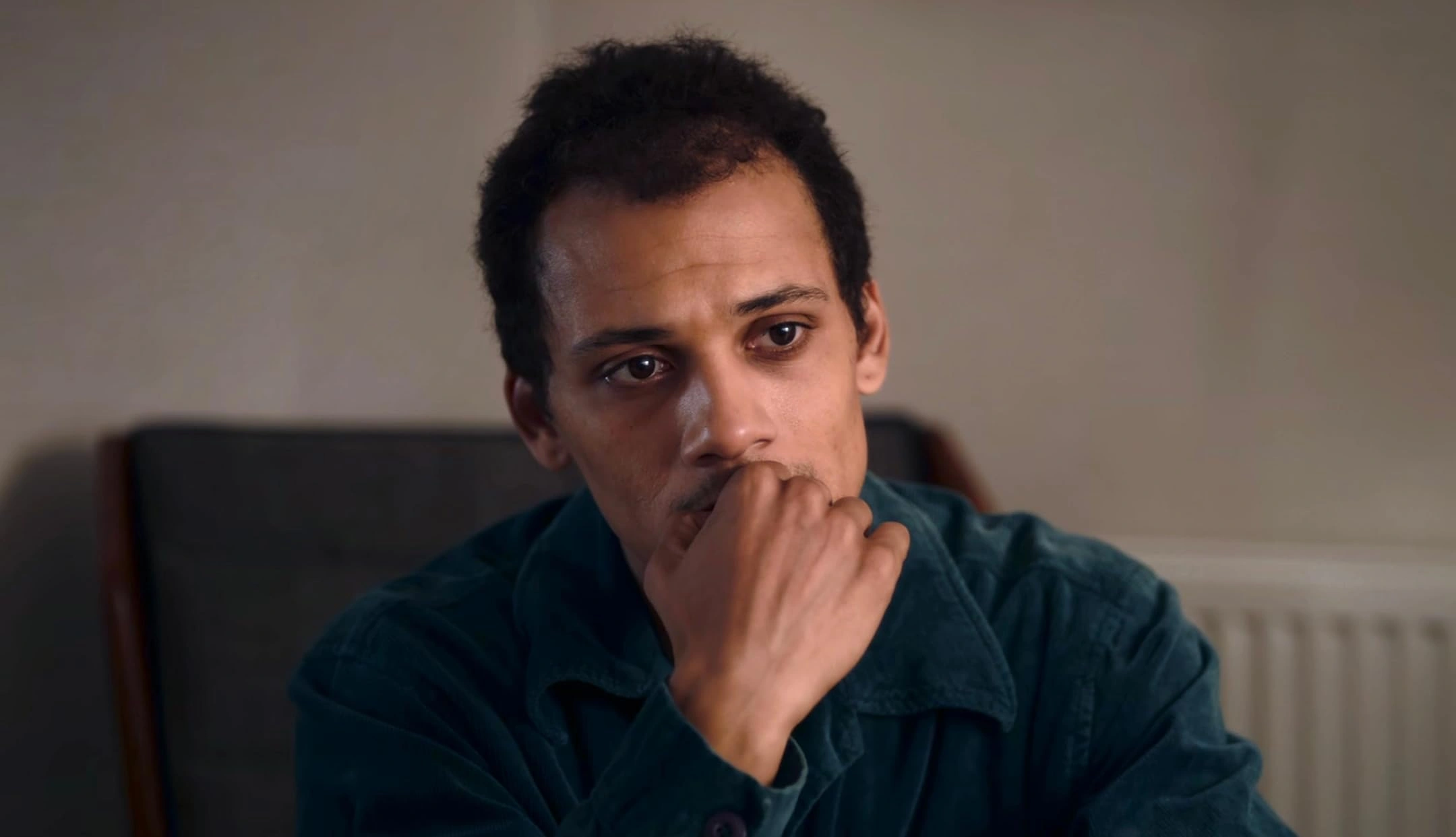
The tabloid press in The Witness is portrayed as invasive, predatory, and almost grotesquely entitled. Reporters gather outside homes, press against police spaces, discover supposed safe locations, and follow André and Alex long after distance should have given them privacy.
The family’s grief becomes public property, while their attempt to disappear is treated as another lead to chase. The series is especially sharp on the racial and social dynamics around André, whose Blackness makes the media’s aggression feel even uglier. His grief is scrutinized, provoked, and packaged by institutions that claim public interest while feeding public appetite.
This is where The Witness speaks most clearly to current television culture. Streaming platforms have helped turn real-life trauma into an endless library category, often with tasteful lighting and ominous piano notes. This series does take part in that economy, yet it also critiques the forces that made the original case a spectacle. That contradiction gives it tension. Netflix selling a drama about media exploitation is not exactly subtle irony. It is the entertainment industry looking in the mirror, adjusting the lighting, then asking us to admire the honesty.
The police material adds another institutional layer. DI Keith Pedder, criminal profiling, the focus on Colin Stagg, and the controversial attempt to secure a confession all appear as part of a system under pressure from public panic and media heat. Later DNA advances reopen the case, bringing Alex back toward memories he wants to leave untouched. These procedural threads matter because they intensify the burden placed on the family. They show how justice systems can extend trauma while trying to repair harm.
The series handles some of this material too quickly. The police errors, the cold-case developments, and the eventual turn toward the real killer all carry dramatic and social weight, yet the show does not always give them enough room.
Its strongest argument remains with André and Alex, where the conflict between holding on and letting go becomes painfully specific. André believes the past must be faced. Alex wants to live without being summoned back to it. Their movement toward understanding feels earned because the series has shown how love can become claustrophobic under pressure.
A Focused Limited Series With Compressed Edges
Alex Winckler’s direction gives The Witness a clear visual grammar across its three episodes. The shifts between 1992 and the early 2000s are easy to follow, with each period carrying its own texture. Wimbledon Common is introduced as open, green, and ordinary, which makes its transformation into a site of horror feel especially disturbing. The series also uses interiors well: homes, police rooms, and temporary refuges never feel fully secure. Every space seems vulnerable to intrusion.
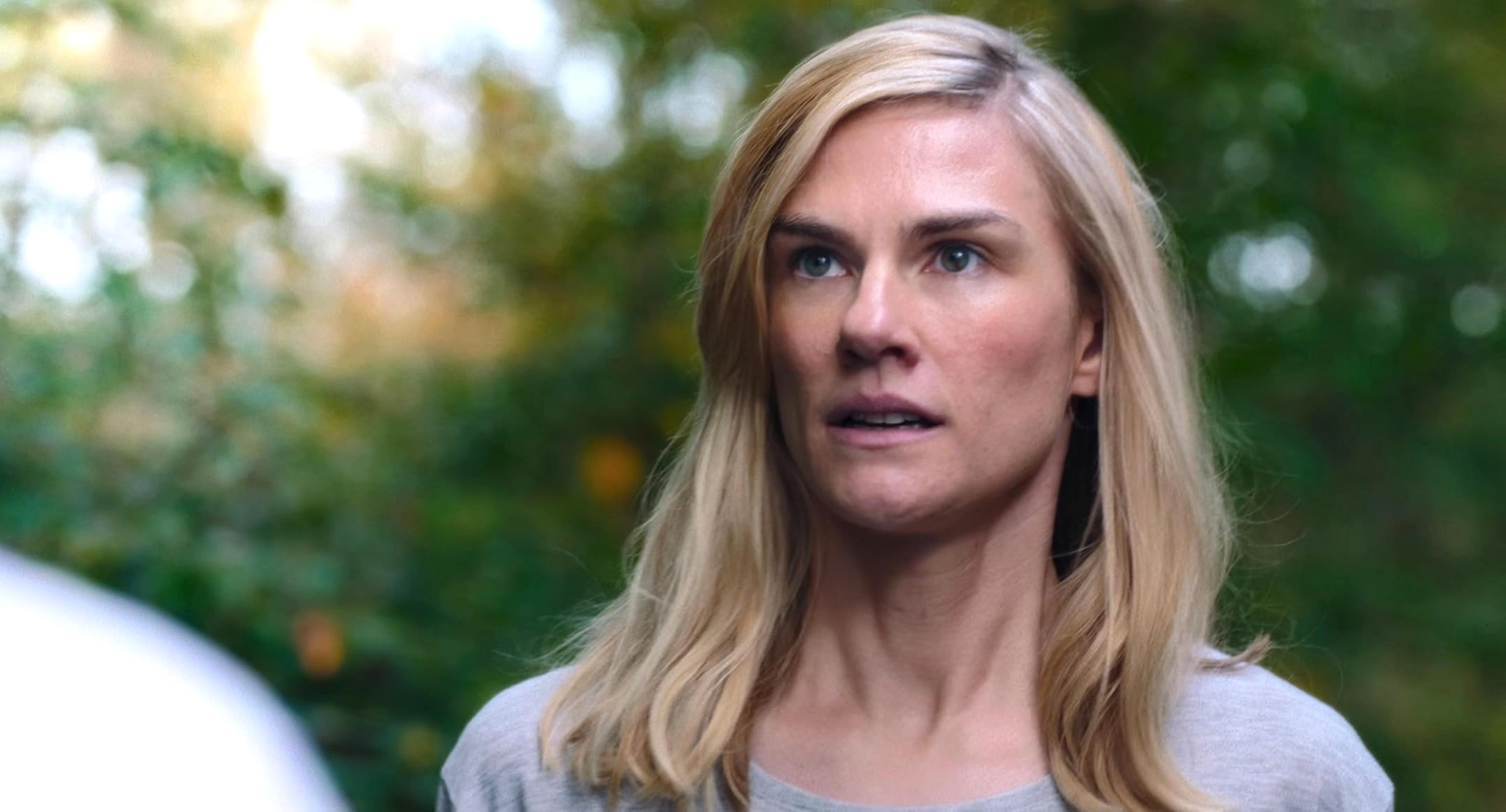
The three-episode format brings discipline. It keeps the series from swelling into the bloated middle act that often plagues streaming crime dramas, where every minor document gets treated like sacred scripture. Here, the focus stays tight enough for the father-son material to remain central. The shorter length also suits the show’s interest in emotional consequence rather than investigative mechanics.
Compression creates its own problems. The final episode carries too much: the reopened case, police failures, the killer’s background, the moral complexity of response, and the slow repair between André and Alex. Any one of those threads could have used additional space. One extra episode might have allowed the institutional critique and family drama to breathe at the same pace.
The writing also has moments of heavy-handedness. Certain scenes state Alex’s trauma too plainly, such as public conflict over food or direct commentary about lifelong psychological damage. These choices are less effective than quieter observations: a packed bag near the door, a son refusing a conversation, a father scanning for danger before he knows what he fears. The Witness works best in those smaller frictions, where survival looks less like courage and closer to exhaustion.
As a true-crime drama, The Witness is strongest when it pushes the genre away from puzzle-box satisfaction and toward the social cost of spectacle. It does not fully escape the limitations of dramatized trauma, and it sometimes rushes material that deserves greater care.
Yet its central perspective gives it a rare sensitivity. This is a series about the afterlife of violence: the child who remembers without language, the father who protects until protection becomes pressure, and the culture that keeps demanding access long after the wound should have been left alone.
The Witness is a true-crime drama miniseries that premiered on Netflix on June 4, 2026. This three-part British production explores the devastating aftermath of the 1992 murder of Rachel Nickell on Wimbledon Common, focusing on her partner André Hanscombe and their young son Alex, who was the sole witness to the crime. Viewers can stream the entire limited series exclusively on Netflix.
Where to Watch The Witness Online


Full Credits
Title: The Witness
Distributor: Netflix
Release date: June 4, 2026
Rating: TV-MA
Running time: 47–57 minutes per episode
Director: Alex Winckler
Writers: Rob Williams
Producers and Executive Producers: Alison Sterling, Katie Player, Rob Williams, Sarah Brown, John Yorke, Peter Welter Soler
Cast: Jordan Bolger, Jahsaiah Williams, Max Fincham, Neil Maskell, Kerry Godliman, James Bradshaw, Kevin Eldon, Jon Pointing, Claire Rushbrook, Mark Stanley
Director of Photography (Cinematographer): Michael Filocamo
Editors: Steven Worsley
Composer: Oliver Coates
The Review
The Witness
The Witness is most effective when it treats the Rachel Nickell case as a story of survival rather than detection. Its father-son focus gives the drama emotional force, and Jordan Bolger and Max Fincham carry the pain, fear, and resentment with conviction. The series loses some strength when it rushes the investigation and explains trauma too bluntly, yet its perspective remains sensitive and worthwhile.
PROS
- Strong father-son emotional core
- Sensitive focus on trauma and memory
- Jordan Bolger gives a grounded lead performance
- Sharp portrayal of media intrusion
- Clear visual separation between timelines
CONS
- Final episode feels compressed
- Some procedural material lacks depth
- A few trauma scenes feel too obvious
- Teenage Alex sometimes reads older than intended
- Rachel Nickell remains underdeveloped