






















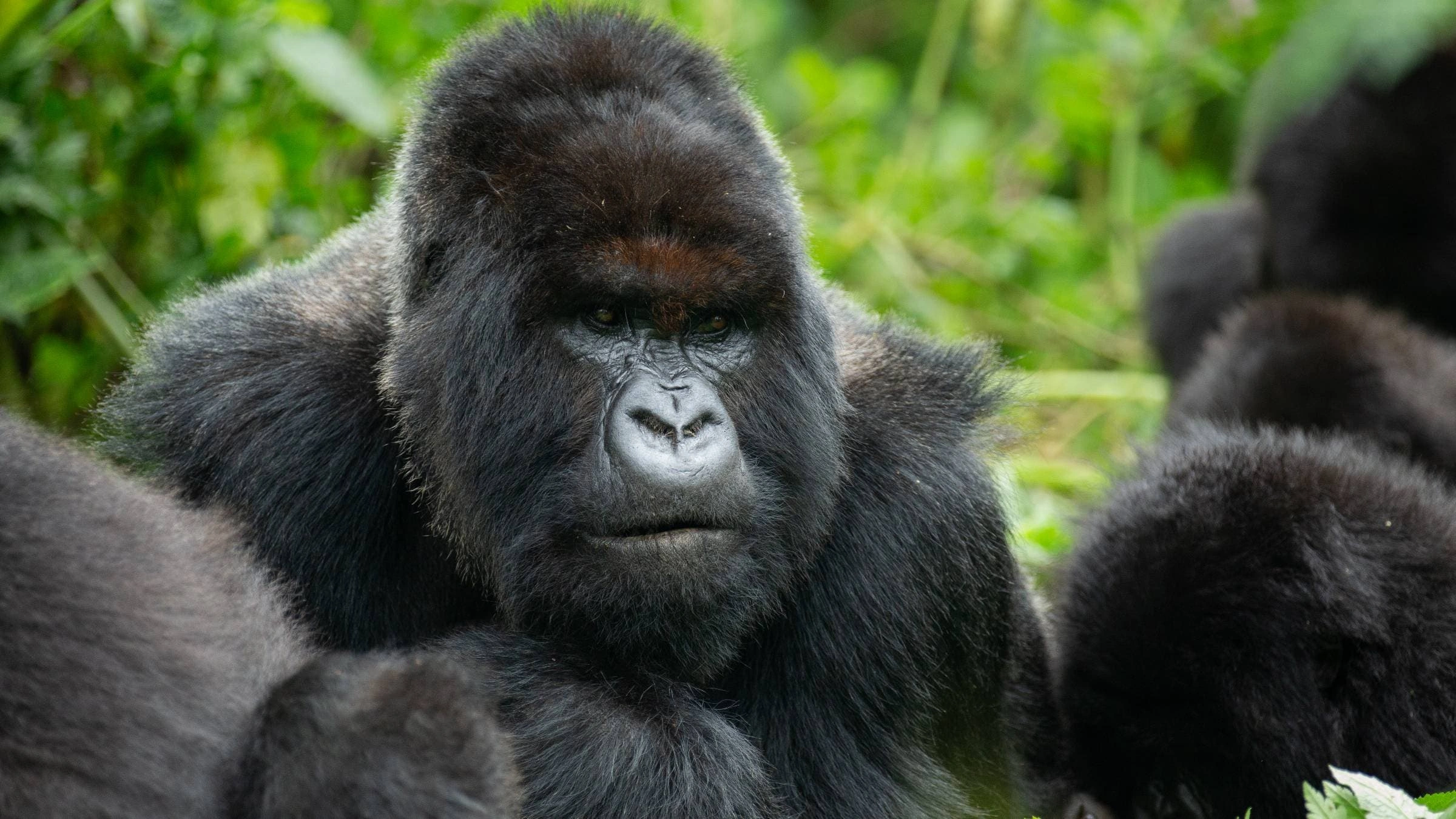

A Gorilla Story: Told by David Attenborough returns to Rwanda’s misted highlands, following the descendants of the gorilla family Attenborough first met in the 1970s during Life on Earth. Netflix presents this short-form feature as both a wildlife portrait and a meditation on time, inheritance, and conservation. The Pablo Group, named after the young gorilla once observed closely, forms the documentary’s central focus. Through lush cinematography, viewers witness the group navigating the rhythms of existence across generations.
The film positions Attenborough simultaneously as narrator, historian, and emotional anchor. His voice, measured and near-mythical in its calm, overlays the jagged, unpredictable patterns of gorilla life. It frames the animals’ actions into something approaching narrative, giving rise to gentle humor when instincts are interpreted as dynastic maneuvering.
The documentary’s power comes less from spectacle and more from contrast: the intimate exchanges of gaze and gesture against the vast, verdant Rwandan mountains. In this compressed runtime, the film invites reflection on human and animal temporality, conservation successes, and the continuity of life, without ever losing sight of the physicality, unpredictability, and presence of the gorillas themselves.
Gorillas as Characters: Power, Family, and Interpretation
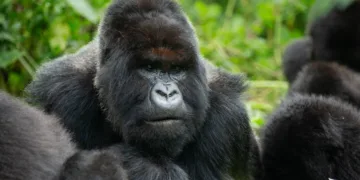
At the center of the narrative lies the internal hierarchy of the Pablo Group. Gicurasi, the aging silverback, holds a fragile dominion. Ubwuzu, a younger, forceful contender, challenges that authority, while Imfura, still maturing, bears the consequences of such contests.
Teta, the older female, exerts a stabilizing influence within this tumultuous social sphere. The documentary constructs a quasi-dynastic drama, emphasizing leadership struggles, dominance displays, and the raw physicality of intergenerational conflict.
The filmmakers lean into anthropomorphism, giving each gorilla a name and a perceived personality. This choice clarifies the emotional stakes for viewers but risks overstating the narrative, mapping human notions of ambition, betrayal, and romance onto behavior that may exist purely as instinct. Attenborough acknowledges these limits, creating an ironic tension: the more compelling the characterization, the more the audience must negotiate between authentic observation and imposed narrative.
Moments of injury, protective aggression, and reconciliation carry real weight, reminding viewers that even the most overinterpreted sequences remain anchored in survival and social necessity. The film’s strength is allowing these moments to breathe, permitting raw emotion to emerge within the strictures of a guided storyline.
Visual Beauty, Natural Atmosphere, and Documentary Craft
Cinematography is the film’s prevailing language. The gorillas inhabit a landscape both intimate and monumental: mist coils over the Rwandan highlands, sunlight flickers through dense foliage, and moss-covered trees frame bodies in chiaroscuro patterns.
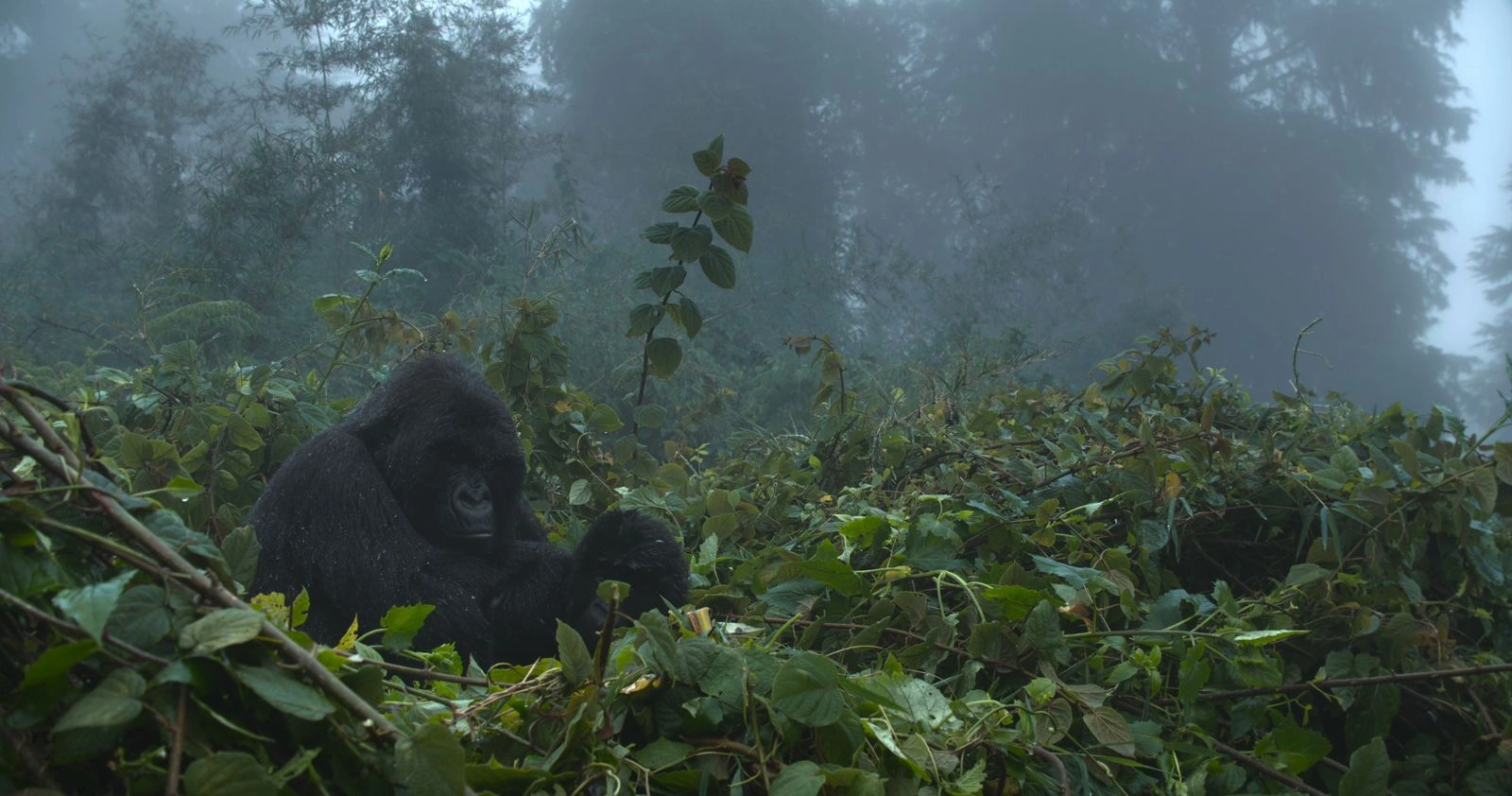
Camera movement alternates between sweeping aerial vistas and tight handheld tracking, emphasizing power, vulnerability, and social cohesion. Close-ups capture texture, expression, and subtle motion, while wider shots situate the group within a vibrant, breathing ecosystem.
The visual narrative contrasts serenity with abrupt bursts of violence. Gentle sequences of grooming or resting pivot to chest-beating confrontations, reinforcing tension without relying solely on narration. The brief runtime enforces a brisk rhythm, occasionally compressing generational arcs and social developments.
A longer series could have allowed these dynamics to unfold with greater temporal fidelity. Despite this, the film retains a sense of spatial and temporal density: the gorillas’ lives feel immediate, yet historically situated. Family viewing is generally untroubled, though sudden displays of injury or dominance may jar expectations of calm nature imagery.
Attenborough’s Presence, Conservation Memory, and Emotional Impact
David Attenborough serves as both lens and moral compass. His voice imparts authority, intimacy, and a reflective cadence that contrasts with the physical unpredictability of gorilla life. When he revisits diaries and recounts his relationship with Pablo, the documentary crystallizes into an elegy for interspecies connection. Attenborough emerges less as distant narrator and more as participant in a continuum, bearing witness to both loss and continuity.
Conservation threads underline the film’s hopeful dimension. Mountain gorillas, once near extinction, now benefit from decades of human protection. This narrative of survival, mediated through Attenborough’s gentle articulation, elevates natural history into philosophical meditation. Observing the Pablo Group invites reflection on free will, social order, and ethical responsibility: humans influence survival yet cannot fully dictate existence.
Emotional resonance arises in quiet exchanges—the glance between gorilla and human, the protective embrace, the measured voice accompanying tragedy. While narrative framing can feel prescriptive, the interplay of visual splendor, behavioral intimacy, and Attenborough’s presence cultivates enduring poignancy, reminding viewers that continuity, memory, and care persist across generations.
A Gorilla Story: Told by David Attenborough is a British nature documentary film that premiered globally on Netflix on April 17, 2026. Directed by James Reed and Callum Webster, and co-produced by Silverback Films alongside Leonardo DiCaprio’s Appian Way, the feature focuses on legendary naturalist Sir David Attenborough as he shares a personal look back at his historic 1978 encounter with a baby mountain gorilla named Pablo in Rwanda. By combining historical archival film and reading passages from his original personal journals with detailed contemporary nature footage, the project chronicles how Pablo grew to lead a record-setting group of sixty-five gorillas and details the daily lives and complex social hierarchies of his modern-day descendants surviving in the Virunga Mountains. Wildlife enthusiasts can stream the entire documentary feature exclusively on the Netflix streaming platform.
Where to Watch A Gorilla Story: Told by David Attenborough (2026) Online


Full Credits
Title: A Gorilla Story: Told by David Attenborough
Distributor: Netflix
Release date: April 17, 2026
Rating: TV-PG
Running time: 77 minutes
Director: James Reed, Callum Webster
Writers: James Reed, Callum Webster
Producers and Executive Producers: Alastair Fothergill, Leonardo DiCaprio, Jennifer Davisson, Phillip Watson
Cast: David Attenborough
- Composer: Richard Collins
The Review
A Gorilla Story: Told by David Attenborough
A Gorilla Story: Told by David Attenborough balances majestic cinematography with intimate observation, anchored by Attenborough’s calm, reflective narration. While anthropomorphized framing occasionally oversells drama, the film’s depiction of gorilla society, intergenerational dynamics, and the lush Rwandan habitat creates a quietly moving experience. Conservation successes, historical continuity, and fleeting emotional moments coalesce into a documentary that is thoughtful, visually arresting, and emotionally resonant. The runtime is brief but effective, leaving viewers with both wonder and reflection on the lives of these remarkable primates.
PROS
- Stunning cinematography and naturalistic lighting
- David Attenborough’s narration adds authority and warmth
- Intimate portrayal of gorilla social structure
- Highlights conservation successes and historical continuity
- Emotional moments rooted in genuine animal behavior
CONS
- Narrative framing occasionally over-anthropomorphizes gorillas
- Short runtime compresses generational storytelling
- Some violent or tragic sequences may surprise viewers expecting gentle nature footage