



























Two years after stepping down as England manager, Gareth Southgate steps into a new arena, trading football pitches for classrooms, community centers, and prisons. Gareth Southgate: Changing the Game for Young Men chronicles his first television project focused on social issues, tracing the struggles of boys and young men navigating motivation, guidance, and opportunity in contemporary Britain. The documentary follows him on a road trip across Middlesbrough, Wickford, Essex, and HMP Leeds, engaging with young men, policy advisers, teachers, and local mentors.
The film situates Southgate as both participant and observer. His approach is earnest and empathetic, often highlighting small-scale interventions such as mentorship programs, after-school initiatives, and volunteer opportunities.
The road-trip structure allows the documentary to shift between regional contexts, showing how social and economic conditions vary while common challenges emerge: absence of male role models, gaps in vocational education, and pressures from unemployment and community decline.
Tone is carefully measured. Southgate conveys warmth and credibility, and the film emphasizes human connection over polemic. There is a palpable tension between the heartfelt gestures he encourages and the larger systemic forces shaping these young men’s lives.
Mentorship and emotional literacy form the central throughline, and the documentary gestures toward the limitations of celebrity-led social interventions without dwelling on political critique. Its focus is on engagement and guidance, framing Southgate as a visible advocate for personal and community support.
The Human Face of Leadership
Southgate’s on-screen presence is the anchor of the documentary. Calm and affable, he balances authority with approachability, offering guidance that draws on his own experiences in professional football. His managerial tenure is refracted through interactions with young men facing life challenges: unemployed youths in Middlesbrough, schoolboys in Wickford, and prisoners in Leeds. Each encounter illuminates his method—direct conversation, motivational framing, and gentle encouragement.
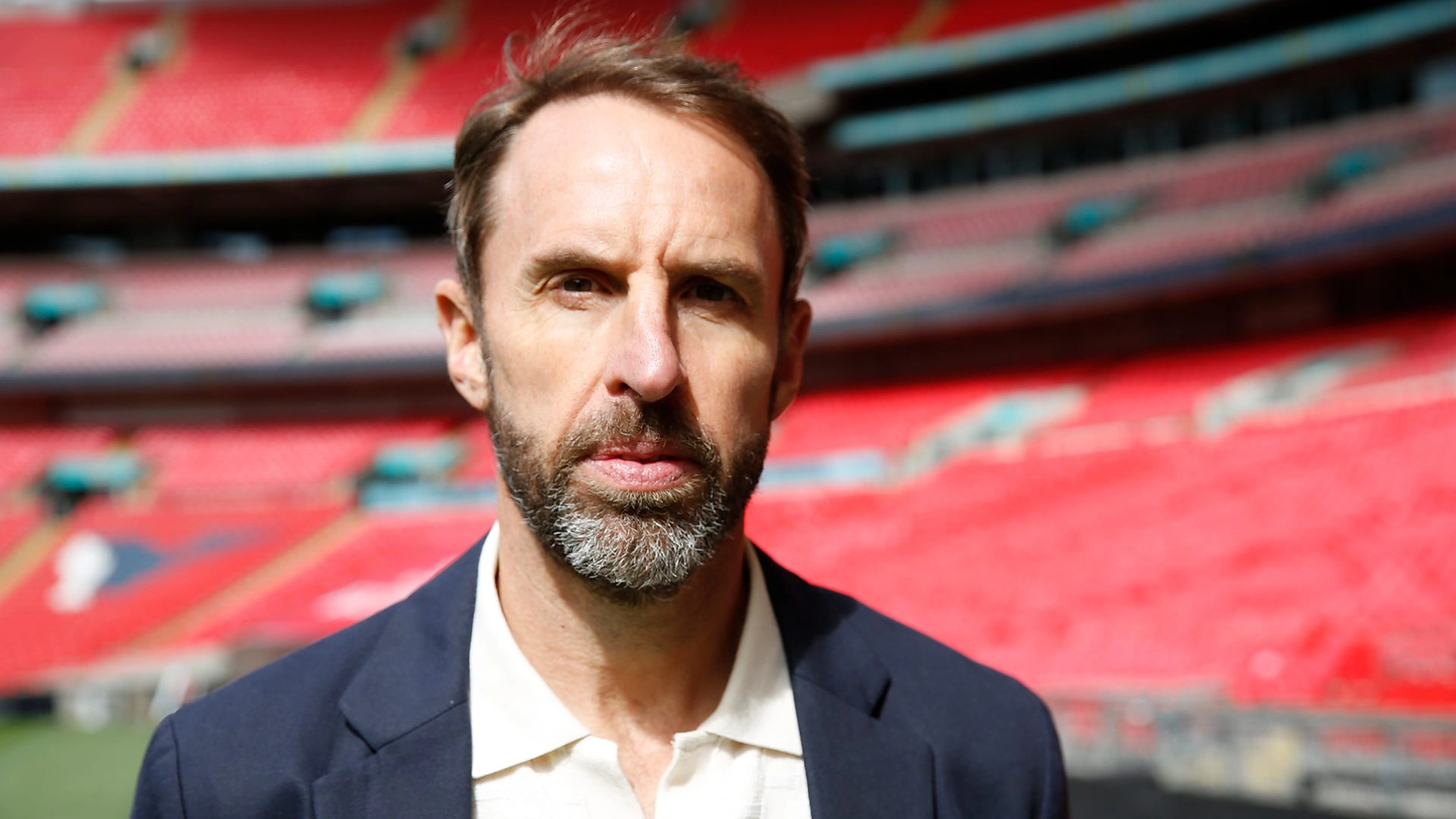
In Middlesbrough, Southgate listens to young men recount repeated rejections and setbacks, offering practical advice and reassurance rooted in his own career resilience. Classroom interactions in Wickford show him translating sports leadership into mentorship, fostering discussions about confidence and aspiration.
Visits to HMP Leeds emphasize empathy and reflection, as he engages with men whose paths diverged into criminality. These sequences highlight Southgate’s ability to convey guidance without condescension, sustaining credibility across diverse socio-economic backgrounds.
Narrative techniques accentuate his presence. Direct-to-camera reflections, storytelling from personal memory, and on-the-ground improvisation blend seamlessly with the observational footage. His demeanor carries the film through moments where systemic challenges loom larger than any individual intervention. By foregrounding character and human connection, the documentary positions Southgate as a facilitator of social cohesion, bridging generational and experiential divides with a measured sincerity.
Mapping the Crisis: Boys, Mentors, and Opportunity
The documentary organizes social issues thematically, mapping the crisis confronting young men across Britain. Mentorship deficits are central, explored through programs like Lads Need Dads and local extracurricular schemes that provide spaces for boys to discuss ambitions and emotions.
Educational challenges are evident in schools where vocational pathways remain limited and male teachers are scarce. The film emphasizes disparities in guidance and role modeling, framing these gaps as factors influencing confidence, self-esteem, and decision-making.
Employment and socio-economic context form another axis. Middlesbrough exemplifies post-industrial decline, with young men facing high unemployment and dwindling local opportunities. Conversations reveal resilience and frustration alike, highlighting the psychological and emotional costs of exclusion.
Prison sequences extend this exploration, showing how absent guidance intersects with social vulnerability and systemic failings. Community-based initiatives, like volunteer projects and after-school programs at Hitchin Town FC, illustrate small-scale responses, emphasizing engagement and participation over structural reform.
The documentary presents these issues through interviews, observational footage, and anecdotal evidence. Policy discussions appear, but Southgate’s interventions remain micro-scale and personal. Tension exists between grassroots initiatives and the broader systemic challenges that underpin them.
While austerity, educational inequality, and socio-economic decline are implicit, the documentary focuses on individual narratives and local action. This framing maintains accessibility and emotional resonance, foregrounding lived experiences over exhaustive social analysis.
Narrative Flow and Technical Craft
The documentary employs a linear yet flexible narrative flow. It opens with Southgate at home, reflecting on his post-managerial life, before following a structured sequence of site visits. Urban and rural locations are intercut with interviews, classroom footage, and community interactions, creating rhythm and thematic cohesion. Personal reflection alternates with observational sequences, allowing the audience to absorb context alongside Southgate’s perspective.
Cinematography favors intimacy. Medium close-ups capture facial expressions during vulnerable conversations, while wider shots situate individuals within their environment—Middlesbrough streets, school classrooms, football terraces.
Naturalistic lighting underscores authenticity, and the camera lingers without intruding, reinforcing the film’s empathetic tone. Editing interweaves policy commentary, personal narrative, and field footage, sustaining engagement without overwhelming the audience with data.
Sound design and score are understated. Minimalist music underscores reflective sequences, while ambient sound from community projects and football matches grounds the film in real spaces. The auditory palette complements the visual framing, reinforcing the sense of presence and immediacy. Southgate’s narration bridges scenes, providing connective tissue that maintains narrative coherence.
The documentary balances accessibility with technical care. Storytelling and production choices enhance intimacy and sincerity, allowing Southgate’s presence to carry the film. Observational footage, reflective commentary, and structured pacing create a cohesive experience, emphasizing mentorship, human connection, and social engagement while maintaining a calm, measured tone.
Gareth Southgate: Changing the Game for Young Men is a British television documentary that premiered on BBC One and became available for digital streaming on BBC iPlayer on June 8, 2026. Produced by Cardiff Productions, the film follows the former England national football manager as he travels across the United Kingdom to explore the multifaceted social and economic crises currently impacting boys and young men. Audiences residing in the United Kingdom can watch the entire documentary special for free on the BBC iPlayer streaming application, while international viewers can track the platform for upcoming global distribution updates or purchase options on Apple TV.
Full Credits
Title: Gareth Southgate: Changing the Game for Young Men
Distributor: BBC One, BBC iPlayer
Release date: June 8, 2026
Rating: TV-PG / 15
Running time: 58 minutes
Director: Samuel Palmer
Producers and Executive Producers: Lorraine Evans, Louise Carroll, Narinder Minhas, Joanna Carr, Gian Quaglieni
Cast: Gareth Southgate, Sonia Shaljean, Joel Shaljean, Dan Gaze
The Review
Gareth Southgate: Changing the Game for Young Men
Gareth Southgate: Changing the Game for Young Men is sincere, humane, and carried by Southgate’s calm authority, yet its social analysis often feels too cautious for the scale of the crisis it presents. The documentary works best in its intimate conversations, where mentorship, unemployment, school disengagement, and emotional literacy become personal rather than abstract. Its technical craft is modest but effective, with a warm observational style. It needed sharper interrogation of systemic causes, but its compassion still lands.
PROS
- Gareth Southgate is a warm, credible presence
- Clear focus on mentorship and emotional literacy
- Strong intimate conversations with young men
- Naturalistic visuals support the subject matter
CONS
- Avoids deeper political and economic analysis
- Some solutions feel too small for the problem
- Limited scrutiny of toxic masculinity and social media
- Celebrity-led format narrows the scope