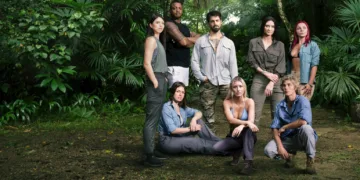












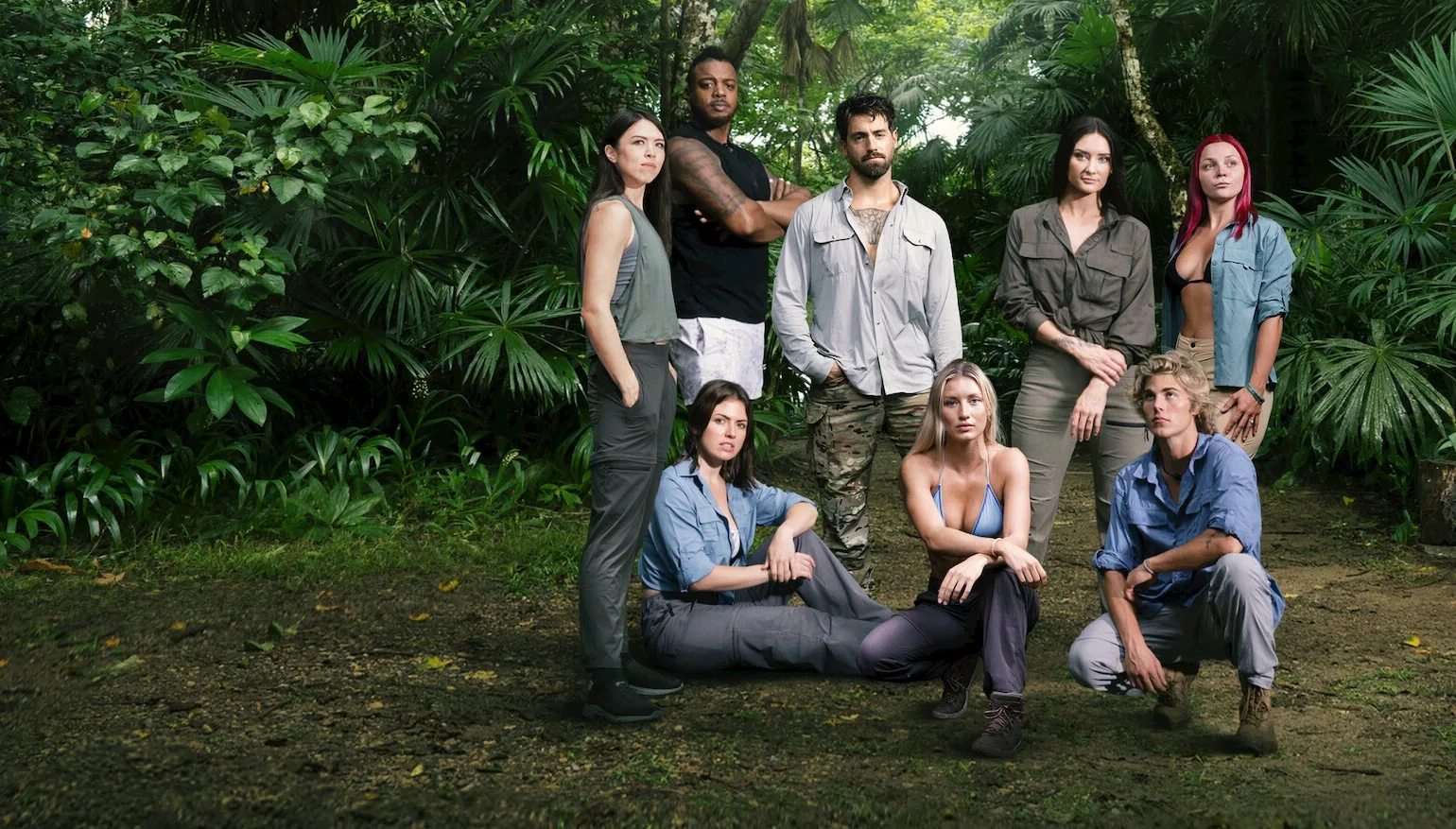

Outlast: The Jungle takes Netflix’s survival competition out of the Alaskan cold and drops it into Panama, where the scenery looks gorgeous enough for a travel advert until everyone starts getting soaked, bitten, hungry, and emotionally frayed.
The premise remains brutally simple: 16 contestants must survive for up to 45 days while chasing a $1 million prize. The catch is the show’s defining rule. Nobody wins alone. The final prize can only go to a team, which means survival depends as much on social endurance as fire, food, or shelter.
That shift to the jungle gives the season a fresh physical texture. Gone are the freezing nights and snowbound misery. In their place come suffocating humidity, daily rain, mud, insects, wet clothes, and the kind of damp discomfort that makes every conversation feel one mosquito away from collapse. The result is intense, messy, and occasionally fascinating reality television, a series where the environment looks ready to swallow the contestants while the contestants remain strangely determined to eat each other first.
A Game Where Shelter Is Useful and Trust Is Apparently Mandatory
The format gives Outlast: The Jungle an immediate strategic spark. The contestants are split into Alpha, Bravo, and Charlie, with each camp receiving a different advantage. Alpha starts with bows and arrows, Bravo gets fire-starting materials, and Charlie receives supplies for shelter. It sounds fair in the abstract. In practice, it creates instant imbalance, which is exactly what reality competition producers dream about before sleeping peacefully in climate-controlled rooms.
Alpha can hunt, yet has no fire or shelter. Bravo has the most practical early advantage because fire changes everything, from warmth to food safety to morale. Charlie has shelter materials, which matter greatly in a rainforest, though internal tension quickly makes those supplies feel less like a blessing and more like props in a group therapy exercise gone feral.
The team rule remains the show’s cleverest twist. Anyone can fire a flare and leave, while an exiled player must join another team within 24 hours or go home. That turns belonging into a survival tool. You can be skilled, tough, and resourceful, yet still doomed if nobody wants you nearby.
The jungle sharpens that pressure. Heat drains bodies by day, rain chills them by night, and constant moisture brings trench foot, injury risks, hunger, insects, and the grim comedy of trying to cook protein without reliable fire. Nature gives the season its best drama. Nature, unlike some contestants, rarely repeats itself.
The Human Food Chain
The human game in Outlast: The Jungle is built on forced cooperation, which is reality television’s polite term for “please share a tarp with someone who may betray you by breakfast.” The $1 million prize makes every relationship unstable. A trade can be strategy. A favor can be leverage. A smile can feel like a signed confession.
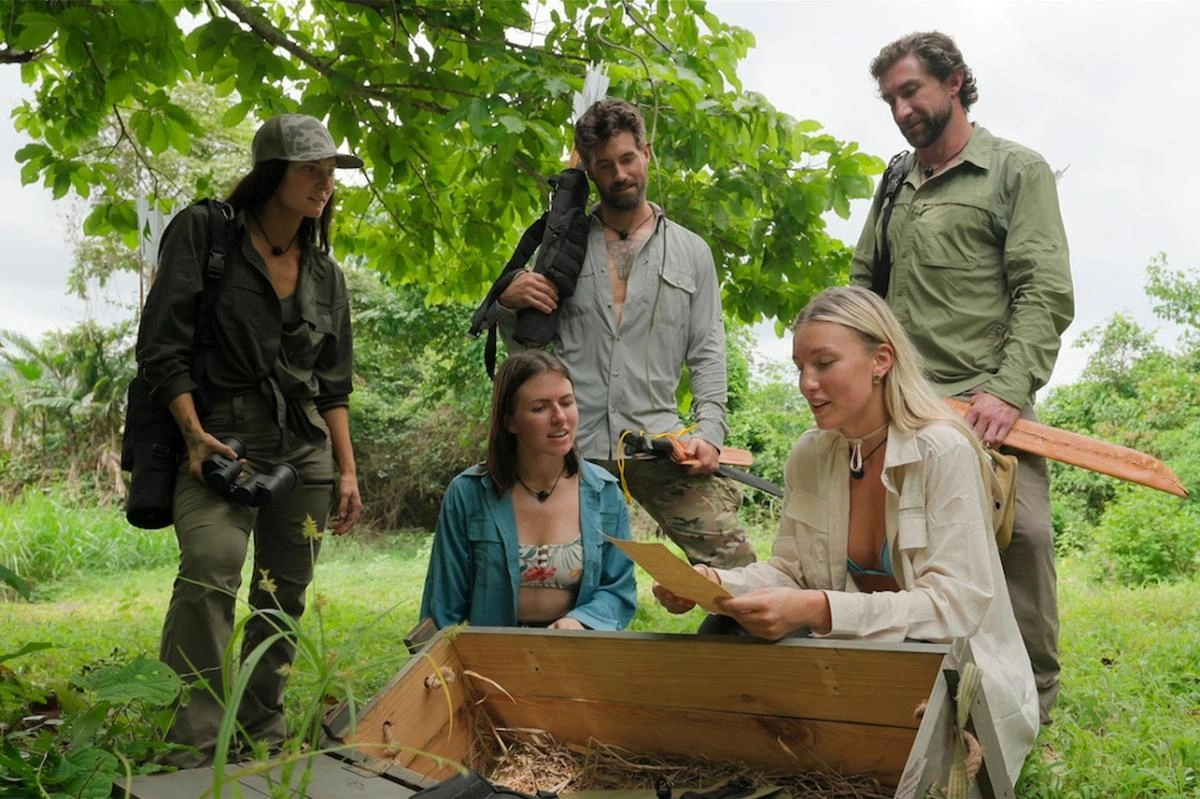
That tension is clearest when Alpha’s Ben and Maddy approach Bravo to negotiate fire access after killing a gull. The moment works because it ties survival directly to power. Alpha has food that could rot in the tropical heat. Bravo has the means to cook it.
Suddenly, basic human need becomes a boardroom negotiation with worse footwear. Maddy, in particular, stands out because her calm outdoor competence cuts through the noise. She has the useful quality of seeming like she would rather solve a problem than give a speech about solving it.
Morgan also emerges as one of the more interesting presences. When Abby tries to form an all-female alliance, Morgan resists being boxed into a simple loyalty play. She wants to prove her value through capability, which gives her choices a sharper edge than the usual alliance arithmetic. Pharoah and Sarah also bring personality and presence, though the show sometimes struggles to separate memorable players from the wider blur of people discussing trust as if trapped in a corporate seminar with no snacks.
Team Charlie delivers the season’s most uncomfortable interpersonal friction through Sarah and Wes. Their conflict touches on communication, respect, effort, and gendered double standards, but the scenes can become hard to watch rather than revealing. There is a difference between social pressure exposing character and hostility circling the drain. The show does not always know which one it is filming.
Beautiful Jungle, Repetitive Humans
The production values are strong enough to make the season’s frustrations sting more. Panama is filmed with a vivid, punishing beauty. The jungle feels alive, wet, loud, and faintly hostile, which is exactly what this format needs. Shelter-building, food struggles, injuries, exhaustion, weather exposure, and the constant battle against dampness give the series its most convincing stakes. When Outlast: The Jungle focuses on survival, it has real force.
The problem is pacing. Too often, the season trades environmental tension for another looping conversation about loyalty, betrayal, or whether someone is “really” part of the team. Interpersonal conflict can be terrific reality television when it changes the game or exposes something specific about a person. Here, it sometimes feels like the same argument wearing a different wet shirt.
The editing does not always help. Ominous music swells around minor disagreements until borrowing a tool starts to feel like the fall of a small republic. Suspicious glances are treated like geopolitical incidents. The result can be funny, though not always in the intended way.
Still, the season has a strong hook, a brutal setting, and enough psychological warfare to keep the pressure alive. Its best moments understand that survival is physical, social, and moral. Its weakest moments confuse repetition with escalation. The jungle keeps offering danger, texture, and spectacle. Why does the show keep interrupting it with meetings?
Outlast: The Jungle is an American survival reality competition television series that premiered its third overall season on Netflix on June 10, 2026. Transitioning from its traditional frozen Alaskan setting, the intense game drops sixteen raw strangers into the unforgiving, volatile environment of the Panamanian rainforest where they must work together in teams to endure extreme conditions and competing strategies for a million-dollar prize. Viewers can watch the entire season tracking the psychological and environmental struggle by logging into the Netflix digital streaming application.
Where to Watch Outlast: The Jungle Online


Full Credits
Title: Outlast: The Jungle
Distributor: Netflix
Release date: June 10, 2026
Rating: TV-14
Running time: 48–58 minutes per episode
- Producers and Executive Producers: Mike Odair, Jason Bateman, Michael Costigan, Emma Ho, Ryan O’Dowd, Krystal Whitney
Cast: Wes Saunders, Sean Jacobs, Sarah Awad, Pharaoh Gayles, Nikki Hru, Morgan Colburn, Mary Wedell, Marshall Strain, Maddy Jones, Leiya Pillitteri, Dave Cecchini, Brett Johnson, Braxton Fish, Ben Orndorff, Abby Chu, Halle Cooley
The Review
Outlast: The Jungle
Outlast: The Jungle has a brutal setting, a smart team-based premise, and enough survival tension to justify the trip to Panama. The jungle gives the season real danger and visual force, especially when the focus stays on fire, shelter, hunger, and physical decline. The problem is the human drama, which too often gets stuck in repetitive loyalty debates. Gripping in bursts, exhausting in stretches.
PROS
- Vivid and punishing Panamanian jungle setting
- Strong survival premise built around team dependency
- Real tension from uneven resources and forced alliances
- Standout moments involving fire, food, shelter, and weather
- Some memorable contestants with sharp strategic instincts
CONS
- Repetitive arguments about trust and loyalty
- Uneven pacing across episodes
- Some cast members blur together
- Editing can make minor disputes feel overdramatic
- Social conflict sometimes overshadows stronger survival material