


























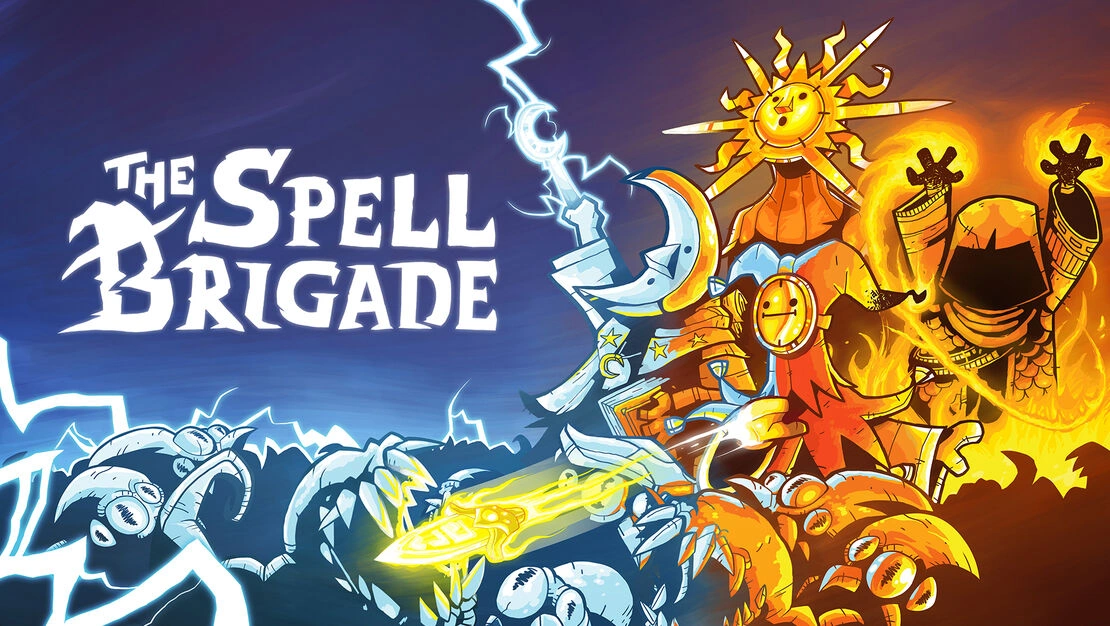

The Spell Brigade from Bolt Blaster Games positions itself within the crowded survivorlike roguelite genre, but it immediately stakes its claim with co-op as a core experience. Players control a wizard or witch tasked with battling endless swarms of enemies across maps layered with hazards and interactive terrain.
The game supports 1 to 4 players online, letting friends share in the chaos or experiment with different spell combinations. The loop is intuitive: pick a character, enter a map, survive waves of enemies, collect mana orbs, level up spells and stats, complete objectives, and spend gold on permanent upgrades after the run.
While the foundation is lively and readable, the appeal depends on tolerance for repetition and grinding inherent to the genre. The Spell Brigade thrives when players embrace its spell-driven chaos, but its staying power hinges on whether progression and challenge balance keep them engaged over multiple sessions.
Survivorlike Combat, Spell Growth, and Moment-to-Moment Play
Combat in The Spell Brigade emphasizes positioning, since all attacks are automated or orbit the character. This keeps the game accessible to newcomers while layering tactical depth through route planning, hazard avoidance, and upgrade selection.
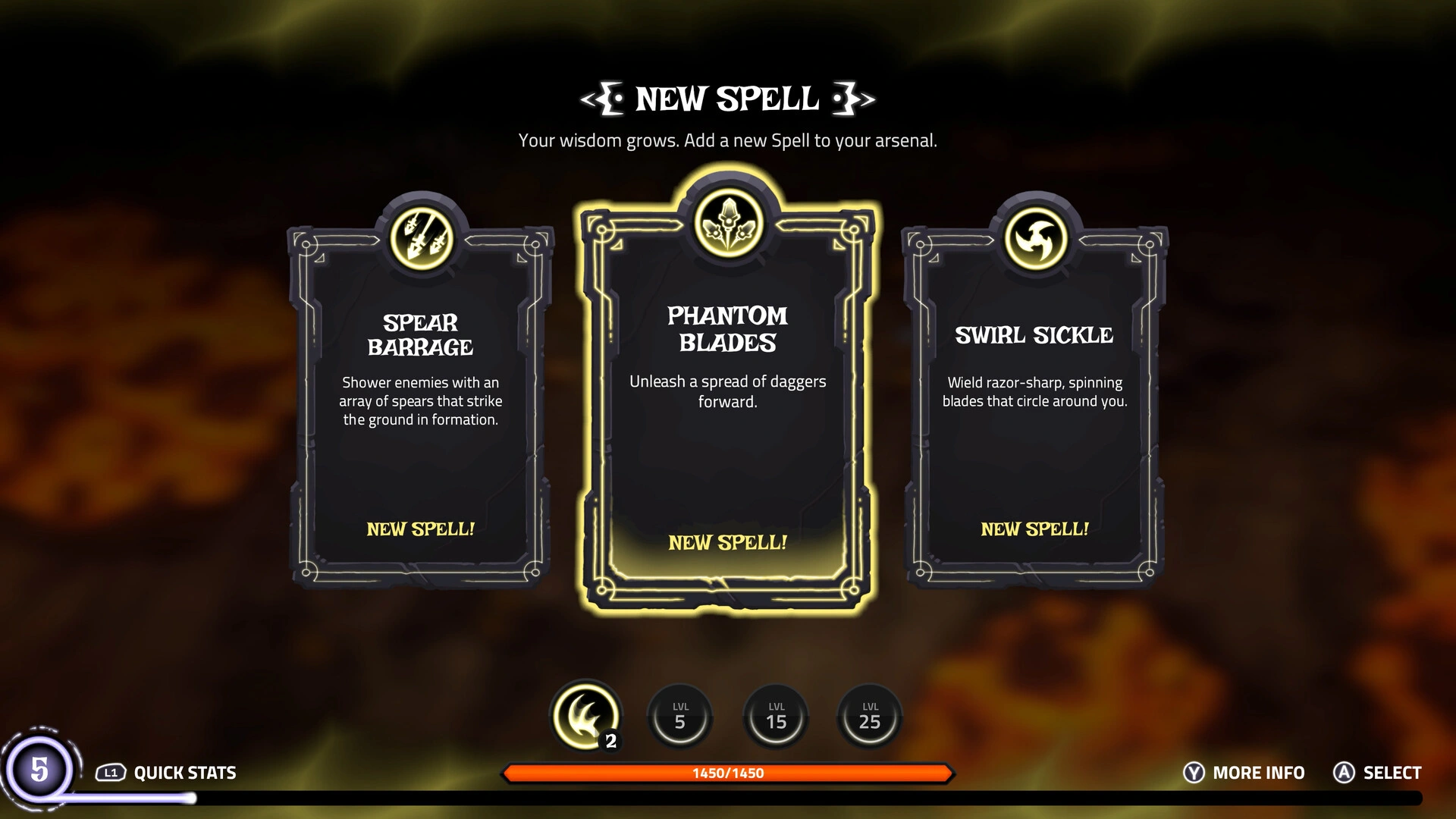
Spells vary widely: Astral Orbs fire toward enemies, Solar Pulse delivers area damage, spectral swords or broadswords rotate around the player, and projectile barrages include bombs, spears, boomerangs, and magical birds. Level-ups allow players to boost damage, cast speed, spell size, luck, max health, mana gain, and dodge chance. New attacks unlock mid-run, expanding build diversity as enemy waves intensify.
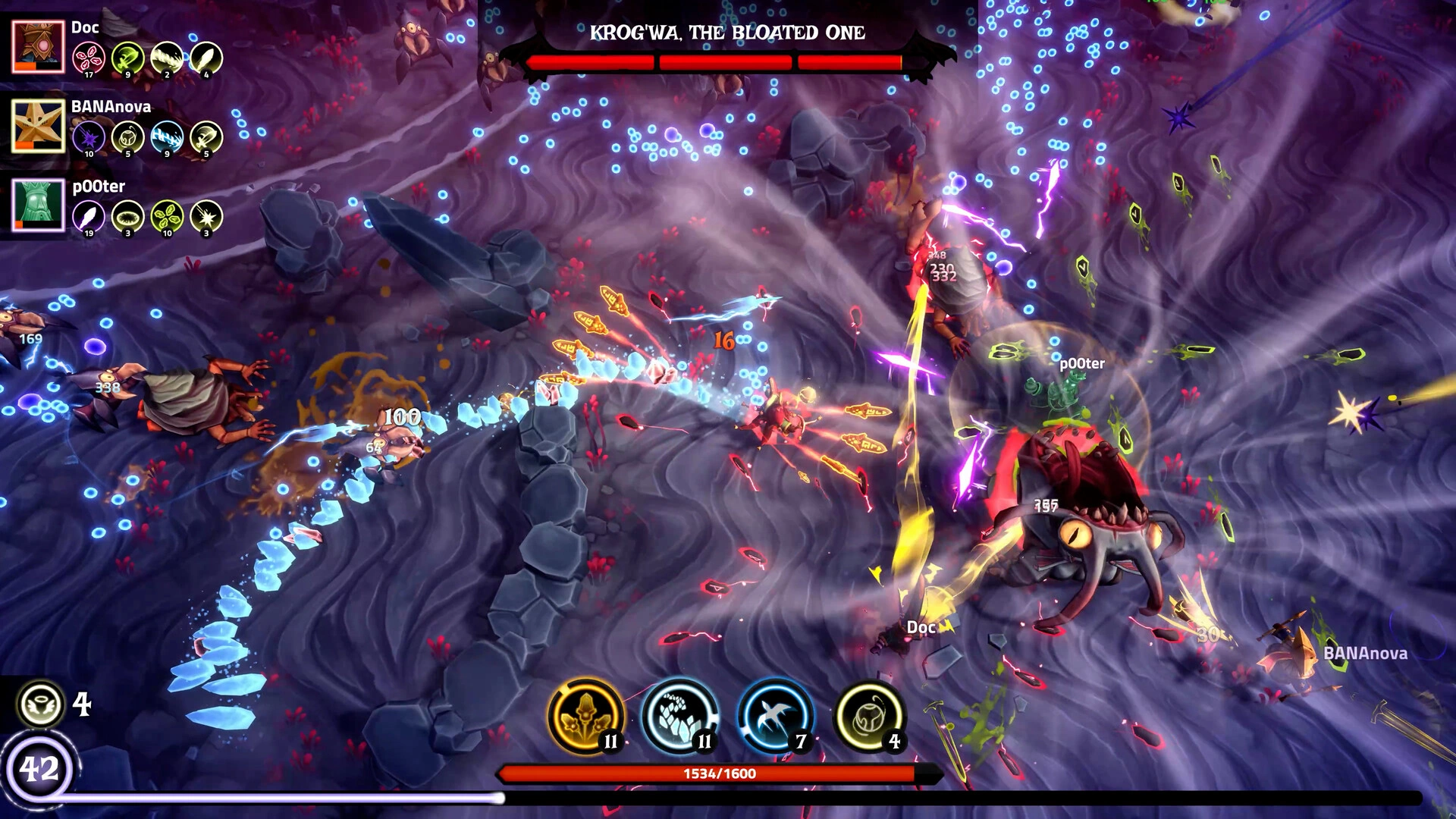
Elemental infusions—fire, ice, lightning, acid, poison, plasma—add layers of complexity, combining to slow, burn, shock, or burst enemies. The result is a visually satisfying overlap of spell effects that elevates the power fantasy. Yet some spells feel familiar, making high-level runs more about stacking power than discovering fresh tactical choices. The excitement peaks when spell combinations align but rarely reaches the explosive heights of top-tier survivorlikes, leaving progression as the primary motivator for sustained engagement.
Co-op Design, Friendly Fire, and Team Dynamics
Co-op defines the game’s identity, with up to four players contributing to a shared mana pool and leveling system. Chests, objectives, and level-up rewards benefit the group, and multiple builds interacting across the screen creates chaotic but rewarding spectacles. Playing with friends amplifies the fun: waves thin faster, reviving allies introduces tension, and bosses feel dynamic with overlapping abilities.
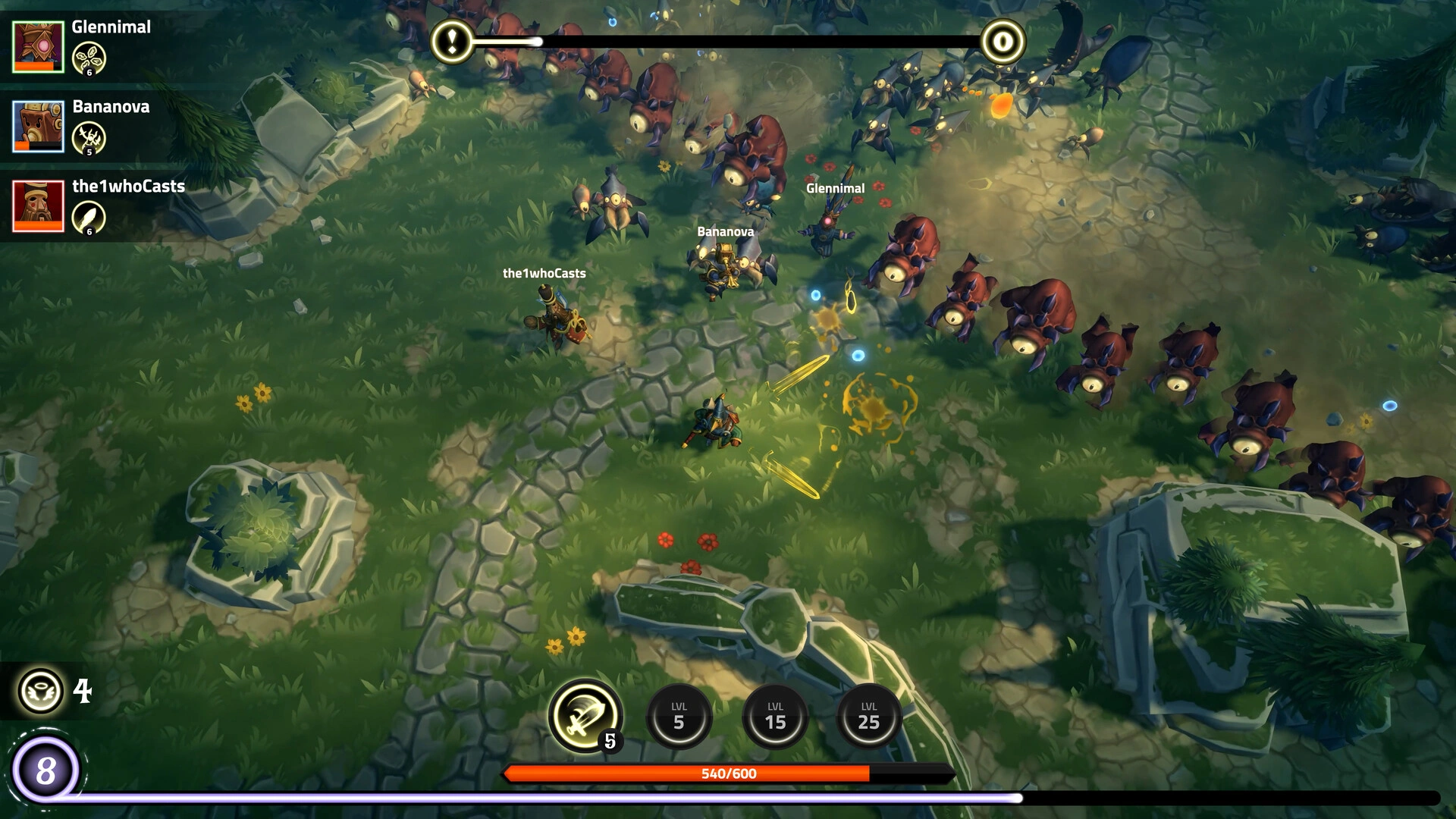
Communication tools such as emotes and quick chat assist coordination, though casual players often rely on non-verbal cues. Friendly fire is active by default, introducing risk from explosive or area-effect spells. This creates tension as players must balance offense with positioning.
The Covenant system allows disabling friendly fire, useful for solo runs, but the single-modifier limitation can frustrate co-op planning. Despite its accessibility, co-op can feel like players surviving alongside each other rather than coordinating, highlighting an opportunity for synergy mechanics or role-based interactions. It excels as a social experience, less so as a tactical one.
Maps, Objectives, Hazards, and Difficulty Spikes
The Spell Brigade’s maps each carry distinct personalities. Rocky green terrain funnels enemies but can trap players. Ice maps introduce slipperiness and slowed movement, lava regions punish with damaging pools and tornadoes, and rivers with portals alter navigation dynamically.
Objects in the environment create choke points and opportunities, adding strategic depth beyond flat arenas. Objectives add mid-run goals: destroying statues, collecting mushrooms, cleaning magical goo, closing portals, lighting torches, herding mana beasts, holding zones, or killing enemies in specific areas. These require players to weigh risk versus reward, forcing pauses or splitting groups to complete tasks under pressure.
Difficulty spikes sharply beyond the first map, with objectives sometimes overlapping hazards and enemy density creating overwhelming scenarios. Characters with hazard bonuses, smaller hitboxes, healing, or faster revives can mitigate these challenges. The game shines when the chaos remains survivable, but its design occasionally leaves little room for reactive play.
Progression, Unlocks, Characters, and Long-Term Motivation
Progression centers on gold and permanent Enchantments, boosting damage, mana pull, max health, luck, revive speed, and other stats. Respecs are available to redistribute spent currency. Gold accrual is slow relative to upgrade costs, making 20–30 minute runs often fund only a single upgrade.
The 15-wizard roster expands options, starting with Reginald and unlocking others via gold. Character traits affect gameplay: Reginald benefits from luck and Astral Orbs, Sun Mage offers agility, hazard mobility, and Solar Pulse, and others improve healing or hazard resilience.
Blind character purchases and rising costs introduce friction and can feel punishing. Achievements, cosmetics, and ascension goals offer long-term objectives, appealing to completionists, though players seeking consistent mechanical novelty may find the progression sluggish. The system provides structure but can blunt the immediacy of power growth, impacting the emotional satisfaction of repeated runs.
Presentation, Personality, Audio, and Final Review Direction
Visually, the game embraces a colorful, cartoon-like fantasy aesthetic. Wizards are distinct in masks, robes, and silhouettes, while elemental spell effects inject energy into combat. Enemy designs remain clear but repeat across runs. Audio feedback—spell impacts, mana pickups, boss cues—supports gameplay, though soundtrack choices may not always match the environmental intensity.
Familiar genre mechanics ensure accessibility for survivorlike fans seeking co-op spell chaos. Players seeking bold mechanical reinvention might find the game conventional. The Spell Brigade excels as a lively, chaotic co-op experience with charm and objectives, yet its slower progression, uneven difficulty, and limited enemy variety temper its long-term engagement potential.
The Review
The Spell Brigade
The Spell Brigade is a lively co-op survivorlike with charming wizard designs, readable combat, and enjoyable objective-based chaos. Its spell system can be satisfying once builds start stacking, and playing with friends gives the action a welcome social spark. Still, slow progression, uneven difficulty spikes, limited enemy variety, and shallow team synergy keep it from becoming essential.
PROS
- Fun co-op chaos
- Strong wizard designs
- Accessible combat loop
- Smart mid-run objectives
- Flexible spell upgrades
CONS
- Slow gold grind
- Uneven difficulty
- Limited enemy variety
- Friendly fire feels awkward
- Co-op lacks deeper synergy