












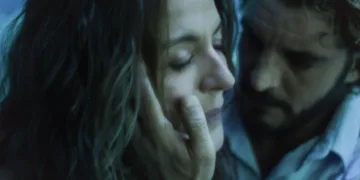
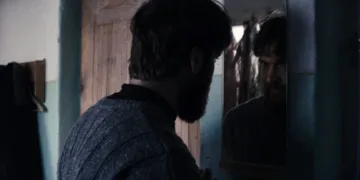










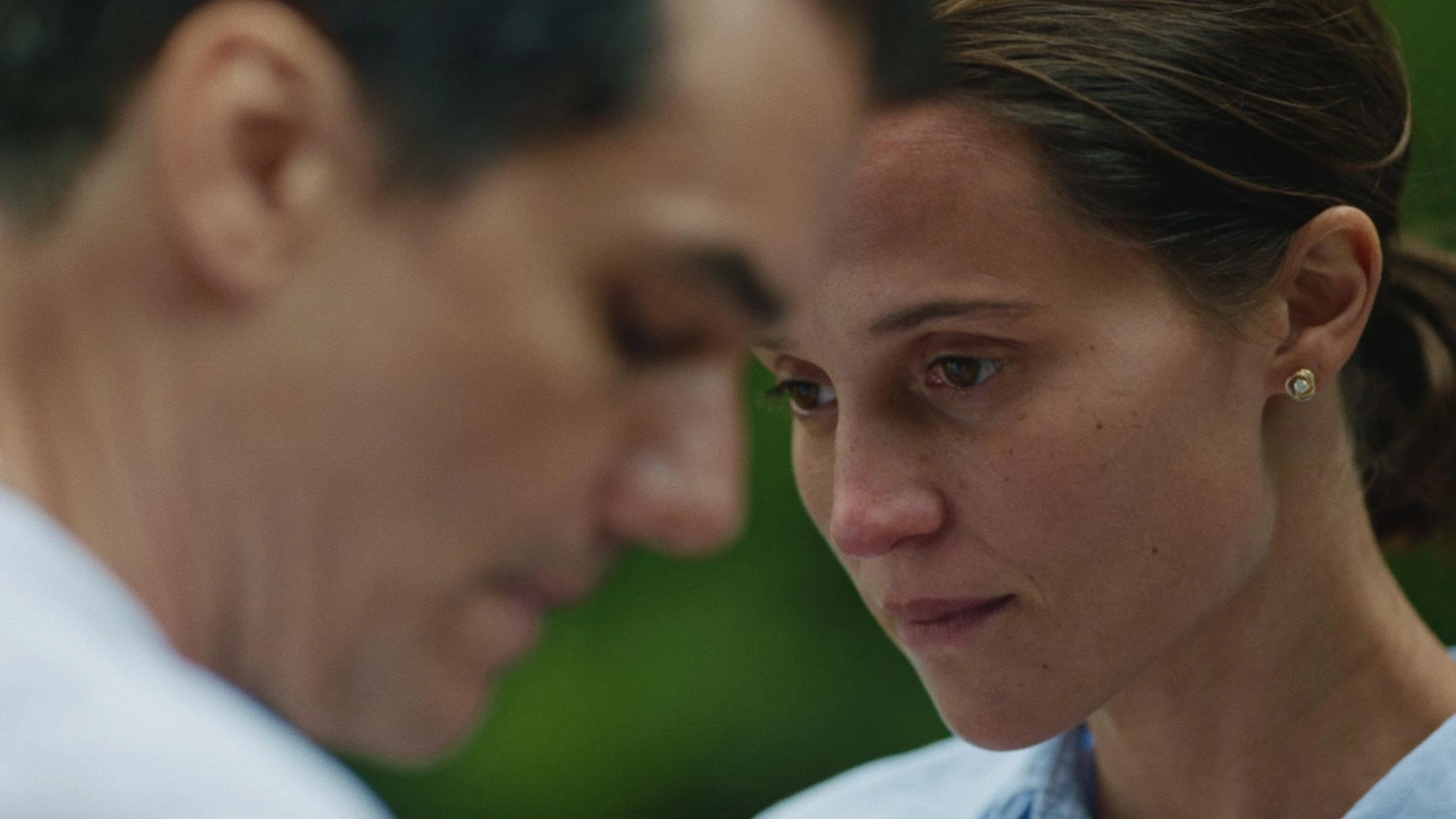

Rachel Rose’s The Last Day turns a Fourth of July schedule into an emotional pressure chamber. Loosely shaped by Virginia Woolf’s Mrs. Dalloway, the film follows Julia, played by Alicia Vikander, through a day of errands, social obligations, and private reckoning as she prepares for an evening party at her suburban home. She is a former novelist, a mother, a wife, and a daughter still carrying the grief of her father’s death. None of those roles sits comfortably on her.
Running beside her story is Taylor, played by Victoria Pedretti, a young mother of three whose mental health is fraying beneath the familiar surface of domestic life. Rose builds unease through ordinary details that feel faintly hostile: air sirens, fireworks, flashbacks, a dead deer, an anxious fawn, and the constant hum of a world too loud for women already close to breaking.
The film’s power comes from how quietly it understands panic. The danger here is rarely dramatic in the usual sense. It is accumulated, folded into appointments, childcare, polite greetings, and the forced brightness of a holiday gathering.
A Literary Frame Made Restless
The Last Day uses Woolf’s one-day structure with intelligence rather than reverence. Rose does not flatten the film into a page-to-screen exercise. She borrows the rhythm of errands and memory, then lets modern anxieties reshape the material.
Julia’s day has a clean external pattern: bakery pickup, Botox appointment, professional meeting, group therapy, a visit to her father’s old loft, and an encounter with a former love, played by Wagner Moura. Each stop carries the false promise of productivity. She keeps moving, yet each task pulls her deeper into grief, artistic frustration, and uncertainty about the life she has built.
The structure works best when the film treats daily routine as a map of psychic strain. Julia’s meeting in the publishing world exposes the wound of her stalled writing career. Her encounter with Moura’s character opens a door to an alternate self, one tied to romance, youth, and creative possibility. Her trip through the city becomes less about preparation and closer to emotional excavation.
Taylor’s storyline is more direct in its distress. She drops her wallet outside the bakery, unknowingly linking herself to Julia, and the film makes that small accident feel quietly devastating. Julia later finds Taylor online, where smiling photos suggest health and stability. The contrast between that curated image and Taylor’s visible pain speaks sharply to a culture where exhaustion often has to pass through a filter before anyone recognizes it.
The film does stumble in its balance. It aims for a dual portrait, yet Julia receives the richer narrative architecture. Taylor’s arc contains some of the film’s most piercing material, so her thinner writing can feel like a missed opportunity. Still, the emotional connection between the women gives the film its aching shape.
Motherhood, Grief, and the Silence Between Women
The Last Day is especially sharp about motherhood as performance. Julia and Taylor live in different emotional weather, but both are pressed into roles that leave little room for honest speech. Julia has money, space, and temporary freedom from childcare, yet she remains trapped by grief and by the deadening question of what happened to her creative self after becoming a wife and mother. Taylor’s situation is more urgent: three children, a newborn, fragile mental health, and a household that keeps demanding from her while barely seeing her.
Rose does not turn this into a simple accusation against husbands, doctors, editors, or friends. That restraint matters. The film’s world is full of people who speak to these women, advise them, schedule them, treat them, admire them, and depend on them. Very few truly listen. Everyday conversations about children become a social code, a way for women to connect while still protecting themselves from saying too much.
Julia’s father is the central absence in her story. His death has not simply made her sad. It has removed a witness to the version of herself she still wants to believe in. Her writing block carries grief, resentment, and fear of creative extinction. Taylor’s past as a delivery nurse gives her story a painful irony. She once helped others bring children into the world, while her own life now feels consumed by the labor of sustaining everyone else.
This is where the film feels strongly tied to the current cultural moment. It speaks to burnout, postpartum anxiety, curated domestic happiness, and the loneliness that can live inside comfort. Rose understands that privilege does not erase pain, but the film is also aware that privilege changes how pain is expressed, hidden, or dismissed.
Faces, Sirens, Fireworks, and the Shape of Collapse
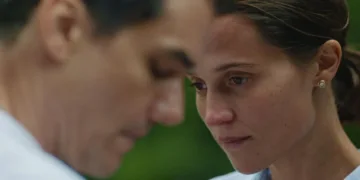
Alicia Vikander gives Julia a controlled surface that keeps cracking in tiny, readable ways. Her performance is built from glances, pauses, tightened expressions, and the weary discipline of someone determined to remain presentable. One of the pleasures of watching Vikander here is seeing how much she can communicate without announcing the emotion. Julia’s professional humiliation, grief, envy, and disappointment move across her face like passing weather.
Victoria Pedretti brings a rawer charge. Taylor feels exposed from the start, almost painfully open, and Pedretti captures the terror of someone who has lost access to her own center. Her flashbacks are especially affecting because they reveal a brighter, freer person, which makes her present state feel even more bruising.
The supporting cast deepens Julia’s world with efficiency. Wagner Moura brings warmth and tension to a meeting that could have become mere nostalgic temptation. Marin Ireland gives a sharp, memorable performance in a professional scene that tightens Julia’s sense of failure.
Rose’s visual background is clear in the film’s sensory design. Eric Yue’s close handheld cinematography keeps the camera near bodies and faces, creating intimacy that can feel comforting one moment and suffocating the next. The party scenes have a lush, almost trapped beauty. Sirens and fireworks puncture the atmosphere, turning civic celebration into a kind of alarm system. The score supports that nervous texture without smothering it.
The slow build mostly suits the film’s interior drama, though the final stretch feels compressed after such patient observation. Still, The Last Day leaves behind a strong emotional imprint. It makes private anguish visible in gestures, sounds, missed conversations, and the fragile spaces where language fails.
The Last Day is an American independent drama film that celebrated its world premiere at the Tribeca Festival in June 2026. Marking the feature directorial debut of acclaimed visual artist Rachel Rose, the narrative serves as a loose, modern-day interpretation of Virginia Woolf’s classic 1925 modernist novel Mrs. Dalloway. Set in New York City over the course of a single day on the Fourth of July, the story follows Julia, a mother and writer struggling with intense creative stagnation and unresolved grief surrounding her father’s death. As she coordinates an evening fireworks watch party, her urban path crosses with Taylor, a vulnerable young mother of three dealing with profound postpartum difficulties. Produced by Killer Films and Luma Projects, the film is currently screening for audiences on the international film festival circuit while its sales agents secure a formal domestic theatrical and streaming distributor.
Full Credits
Title: The Last Day
Distributor: United Talent Agency (UTA), Creative Artists Agency (CAA), WestEnd Films (Sales agents handling distribution sales)
Release date: June 2026 (Tribeca Festival)
Running time: 99 minutes
Director: Rachel Rose
Writers: Rachel Rose
Producers and Executive Producers: Lucie Elwes, Rachel Rose, Mason Plotts, Pamela Koffler, Christine Vachon, Maja Hoffmann, Lucas Hoffmann
Cast: Alicia Vikander, Victoria Pedretti, Wagner Moura, Sinclair Daniel
Director of Photography (Cinematographer): Eric Yue
Editors: Taylor Levy
Composer: Sofia degli Alessandri
The Review
The Last Day
The Last Day is a poised, emotionally perceptive debut from Rachel Rose, led by finely tuned work from Alicia Vikander and a bruising turn from Victoria Pedretti. Its Woolf-inspired structure gives everyday errands the weight of buried crisis, while the visual and sound design turn suburban routine into quiet alarm. The film loses some force by giving Taylor less narrative space than she deserves, and the final stretch feels compressed, yet its study of motherhood, grief, and isolation leaves a deep mark.
PROS
- Excellent performances from Alicia Vikander and Victoria Pedretti
- Smart modern use of the Mrs. Dalloway framework
- Gorgeous, intimate cinematography
- Strong sound design with sirens and fireworks heightening tension
- Sensitive treatment of motherhood, grief, and burnout
CONS
- Taylor’s storyline feels underwritten
- Julia receives stronger dramatic focus than the dual structure suggests
- Ending feels slightly rushed
- Some symbolic details can feel too pronounced