























My Family Season 2 returns to the Italian household that Fausto built in the shadow of his own death, then asks a colder, quieter question: what remains after mourning loses its ceremonial shape? Created by Filippo Gravino, with Elisa Dondi co-writing, the Netflix family dramedy moves one year beyond Fausto’s passing. The first season watched a terminally ill father try to prepare his sons, Libero and Ercole, for a future without him. This second season studies the moral debris left behind.
The promise was simple in theory: keep the boys together, keep them loved, keep the improvised family intact. Reality, being reality, has other plans. Libero is now living in a group home, apart from Ercole, while Valerio, Lucia, Maria, and Demetrio struggle to preserve the fragile structure Fausto imagined.
Then Gaetano arrives. Fausto and Valerio’s estranged father enters like weather: disruptive, alive, faintly ridiculous, and carrying old damage in his pockets. Around him, the season becomes warmer, stranger, and sadder. Life goes on, which can feel like an insult.
A Compact Season Built From Fractures
Across six episodes, My Family Season 2 keeps its storytelling lean. It resists the temptation to inflate grief into melodrama. Instead, the season gathers its force through small collisions: a refused visit, a tense family exchange, an old recording, a phone call that lands with the weight of absolution. The writing understands that families rarely collapse in grand operatic gestures. They chip, crack, apologize badly, cook dinner, leave the room, come back.
The central wound is Libero’s separation from Ercole. Fausto’s loved ones promised to keep the brothers together, yet the family has already failed that sacred instruction. Libero’s choice to live in a group home creates a field of guilt around everyone. Lucia cannot accept it without fighting. Valerio tries to respect it, which may be the kinder response, or perhaps the cowardlier one. The season lets that uncertainty breathe.
Valerio has inherited Fausto’s responsibilities without inheriting his certainty. He wants to protect Ercole, reach Libero, manage Lucia, tolerate the past, and somehow remain a person. That is a lot to ask of any man, especially one whose grief keeps changing costumes.
Fausto remains present through video diaries, memories, recordings, and dreamlike visions. These appearances never cheapen his death. They make absence visible. His messages reveal family history, especially Gaetano’s corrosive place in the lives of his sons. Season 1 concerned itself with accepting illness. Season 2 turns toward the slower problem of living after the catastrophe has become ordinary.
The Jumble of Love
The strongest element of the season is its ensemble. Maria’s phrase, “jumble of love,” captures the show’s emotional architecture with rare precision. This family is part bloodline, part accident, part duty, part stubborn affection. It has no clean geometry. It functions through improvisation, which may be the truest kind of family structure television can offer.
Massimiliano Caiazzo gives Valerio a tense tenderness. His performance suggests a man who has mistaken endurance for healing. He smiles, cares, organizes, absorbs, then occasionally looks as if his body has remembered what his mind keeps postponing. His strength has fatigue inside it.
Vanessa Scalera’s Lucia remains one of the season’s sharpest forces. She is fierce, wounded, funny in a way that can cut glass, and often impossible. Her anger is not treated as a flaw to be corrected. It is grief with its sleeves rolled up. Her unfinished history with Gaetano, and her stalled future with Sergio, turn her into a woman caught between old wreckage and fragile renewal.
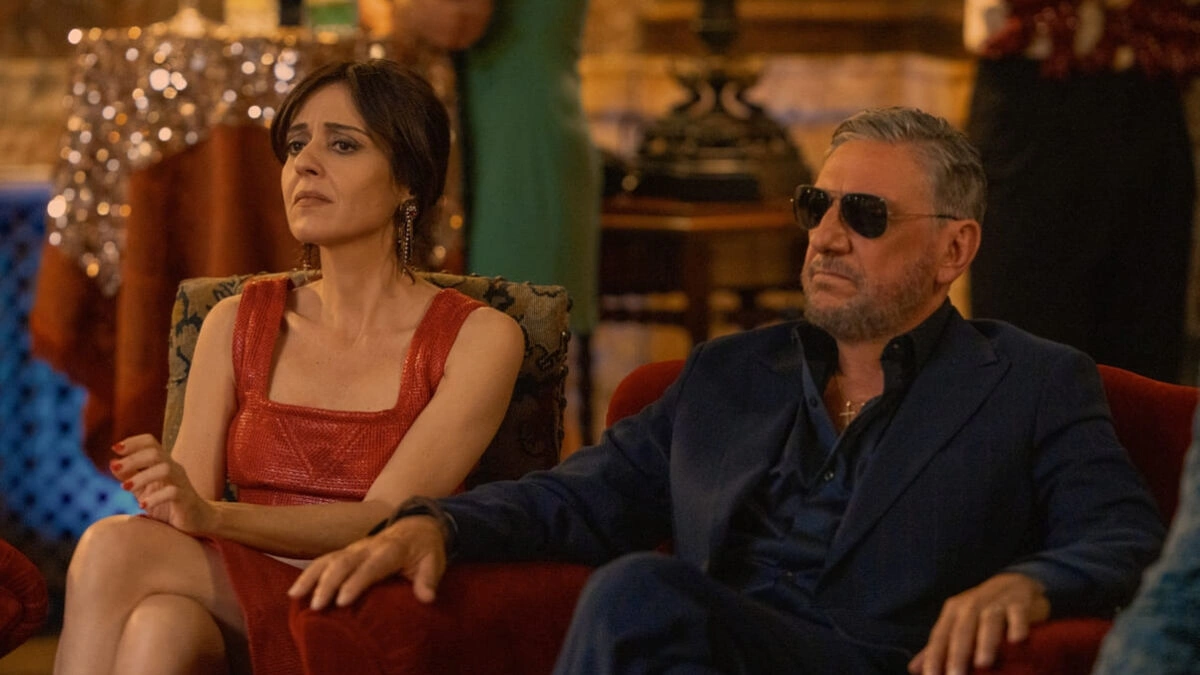
Sergio Castellitto’s Gaetano gives the season its most volatile new charge. He is charming, arrogant, wounded, theatrical, and frequently unbearable. He disrupts every room he enters, yet the show wisely avoids flattening him into a villain. His presence recalls Fausto’s vitality while exposing the damage that shaped him. He is a ghost who happens to be alive, which is often worse.
Maria and Demetrio supply a softer ache. Her return with Pau unsettles Demetrio, whose comic rhythms conceal real longing. Antonio Gargiulo plays him with a lightness that never feels empty. The younger characters gain emotional weight too. Libero’s withdrawal and Ercole’s vulnerability show grief altering childhood before anyone has language for it.
Ordinary Life, Mortal Questions
Beneath its domestic surface, My Family Season 2 is concerned with a severe philosophical problem: how much of the self must be sacrificed to love others properly? The cassette-tape scene gives this question its clearest form.
Young Fausto’s wishes for his adult self carry the ache of someone who sensed, early on, that happiness might require rebellion. He wished for his parents’ separation, for a family that saw him as good, for the courage to be selfish, and for a long life. The last wish fails. The others haunt the living.
The season’s writing has a rare faith in the ordinary. A group-home visit, a recording, a shared trip, a family argument, a clumsy joke: these moments become little altars to survival. The dialogue feels direct and lived-in, with humor rising from personality rather than machinery. That humor matters. Without it, the season might sink into its own sorrow.
The comedy is gentler this time, and the season carries a heavier emotional weather than its debut. Gaetano’s chaos, Demetrio’s timing, and Valeria’s fiery presence keep the air moving. Still, some supporting figures remain thinner than they should be. The six-episode structure gives the season welcome pace, yet it leaves certain arcs undernourished.
Even so, My Family Season 2 finds beauty in the unfinished. Its people are wounded, selfish, loyal, absurd, loving, and frequently wrong. In other words, they resemble a family.
My Family Season 2 (originally titled Storia Della Mia Famiglia) is an Italian drama television series that launched its six-episode sophomore season exclusively on Netflix on June 10, 2026. Created by Filippo Gravino, the emotional narrative picks up one year after the tragic passing of Fausto, tracking his unconventional and fragile clan as they struggle to maintain their family unity and uphold the promises they made to him. Tensions heighten and old wounds reopen when Fausto’s estranged, larger-than-life father unexpectedly arrives, forcing everyone to finally stop running away and confront their collective grief. Viewers across the globe can stream the complete second season right now by logging into their premium Netflix account.
Where to Watch My Family Season 2 Online

Full Credits
Title: My Family Season 2
Distributor: Netflix
Release date: June 10, 2026
Rating: TV-MA
Running time: 41–51 minutes per episode
Director: Claudio Cupellini, Marco Danieli
Writers: Filippo Gravino, Elisa Dondi
Producers and Executive Producers: Palomar, Mediawan
Cast: Eduardo Scarpetta, Vanessa Scalera, Massimiliano Caiazzo, Cristiana Dell’Anna, Antonio Gargiulo, Aurora Giovinazzo, Sergio Castellitto, Gaia Weiss, Filippo Gili, Tommaso Guidi, Jua Leo Migliore
The Review
My Family Season 2
My Family Season 2 is a tender, quietly bruising continuation that turns grief into lived routine rather than spectacle. Its compact six-episode shape keeps the emotional conflicts focused, while the cast gives the family’s messy affection real weight. Some supporting characters could use richer arcs, yet the season’s warmth, humor, and melancholy remain deeply affecting.
PROS
- Strong ensemble performances
- Moving treatment of grief and chosen family
- Tight six-episode pacing
- Natural humor and lived-in dialogue
- Gaetano adds energy and tension
CONS
- Some supporting arcs feel thin
- Slightly less fresh than Season 1