













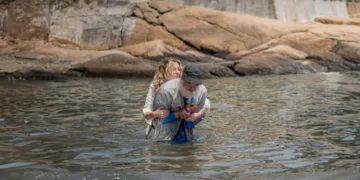











A beach blackened by dead crabs is not an image nature produces politely. It accuses. Jeanie Finlay’s All Rivers Spill Their Stories to the Sea begins from the ecological disaster that struck England’s north east coast on September 25, 2021, when dead and dying crabs and lobsters washed ashore in numbers that turned the tideline into a record of collapse. For the fishing communities around Teesside, this was no abstract environmental warning. It was the sudden disappearance of a livelihood that had passed through generations, from boats to kitchens to mortgages to school shoes.
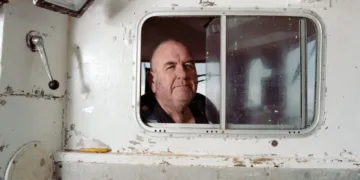
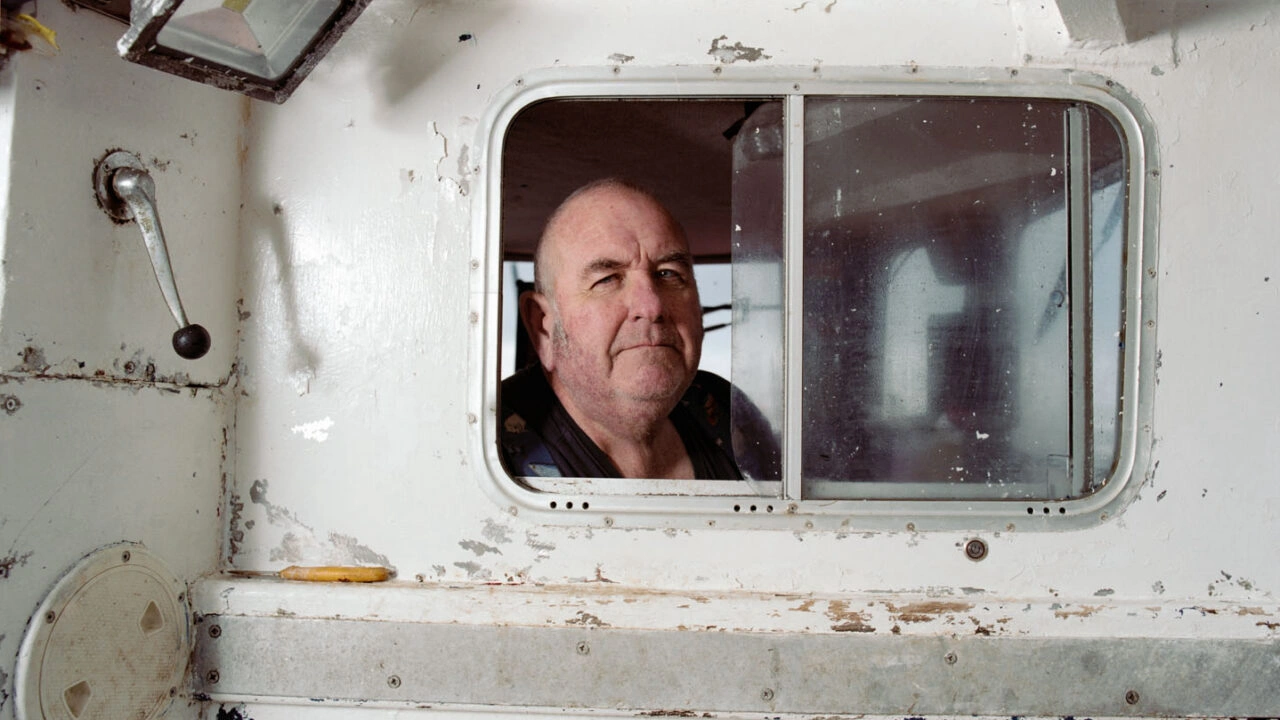
Finlay roots the film in the life of Stan Rennie, a veteran fisherman whose first appearance carries the easy confidence of a man who knows the sea by habit, muscle, and memory. Wearing fish-themed braces on his boat, he calls himself “the luckiest man in the world.” The line lands with painful irony after the die-off, once the same boat struggles to bring in enough lobster to pay for diesel. The film’s power lies in that contraction: a life once held together by family, work, and place is squeezed until it becomes a public fight.
Stan Rennie and the Shape of Working-Class Speech
Stan is a superb documentary subject because he resists the polish that institutions prefer from those asking for justice. He swears. He jokes. He repeats himself when anger demands repetition. He speaks in a broad Teesside accent that carries local authority no briefing paper could imitate. Finlay understands that this voice is part of the evidence.
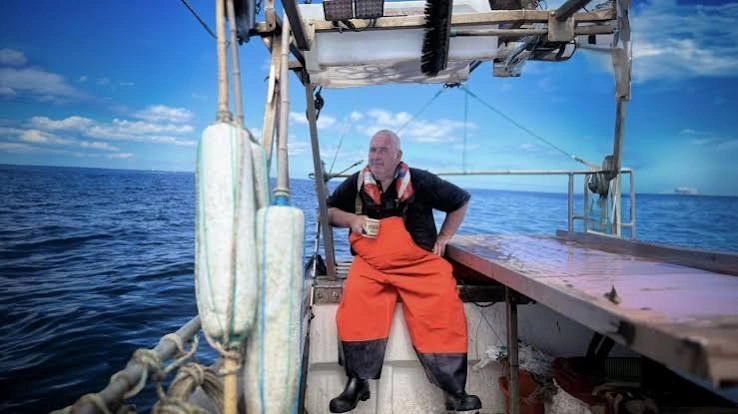
His shift from fisherman to campaigner is neither romantic nor tidy. The film watches him become the spokesman for the North East Fishing Collective, a group of 60 fisherfolk across 60 miles of damaged coastline. The role costs him. He counts out pills for his ailments and cracks a bleak joke about becoming a “desktop warrior,” a phrase that captures the indignity of a sea worker forced into emails, meetings, committees, and public rebuttals.
The faces around him matter. Younger fishermen appear with the stunned fatigue of men who have children, mortgages, and very little room for political patience. Stan may have savings. They have bills arriving faster than the crabs return. Finlay’s camera does not aestheticize their hardship. It stays close enough to catch the silence after bad news, the gallows humor in a pub, the clipped frustration of men who once measured uncertainty in weather and catch sizes, not official statements.
Also Read






Freeports, Dredging, and the Bureaucracy of Denial
The film’s fiercest argument concerns narrative control. What happened to the crabs becomes inseparable from who is allowed to say what happened to the crabs. Along the River Tees, the legacy of heavy industry sits in the soil and sediment, a chemical past waiting beneath redevelopment language. The post-Brexit freeport project and the South Bank Quay development bring promises of renewal, investment, jobs, and regional pride. They also bring dredging.
For the fishermen, the timing is impossible to ignore. Dredging in the Tees mouth intensifies, then dead crustaceans wash onto beaches. Independent, crowdfunded science points toward pyridine, a toxic chemical possibly released from disturbed sediment. Dr Gary Caldwell of Newcastle University gives the film its clearest scientific counterweight, arguing that the chemical theory deserves serious attention. The official explanations move from algal bloom to “unique pathogen,” each one received by the fishing community as another door closing.
Ben Houchen, Teesside’s mayor, becomes the film’s embodiment of political branding under pressure. His freeport vision requires confidence, speed, and public optimism. The fishermen arrive with dead crabs, lost income, and an inconvenient demand for accountability. The moment they are called “activists,” the word functions less as description than demotion. They were useful as “local people” while they symbolized regional pride. Once they objected, they became a problem category.
The parliamentary committee sequence sharpens this conflict without pretending that procedure equals justice. The fishermen finally speak in a formal room, yet the room itself seems built to absorb complaint and continue.
Finlay’s Local Eye
Finlay’s direction is gentle in method and severe in implication. She films boats, pubs, meetings, beaches, and domestic spaces with the ease of someone who has been accepted inside the community rather than parachuted into it. Her Teesside connection matters because the film notices details an outsider might treat as decoration: the talk around tables, the ordinary comedy of irritation, the stubborn pride in a place that has been promised regeneration so many times that the word itself has begun to sound like a threat.
The title’s lyricism could have clashed with the grit of industrial rubble and poisoned coastlines. Instead, the friction gives the film its rhythm. Rivers carry stories to the sea, yes, yet they also carry waste, policy, neglect, and the residue of decisions made far from the people asked to live with them. Finlay’s music choices support that emotional pressure without embalming the community in noble suffering. The score leaves room for anger.
The film refuses the comforting shape of a small community defeating a large machine. That refusal is honest. Stan and his fellow fishermen do not receive the clean victory that environmental dramas often desire for their subjects. What they receive is attention, and Finlay treats attention as a serious civic act. On the beach, locals try to return poisoned creatures to the water. It is a futile gesture, tender and absurd, which may be the most exact image of the film’s politics.
The independent documentary film had its world premiere in Denmark at the CPH:DOX festival on March 18, 2026, followed by its UK premiere at the Sheffield DocFest earlier this month. Because it is navigating the international film festival circuit, a wide commercial streaming or theatrical release has not launched yet. The project follows a veteran fisherman on the North East coast of England who becomes an activist when an ecological disaster washes thousands of dead, poisoned crabs ashore.
Full Credits
Title: All Rivers Spill Their Stories to the Sea
Distributor: Glimmer Films, I Am Charlie Productions
Release date: March 18, 2026
Running time: 1 hour 39 minutes
Director: Jeanie Finlay
Writers: Jeanie Finlay
Producers and Executive Producers: Charlie Phillips, Jeanie Finlay, Nadja Lapcevic, Anke Peterson, Julie Parker Benello, Shanida Scotland, Elaisha Stokes, Mark Thomas
Cast: Stan Rennie
Director of Photography (Cinematographer): Jeanie Finlay, Mark Bushnell
Editors: Nicole Halova
Composer: Lomond Campbell
The Review
All Rivers Spill Their Stories to the Sea
All Rivers Spill Their Stories to the Sea is a lucid, humane, politically charged documentary that turns a poisoned coastline into an argument about class, power, and who gets believed. Jeanie Finlay’s closeness to Teesside gives the film its texture, while Stan Rennie gives it its voice: funny, bruised, stubborn, and impossible to smooth into a soundbite. Its refusal of a clean victory may frustrate some viewers, but that frustration belongs to the story.
PROS
- Stan Rennie’s vivid presence
- Strong local texture
- Sharp political anger
- Sensitive use of music
- Clear environmental stakes
CONS
- No clean investigative resolution
- Some official arguments feel underexplored
- Its quiet pace may test viewers