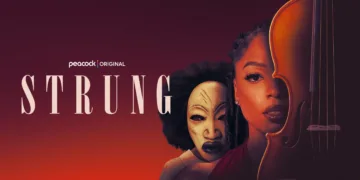






















The richest people in Strung behave as if they purchased grief wholesale and forgot where they stored it. Malcolm D. Lee’s Peacock thriller has a premise with teeth: Laila Calloway, a talented violinist played by Chloe Bailey, is broke, displaced, haunted by her dead sister, and desperate enough to accept a suspiciously generous offer from a woman who hears her play for schoolchildren.
Audra, played by Lynn Whitfield, appears with the soft authority of someone who has spent years making manipulation sound like etiquette. She offers Laila work tutoring her granddaughter Zuri, along with a room in a mansion and a possible path toward the philharmonic.
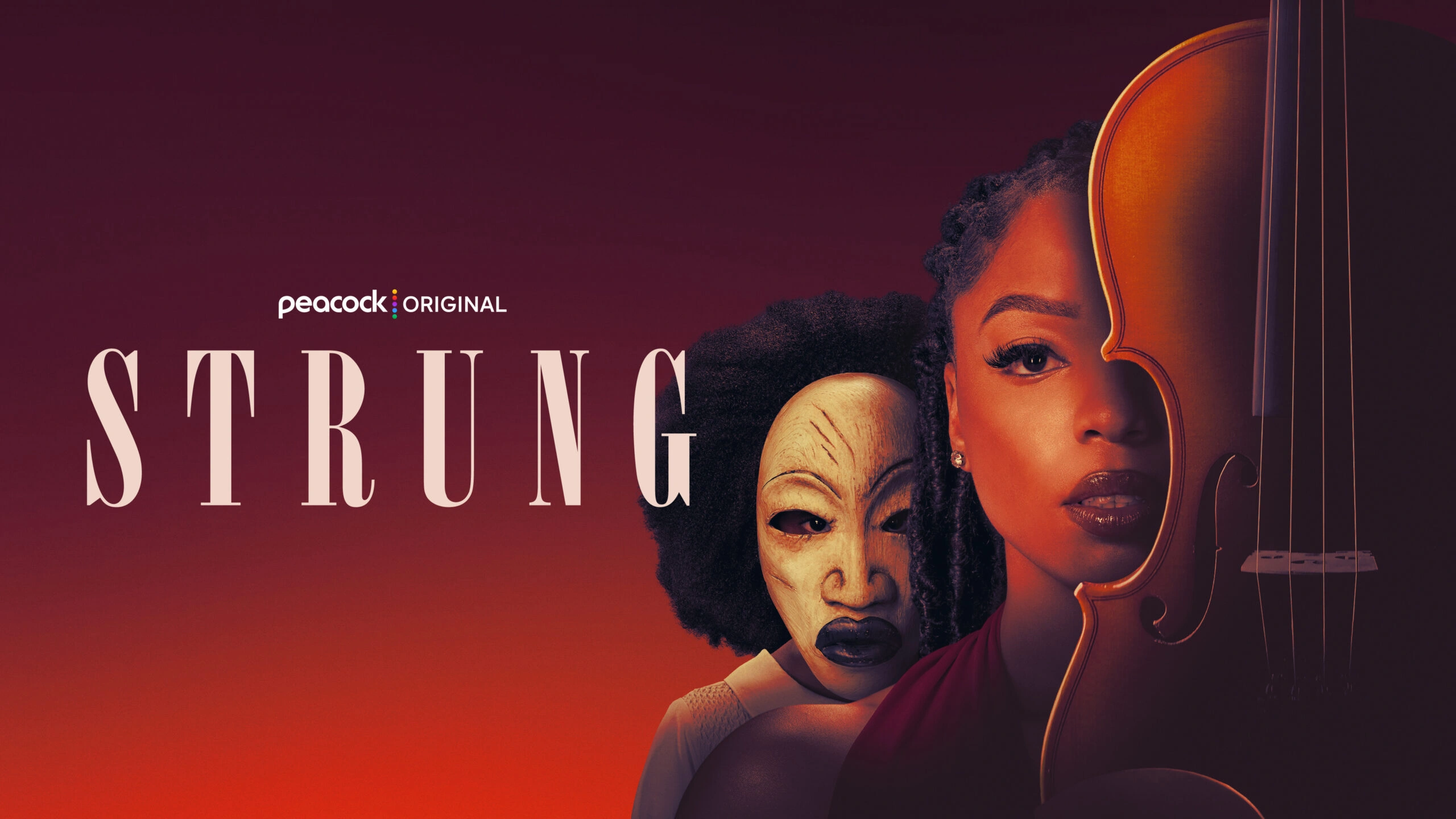
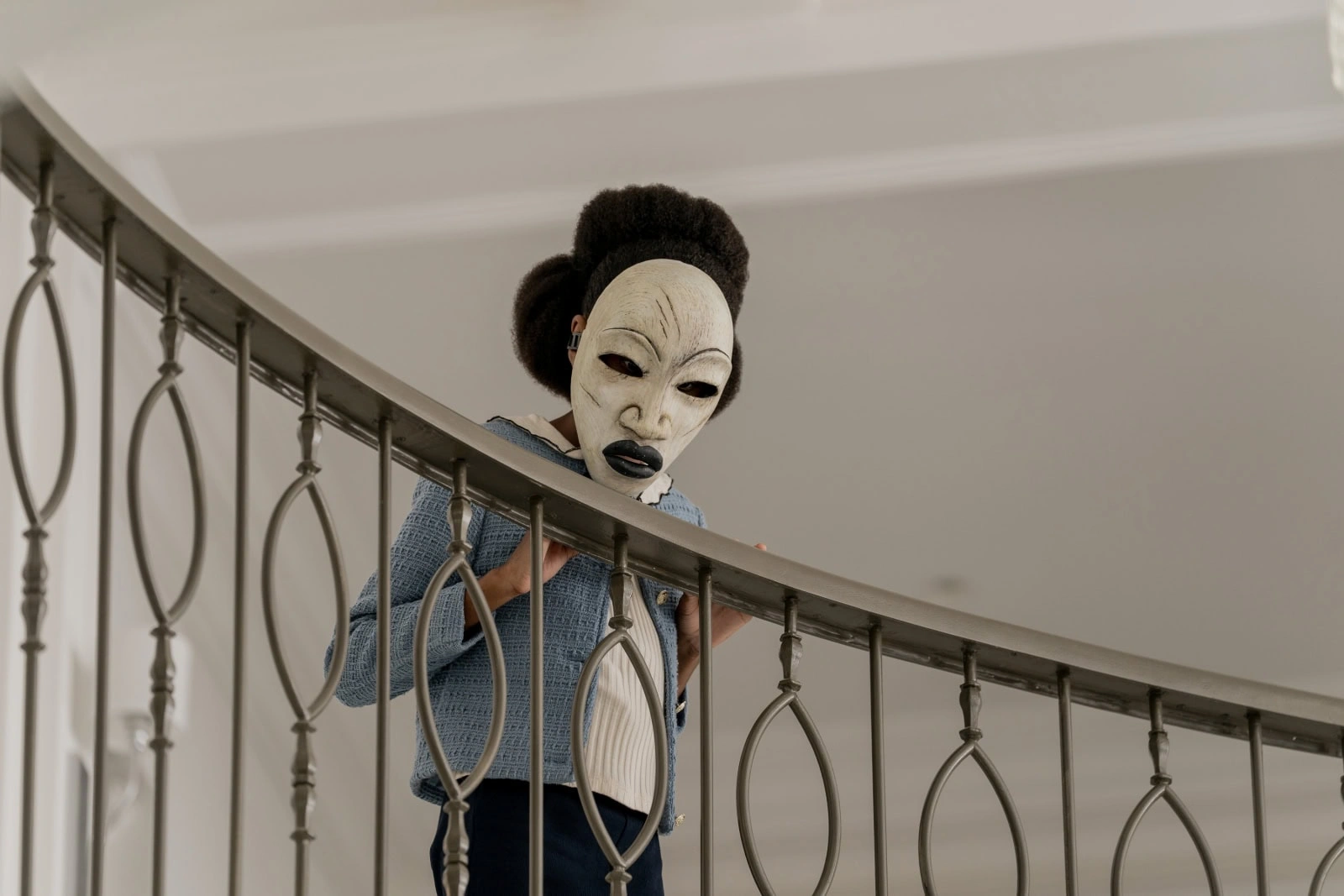
This is a good trap. Or it should be. Laila enters the Walker household and finds the kind of wealth that never looks lived in: white interiors, glossy surfaces, a staircase with the self-importance of a minor monarchy. Zuri wears a white-painted African wooden mask once connected to her dead father, speaks in ominous trivia, and warns Laila about dying in dreams.
Imani, Zuri’s pregnant mother, greets the new tutor with hostility cold enough to qualify as climate control. Marcus, Imani’s husband, turns out to be the man Laila recently slept with before she knew who he was. One could call this coincidence. The film calls it plot.
The House Knows What the Script Forgets
The Walker mansion is the film’s best character, which is rarely a compliment to the humans, but here it comes close. Production designer Keith Brian Burns makes the home feel less like a residence than a private museum curated by a nervous tyrant.
Laila’s new room, the handpicked clothes, the clean surfaces, the expensive emptiness: all of it tells her she has been welcomed and absorbed. The distinction matters. Hospitality in thrillers is often just captivity with better lighting.
Also Read




Greg Gardiner’s cinematography gives that captivity some real texture. The film frames Laila, Imani, and Marcus against gold, indigo, crimson, and polished white with a care that prevents the house from turning into sterile streaming wallpaper.
The day scenes can feel almost too bright, as if nothing corrupt could survive in so much light. The night scenes warm the rooms without making them safe. This is where Strung has its strongest argument: wealth does not hide monstrosity in darkness. It hires better lamps.
Zuri’s mask should be the film’s great emblem, but the script keeps converting symbols into explanations. At first, the child looks like a walking omen, the classic creepy kid whose silence carries a threat. Then the film ties her behavior to trauma after the murder of her rapper father.
That could have opened a sharper film about grief moving through Black childhood, performance, protection, and family myth. Instead, it becomes one station on a tour of thriller fixtures. The mask remains memorable because Romy Woods gives Zuri a guarded stillness that the film rarely earns elsewhere. She looks trapped inside an object adults have turned into meaning. Instinct, Explained to Death
Alan McElroy’s screenplay keeps returning to instinct, which is unfortunate because the film has so little trust in its own. Laila’s dead sister appears in nightmares and flashbacks, including the opening recital vision where her violin playing curdles and her fingers bend in impossible directions. It is a strong image, all artistic terror and body panic. For a moment, Strung seems prepared to make Laila’s instrument a site of horror, the place where ambition, guilt, and memory twist together.
Then the film starts explaining.
Audra spells out emotional connections that should have stayed unstable. Laila is haunted, yes, but she rarely seems to doubt her own perception. Bailey plays her with softness and sincerity, and she handles the violin material with convincing focus, but the role asks for a spiral the script never builds. Too often, Laila watches the mansion produce red flags and responds as if someone has mildly overcharged her for brunch. The film wants her vulnerability, then protects her from genuine unraveling.
The stranger version of the film belongs to Imani. Anna Diop gives the house its electrical system. Pregnant, furious, exhausted, and trapped in her own social performance, Imani enters scenes like someone holding a glass too tightly. Her hostility toward Laila can be cartoonish, but Diop makes even the cartoon lines snap. She is where the film’s paranoia concentrates. When Imani is onscreen, the thriller remembers pressure. When she leaves, the air leaks out.
Marcus is the weakest hinge. His prior hookup with Laila should turn the job into a moral vise, yet Lucien Laviscount is asked to play too many functions and too few desires: temptation, husband, stepfather, secret, clue. He becomes handsome narrative furniture. Expensive, placed carefully, not very useful.
The Pleasure of Bad Decisions
Lynn Whitfield understands the assignment so completely she appears to have written a private dissertation on Audra’s temperature. Her first praise of Laila’s playing is velvet wrapped around wire. She does not need to raise her voice because Audra’s power lies in making other people lean closer. Whitfield turns small pauses into threats, then lets the melodrama arrive without shame.
Coco Jones has a different job as Jasmine, Laila’s skeptical best friend, and the film brightens whenever she punctures the mood. During a visit with Zuri’s other grandmother, Laila says she does not believe the story she has just heard. Jasmine answers, “now tell your face.” It is the film’s clearest diagnosis of itself: everyone keeps announcing one thing while visibly performing another.
The soundscape has taste. The mix of classical, jazz, and hip-hop ties Laila’s ambition to the family history around Zuri’s father, while Ali Shaheed Muhammad and Adrian Younge give the film a better sense of rhythm than the edit can sustain. The noticeable ADR is harder to forgive. A thriller can survive many absurdities. Voices that seem pasted onto faces are not one of them.
At nearly two hours, Strung stretches a lean pulp idea until the seams show. The viper in the closet is less a twist than a decorative emergency. The late escalation aims for danger and lands somewhere near luxury soap opera with a higher catering budget.
Still, a strange entertainment remains inside the mess. Lee may not have made a persuasive psychological thriller, but he has made a glossy object with enough bad choices, good lighting, and Whitfield side-eye to keep it from becoming dead air. Call it prestige-adjacent nonsense. The hyphen is doing heroic labor.
The sleek psychological suspense thriller Strung celebrated its world premiere as the opening night film of the 30th anniversary American Black Film Festival on May 27, 2026, before launching globally for exclusive digital streaming on Peacock on June 26, 2026. Directed by Malcolm D. Lee and produced through a joint venture between Blumhouse Productions and Tyler Perry’s Peachtree & Vine, the film follows Laila Calloway, a highly talented but struggling classical violinist in Los Angeles who accepts a lucrative private tutoring job for the enigmatic granddaughter of an influential family. Moving into their luxurious estate, she becomes ensnared in an opulent world of shifting realities and unsettling family secrets that rapidly threaten her sanity.
Where to Watch Strung (2026) Online


Full Credits
Title: Strung
Distributor: Peacock
Release date: May 27, 2026 (American Black Film Festival World Premiere), June 26, 2026 (Peacock Streaming Release)
Running time: 119 minutes
Director: Malcolm D. Lee
Writers: Alan B. McElroy, Matthew Mixon
Producers and Executive Producers: Tyler Perry, Jason Blum, Tim Palen, Malcolm D. Lee, Dominique Telson, Philip Waley, Shaun S. Sutton, Alan B. McElroy, Giselle Johnson-Morris
Cast: Chlöe Bailey, Lynn Whitfield, Lucien Laviscount, Anna Diop, Coco Jones, Romy Woods, Donna Biscoe, Shaun Sutton
Director of Photography (Cinematographer): Greg Gardiner
Editors: Paul Millspaugh
Composer: Ali Shaheed Muhammad, Adrian Younge
The Review
Strung
Strung has a fine thriller premise: music, grief, wealth, a masked child, a mansion scrubbed clean enough to suggest moral infection. The trouble is that the film keeps mistaking ingredients for pressure. Laila’s trauma, Zuri’s mask, Imani’s fury, and Audra’s honeyed menace all point toward a richer paranoia machine, then the movie chooses soap bubbles and a snake in a closet. Still, Lynn Whitfield and Anna Diop know exactly which film they are in, and sometimes that is enough to keep the floor from collapsing.
PROS
- Lynn Whitfield’s icy control
- Anna Diop’s charged hostility
- Polished mansion atmosphere
- Strong musical texture
- Some amusing pulp energy
CONS
- Bloated runtime
- Weak psychological tension
- Laila’s trauma feels over-explained
- Twists lack bite
- ADR distracts from performances