














Chaiken cuts the Lunachicks like a band that never learned to enter a room quietly. The drums arrive first, then the old stage footage, then the sense that the frame itself has been kicked open by someone in ripped tights and a grin sharp enough to draw blood. Pretty Ugly: The Story of the Lunachicks does what the strongest music documentaries do: it makes the archive feel unstable, alive, still leaking heat.
Written and directed by Ilya Chaiken, the film traces the New York punk band from teenage friendship through underground cult status, touring exhaustion, internal fractures, and a 2021 Webster Hall reunion. Theo Kogan, Gina Volpe, Sydney “Squid” Silver, Sindi Benezra, Becky Wreck, and Chip English emerge from old VHS murk and present-day interviews with the texture of people who survived both the road and one another. The movie knows the rock-doc skeleton is familiar. It puts better meat on it.
The Room Before the Band
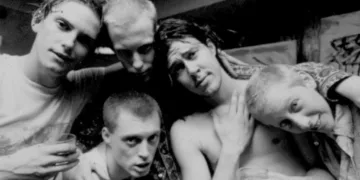
The film’s best historical instinct is its treatment of New York as pressure, not scenery. The East Village of the late 1980s is not handed to us through postcard decay. It appears in the details: teenagers sneaking into shows with fake IDs, CBGB’s as a room with mythic lighting and sticky floors, handmade flyers taped to poles, young women learning freedom by standing too close to danger. When Howie Pyro tells the girls they should start a band before they can properly play, the advice lands like a door being thrown open.
Chaiken frames the early Lunachicks as an act of collective self-invention. Kogan, Volpe, and Silver meet as young New Yorkers with more nerve than technique; Benezra, older and already tied to downtown life, becomes a kind of punk Virgil with an apartment key.
The fact that they initially sound raw matters less than the speed with which they understand performance as armor. Tutus, wigs, fake blood, vinyl nurse outfits, grotesque band art, songs called “Jan Brady,” “Babysitters on Acid,” and “Bitterness Barbie”: these are not props scattered around a juvenile joke. They are a visual code.
Joey Ramone introducing them at CBGB’s gives the film one clean bolt of rock history. Thurston Moore and Kim Gordon mistaking them for a noise band and connecting them to Blast First gives it another. The joke is that the misunderstanding was also a form of recognition. The Lunachicks looked like chaos from a distance. Up close, the chaos had blocking.
Also Read





Girls to the Front, Men to the Exit
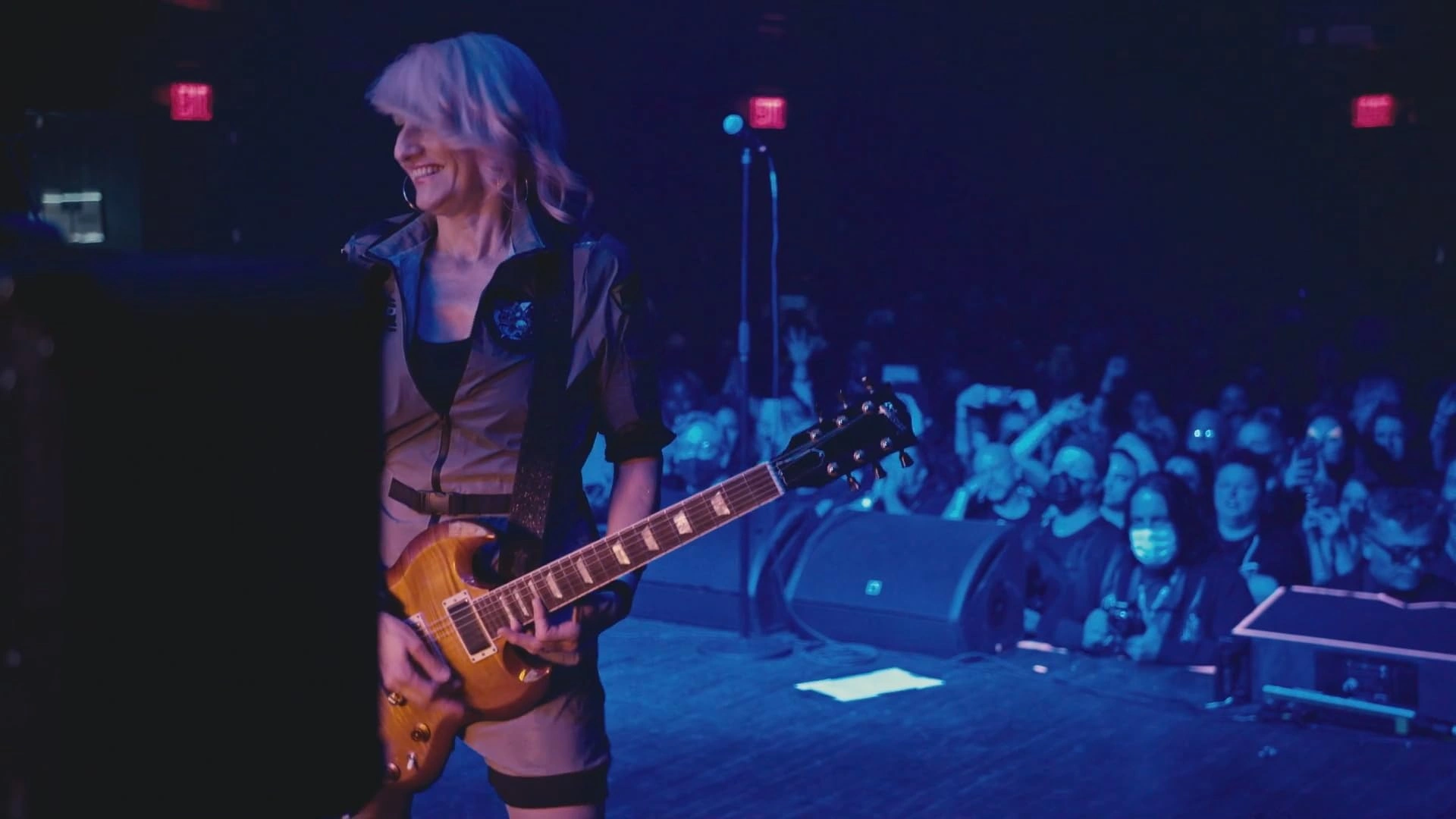
The concert footage has a violent social geometry. Kogan stands at the edge of the stage, often brightly lit against a room that wants to test her, and the frame keeps registering the ugly mathematics of punk spaces built by men who thought women were decoration until women became the threat.
Pint glasses thrown. Men exposing themselves. Chants from Offspring fans demanding bodies instead of songs. Blink-182 treating Warped Tour misogyny like locker-room weather. Radio programmers acting as if one band with women on the playlist had filled the quota for the month.
Chaiken is careful here. The film does not trap the Lunachicks in injury. It lets them answer with volume, mockery, musicianship, and direct confrontation. Kogan calling out men from the stage carries the charge of a tactical move: she is not pausing the show, she is taking command of the room’s sightlines. Sindi Benezra’s description of protecting women in the crowd gives that stance a physical shape. Those fans were not an abstract constituency. They were bodies at the front of the stage, close enough to be shoved, close enough to be defended.
The abortion-rights material deepens the film’s politics without flattening the band into a slogan. Kogan’s Rock for Choice presence, the tiara reading “FEMINIST KILLJOY,” the DC march footage, the sign aimed at anyone trying to legislate a woman’s body: these moments belong to the same performance grammar as the fake blood and Barbie grotesquerie. The Lunachicks turned the female body, mocked and policed elsewhere, into a site of noise.
Archive With Teeth
Chaiken’s craft is fast, but it is not sloppy. The documentary moves between current interviews, flyers, photographs, fan letters, tour footage, and club recordings with a punk rhythm that still allows emotional beats to breathe. A lesser film would treat the VHS material as nostalgic seasoning. Here, the degraded image becomes evidence. The blown-out whites, smeared blacks, and unstable camera motion give the performances a forensic charge. The past is not clean. Good.
The interviews carry a necessary counterweight. Volpe’s archive, with its saved flyers and ephemera, becomes one of the film’s quiet visual anchors, a box of proof against cultural forgetfulness. Kogan’s present-day reflections give the stage persona a scarred intelligence. Silver’s bass work and the band’s rhythm history keep pulling the film back to craft, especially when Becky Wreck, Kate Schellenbach, and Chip English enter the story. The documentary understands that drummer changes in a punk band are never mere personnel notes. They alter the body temperature of the music.
Conflict gets space without tabloid hunger. Band romances fray. Substance abuse shadows the road. Credit, money, beauty, and attention leave bruises. Sindi’s exit carries the sting of someone watching the band tighten its sound and realizing that the thing she helped build has begun moving without her. Chaiken does not overlight these passages. She lets the corners stay dark.
Reunion Light
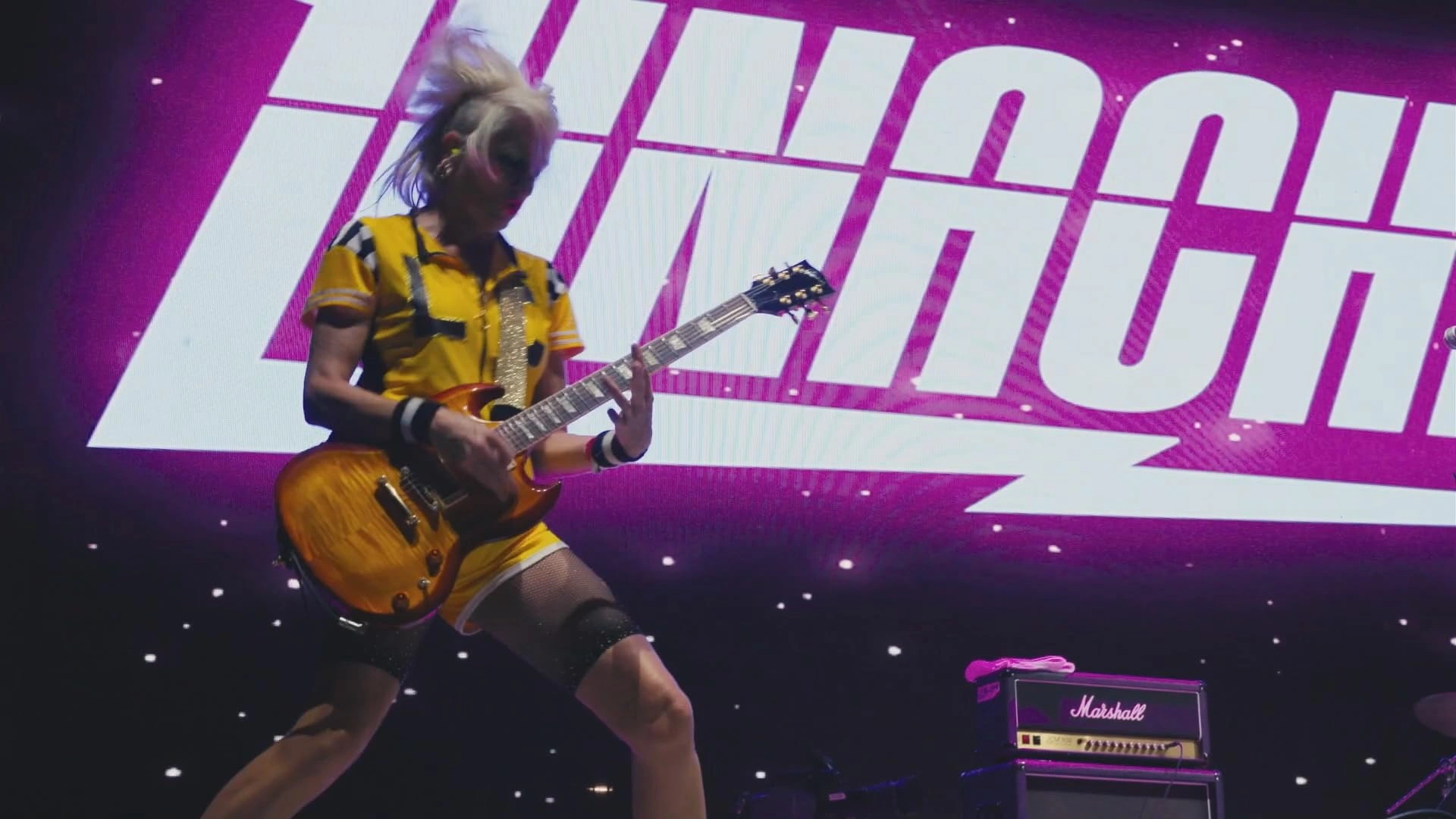
By the time the 2021 Webster Hall reunion arrives, the film has earned the glow it gives the stage. COVID delays sit in the background, but the emotional suspense is older: can a band built from youth, anger, friendship, and unresolved history step back into the same light without becoming its own tribute act?
The answer comes in the sound. Kogan’s voice still has force. Volpe’s guitar cuts through the reunion footage with the authority the archive has been arguing for all along. The rhythm section does not play like a museum exhibit dusted off for sentimental purposes. The band sounds dangerous enough to justify the nerves that preceded the show.
Then Sindi joins them. Chaiken shoots the moment without smothering it in reverence, which is exactly right. The power lies in the gesture: a former member stepping back into the frame, a history making room for the person it once pushed out, a stage briefly becoming less a battlefield than a repair shop with amplifiers.
Pretty Ugly: The Story of the Lunachicks gives the band what the industry withheld: scale, attention, and a frame that can hold their noise without taming it. The film’s structure may carry familiar rock-doc bones, but its best images have blood under the polish. VHS grit, stage glare, old flyers, fake blood, real fury. The Lunachicks do not look preserved. They look armed.
The music documentary Pretty Ugly: The Story of the Lunachicks secured its commercial and digital streaming rollout via Giant Pictures on April 24, 2026. Audiences looking to watch the film can currently find it available to rent or purchase across premium video-on-demand networks, including Amazon Prime Video and Apple TV. Incorporating an array of rare archival footage, the non-fiction narrative follows the riotous punk rock icons as they reunite after a twenty-year hiatus, charting their collective trajectory from gritty New York City teenagers to foundational feminist trailblazers of the 1990s grunge movement.
Where to Watch Pretty Ugly: The Story of the Lunachicks (2026) Online






Full Credits
Title: Pretty Ugly: The Story of the Lunachicks
Distributor: Giant Pictures
Release date: April 24, 2026
Rating: TV-MA
Running time: 91 minutes
Director: Ilya Chaiken
Writers: Ilya Chaiken
Producers and Executive Producers: Ilya Chaiken, Concord Originals
Cast: Gina Volpe, Theo Kogan, Sydney Silver, Sindi Benezra, Chip English, Becky Wreck, Kate Schellenbach, Donita Sparks
Director of Photography (Cinematographer): Ilya Chaiken Production Crew
Editors: Ilya Chaiken Post-Production Department
Composer: Lunachicks
The Review
Pretty Ugly: The Story of the Lunachicks
Pretty Ugly: The Story of the Lunachicks turns archive grit, stage glare, and old wounds into a punk document with pulse. Ilya Chaiken understands that the band’s legend lives in movement: Theo Kogan barking at hostile crowds, Gina Volpe’s preserved flyers, Sindi Benezra stepping back into the light at Webster Hall. The film’s shape is familiar, but its voltage is not. It gives the Lunachicks the frame history denied them, then lets them scorch it from inside.
PROS
- Electric archival footage
- Strong feminist punk context
- Moving reunion material
- Clear sense of New York grit
- Honest band conflict
CONS
- Familiar rock-doc structure
- Legacy section feels brief
- Some lineup drama compressed
- A few famous testimonials feel thin