


























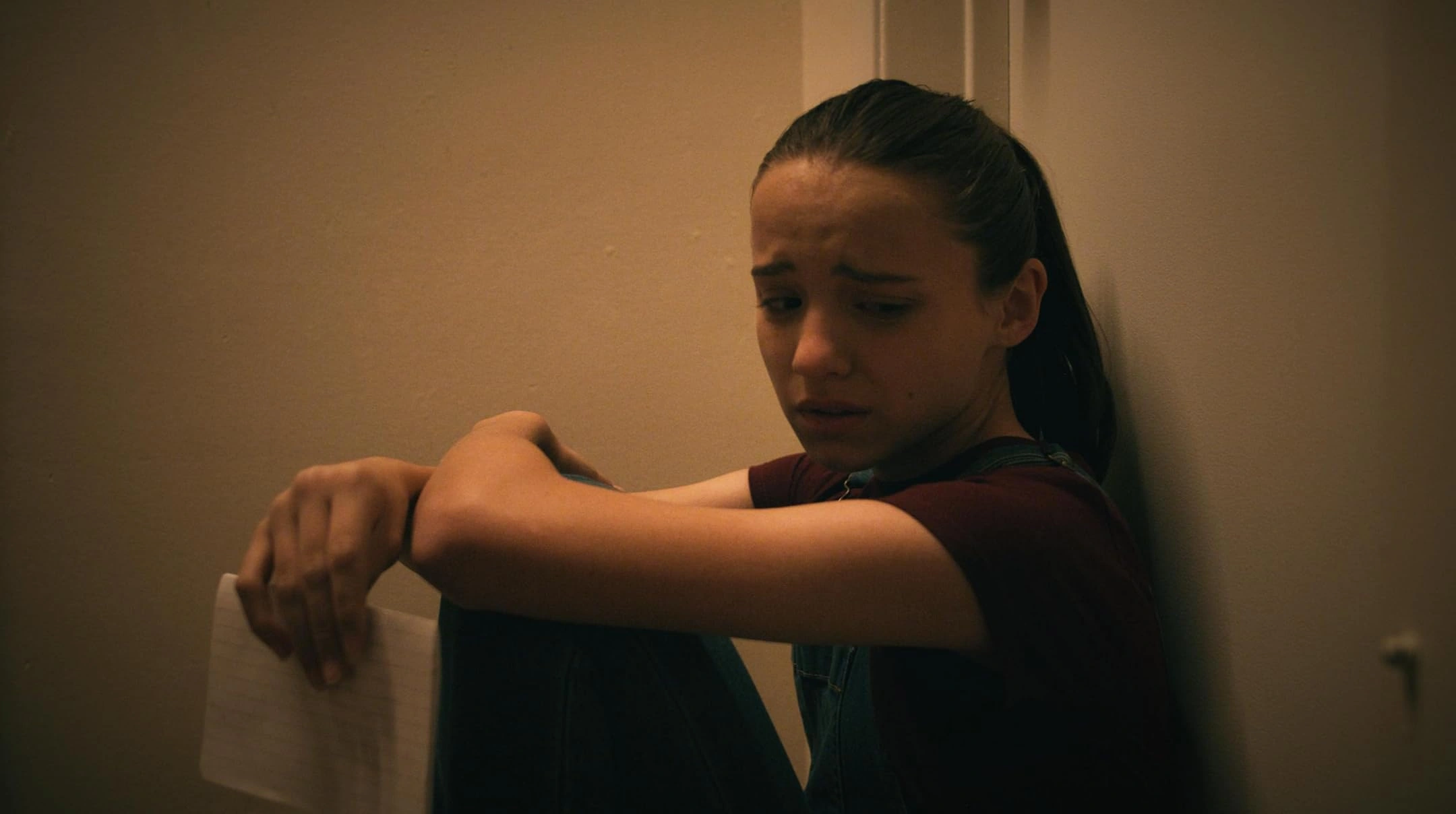

The comic shop in Captain Tsunami is the sort of place where adulthood goes to pretend it is still choosing nostalgia freely. Shelves, paper, color, old fantasies, the mild dust of preserved childhood. Glenn, played by P.J. Marino, has made a life there, or at least an arrangement that resembles one. Then Emma arrives with unfinished storyboard pages drawn by her missing mother, Desiree, and the shop stops being a refuge. It becomes an archive.
Aaron Sherry’s debut feature uses that shift well. The premise sounds, on paper, like a sentimental indie mystery: a twelve-year-old girl, a vanished parent, a wounded man with buried knowledge. The film is softer and stranger than that description suggests. Emma, played by Madeleine McGraw, does not bring Glenn a clue in the usual thriller sense. She brings him a language he once understood and has spent years refusing to read.
That may be the film’s sharpest idea. Fantasy is never innocent here. It comforts, yes, but comfort can become architecture. Live inside it long enough and the walls start locking from the outside.
A Past Drawn Out of Order
Desiree’s comic pages function as confession, map, hallucination, and warning. Sherry and Marino resist the clean machinery of the missing-person drama, where every scene turns a key and every key opens the next door. The past arrives in broken panels. Glenn’s history with Desiree and Malcolm comes through partial images, interrupted memories, and the unstable logic of art made under pressure.
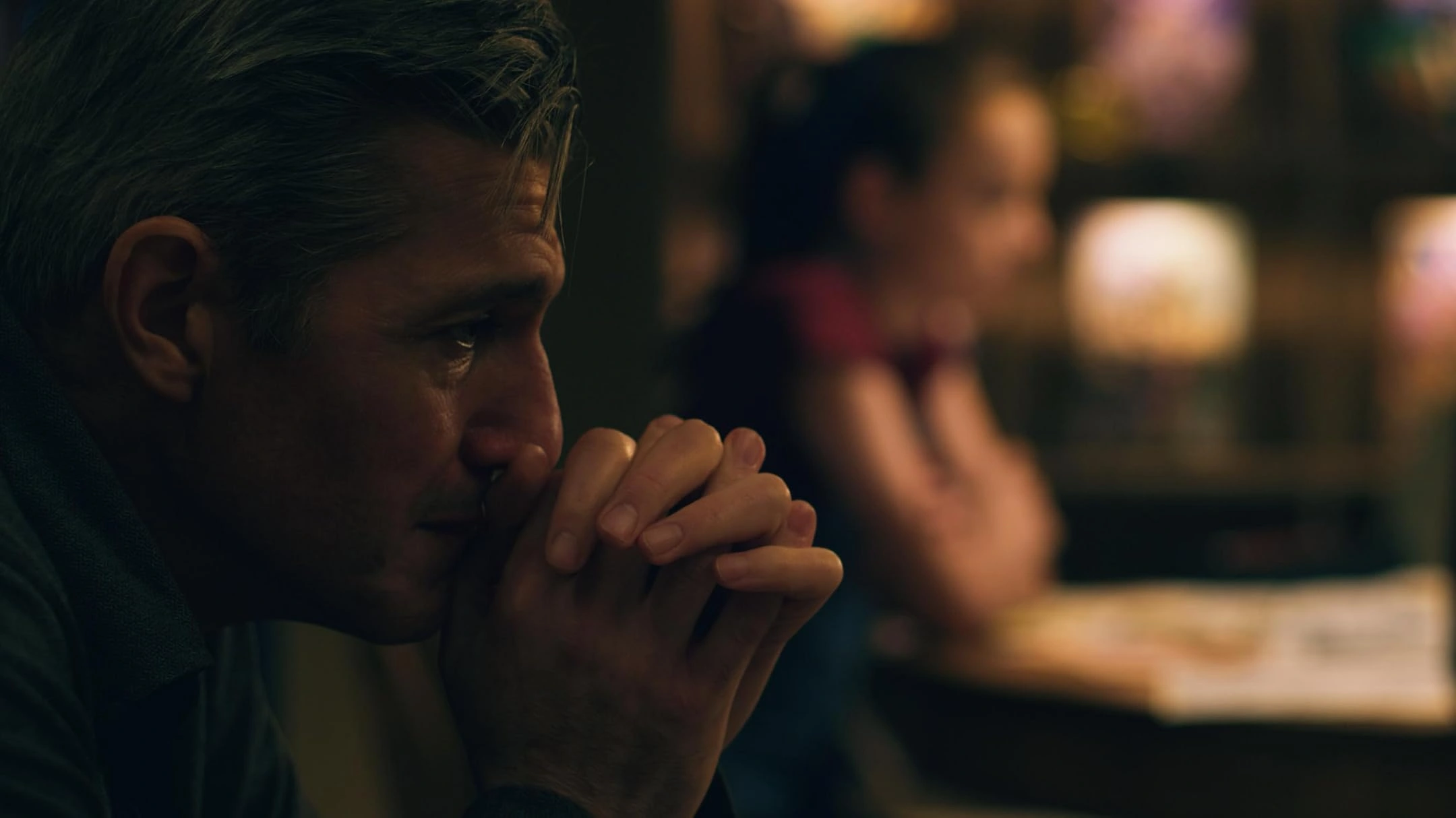
This fragmentation matters because the film is dealing with trauma, and trauma is a terrible editor. It cuts without rhythm. It repeats shots you thought were gone. It withholds the one scene you need. Glenn’s guilt is built from that same disorder. He did not commit some grand melodramatic betrayal. He withdrew. He survived himself by becoming absent, which is a smaller sin until one notices how large its shadow has become.
The triangle between Glenn, Desiree, and Malcolm gives the film its moral pressure. These three grew up connected by orphanhood, and that shared wound becomes both bond and inheritance. Malcolm, played by Craig Frank, stayed where Glenn left. The film does not make this saintly, which is wise. Staying has its own fatigue, its own resentment, its own private vanity. Still, Malcolm’s presence beside Desiree and Emma exposes Glenn’s chosen isolation as something less neutral than he would like.
The final movement is the place where the structure loses some nerve. Glenn and Malcolm’s reconciliation, followed by their implied co-fathering of Emma, carries emotional logic, but the film moves through it too quickly. Repair is treated as a door one steps through. In reality, it is paperwork, repetition, humiliation, and someone remembering to buy cereal on a Tuesday. Cinema often hates that part. Life insists on it.
Illness Without Reduction
Desiree is the film’s most difficult figure because she is both absent and everywhere. Tessa Munro has to play a woman filtered through memory, art, fear, love, and illness, and the film’s respect for her is one of its major strengths. Her psychosis is not softened into poetic eccentricity, nor is it turned into horror-movie otherness. She is a mother trying to speak. She is an artist losing contact with the shared world. She is also, plainly, a person whose suffering hurts the people around her.
That last part is important, and uncomfortable. Some dramas about mental illness become so eager to avoid stigma that they erase damage. Others become punishment machines. Captain Tsunami finds a better, messier space. Desiree’s comic is beautiful, frightening, protective, and dangerous. It lets her encode feeling when ordinary speech fails, but it also reveals how far reality has begun to bend around her.
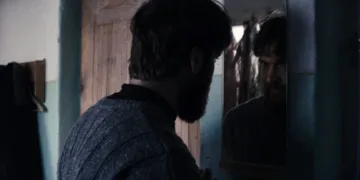
Marino’s Glenn works because he does not overplay revelation. When he studies the pages Emma brings him, the performance suggests recognition before comprehension. He knows the emotional handwriting before he understands the message. His face carries the expression of a man reading a letter that should have reached him years ago, then realizing he may have been avoiding the mailbox.
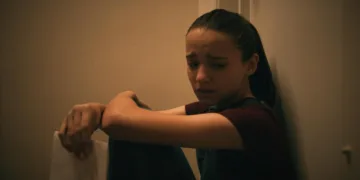
McGraw gives Emma a necessary directness. She is not a precocious puzzle-solver dropped into adult grief for charm points. Her need is practical and brutal: she wants her mother found, and she believes the pages matter. The film’s emotion often comes from the gap between Emma’s faith in clues and Glenn’s knowledge that some clues lead to guilt rather than answers.
Panels, Light, and the Trouble with Escape
Gillian Buhlman’s art direction gives the comic sequences their strange power. The panels do not feel pasted onto the film as decoration. They behave like another layer of memory, sometimes clarifying the past, sometimes contaminating it. When the Captain Tsunami figure appears, the effect is both playful and ominous, a childhood fantasy walking around with adult damage inside its costume (a deeply unfair job for any superhero).
Robert Lam and Jennifer Hook’s cinematography builds a careful visual argument around temperature. The comic shop has warmth, amber safety, and the inviting clutter of a place designed to keep the world out. The exterior spaces lean colder, with blues and blacks pressing against Glenn’s sanctuary. The irony is almost architectural: the warmest place in the film is also where Glenn has frozen himself.
The flashbacks carry brighter life, which gives them a painful charge. Memory, here, is not faded. It is overlit. Desiree, Malcolm, and Glenn seem most alive in the very passages that prove how much has already been lost. That choice could have tipped into easy sentiment, yet Sherry keeps returning to the unfinished pages, to the fact that art preserves feeling without solving it.
Captain Tsunami is somewhat predictable in the shape of its revelations, and its ending wants emotional settlement before the characters have earned the daily labor of it. Still, the film understands something many louder comic-book movies miss completely: the fantasy of rescue is often born from the terror that nobody is coming. Glenn spends the film learning that this terror was never his alone.
The independent family drama Captain Tsunami celebrated its world premiere as the closing night film at the Dances With Films festival on June 29, 2025, before launching globally for digital streaming on April 24, 2026. Audiences can currently rent or purchase the film on major video-on-demand networks, including Amazon Prime Video and Apple TV. The heartfelt story follows a reclusive comic book shop owner whose isolated routine is completely disrupted when a runaway twelve-year-old girl arrives at his doorstep carrying cryptic, unfinished storyboard art drawn by her missing mother.
Where to Watch Captain Tsunami (2025) Online



Full Credits
Title: Captain Tsunami
Distributor: Persimmon, Apple TV, Prime Video
Release date: June 29, 2025 (Dances With Films World Premiere), April 24, 2026 (Digital Streaming Release)
Rating: TV-14
Running time: 93 minutes
Director: Aaron Sherry
Writers: P.J. Marino
Producers and Executive Producers: Michael Buhlman, Karla Buhlman, Jim Wareck, P.J. Marino, Tessa Munro, Amy Bloom
Cast: Madeleine McGraw, P.J. Marino, Craig Frank, Tessa Munro, Jeremy Sisto, Archie Kao, Cameron Meyer, Rick Howland, Camille Mana, GloZell Green, Joe Nieves
Director of Photography (Cinematographer): Robert Lam, Jennifer Hook
Editors: Aaron Sherry
Composer: Todd Beeson
The Review
Captain Tsunami
Captain Tsunami uses comic-book fantasy like a cracked mirror: bright panels reflecting a life that has gone dark. Aaron Sherry’s film is strongest when Glenn reads Desiree’s unfinished pages and realizes art can preserve love while disguising collapse. P.J. Marino and Madeleine McGraw give the mystery a wounded pulse, and the warm comic-shop imagery turns refuge into a kind of emotional bunker. The ending hurries toward repair, which feels too clean for wounds this old. Still, the ache remains.
PROS
- Strong comic-book framing device
- P.J. Marino’s guilt-heavy performance
- Madeleine McGraw’s emotional clarity
- Careful treatment of Desiree’s illness
- Warm, expressive visual design
CONS
- Rushed final resolution
- Some predictable story turns
- Glenn’s new father role needs space
- Mystery structure can feel familiar