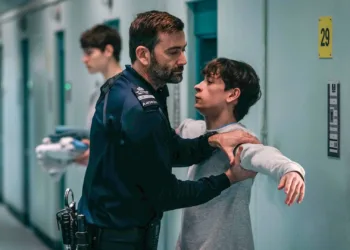







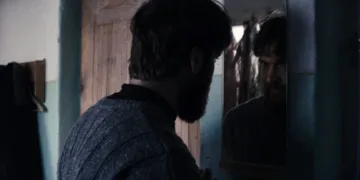










Make-believe has a paper trail here, and the paper matters. James Litchfield’s Alphabet Lane, a darkly funny Australian relationship drama, turns an invented farmer and his wife into the most revealing presences in a young couple’s home.
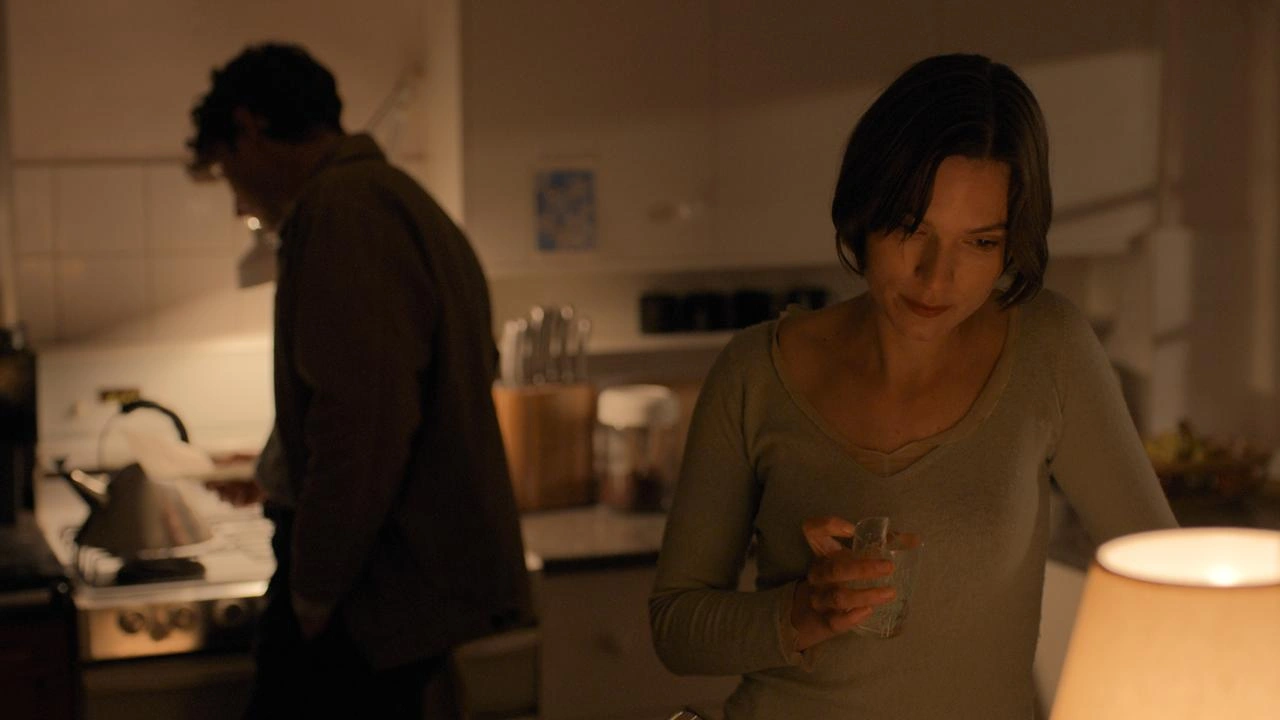
Anna and Jack have left Sydney for rural New South Wales, where open space exposes the distance already inside them. He works days as an engineer on the Snowy Hydro. She works nights as an ER doctor. Their schedules pass like shutters closing in opposite directions.
The premise sounds perilously thin on paper. Jack jokes that he met a farmer named Joe, then pretends to phone him and invite him for dinner. Anna joins the bit, inventing Joe’s wife Michelle with the ease of someone grateful for any new voice in the room. The joke should evaporate by morning. Instead, it acquires stationery.
The Lie Learns Manners
The smartest choice in Litchfield’s script is the shift from spoken improvisation to handwritten letters. Anna writes to Joe knowing Jack will read the page. Jack answers through Michelle knowing Anna is listening from behind the mask. The conceit gives them a confessional booth with no priest, which is convenient, since absolution would ruin the game.
Those letters let Anna confess what direct speech cannot hold. Her difficulty with the isolation, the dead air of the house, the feeling of having followed Jack into a life that fits him better, all surface through the invented couple. Jack, meanwhile, finds in Michelle a receptive figure who does not accuse him by existing. Joe and Michelle become neighbours, flirtations, parental substitutes, and alibis. They are fake in the least interesting sense. Their function is painfully real.
Litchfield understands that a private fiction changes shape once performed for outsiders. Anna and Jack begin mentioning Joe and Michelle to visiting friends, which gives the lie a social body. The best comic discomfort arrives when those friends raise the names with a local who seems to know everyone in the area. Suddenly the imaginary couple has to survive civic scrutiny. Rural life, so often sold as anonymous freedom, becomes a surveillance system made of politeness and memory.
Faces in Low Weather
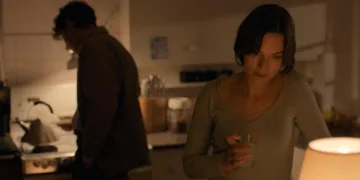
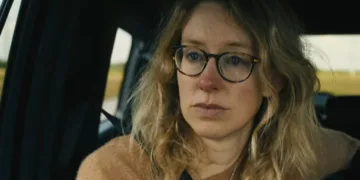
Tilda Cobham-Hervey gives Anna a guarded, luminous unease. Early scenes of her moving through the house before night work carry the exhaustion of someone who has not yet admitted what she has lost. A shot of her slowly eating lettuce risks absurdity, then curdles into character study. The action is banal. The duration makes it accusatory.
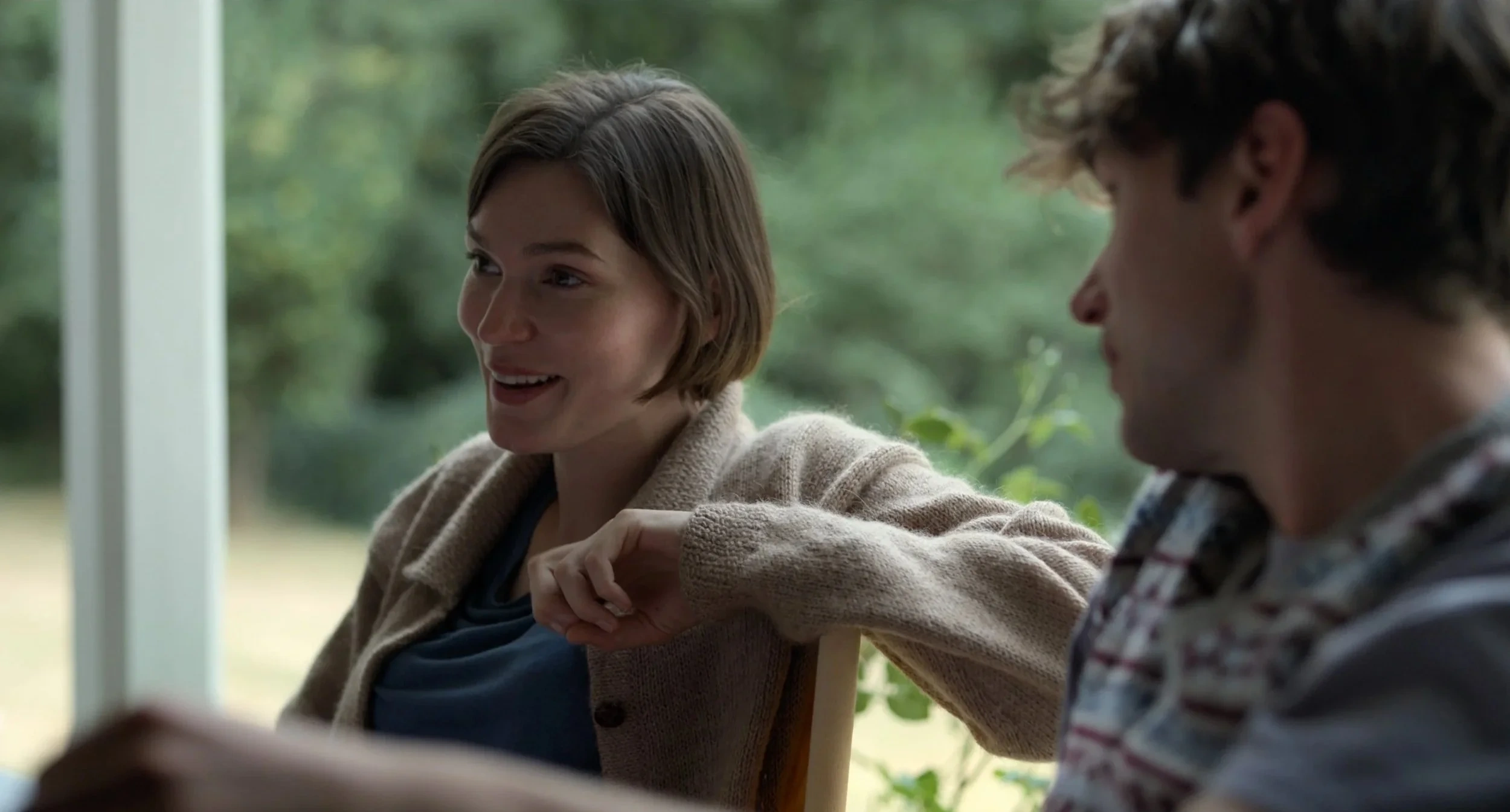
Nicholas Denton plays Jack with a softer evasiveness. He is not cruel, which makes the distance between them harder to dismiss. When he fake-calls Joe at the dinner table, Denton lets the joke remain casual, almost boyish. Later, when the letters start carrying real feeling, that same ease begins to look like a defense mechanism. His comfort in the country is not villainy. It is a kind of blindness, and blindness can do plenty of damage without raising its voice.
Litchfield’s direction refuses decorative panic. With cinematographer Grégoire Lière, he keeps the Monaro Plains open and pale, often catching the dry grass and low hills at dusk or first light. Those images do not romanticize the move. They make distance visible. The frame often seems to have room for other people, and that absence becomes the film’s quietest pressure.
Editor Paul Rowe lets pauses remain slightly too long, especially around the letters and the couple’s shift-change encounters. The timing matters. A quicker cut would turn the film into quirky farce. A heavier one would tip it into rural misery. Alphabet Lane sits in the narrow band between embarrassment and dread, where a joke can still be funny after it has become dangerous.
The Thriller That Stays at the Door
Calling the film a thriller would send viewers down the wrong road, probably one with worse lighting. Litchfield borrows the architecture of a psychological thriller: the invented figures, the leaking lie, the possibility that the couple’s game might start governing them.
Yet he keeps the danger internal. No shadowy Joe appears at the fence. Michelle does not materialize in a hallway. The menace is domestic and grammatical: once Anna and Jack have created these names, every sentence has to account for them.
The Ern Malley reference sharpens the film’s interest in hoax and authorship. A fake poet, a fake farmer, a fake wife: Australian art has a lively history of invented figures escaping their makers’ hands. Here, the escape is intimate rather than public. Joe and Michelle do not embarrass a literary establishment. They expose a marriage-sized silence.
The final stretch is the film’s weakest pressure point. Litchfield edges toward a sharper rupture, then pulls back into ambiguity that feels partly earned and partly evasive. A clean resolution would flatten the premise, yet the abruptness leaves some emotional debt unpaid. Still, the closing unease fits the film’s chosen grammar. In this house, fiction finds the lock before anyone reaches the door.
The darkly comedic Australian psychological thriller Alphabet Lane made its acclaimed world premiere at the Melbourne International Film Festival in August 2025 before launching across Australian theatrical networks via distributor Screen Inc. on April 23, 2026. Audiences can look for the independent production at participating regional cinema locations and specialized arthouse venues. The story follows Anna and Jack, a young city couple who relocate to a remote pocket of the New South Wales countryside and begin inventing imaginary neighbors to handle their compounding loneliness, only to lose complete control of the game as real letters from their fictional friends start turning up in their mailbox.
Full Credits
Title: Alphabet Lane
Distributor: Screen Inc.
Release date: August 2025 (Melbourne International Film Festival World Premiere), April 23, 2026 (Australia Wide Theatrical Release)
Running time: 80 minutes
Director: James Litchfield
Writers: James Litchfield
Producers and Executive Producers: Lucinda Reynolds, Joey Charlton, James Litchfield
Cast: Tilda Cobham-Hervey, Nicholas Denton, Henry Nixon, Bishanyia Vincent, Helana Sawires, Will Johnston, Lily Stewart, Alan Dukes, Serdan Bircan
Director of Photography (Cinematographer): Grégoire Lière
Editors: Paul Rowe
Composer: Mark Bradshaw
The Review
Alphabet Lane
Alphabet Lane turns a rural in-joke into a chamber piece about loneliness, invention, and the moral afterlife of make-believe. James Litchfield keeps the frame quiet, letting letters, pauses, and the Monaro Plains do the unsettling work. Tilda Cobham-Hervey and Nicholas Denton make Anna and Jack’s intimacy feel tender, strange, and faintly airless. The final act slips where a sharper cut might have wounded deeper, but the film’s unease lingers.
PROS
- Cobham-Hervey’s expressive restraint
- Denton’s gently evasive warmth
- Strong letter-writing device
- Landscape used as emotional pressure
- Canny tonal control
CONS
- Abrupt final stretch
- Thriller framing may mislead
- Conceit slightly strains feature length
- Some early exchanges feel stilted