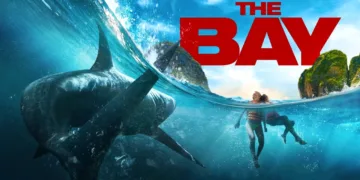



























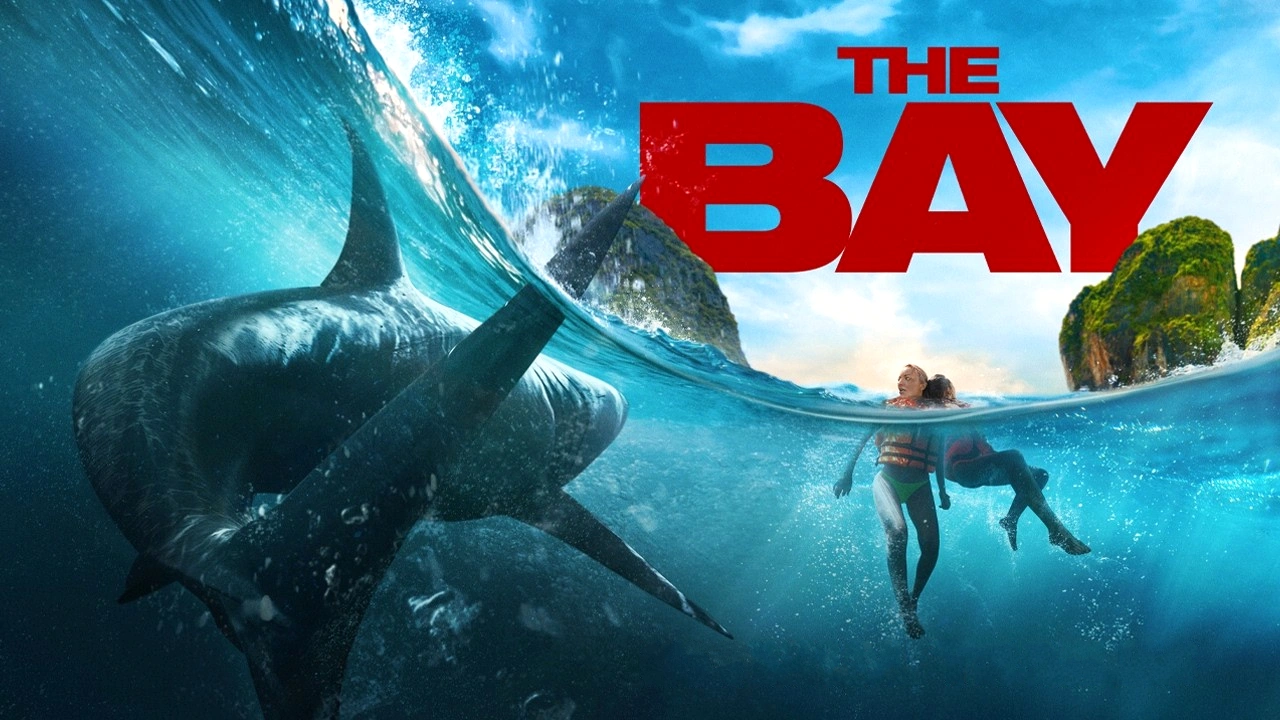

Helge Gerull’s camera rises and sinks with the tide until the horizon itself seems unreliable. The movement gives The Bay its clearest idea: safety is never fixed once Emma and Lani step onto Mandal’s boat. Phil Volken’s Thailand-set survival thriller sends the two nurses from a destination wedding into coastal waters where a shark-feeding tour collapses into panic, injury, and a failing vessel.
The setup is lean. Emma’s attraction to Mandal provides the invitation, Lani brings warmth to their friendship, and Ruhan arrives as Mandal’s wary crewman. Volken delays the first major attack until near the midpoint, using Mandal’s lessons about tiger sharks to frame the animals as hunters rather than villains. “Sharks hunt, humans kill,” he says. The line carries the entire moral thesis on its back. It also sounds like it knows it is doing so.
Sunlight Without Innocence
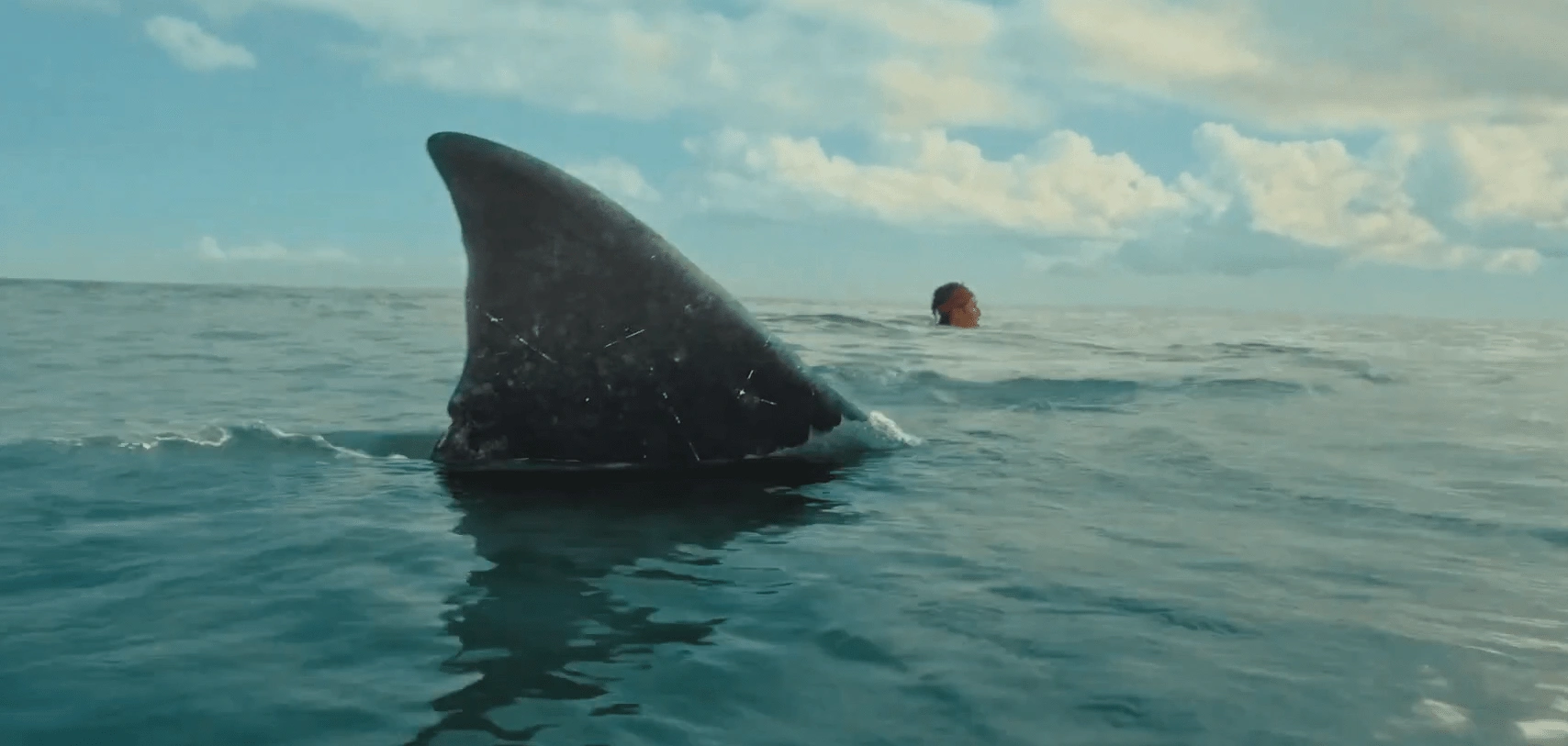
Shark films usually use darkness, murky water, or restricted framing to hide the threat. The Bay chooses exposure. The water is clear, the sky is bright, and Gerull’s wide-angle compositions let the coastline remain visible behind the stranded group. This creates a peculiar psychological trap. Rescue appears close enough to imagine, yet the camera offers no credible path toward it.
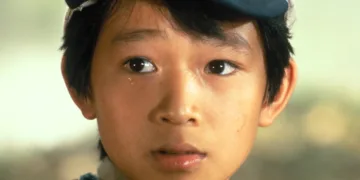
The daylight also strips the characters of visual cover. Ruhan’s panic begins when a large tiger shark becomes tangled in the bait chain. His earlier bite has left him terrified, and Ta’imua plays that fear through rigid posture and sudden, stabbing gestures.
Once he attacks the shark, the group’s fragile order disintegrates. Volken frames the incident as a moral choice made under pressure, but the choice is scarcely free. Trauma has already narrowed Ruhan’s field of action before the knife enters the water.
The film then simplifies him into its human antagonist. Emma, Lani, and Mandal receive acts of courage, medical care, or sacrifice. Ruhan, the sole local character, receives cowardice and escalating selfishness. The distribution is too neat. Moral darkness lands on the one figure already separated from the American trio, and the screenplay never gives him enough interior life to complicate the image.
Teeth at Water Level
The shark work is strongest when the production trusts physical presence. Practical fins cut across the surface near the actors, a tail breaks the water with convincing weight, and the animatronic elements give hands and bodies something solid to strike against. These shots do not need frantic cutting. Their force comes from proximity.
Gerull’s water-level close-ups are especially effective. The lens moves with the natural swell, so a face can vanish behind a small wave before returning in another position. That brief loss of visual information creates suspense through occlusion, the same basic principle noir uses when a doorway hides half a room. Here, the ocean becomes the doorway.
The attacks are restrained. Wounded bodies drift away rather than explode into spectacle, and one feeding sequence grows from tentative bites into a violent frenzy. Gad Emile Zeitune’s score supports the escalation without announcing each turn too early. The film is less successful when stock footage and digital compositing enter the frame. Spatial relationships become uncertain, and the sharks appear pasted into water that had previously felt tactile.
The Food Chain Tilts
Francesca Eastwood carries the physical burden as Emma, especially once fear gives way to triage. Her nursing skills matter during the injury scenes, and her grief registers most clearly when the script stops feeding her explanatory dialogue.
Dani Oliveros gives Lani a loose, affectionate energy that makes their bond credible before the situation demands heroics. Alexander Wraith keeps Mandal composed through clipped instructions and controlled movement, turning calm into a form of authority.
Volken’s ecological argument is easy to read. Humans bait the water, trap an animal, injure it, and then call the response monstrous. The trouble is that the film repeats this argument in speeches, then compromises it for a final encounter built around conspicuous CGI and implausible shark behaviour. The sequence abandons the restrained visual grammar that had given the earlier attacks their force. The water was telling the truth. The shark is where the film lies.
The film premiered on July 17, 2026, and is available to stream on Netflix. Best friends Emma and Lani, while attending a destination wedding in Thailand, find themselves trapped on a sinking tour boat in the middle of a dangerous tiger shark sanctuary.
Where to Watch The Bay (2026) Online





Full Credits
Title: The Bay
Distributor: Netflix
Release date: July 17, 2026
Rating: TV-14
Running time: 1 hour 27 minutes
Director: Phil Volken
Writers: Phil Volken
Producers and Executive Producers: Phil Volken, Francesca Eastwood, Alexander Wraith
Cast: Francesca Eastwood, Dani Oliveros, Alexander Wraith, Lachlan Taimua Hannemann, Ruhan, David Lipper, Phet Phumchai, Thanyaporn Thongchum
The Review
The Bay
The Bay finds its strongest tension at water level, where practical fins, drifting bodies, and Helge Gerull’s unsteady camera turn clear coastal water into a fragile trap. Phil Volken’s ecological argument carries merit, yet the script keeps announcing it through blunt dialogue, while Ruhan’s writing introduces an ugly representational imbalance. The final CGI encounter breaks the visual restraint that gave the earlier attacks their weight. The sharks behave convincingly until the film loses its nerve.
PROS
- Convincing water-level photography
- Effective practical shark effects
- Restrained, weighty attack scenes
- Warm chemistry between Emma and Lani
CONS
- Thin character development
- Blunt ecological dialogue
- Troubling treatment of Ruhan
- Weak final CGI encounter
- Uneven suspense