












Simon Ryninks takes the visual grammar of American UFO cinema and relocates it somewhere far less accustomed to receiving extraterrestrial visitors on screen: a worn Welsh seaside town where cosmic speculation competes with pub smoke, local gossip and getting home in time for tea. That geographical shift gives Out There much of its personality.
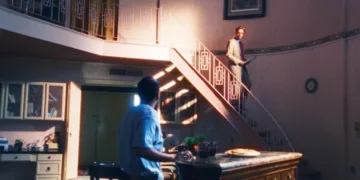
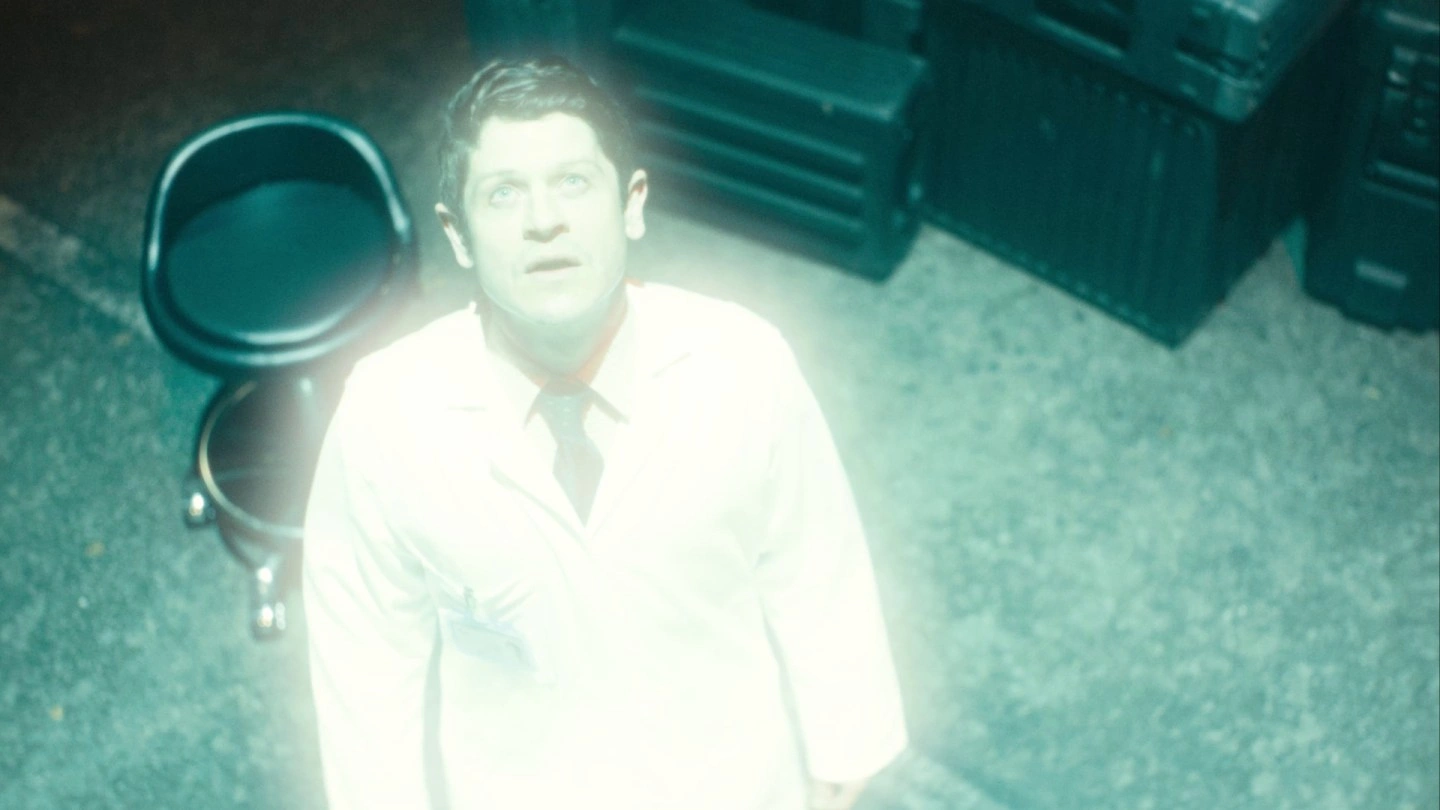
Its 1994 prologue establishes the film at its most assured. Ministry of Defence scientist Lew, played by Iwan Rheon, watches the stars with his 11-year-old daughter Maz as they discuss life elsewhere in the universe. Ryninks folds eyewitness accounts, news footage and Carl Sagan into Catherine Goldschmidt’s warm photography, making the night sky feel genuinely enormous. The influence of Spielberg is obvious, particularly Close Encounters of the Third Kind, yet the Welsh setting keeps the homage from becoming simple imitation.
Five years later, Maz is 16 and Lew is dead. She cannot accept the official account of what happened at his military facility, partly because her own memories of that night remain incomplete. When she sees another strange light overhead, extraterrestrial abduction becomes less a theory than an emotional escape hatch.
The Caradoc UFO Society
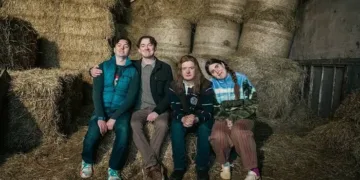
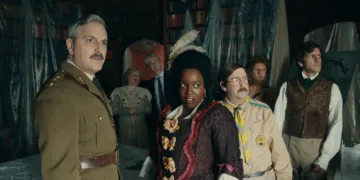
Maz’s investigation gathers precisely the kind of crew that could exist only in a small community where everybody seems one acquaintance away from everybody else’s business. Nerys Amber Stocks plays her with a stubborn intensity that keeps the story grounded while its plotting grows increasingly silly.
Tom Moya’s Little Elis provides the opposite energy. He follows Maz into increasingly questionable situations while carrying himself like somebody mentally calculating how much trouble he will be in for missing dinner. Their friendship works because Moya never turns his nervousness into pure caricature.
Then there is Bryn, Aneurin Barnard’s lonely conspiracy obsessive. Barnard initially pushes him toward manic ufologist territory, all certainty and forward momentum, before quieter scenes expose the isolation feeding that obsession. His belief in hidden truths has an emotional cousin in Maz’s refusal to accept the visible one.
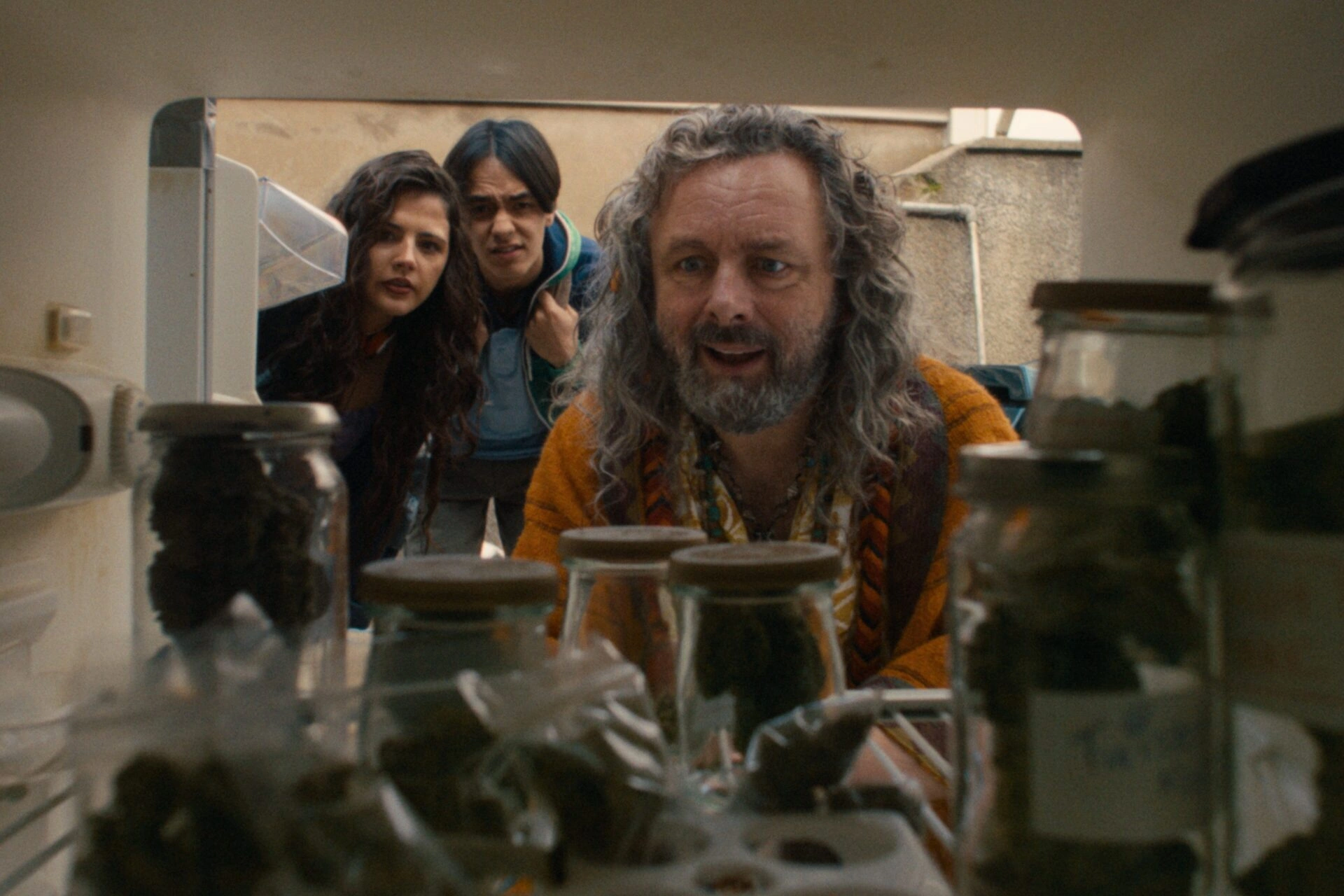
Michael Sheen gets the film’s richest comic material as Shifty Gruff, a New Age psychic whose spiritual enlightenment exists comfortably beside drug dealing and petty commerce. During Maz’s regression session, Gruff unexpectedly succeeds in unlocking something buried in her memory. His immediate excitement about the commercial possibilities tells us exactly who he is. Mysticism, apparently, also needs a revenue model.
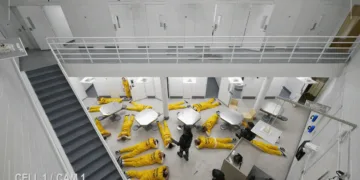
The problem arrives when this eccentric little group turns toward infiltrating the military installation. Soldiers behave with such convenient incompetence that danger rarely survives for long. What might have been a tense collision between youthful belief and government secrecy becomes a lightweight caper, with obstacles appearing mainly so the characters can stumble around them.
Looking Up, Looking Back
The alien mystery matters because Maz needs it to be true. Lew’s death left behind grief, guilt and a memory she cannot fully access, while the possibility of abduction offers a different story: her father might still exist somewhere beyond Earth.
That idea connects Out There to a long tradition of science fiction using the fantastic to process something painfully ordinary. American films often send characters toward the stars in search of transcendence. Ryninks reverses the direction. Maz looks upward because looking backward is harder.
Stocks handles that tension especially well once Maz’s certainty begins to weaken. Her performance during the recovered memories does not depend on large emotional declarations. The change registers through hesitation and the gradual collapse of the explanation Maz has protected for five years.
The revelation concerning Lew is easier to predict than the screenplay seems to realise, yet its familiarity does not erase its emotional force. Ryninks gives the father-daughter material patience that the conspiracy plot rarely receives. He also resists stripping the world of mystery altogether. A final extraterrestrial suggestion leaves room for wonder without using aliens to rescue Maz from grief.
That balance is important. If the film had confirmed every fantasy, Maz would never need to confront loss. If it had dismissed every strange possibility, the early fascination with the night sky would feel like a trick played on the audience.
Wales, 1999
The film becomes most culturally distinctive in the details surrounding its genre machinery. Caradoc is filled with dot-matrix printouts, Sony Handycams, smoky pubs and references to New Labour Britain. These objects locate the story in 1999 without turning every frame into a museum display.
Goldschmidt’s photography helps. The town has the slightly faded texture of a place where tourism and everyday life overlap uneasily, while the forest sequences use light through trees and simple effects to suggest something genuinely unknowable nearby. Ryninks works within a modest scale, and his better visual choices acknowledge that limitation rather than disguising it.
The soundtrack is less disciplined. Super Furry Animals, Stereophonics, Yazoo, Catatonia’s “Mulder and Scully” and Manic Street Preachers’ “Everything Must Go” provide immediate period recognition, yet several selections feel selected for cultural memory rather than for what a particular scene needs. The music sometimes tells viewers “this is 1999” with a little too much enthusiasm.
Still, regional specificity gives Out There something many larger British genre productions lose while chasing international familiarity. Its UFO mythology remains tied to Welsh folklore, its comedy emerges from local personalities, and its sadness belongs to a family living in a place small enough for every private mystery to become communal property.
Ryninks’ screenplay may struggle to make the military conspiracy convincing, but his cast understands the film he is trying to make. Stocks gives its grief weight, Moya gives its friendship warmth, Barnard finds loneliness beneath Bryn’s enthusiasm, and Sheen turns Shifty Gruff into the kind of cheerful rogue who could probably monetize first contact before breakfast.
Out There premiered on August 14, 2026, at the Edinburgh International Film Festival. The film follows a 16-year-old astronomy enthusiast in a quiet Welsh seaside town who, after spotting a UFO, teams up with an unhinged ufologist and her skeptical best friend to investigate the truth.
Full Credits
Title: Out There
Distributor: Starsesh Ltd.
Release date: August 14, 2026
Rating: PG
Running time: 80 minutes
Director: Simon Ryninks
Writers: Simon Ryninks
Producers and Executive Producers: Tibo Travers, Katie Dolan, Mia Bays, Kiah Simpson, James Barton-Steel, Susan Simnett
Cast: Michael Sheen, Aneurin Barnard, Iwan Rheon, Nerys Amber Stocks, Tom Moya, Remy Beasley, Matthew Aubrey
Director of Photography (Cinematographer): Catherine Goldschmidt
Editors: Rachel Durance, Hiran Balasuriya
Composer: Sami El-Enany
The Review
Out There
Out There is strongest when its Welsh identity and borrowed science-fiction grammar occupy the same frame. Simon Ryninks takes the cosmic wonder associated with American UFO cinema and shrinks it into seaside pubs, local eccentrics, military folklore and a teenager unable to accept her father’s death. Nerys Amber Stocks gives that grief credibility, while Michael Sheen and Aneurin Barnard keep the comic detours lively. The conspiracy itself is thin, and the military caper rarely generates tension, yet the regional specificity gives this modest film a character that its genre mechanics cannot quite supply.
PROS
- Strong Welsh regional identity
- Stocks’ affecting lead performance
- Sheen’s scene-stealing Shifty Gruff
- Warm period cinematography
- Effective grief narrative
CONS
- Thin conspiracy plotting
- Weak military antagonists
- Increasingly convenient contrivances
- Uneven family-film tone