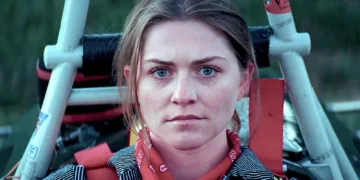






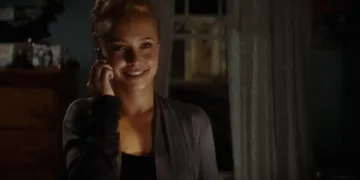
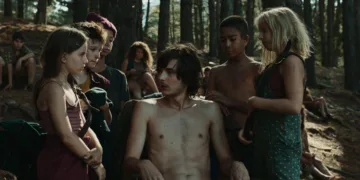
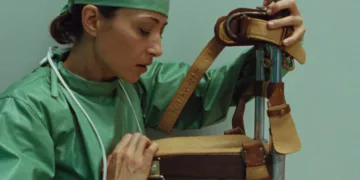

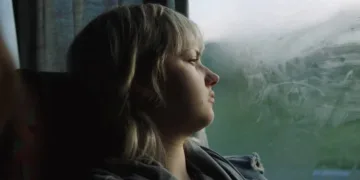











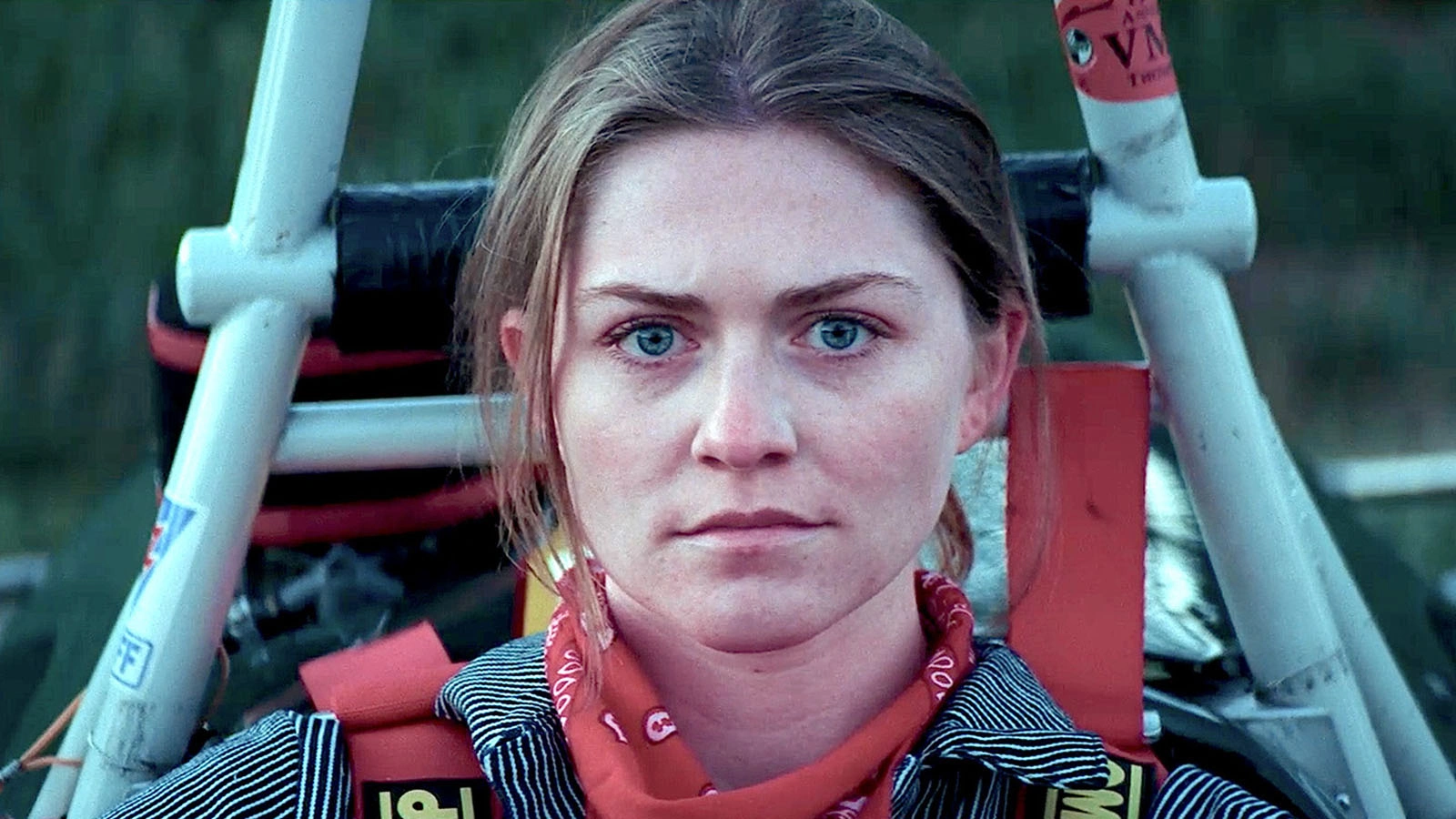

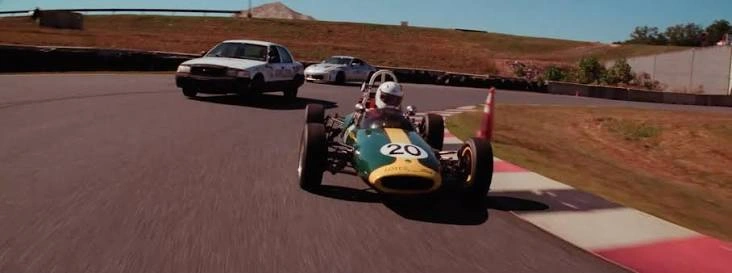
The strangest joke in Rob Tregenza’s Fast is that its heroine wants speed while the movie keeps refusing it. Sterling, played by Madison Pankey, works around wrecked cars in small-town Virginia, discovers an old Lotus 51-C, and starts rebuilding the machine with hopes of becoming a professional racer. Tregenza answers that premise with extended takes, long stretches of waiting, and compositions that keep Sterling small against junkyards, roads, bridges, and industrial leftovers.
That contradiction gives the film its personality. Tregenza has been working with sequence shots since Talking to Strangers, where nine scenes each ran for roughly ten minutes, and his experience shows in how confidently Fast lets space dictate rhythm. The camera often asks us to look around rather than simply look ahead. For a film about racing, the accelerator spends an impressive amount of time untouched.
Running From a Time That Will Not Move
Sterling’s past refuses to remain neatly behind her. A black-and-white sequence shows former boyfriend Bobby assaulting her in the junkyard before she apparently kills him with a crowbar. Tregenza never turns that act into a conventional plot engine. The scene hangs there, disturbing and unresolved, while later encounters make it increasingly difficult to determine which events belong to Sterling’s present, memory, fantasy, or some collision among all three.
Pankey works well within that uncertainty. Her most persuasive moments come while Sterling is occupied with the Lotus, tightening parts or standing beside the stripped-down machine with a concentration that feels far clearer than anything she says aloud. Dialogue operates differently.
An uncle offers help, a mechanic carries an obvious affection for her, and a wealthy local speaks warmly before describing Sterling as “a bit tarnished.” These exchanges frequently sound stiff, with emotions stated through oddly formal line readings instead of emerging through conversational behavior.
Some viewers may read that distance as weak performance direction. I think the effect becomes easier to accept once the film’s stranger passages arrive. Sterling rarely seems fully synchronized with the people around her. The conversations feel displaced because she does too. Her racing ambition is therefore less persuasive as a sports-movie objective than as a physical response to paralysis. Everyone talks. Sterling keeps fixing the car.
Also Read






Where the Dead Keep Driving
A sequence shot simply means an extended scene presented without visible cuts, and Tregenza uses the technique to give us unusual freedom inside the frame. Editing normally decides where our attention goes. Here, a slow pan can leave us scanning the far side of the image for movement, then redirect us toward Sterling several seconds later.
The wildest example comes in the junkyard, where repeated 360-degree pans circle Sterling as figures emerge from damaged vehicles again and again. The repetition plays like a ghost story assembled from automotive wreckage. Are these dead drivers tied to the cars that killed them? Memories attached to Sterling’s trauma? People from another point in the town’s history? Tregenza never hands us the key.
Color offers no easy answer either. Black-and-white initially looks like a marker for the past, yet that distinction quickly becomes unreliable. Period-dressed figures appear within recognizably modern spaces, including the wonderfully strange sight of a man leaving his truck and approaching a woman in a hoop skirt. Different centuries seem to share the same patch of Virginia.
Tregenza’s compositions make that temporal confusion surprisingly tangible. Autumn foliage crowds the railway imagery that bookends the film. An extended car ride across a bridge turns movement itself into spectacle. Junk vehicles sit around Sterling like abandoned monuments to earlier promises of mobility. The frame keeps saying something the dialogue cannot quite articulate: people move on, places remember.
Beauty With the Seams Showing
Tregenza also leaves evidence of filmmaking itself inside Fast. A boom microphone becomes visible. Hair appears in the gate. An actor stumbles through a line. These would normally be treated as mistakes and removed from a finished feature.
Long takes complicate that judgment. When a camera has been moving for several minutes through a carefully staged scene, restarting because of one flaw can mean rebuilding the entire performance. Tregenza seems increasingly willing to let those imperfections remain, allowing the circumstances of production to become part of the image.
That choice fits a movie obsessed with broken machinery. Sterling does not discover a pristine racecar. She finds something discarded and tries to make it move again. The junkyard is filled with vehicles whose original purpose has ended, while her Lotus becomes a piece of industrial history redirected toward another possibility.
The title carries a sly production joke too. Tregenza shot the film in ten days while attempting complicated crane movements, lengthy takes, and elaborate spatial choreography. Sterling wants to go fast. The production had to go fast. The finished film moves with almost stubborn patience.
That mismatch occasionally becomes exhausting, especially when a stiff conversation stretches beyond the dramatic material it contains. Yet the best sequences reward the extra seconds. Watch how the 360-degree junkyard shot keeps changing meaning each time another figure appears, or how the bridge sequence turns an ordinary drive into a study of distance and duration. Sterling can repair the Lotus. Escaping everything attached to the road beneath it is harder.
Fast was released in theaters on August 12, 2026, through Cinema Parallel. The story follows Sterling, a Southern woman carrying historical secrets and personal baggage, who acquires a restored Lotus sports car that becomes a portal through time to navigate the boundary between the living and the dead while pursuing her dream of becoming an F1 driver.
Full Credits
Title: Fast
Distributor: Cinema Parallel, Phantom Road
Release date: August 12, 2026
Running time: 1 hour 36 minutes
Director: Rob Tregenza
Writers: Rob Tregenza
Producers and Executive Producers: Danny Caporaletti, Birgit Tregenza, Rob Tregenza, Nick Newman, R. Stewart Bartley, Charles Harris, Anne Chapman
Cast: Madison Pankey, Mia Grichendler, Nicholas X. Parsons, Jeff Wincott, Suzie Haines, Danny Hugus, Dietrich Teschner, Mike Marunde, Liv Crosby
Director of Photography (Cinematographer): Rob Tregenza
Editors: Rob Tregenza, Woody Chapman
Composer: Carlos Chapin, Jason Moody, Earecka Mary Tregenza, Graham Crozier
The Review
Fast
Fast turns a racecar dream into a strange experiment with cinematic time. Rob Tregenza’s extended pans, shifting color schemes, and bridge-crossing long take make Sterling’s Virginia feel haunted by histories that refuse to stay buried. Madison Pankey gives the film a steady human presence, especially when Sterling works silently on the Lotus, though several stiff conversations and deliberately disconnected encounters strain the film’s emotional clarity. Visible boom mics, imperfect line readings, and other production seams fit Tregenza’s interest in process, yet they can still distract. Difficult, beautiful, frustrating filmmaking.
PROS
- Expressive extended sequence shots
- Striking color and black-and-white shifts
- Memorable junkyard ghost imagery
- Strong use of Virginia locations
- Fascinating tension between speed and stillness
CONS
- Frequently stiff dialogue
- Fragmented chronology can frustrate
- Secondary characters lack development
- Production imperfections sometimes distract