









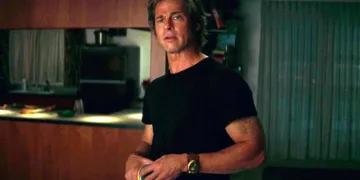
















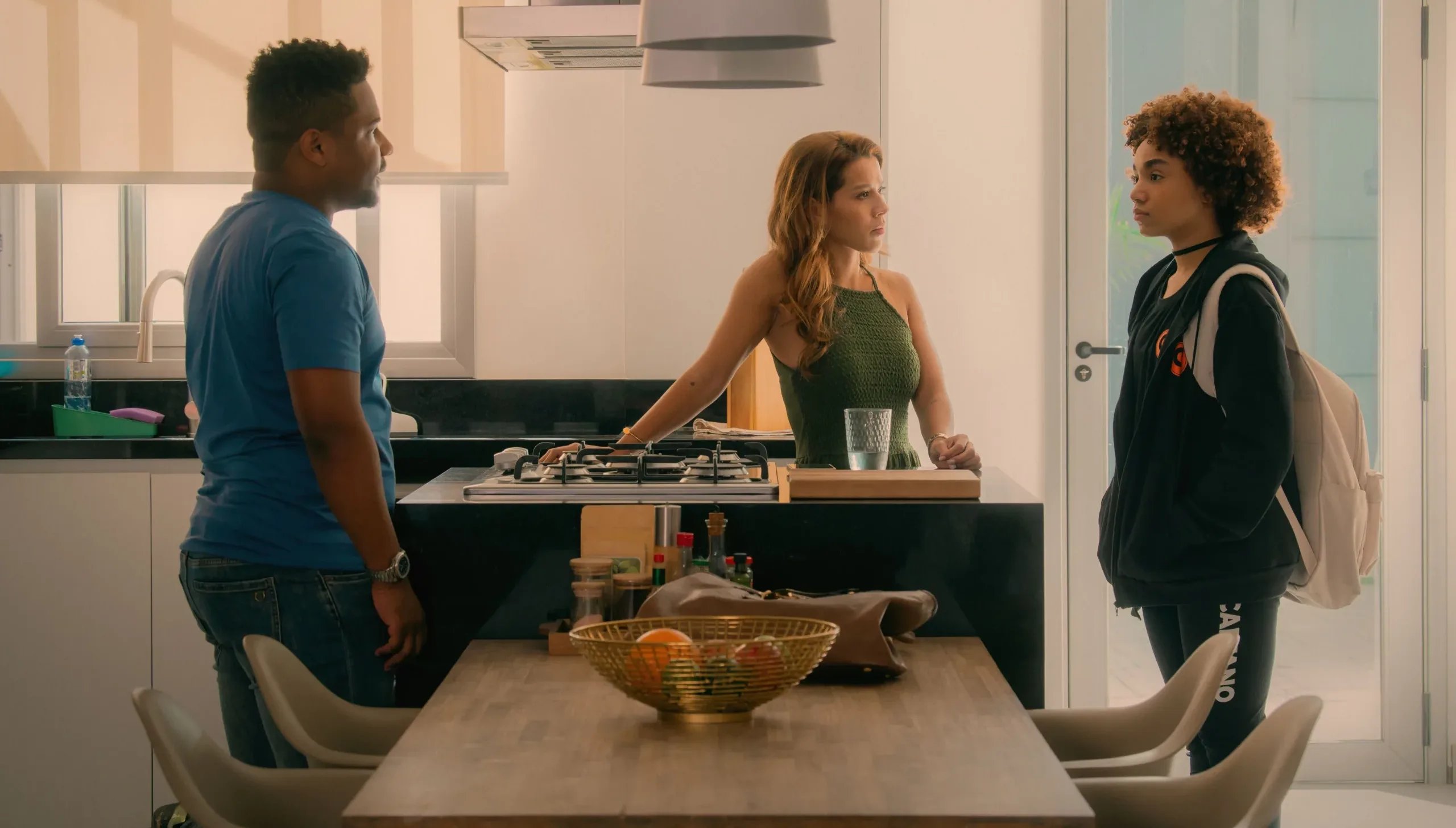

Five years in Serbia have given Nando a different skyline, better suits, helicopter arrivals, and the appearance of distance from everything that made his life dangerous. Distance, however, turns out to be a poor substitute for escape.
Nando Between Two Worlds – A Sintonia Film picks up after the five-season Netflix series with Nando presumed dead in Brazil and operating inside an international drug network in Europe. Christian Malheiros returns to a character who once climbed from neighborhood dealing to serious criminal power, only to discover that success has left him living thousands of miles from Scheyla, Bruninha, and Enzo.
The screenplay wastes little time destabilizing that arrangement. A Serbian business dispute involving roughly $2 million erupts into gunfire, leaving Nando with enemies abroad. Then Scheyla calls from São Paulo: Bruninha has disappeared. He heads back to Brazil, where personal and criminal problems begin piling up with suspiciously synchronized efficiency.
The premise makes sense as a final chapter for Sintonia. Nando spent years claiming that crime was a means of protecting his family. The film places him in the rather awkward position of discovering that the protection has become the threat. For anyone arriving without five seasons of history, the mechanics are clear enough. The emotional accounting is harder to access.
The Family He Already Lost
The film becomes considerably sharper whenever Bruninha enters the picture. Duda Pimenta plays her resentment without turning it into generic teenage hostility. She has grown up with a father capable of disappearing for years, and at one point she speaks about him as though he were dead. That choice says far more about their relationship than another screaming argument could. Nando may insist that he left to keep his family safe, but Bruninha experienced that sacrifice as abandonment.
Her decision to confide in Murilo about Nando’s identity is equally useful. She wants somebody outside the family to understand why her life has become so strange, which makes the mistake feel connected to loneliness rather than plot convenience. When that confidence creates further danger, the screenplay finally links Nando’s criminal reputation directly to his daughter’s attempts at having an ordinary life.
Malheiros is strongest in these scenes because Nando’s usual control stops helping him. The man who can negotiate with armed criminals has no comparable tactic for a daughter who has learned to live without him. His performance grows quieter around Bruninha, and that reduction in authority suits the character better than the moments designed to remind us that he remains a major criminal figure.
Scheyla, played by Júlia Yamaguchi, carries another piece of the family damage. She has raised their children while Nando managed his survival elsewhere. Yet the screenplay too often leaves her responding to his choices instead of establishing firm conditions of her own. Given what she has endured, she deserves greater dramatic authority over the possibility of reconciliation.
Returning faces such as Doni and Rita bring accumulated meaning for longtime viewers. They also expose the film’s structural problem. Every reunion costs time that could have gone toward the household Nando is supposedly desperate to repair.
One Last Job, Again
The criminal plot is where the machinery starts showing. Nando’s Serbian dispute follows him back to Brazil while old organizational obligations reappear around him. Moicano represents the operation Nando has tried to manage from afar, proof that relocating to another continent never amounted to leaving the business. Conflicts involving Buda and the pursuit of Govinda add betrayals, chases, armed confrontations, and shifting loyalties.
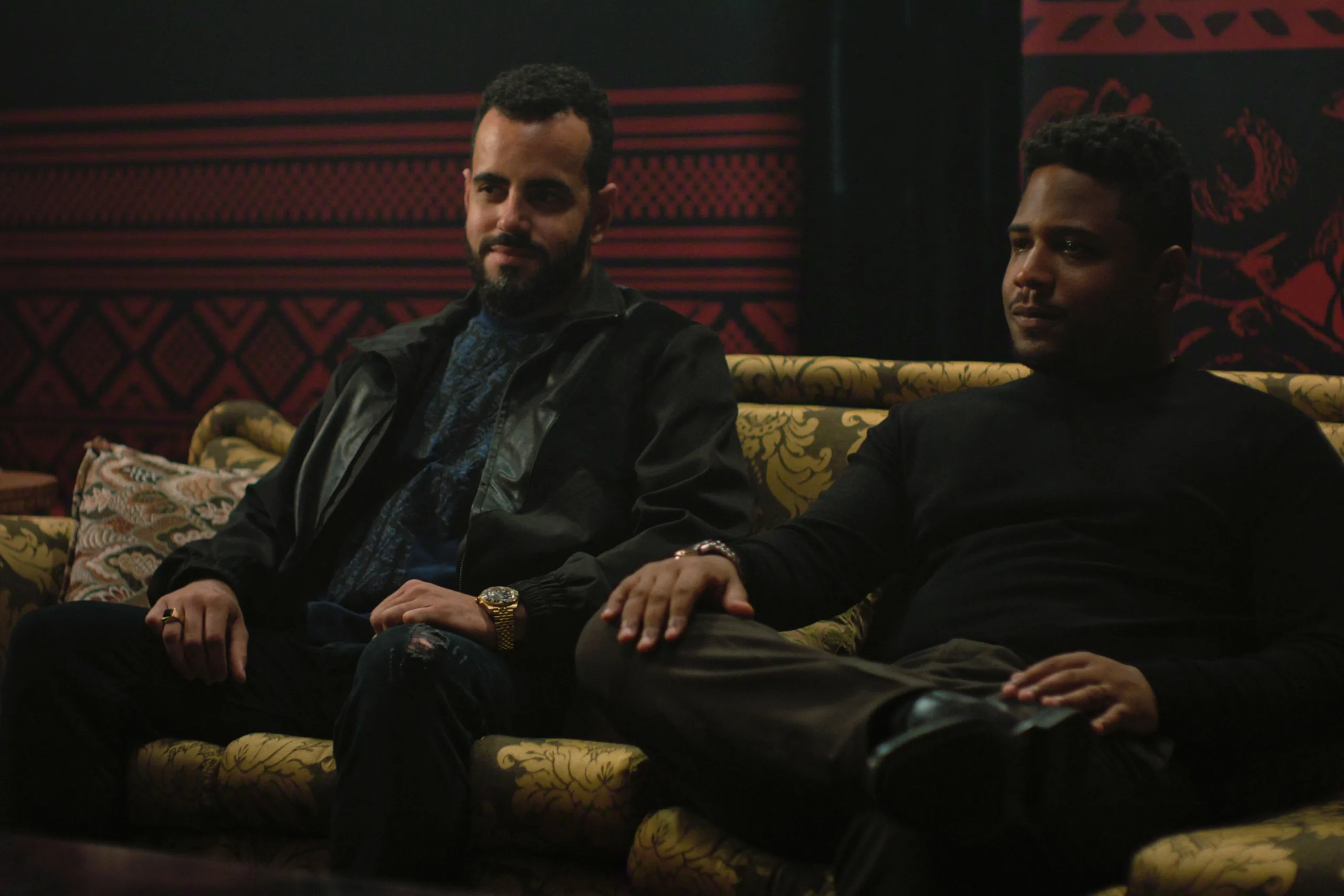
None of this is badly assembled. It is simply extremely familiar. The criminal pulled back toward one final piece of business has been a dependable genre structure for decades. Here, the rebellious daughter, endangered family, suspected betrayal, unpaid money, and former associates are arranged with such recognizable precision that suspense frequently becomes anticipation of the next expected beat.
The violence compounds the issue. A dangerous situation appears, Nando survives another confrontation, and the story advances to the next threat. Repetition gradually makes him seem safer rather than increasingly trapped. A crime thriller needs pressure to accumulate. This one keeps clearing the board.
Malheiros also suffers from that construction. His Nando can look weary, worried, and capable, yet the film occasionally struggles to communicate the authority somebody with his history should possess. He sometimes resembles an experienced lieutenant handling somebody else’s crisis rather than the former kingpin whose decisions supposedly reshaped an entire network. That might have been an interesting sign of decline. The screenplay never quite commits to it.
Two Worlds, Separate Tracks
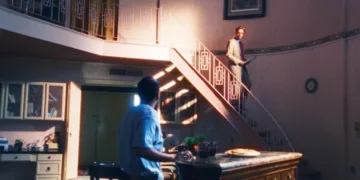
Johnny Araújo gives the film a polished surface. Serbia and São Paulo provide a clean geographical contrast, and the European hotel meetings and helicopter travel make Nando’s new life visually distinct from the streets and family spaces waiting for him in Brazil. The brisk editing keeps several threads moving without much confusion.
The title suggests something stronger than geography, though. Nando is divided between the criminal identity that gave him power and the family identity he keeps insisting matters most. The richest version of this film would force those identities to damage each other scene by scene. Instead, the family drama and crime thriller frequently take turns.
Nando argues with Bruninha. Then criminal business needs attention. Scheyla confronts the damage he caused. Then another threat arrives. The pieces share a protagonist, yet they do not consistently form a single escalating chain of consequences.
At nearly two hours, the feature also carries the obligations of a franchise farewell. Old friends need appearances, Nando needs closure, Serbian enemies require resolution, Brazilian criminal politics need attention, and his marriage and children need space. Something has to give, and it is usually depth.
The best material survives because Bruninha makes Nando’s contradiction impossible to romanticize. He built power in the name of protecting his children, then created a life in which his daughter learned to tell people her father was dead. No gunfight in the film puts him in a tighter corner than that.
Nando Between Two Worlds – A Sintonia Film premiered on August 12, 2026, and is available for streaming exclusively on Netflix. Expanding upon the world of the hit Brazilian series Sintonia, the crime drama follows Nando years after rising to power, as he is forced to leave his international exile and return to Brazil to locate his missing teenage daughter while confronting the underworld he tried to escape.
Where to Watch Nando Between Two Worlds – A Sintonia Film (2026) Online


Full Credits
Title: Nando Between Two Worlds – A Sintonia Film
Distributor: Netflix
Release date: August 12, 2026
Rating: TV-MA
Running time: 1 hour 49 minutes
Director: Johnny Araújo
Writers: Guilherme Quintella, Denis Nielsen, Léo Todeschini
Producers and Executive Producers: Caio Gullane, Fabiano Gullane, Ana Saito, Marina Puech Leão, Cristiane Façanha, Johnny Araújo, Viviane Zangrossi
Cast: Christian Malheiros, Duda Pimenta, Julia Yamaguchi, Jottapê, Bruna Mascarenhas, Enio Cavalcante, Henrique Santana, Victor Galisteu, Matheus Santos, José Trassi
Editors: Ricardo Farias
The Review
Nando Between Two Worlds - A Sintonia Film
Nando Between Two Worlds - A Sintonia Film gives Nando a logical final chapter, but the machinery around him feels borrowed from too many familiar crime dramas. The Serbian deal, Bruninha’s disappearance, and the threatened family should tighten into one escalating problem, yet the film keeps treating them as separate obligations. Christian Malheiros and Duda Pimenta give the father-daughter conflict real weight, especially when Bruninha speaks of Nando as if he were already dead. Longtime Sintonia viewers will find closure here. Newcomers may mostly find a competent finale stretched into feature length.
PROS
- Strong father-daughter tension
- Duda Pimenta’s grounded performance
- Useful Serbia-São Paulo contrast
- Meaningful closure for Sintonia fans
CONS
- Predictable crime plotting
- Familiar final-job structure
- Uneven pacing
- Franchise reunions slow the character study
- Scheyla receives limited dramatic agency