

























The most revealing action in Tukoni: Forest Keepers involves making tea for someone who does not strictly need it. Traveller can gather ingredients, prepare a creature’s preferred blend, sit down, and watch a tiny exchange of warmth unfold without dialogue. No quest marker announces a major reward. The pleasure comes from having understood another resident of the forest well enough to offer the right cup.
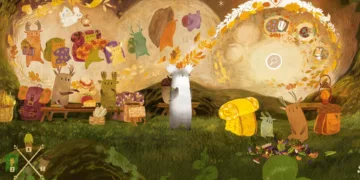
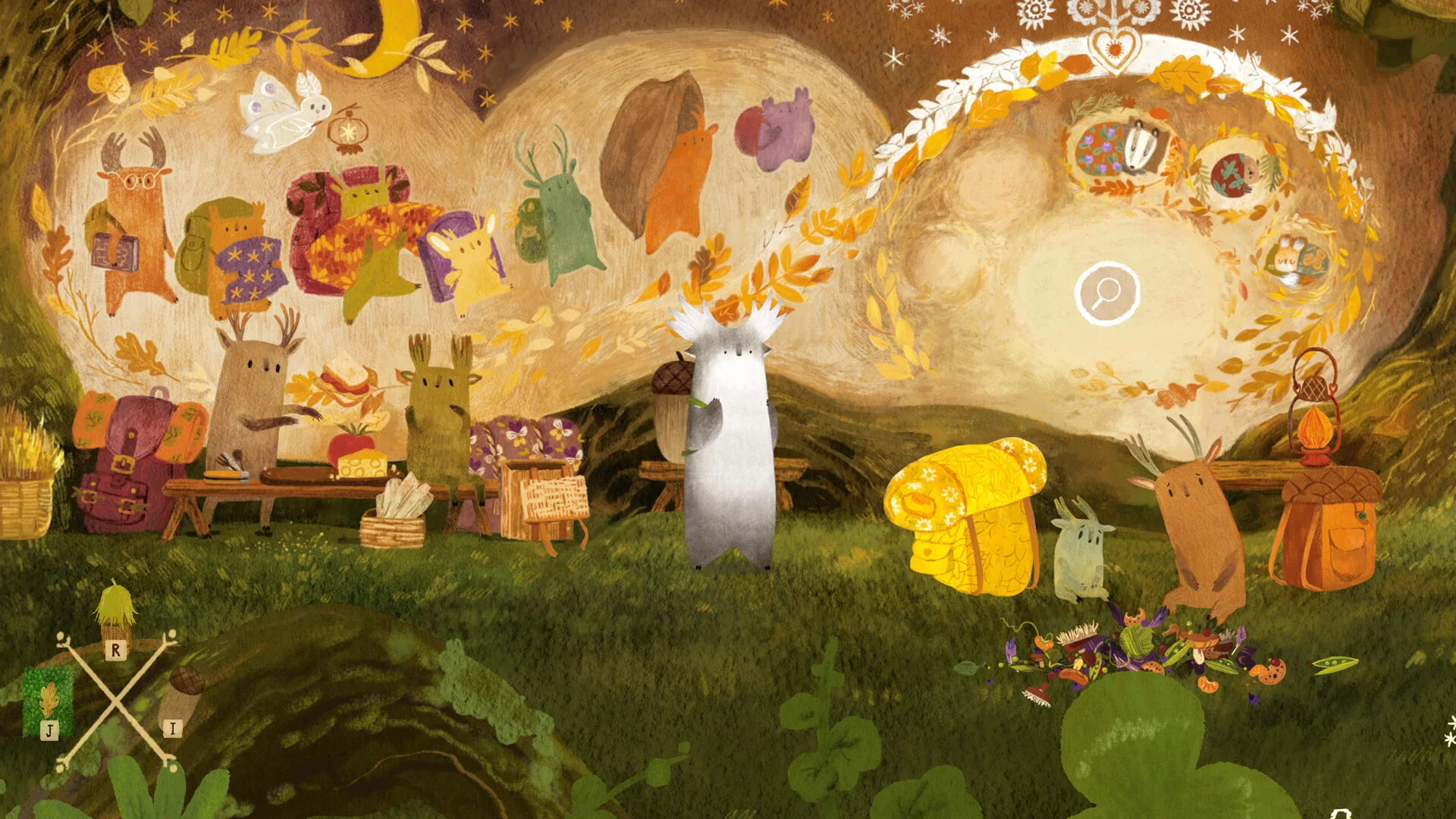
That emphasis gives Dream Operator’s short point-and-click adventure its identity. Based on the books of Ukrainian artist and author Oksana Bula, who serves here as art director, the game casts players as Traveller, a small forest spirit helping woodland residents prepare for winter. Autumn is already turning, supplies need gathering, and each new area presents another collection of small problems to solve.
Communication happens through pictures, gestures, chirps, and animated expressions. A worried creature produces an illustrated thought bubble. Traveller responds through action. It gives the game the universal readability of a picture book while preserving something culturally specific in Bula’s handmade visual language. Translation usually asks what must change when art travels between mediums. Here, surprisingly little needs changing.
Pack the Bag, Brew the Tea
Mechanically, Forest Keepers belongs to a much older adventure-game tradition. Enter an area, inspect everything, collect objects, work out who needs what, combine items when necessary, then use them on the correct person or environmental feature. Its gentleness cannot entirely disguise the lineage.
The teapot sequence shows both sides of that design. Someone has removed one of the pots hanging outside the tea mistress’s teapot-shaped home, causing her to withdraw and keep her knowledge to herself. Traveller retrieves objects, works through inventory problems, restores the display, gains entry, rides upward inside a cauldron, tackles a locked safe, and earns an item that later helps create new connections.
There is real pleasure in how cooperation replaces conquest as the game’s progression language. Many fantasy adventures ask players to acquire power by defeating whatever lives ahead. Traveller acquires access by fixing things. Tea knowledge, useful objects, and friendships arrive through acts of attention.
Also Read





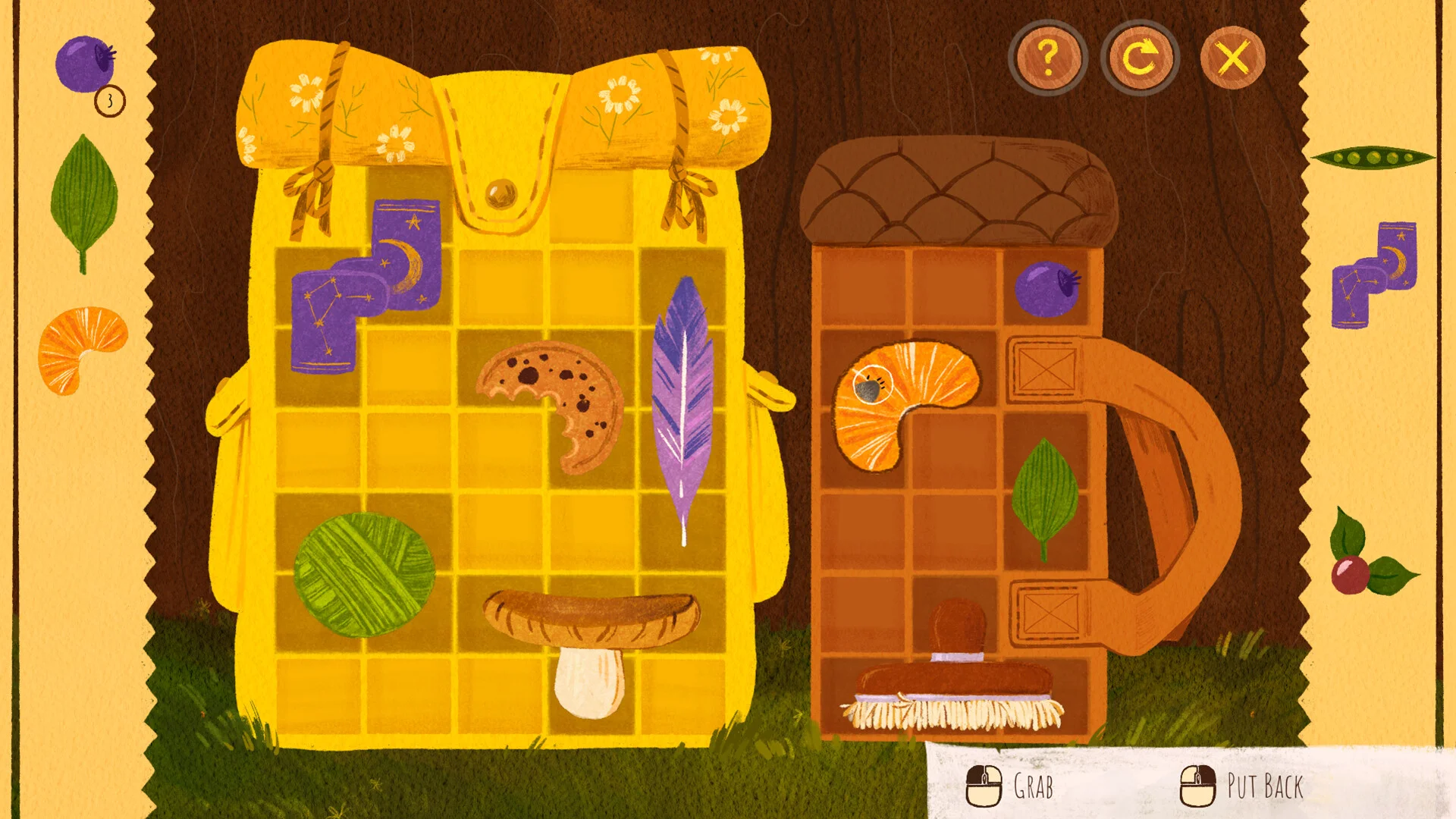
The puzzles themselves struggle to carry that philosophy with equal elegance. Packing objects into backpacks is immediately legible. Finding an item and delivering it to the creature picturing it makes sense. Trouble appears when the game knows the solution but fails to communicate the expected interaction.
Using inventory items with a controller can be particularly awkward. Selecting something and applying it to an environmental target never feels as natural as dragging an object with a mouse. Mouse input makes inventory manipulation clearer, while movement feels better on a controller. Switching between those strengths should have been effortless; requiring players to commit to one control scheme turns an interface choice into needless friction.
The notebook helps by recording visual clues, and hints can resolve some minigames. Yet hints sometimes explain the mechanism when the real question is intent. Knowing how to brew tea means little when the player cannot tell which tea matters, or if brewing tea is even the required action.
Walking Through the Illustrations
Bula’s artwork survives the transition from page to screen with remarkable confidence. The forest uses warm autumn shades, broad painted forms, compact interiors, and creatures whose silhouettes communicate personality before they make a sound. Traveller’s notebook itself looks like something lifted from the books rather than an interface imposed over them.
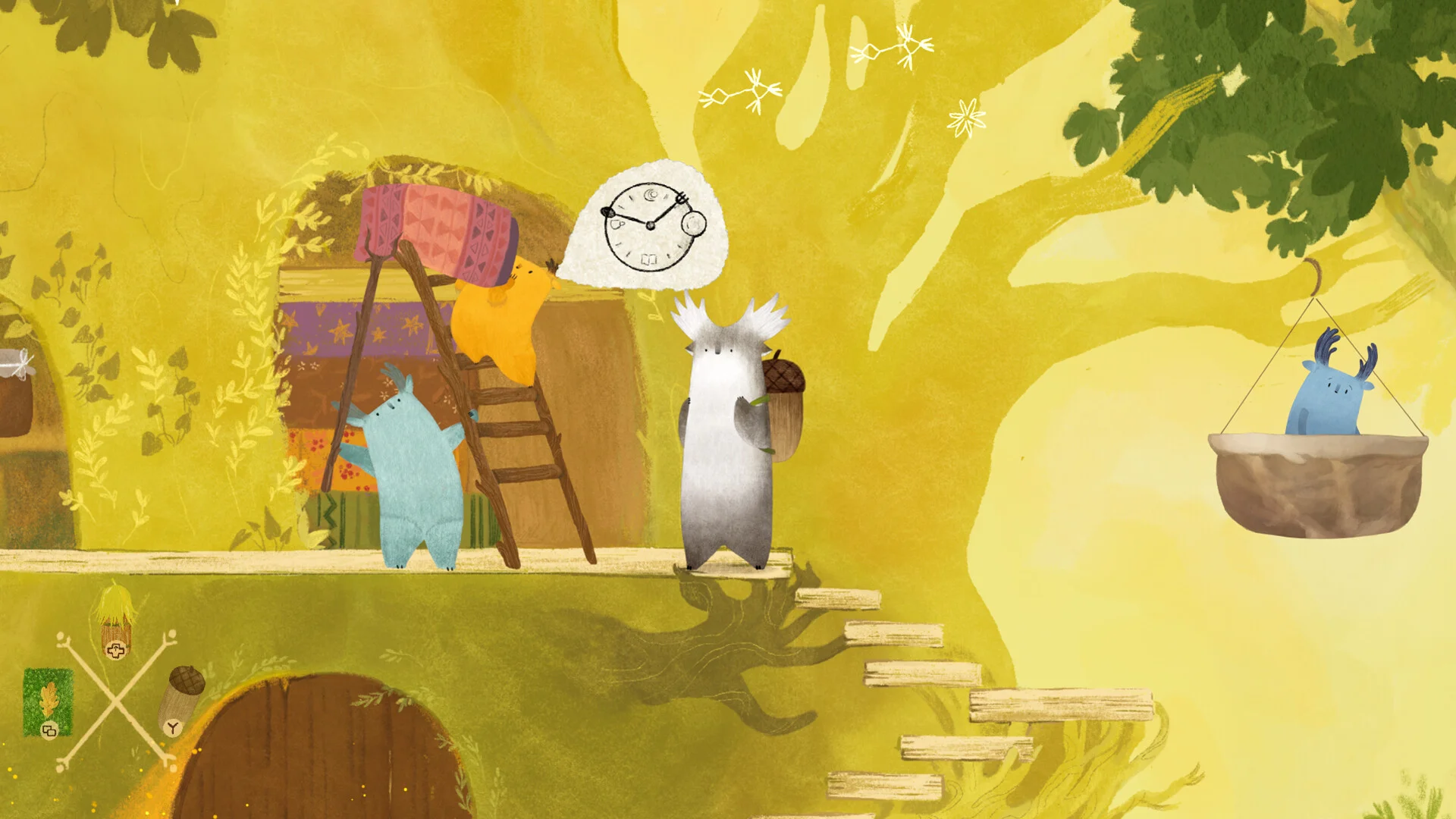
The strongest narrative sequences lean fully into that heritage. Helping a resident can trigger vignette-like scenes arranged with the clarity of illustrated pages. Characters chirp, hum, gesture, or release small bursts of visual delight. Meaning comes through pose and composition.
That wordless design gives Forest Keepers an unusual position among adventure games. The genre historically leans heavily on written dialogue, jokes, item descriptions, and verbal misdirection. Here the player interprets iconography instead. It makes the game accessible across languages while placing considerable pressure on visual communication. When an infographic is clear, the design feels almost frictionless. When it is vague, there is no line of dialogue available to rescue it.
Ambient behavior strengthens the forest far beyond Traveller’s thin characterization. Creatures gather around teachers, cook, paint, build, and spend time together. These activities make community visible before the game ever asks the player to think about it.
Sound works by the same principle. Nobody speaks, yet the forest never feels mute. Chirps and creature noises provide social texture, while the music maintains the soft melancholy of late autumn. Winter is approaching, but nobody needs to panic about it yet.
Winter Arrives Quickly
Forest Keepers lasts roughly two to three hours, which places unusual pressure on every puzzle and location. New zones bring different residents and small mechanical wrinkles, yet the game finishes before those ideas can grow into a richer adventure structure.
Leaving an area permanently closes it, so overlooked items or optional tea meetings may disappear with it. Missing them will not block progress, but the design creates a curious contradiction: a game about patience and companionship occasionally encourages the player to search each location like an auditor before walking through the next door.
Adventure veterans may also find the puzzle vocabulary narrow. Gathering, combining, packing, remembering visual sequences, and delivering objects recur frequently, with few late-game transformations of those ideas. Younger players face the opposite problem. The solutions are often straightforward once the intended interaction becomes clear, yet the controls and sparse instruction can make discovering that interaction harder than the puzzle itself.
Traveller remains similarly underwritten. The surrounding creatures express specific needs, habits, and little flashes of personality, while the protagonist largely exists as a vessel for kindness. A longer game could have tested that generosity, complicated it, or allowed the changing seasons to reshape Traveller’s relationship with the forest.
For now, the most persuasive glimpse of that larger possibility comes from the tea set. Choosing ingredients, preparing the right blend, and sitting quietly beside another creature accomplishes little in conventional mechanical terms. In this Ukrainian storybook world, that small act is allowed to matter anyway.
The Review
Tukoni: Forest Keepers
Tukoni: Forest Keepers carries the texture of Oksana Bula’s Ukrainian picture-book world into an adventure built around hospitality, shared labor, and quiet gestures. Its finest moments come when brewing tea or helping a worried creature turns a mechanical task into a small social ritual. The point-and-click framework is less graceful. Controller interactions can feel unnecessarily awkward, hints do not always address the real source of confusion, and the two-to-three-hour runtime ends before its ideas have much room to develop. Still, few games make preparing for winter feel this gentle.
PROS
- Beautiful storybook art direction
- Expressive wordless storytelling
- Charming tea-sharing interactions
- Warm, communal atmosphere
- Accessible puzzle concepts
CONS
- Awkward controller inventory handling
- Inconsistent puzzle guidance
- Very short runtime
- Limited puzzle variety
- Traveller lacks much characterization