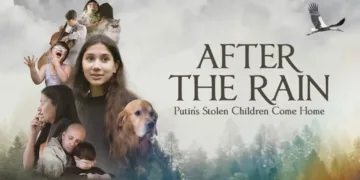






















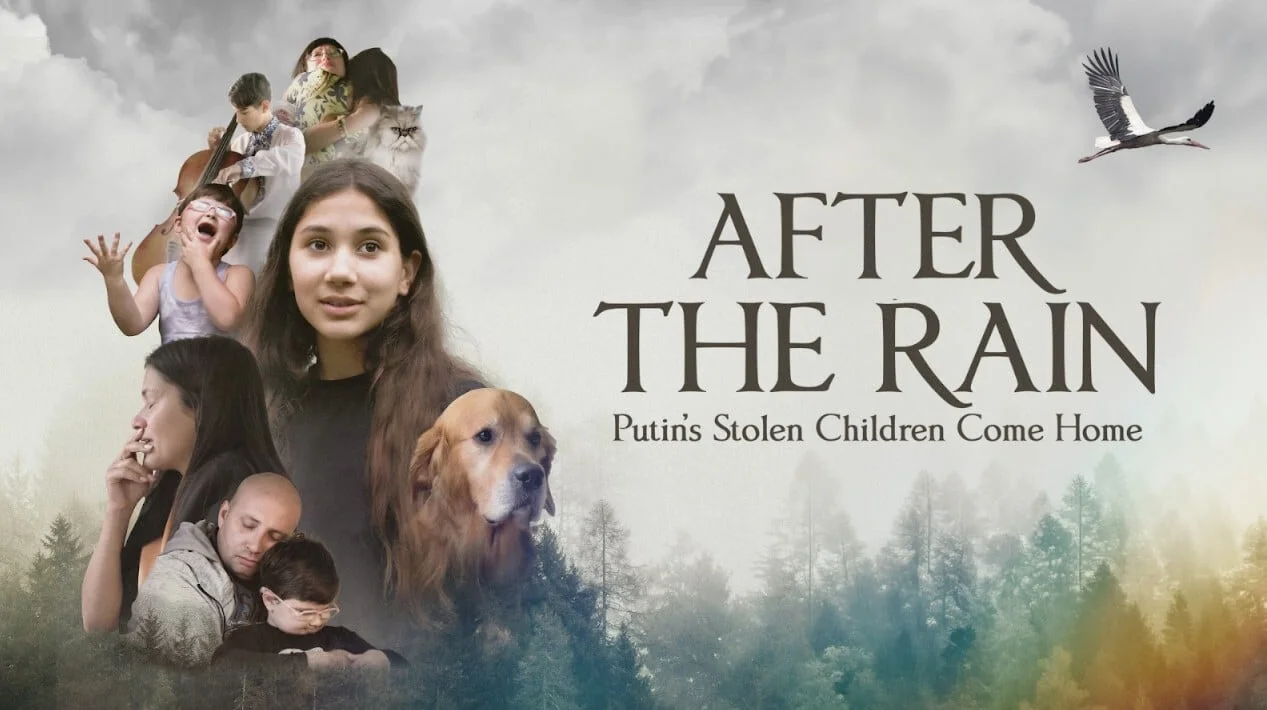

War documentaries often face a difficult choice: explain the machinery of violence or remain close to those who survive it. After the Rain: Putin’s Stolen Children Come Home chooses the latter, and its restraint becomes both its defining strength and its greatest limitation. Sarah McCarthy’s documentary refuses the familiar images of war, replacing battlefields and political speeches with a quieter examination of children attempting to understand what was taken from them.
The film observes Ukrainian children who were forcibly separated from their families and later returned home, placing them in a retreat near the Baltic Sea where therapy, nature, and human connection create a temporary space away from fear. This setting is deliberately removed from the events that caused their trauma. The distance allows the children to exist as children again, even when the memories they carry refuse to disappear.
The documentary’s focus on aftermath carries a significant ethical choice. Stories of war are often shaped around destruction itself, while the people living through the consequences become secondary figures. McCarthy reverses that priority. The crime matters because of the faces left behind.
Children Beyond the Statistics
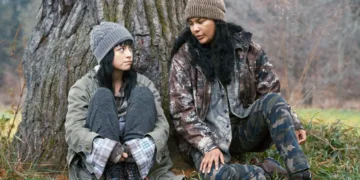
The film’s strongest moments come through Sasha Mezhevoy and Veronika Vlasova, two children whose experiences reveal different responses to the same kind of harm. Sasha’s search for a mother figure becomes one of the documentary’s most painful observations. Her repeated questions to women at the retreat reveal a child trying to rebuild a family structure that was violently interrupted. The moment does not require additional explanation. Her need speaks for itself.
Veronika presents a different portrait of trauma. At fourteen, she hides behind humor and emotional distance after experiencing isolation, bullying, and ideological pressure during her time in Russia. Her drawing exercise, where she represents herself with a blank face, captures a child who has learned to protect herself by disappearing emotionally.
These stories prevent the film from turning abducted children into a single image of suffering. Each child reacts differently. Some seek affection openly. Others retreat behind silence. The documentary understands that trauma does not create one universal response.
Also Read






A Retreat That Cannot Repair Everything
The therapeutic retreat offers moments of tenderness without pretending that a short period of care can undo years of damage. Children spend time with dogs, horses, cats, and counselors. They swim, walk through forests, create art, and experience ordinary activities that were taken from them.
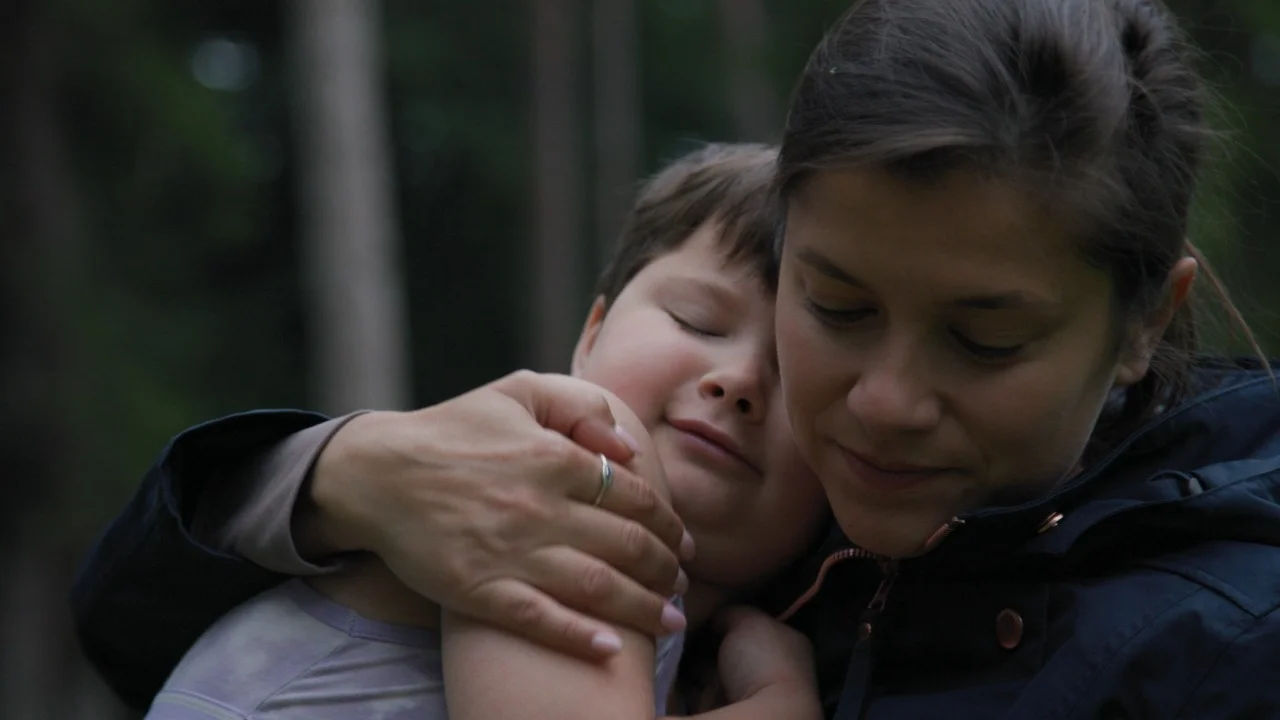
The film avoids presenting these experiences as a miracle cure. The animals provide comfort, but they do not erase memories. The counselors offer support, but they cannot return lost time. This honesty gives the documentary its emotional force.
McCarthy’s camera observes rather than demands. Conversations unfold slowly. Pauses remain. Some children struggle to speak, and the film allows that struggle to exist without forcing a dramatic breakthrough. This approach respects the difficulty of expressing experiences that are almost impossible to describe.
The natural surroundings become a quiet contrast to the violence these families escaped. The sea, trees, and open spaces offer calm, yet the film never suggests that beauty can repair injustice. A peaceful location can provide safety. It cannot restore what was stolen.
The Limits of Compassionate Observation
The documentary’s greatest argument is also where some viewers may find frustration. By concentrating so closely on recovery, it leaves much of the machinery behind the children’s suffering outside the frame. The political forces, institutions, and methods behind these separations remain largely understood rather than examined.
That choice keeps the film intimate, but it also narrows its reach. A viewer looking for a detailed investigation into the process of forced deportation may find unanswered questions. McCarthy is interested in what happens after children return, not in constructing a complete record of the crime itself.
Still, this focus reveals something that statistics cannot capture. The loss experienced by these families is measured through small moments: a child looking for a mother, a parent watching carefully, a counselor struggling with the weight of another story. The documentary shows how identity is damaged through separation and how difficult it is to rebuild a sense of belonging.
After the Rain: Putin’s Stolen Children Come Home challenges the way war stories are usually presented. It removes spectacle and asks the audience to remain with the people who must live after the headlines fade. The film’s quiet approach will not satisfy every viewer, but its refusal to turn suffering into entertainment gives these children dignity. Their experiences are not symbols of a conflict. They are lives interrupted, waiting to become whole again.
After the Rain: Putin’s Stolen Children Come Home premiered on November 14, 2024, and is available for streaming on platforms such as Prime Video and the Roku Channel. Deep in a forest by the Baltic Sea, Ukrainian families and children once illegally deported to Russia come together to start a profound healing process through an animal therapy retreat.
Full Credits
Title: After the Rain: Putin’s Stolen Children Come Home
Distributor: Cineverse, Prime Video, Roku Channel
Release date: November 14, 2024
Running time: 1 hour 19 minutes
Director: Sarah McCarthy
Writers: Sarah McCarthy
Producers and Executive Producers: Olga Beskhmelnitsyna, Sarah McCarthy
Cast: Veronika Blahova, Yvgeny Mezhevoi, Evan Harris
Editors: Guy Chadwick
The Review
After the Rain: Putin's Stolen Children Come Home
After the Rain: Putin’s Stolen Children Come Home rejects the familiar language of war documentaries and focuses on the quiet damage left behind. Sarah McCarthy’s restraint protects the children’s stories from becoming spectacle, though the limited scope may leave some viewers wanting deeper investigation. Its greatest strength is the refusal to reduce survivors to statistics. It presents a system that steals identity, then asks audiences to look closely at what remains after the theft.
PROS
- Compassionate focus on children
- Restrained documentary approach
- Powerful personal stories
- Sensitive direction
CONS
- Limited wider context
- Slow emotional progression
- Minimal examination of the system behind events