




























Eleven years is a long time for one murder case to keep changing shape. Dan Markel was shot twice in the head in the driveway of his Tallahassee home in July 2014, yet the story that follows stretches through surveillance footage, cell-phone records, undercover operations, multiple trials, and a family feud poisonous enough to make Thanksgiving seem like an unsafe activity.
Sebastian Smith’s four-part Hulu docuseries, Welcome to the Family: The Murder of Dan Markel, takes that enormous timeline and turns it into remarkably manageable television. Markel, a Florida State University law professor, had been locked in a bitter divorce and custody dispute with his former wife, Wendi Adelson.
She wanted to move their two sons to Miami. Markel wanted them raised in Tallahassee. What initially looks like a targeted shooting gradually expands toward Wendi’s brother Charlie, their mother Donna, Katherine Magbanua, and the two men who carried out the killing, Sigfredo Garcia and Luis Rivera. The title promises one family. The investigation finds quite a crowd.
Following the Conspiracy
The smartest structural decision is splitting the case into four distinct movements rather than forcing every name, arrest, romantic relationship, and legal development into one chronological avalanche. “The Perfect Couple” establishes Dan and Wendi’s collapsing marriage. “The Love Triangle” traces Charlie Adelson’s relationship with Magbanua and her connection to Garcia and Rivera. “The Monster-in-Law” turns toward Donna. “The Fall of the House of Adelson” deals with the prosecutions that followed.
That organization matters once the evidence begins multiplying. Investigators track a Toyota Prius seen near Markel’s home. Cell records connect participants who initially appear several degrees removed from one another. Financial evidence tightens the chain. Wendi’s police interview on the day of the murder becomes another recurring piece of the case.
Jeffrey Lacasse, who dated Wendi after her separation, provides one of the series’ strongest turns. His first police interview comes only days after Markel’s death, when he does not appear convinced Wendi was involved. Months later, he voluntarily returns and tells investigators that Wendi had mentioned Charlie researching the price of hiring someone to kill Dan. The docuseries lets that shift play through interrogation footage instead of drowning it beneath narration.
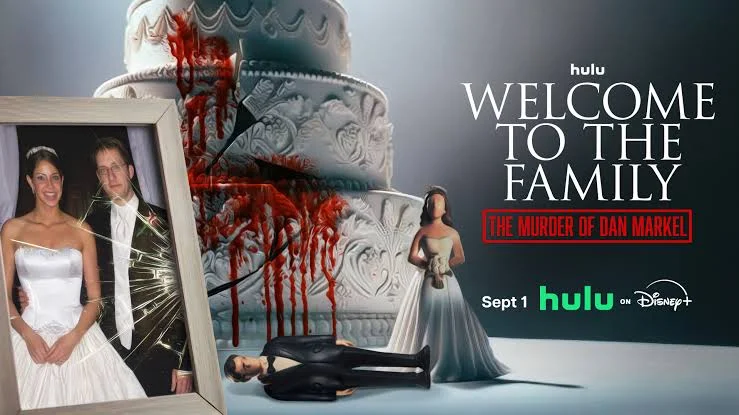
Smith also avoids the standard true-crime reenactment package. Miniature figurines and dioramas stand in for key players and locations, including a tiny Prius. A wedding cake representing Dan and Wendi’s marriage is cut apart and infested with maggots. Subtle it is not. Effective? Annoyingly, yes. The case has enough strange details already. Somehow the tiny murder car survives the competition.
A Family Under the Microscope
Once the documentary begins examining the Adelsons, Markel starts disappearing from his own story. Former neighbors and acquaintances describe Donna Adelson as controlling and intensely involved in the lives of her adult children. Eldest son Robert became increasingly estranged from the family after resisting her expectations. Charlie is portrayed as wealthy, flashy, attention-hungry, and tightly attached to his mother. Wendi, meanwhile, is repeatedly described as someone her parents continued treating like a child deep into adulthood.
Lacasse calls the family “unhealthily enmeshed,” and the series backs that assessment with very specific behavior. Wendi’s parents reportedly accompanied her during drives between Miami and Tallahassee. During the custody fight, Wendi, Donna, and Charlie were said to have discussed contributing toward a $1 million proposal designed to persuade Markel to surrender custody. Markel later sought supervised visitation involving Donna after accusing her of saying damaging things about him to his children.
This is rich material because the murder starts looking less like an isolated criminal scheme than the hideous endpoint of years of resentment, entitlement, and family loyalty curdled into something dangerous.
Yet Dan remains strangely underdeveloped. His friend Orly Lobel remembers a brilliant, ambitious public speaker with a playful side who could also irritate people. Stewart Schlazer recounts speaking with him seconds before the shooting. These glimpses suggest a person far messier and livelier than the victim-shaped outline he occupies across much of the series. The Adelsons are fascinating television. Dan Markel deserved to be equally present.
The Gaps in the Definitive Story
For newcomers, the docuseries is an excellent map through an intimidating case. Former FBI agent Pat Sanford and investigators including Craig Isom and Jason Newlin explain investigative turns cleanly. Prosecutor Sarah Kathryn Dugan helps clarify the legal progression. Charlie’s former girlfriend June Umchinda provides personal observations about his behavior, while Drina Bernhardt recounts meeting Donna in jail and says Donna tried to persuade her to lie on her behalf.
That breadth gives the series momentum, yet its selectivity becomes difficult to ignore. Certain wiretap details and coded exchanges receive little attention. The custody dispute could support an entire episode and instead arrives in compressed pieces. Journalists who spent years reporting on the case are absent, while social-media reaction montages consume minutes that might have been spent interrogating disputed evidence.
The perspective also leans heavily toward investigators, prosecutors, and witnesses whose accounts support the state’s case. Defense arguments appear, but rarely with equivalent depth. That does not erase the convictions or the evidence presented against those involved. It does make the series’ claim to comprehensiveness feel shakier.
Welcome to the Family remains absorbing because Smith understands television rhythm. Each episode closes one door and discovers another behind it, keeping an eleven-year prosecution from feeling like homework. Its polished construction makes a complicated story unusually easy to follow. Definitive true crime is a dangerous promise. There is always another file in the box.
Welcome to the Family: The Murder of Dan Markel premiered on Hulu on September 1, 2026. The four-part true-crime docuseries explores the 2014 killing of a prominent law professor and the complex murder-for-hire plot tied to a bitter custody battle.
Full Credits
Title: Welcome to the Family: The Murder of Dan Markel
Distributor: Hulu
Release date: September 1, 2026
Rating: TV-14
Running time: Approximately 45 minutes per episode
Producers and Executive Producers: Dov Freedman, Charlie Russell, David Sloan, Claire Weinraub
Cast: Pat Sanford, June Umchina, Rob Adelson, Dan Markel, Charlie Adelson, Donna Adelson, Wendi Adelson
The Review
Welcome to the Family: The Murder of Dan Markel
Welcome to the Family: The Murder of Dan Markel handles an eleven-year investigation with impressive clarity, especially when cell records, surveillance footage, Jeffrey Lacasse’s interviews, and the Adelson family dynamics begin locking together. Its miniature dioramas give familiar true-crime machinery some visual personality, and four episodes rarely feel padded. The problem is selectivity. Dan Markel gradually becomes a supporting figure in his own murder story, while disputed evidence and defense perspectives receive limited attention. Accessible, absorbing television, yes. Definitive? The jury can stay out on that one.
PROS
- Clear four-episode structure
- Strong investigative chronology
- Memorable miniature dioramas
- Excellent firsthand interviews
- Consistently effective pacing
CONS
- Markel receives too little focus
- Limited defense perspective
- Key investigative details omitted
- Social-media montages add little