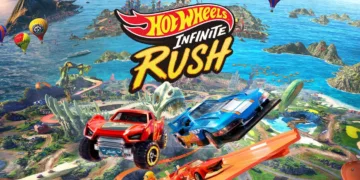





















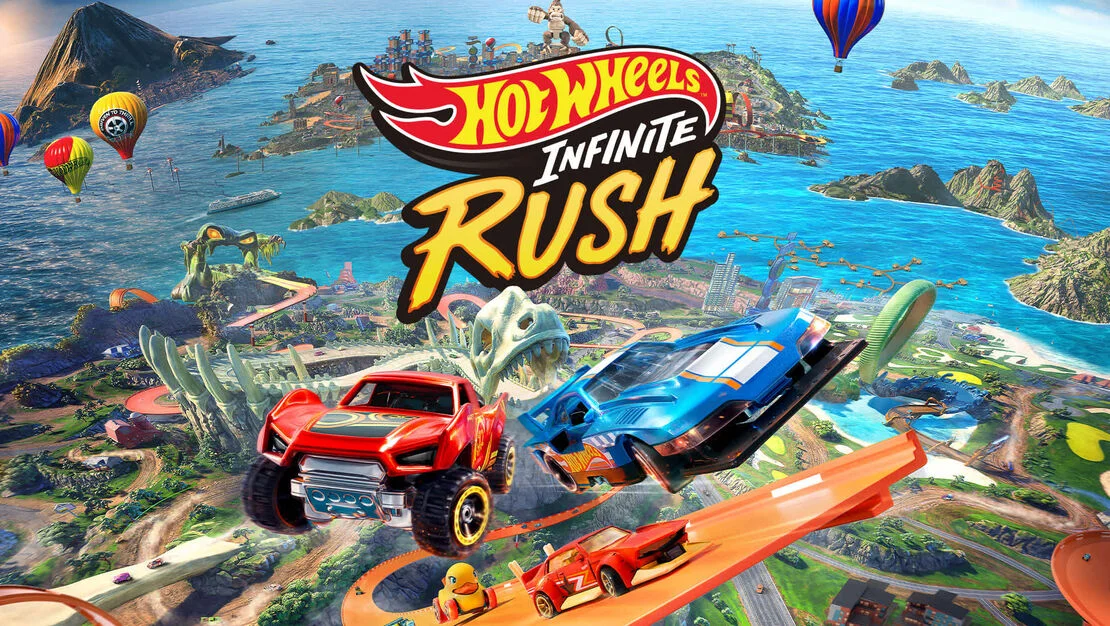

Milestone’s smartest move with HOT WHEELS Infinite Rush is giving the cars somewhere to exist between races. Previous Unleashed games treated orange track as the main event. Here, Wheelswood, Tentacle Bay, Gearville, and Drifty Temples turn the fantasy outward, letting tiny cars tear through city streets, beaches, desert stretches, and Japanese-inspired scenery under the gaze of giant gorillas, squids, scorpions, and dragons.
The setup immediately feels closer to Forza Horizon or Burnout Paradise, yet the scale stays unmistakably toy-sized. Roads, vegetation, structures, and creature props have the faintly artificial quality of pieces arranged on a bedroom floor. Some districts sell that fantasy better than others. A few open stretches could belong to almost any arcade racer. Then a colossal squid appears beside the road and the Hot Wheels identity snaps back into focus.
Four Classes, Four Ways to Misbehave
The racing remains comfortably ridiculous. Cars are light, fast, and easy to throw into corners, with drifting feeding boost and boost feeding the next reckless decision. Hit a ramp too quickly and you can correct your angle in mid-air before praying the landing sticks. Side-swiping another racer adds a scrappy physicality that fits the license far better than clean, polite competition ever could.
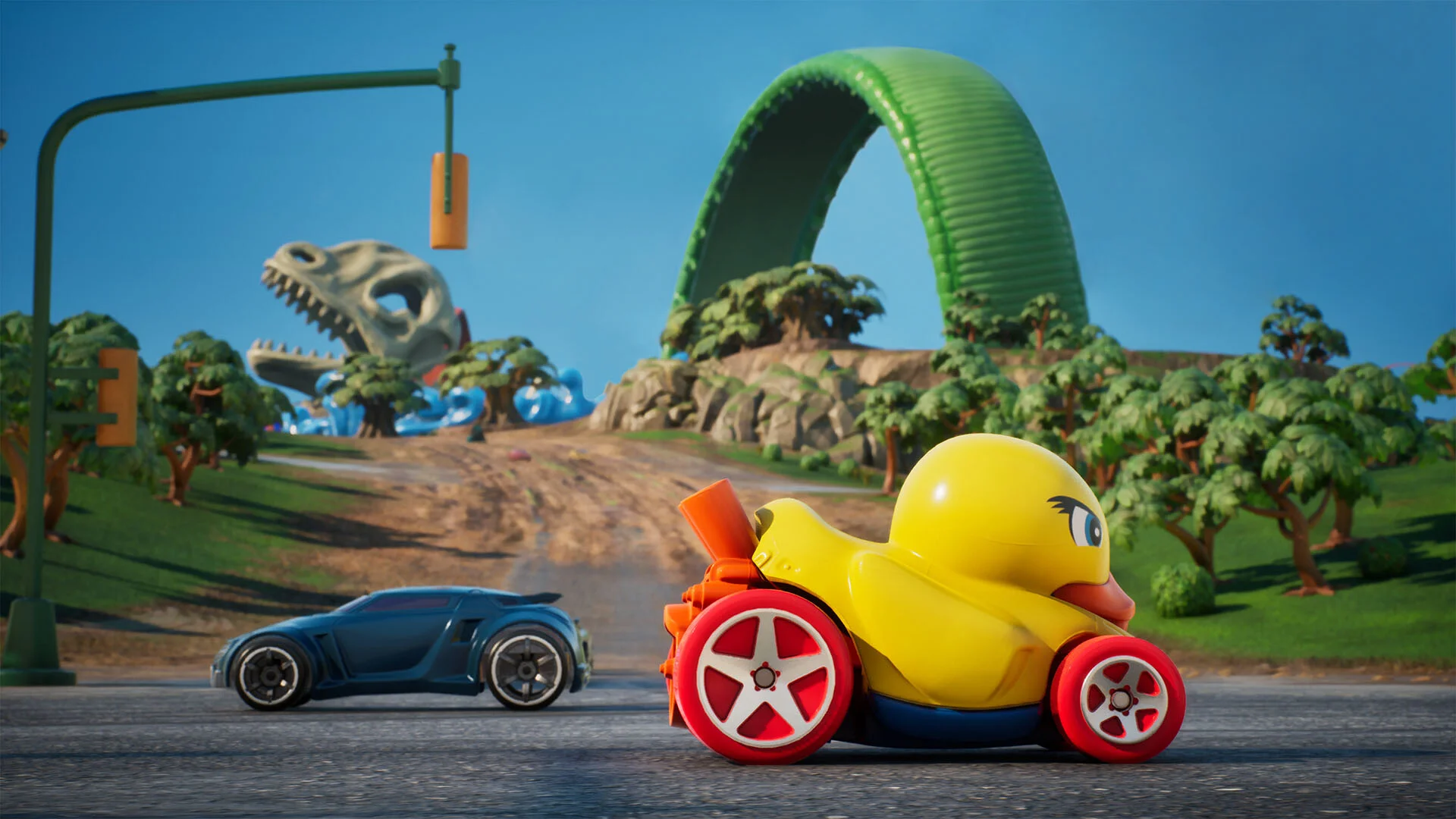
The four vehicle classes give that chaos some shape. Speeders want clean velocity. Drifters recharge through slides. Titans trade finesse for the pleasure of smashing through obstacles. Versatiles fill the middle and include some of the strangest designs in the garage, such as Feline Lucky, Duck n Roll, and Dragon Blaster. Events sometimes restrict class choice, so collecting has a practical purpose rather than becoming a garage full of trophies.
That matters because Infinite Rush launches with over 150 cars. Pink-slip-style rival races, collectible rewards, shops, and exploration keep feeding the garage, and the Rush Squad system lets you swap among selected vehicles while roaming. I liked how quickly this changes the feeling of an activity. A Titan turns a cluttered route into a demolition exercise. A Drifter asks you to treat every bend as a chance to keep the boost meter alive.
The handling has a ceiling, though. Drifting produces speed and spectacle, yet it lacks the fine correction found in something like Mario Kart. Small adjustments can feel vague, which means the difference between learning the game and truly mastering it never grows very wide.
Big Islands, Thin Spaces
Each island is packed with recognizable open-world ingredients: circuit races, point-to-point events, drift challenges, destruction tasks, hidden missions, cogs, stickers, Hot Wheels logos, and rival cars waiting to be won. Early progression asks you to collect trophies across each region before giving you greater freedom to chase whatever catches your attention.
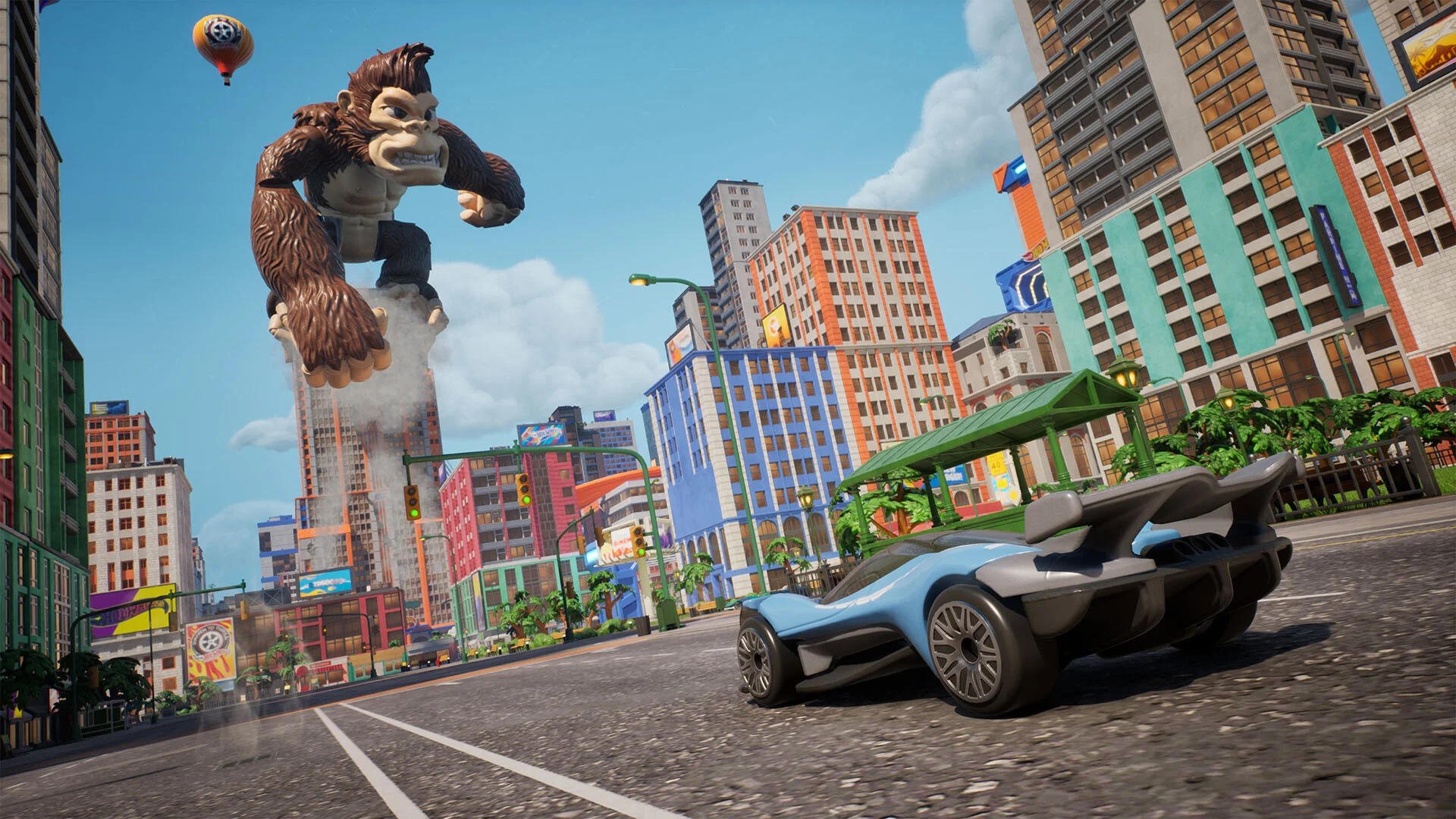
The trouble arrives after the first few hours. Driving toward the next marker can feel empty once the visual surprise of a new island wears off. There are stretches where I wanted something small to interrupt the commute, a speed trap, a strange roadside challenge, anything that turns travel itself into play. Forza Horizon is especially good at making the distance between events feel active. Infinite Rush too often treats that distance as connective tissue.
The cars help carry those quieter moments. Reflections slide across the die-cast bodies beautifully, decals and surface wear give individual models personality, and the mix of metal, plastic, glass, and rubber sells the illusion that these really are collectible toys brought to life. Engine audio has the same confidence, with exaggerated pops and growls giving tiny vehicles absurdly muscular voices.
The soundtrack is far less successful. Its small pool of bright tracks begins repeating early, and repeated loading between menus, restarts, and island travel makes the downtime easier to notice. Reports of an occasional harsh audio glitch make headphones a riskier proposition than they should be.
Build the Fun Yourself
The Track Builder may be where Infinite Rush finds its longest life. Courses can wrap around open-world terrain and buildings, climb across elevation changes, and incorporate recognizable pieces such as Shark Jaws and Spider Ambush. Action markers even teach AI racers how to behave on custom layouts before those creations are shared with other players.
That toolset understands something important about Hot Wheels. Playing with the toys was rarely about accepting the track exactly as it came out of the box. Rearranging pieces, extending turns across furniture, and inventing impossible layouts was part of the pleasure. Letting players shape tracks around the islands captures that feeling better than another hundred fixed races could.
The car editor extends the same idea through materials, glass tint, tires, exhaust effects, decals, stickers, liveries, and logos. Local two-player racing survives alongside online competition, and difficulty options, slower gameplay speeds, and full control remapping make the game unusually accommodating for younger players or anyone learning racing games for the first time.
I keep coming back to the moment a ridiculous car launches from an orange ramp into a landscape that looks too large for it. That image works because the game understands the emotional scale of Hot Wheels. These toys always felt bigger once imagination took over.
The Review
HOT WHEELS Infinite Rush
Hot Wheels Infinite Rush is at its best when the world feels like a toy box somebody forgot to tidy. Switching from a Titan smashing through obstacles to a Drifter carving corners gives its huge garage purpose, while pink-slip races and Track Builder creations keep the collecting fantasy alive. The four islands can feel strangely empty between events, and imprecise drifting keeps the handling from gaining much competitive depth. Still, Milestone understands the pleasure of picking a ridiculous little car, pointing it toward something impossible, and flooring it.
PROS
- Distinct four-class handling
- Excellent die-cast presentation
- Over 150 collectible cars
- Flexible Track Builder
- Strong accessibility options
CONS
- Open world can feel sparse
- Drifting lacks precision
- Repetitive soundtrack
- Noticeable loading interruptions
- Reported audio glitch