



















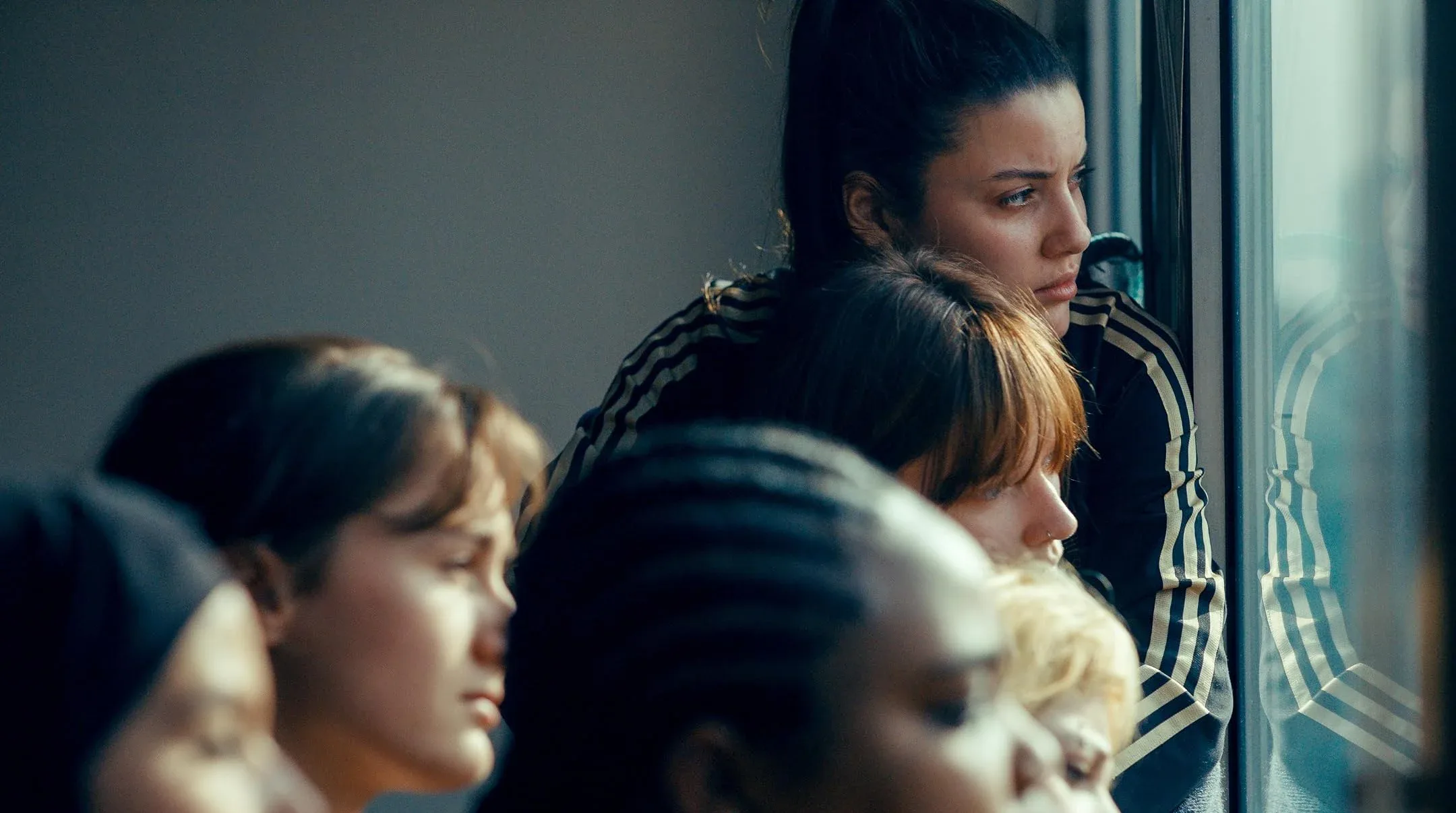

Confinement practically writes the criticism for a psychiatric ward: locked doors, confiscated phones, teenagers staring through windows, adults asking questions with clipboards nearby. Cédric Kahn seems aware of that temptation in 15/18 A Place to Heal, which is why the film becomes interesting precisely when the metaphor stops behaving. The ward restricts these teenagers, certainly. It may also be the safest place some of them have.
That distinction matters. Seventeen-year-old Lucia arrives already knowing the routines, protesting as her phone and lighters are confiscated while trading familiar remarks with the staff. Her return has the strange social energy of someone coming back to a place she dislikes but understands.
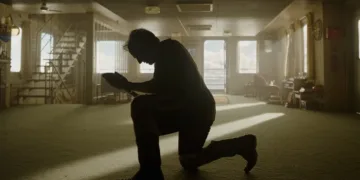
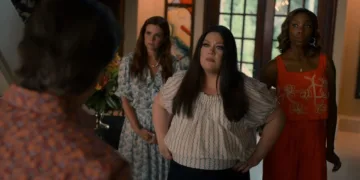
Around her are adolescents dealing with abuse, suicidal thoughts, hallucinations, grief and fractured families. Patrick Ghiringhelli’s camera keeps close to them, moving through treatment rooms, bedrooms and communal spaces with an alert, almost documentary responsiveness. The outside world exists largely as something glimpsed or imagined.
My first impulse was to read all this as an indictment of psychiatric care. Kahn gives us the visual vocabulary of incarceration and plenty of institutional coldness to support it. Then Charline sits in a meeting trying to speak about her depression while her separated parents argue over her. Yasmine insists that abuse inside her family was somehow protection. Eloïse can tell a member of staff about an earlier sexual trauma that she cannot tell her own family. The argument changes.
Call it delegated damage. The institution inherits injuries it did not create, then gets judged for being unable to repair them cleanly. This does not absolve the adults working there. Kahn, who plays the ward’s chief psychiatrist Étienne, gives the staff their own unsettling mixture of care and fatigue.
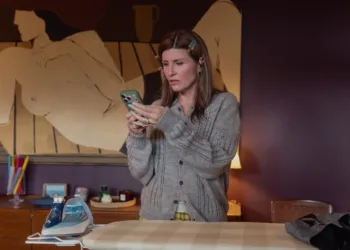
Some respond to suicidal declarations with a bluntness that initially feels appalling. New intern Jules offers the opposite perspective, arriving with the nervous conviction that empathy should be enough and discovering, rather quickly, that empathy can get punched in the face. His early assault during an assessment is funny for half a second, then frightening, then instructive. Good intentions are not yet competence.
The staff’s emotional distance begins to resemble occupational armor rather than simple indifference. Nurse Carole cannot react to every crisis as though it were the first she has witnessed. Étienne cannot transform every assessment into therapeutic intimacy. They are responsible for keeping people alive inside a system where affection, authority and surveillance constantly overlap. Kahn refuses to make this reassuring. He is too interested in the ugly mechanics of care.
The film’s loose ensemble construction helps. Early scenes accumulate instead of marching forward. A dispute over music during a meal escalates into a food fight. Patients move from jokes to rage with almost no warning. Medication changes the energy of a room. Small conversations carry information that a conventional screenplay would probably underline twice and then schedule for payoff twenty minutes later.
There is generosity in this looseness because the teenagers are allowed to be irritating, cruel, hilarious and exhausting without those qualities becoming diagnoses. Mental illness does not confer saintliness. Apparently cinema still needs reminding.
The method creates one of the film’s problems too. Kahn and co-writer Kahina Le Querrec developed the screenplay after observing real psychiatric wards, and the cast mixes experienced performers with newer faces. The preparation gives many communal scenes an unruly credibility. Elsewhere, the intensity begins to resemble actors demonstrating instability for the camera. A shout lands too perfectly. A breakdown feels fractionally aware of its own dramatic usefulness. The border between observational fiction and performed authenticity becomes visible.
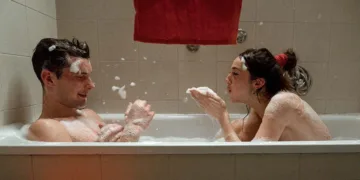
That weakness seems to argue for a harsher, less fictional film. Enzo’s arrival makes the opposite case. Volatile, swaggering and immediately disruptive, Enzo first gravitates toward Lucia before forming a relationship with the quieter Eloïse. His presence narrows a film that had resisted narrowing.
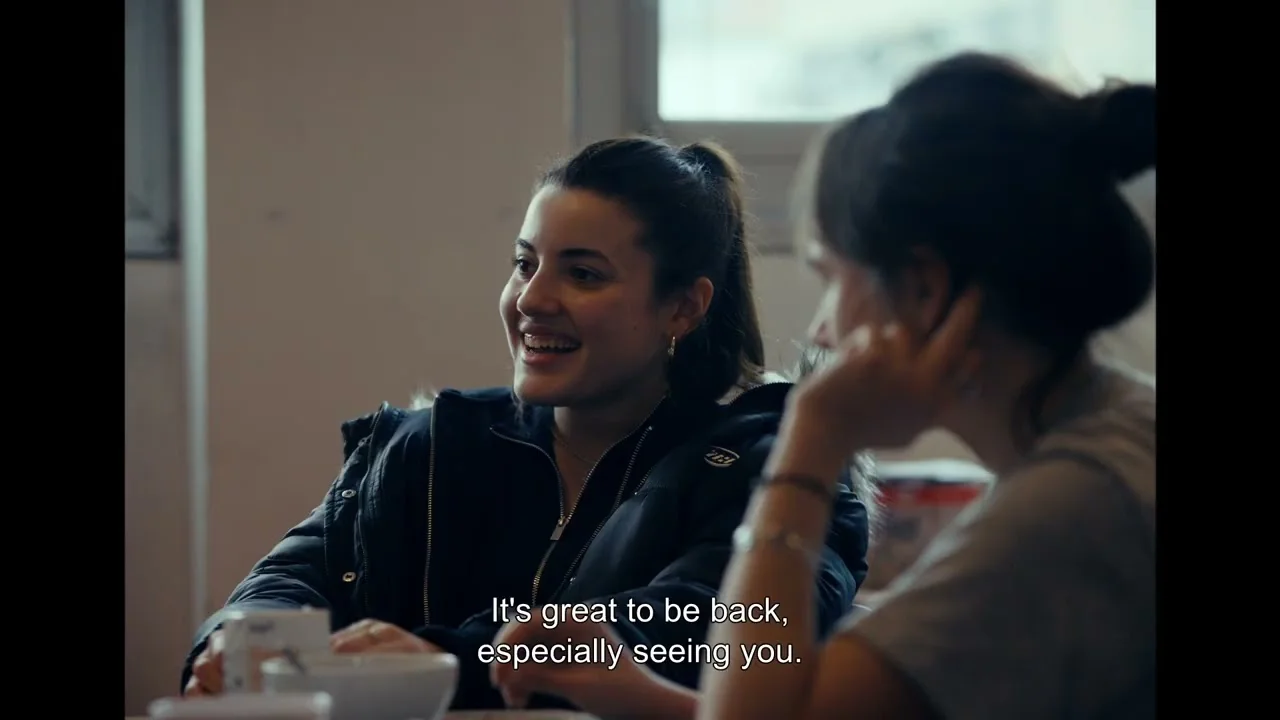
The ward’s competing crises begin to recede, and something resembling a conventional teenage love triangle takes their place. Eloïse, whose reserve had previously felt like one note among many in the ensemble, becomes central. Enzo offers attention, escape and the intoxicating possibility that she might briefly live inside a story unrelated to her diagnosis.
This is also where A Place to Heal risks losing its nerve. The late movement toward arson, escape and young lovers on the run belongs to a different cinematic register from the jittery institutional realism that precedes it. Patients we have spent substantial time with are left behind. Their crises do not resolve because the film has found a cleaner narrative engine elsewhere. Enzo can feel less like a person than a delivery system for plot. And yet the shift contains the film’s most provocative idea.
For most of the running time, these teenagers are interpreted by other people. Doctors assess them. Parents explain them. Records describe them. Medication regulates them. Even the camera observes them with the alertness of someone gathering evidence. Once Eloïse leaves the ward, that framework loosens. Ghiringhelli’s cramped interiors give way to open space, and the visual release is almost embarrassingly effective. You realize how little air the film has permitted until it suddenly gives her some.
Freedom here is plainly dangerous. Kahn does not confuse escape with recovery. Enzo’s affection may contain manipulation, Eloïse remains vulnerable, and running away from psychiatric care cannot erase the circumstances that brought her there. The romanticism is suspect. It is also hers.
That is the contradiction Kahn appears willing to accept. Treatment can preserve a life while still reducing that life to symptoms, risks and procedures. A teenager may need protection from her own impulses and still need the chance to imagine herself as somebody other than a patient. The film never solves that equation because any clean solution would probably be dishonest.
The English subtitle promises a place where people heal. Kahn offers something less comforting: a place where damaged young people may be kept alive long enough to reclaim some authorship over what happens next. Recovery has terrible branding. Sometimes that reclamation looks sensible. Sometimes it looks like setting fire to the rules and running.
15/18 A Place to Heal had its world premiere in the main competition at the 83rd Venice International Film Festival on September 4, 2026. The French drama follows two teenage girls admitted to an adolescent psychiatric ward, exploring the raw daily realities and emotional landscapes of young people navigating psychological distress.
Full Credits
Title: 15/18 A Place to Heal
Distributor: Ad Vitam
Release date: September 4, 2026 (Venice International Film Festival)
Running time: 1 hour 45 minutes (105 minutes)
Director: Cédric Kahn
Writers: Cédric Kahn, Kahina Le Querrec
Producers and Executive Producers: Alexandra Henochsberg
Cast: Zoé Monpart, Malou Khebizi, Kenji Peyran, Patience Munchenbach, Sophie Guillemin, Maria Cavalier-Bazan, Antoine de Foucauld, Jennifer Decker
The Review
15/18 A Place to Heal
15/18 A Place to Heal finds its strongest idea inside a contradiction: the ward can resemble confinement while remaining one of the few spaces actually trying to keep these teenagers alive. Cédric Kahn's observational approach occasionally makes performed distress feel conspicuous, and Enzo's arrival pushes the film toward a tidier dramatic register. Yet that same rupture gives Eloïse's escape real philosophical weight. Healing here is less about repair than recovering some authorship over a life others have spent defining.
PROS
- Rich tension between care and confinement
- Strong ensemble observation
- Eloïse's arc gives the finale weight
- Sharp use of institutional space
- Humane treatment of patients and staff
CONS
- Some performances feel overly demonstrative
- Enzo sometimes functions as a plot device
- Final act sidelines parts of the ensemble
- Romantic escape pushes against the earlier realism