

























By the back half of the original Graveyard Keeper, the work itself had become part of the challenge. Every plank, ingredient, corpse, and crafted component could send you walking between workstations, storage areas, NPCs, and production spaces. The game had plenty of systems, yet too often the player served as the conveyor belt connecting them. Graveyard Keeper 2 clearly remembers that frustration. Its biggest improvement comes from changing who performs the labor and, eventually, how entire production chains fit together.
That makes this feel like a particularly direct sequel. The systems that defined the first game are still recognizable: corpse preparation, cemetery management, crafting, farming, sermons, technology upgrades, quests, and friendly zombies all return. This time, though, the Keeper has a much larger problem waiting outside the graveyard.
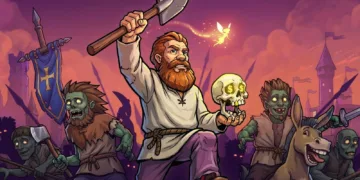
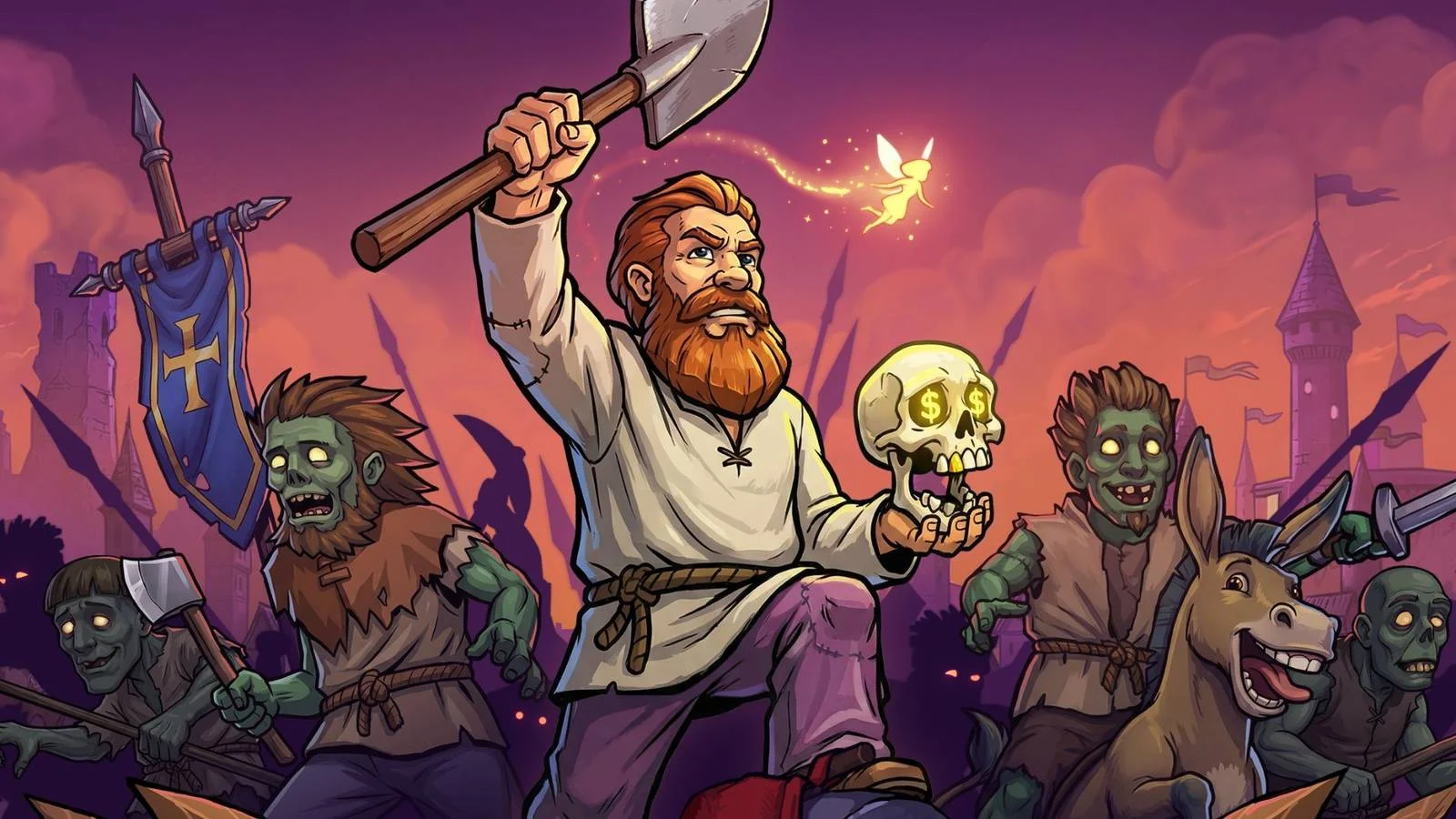
The story follows another version of the Keeper, created when the protagonist was apparently split into two beings. He awakens imprisoned, receives some unexpected help from a fairy, reunites with talking skull Larry, and soon discovers that the Town has been consumed by a zombie apocalypse connected to his counterpart’s actions. Before long, he is handling graveyard duties while serving as an Inquisitor and helping reclaim the Town.
For returning players, that expanded responsibility changes the scale immediately. The first game could make farming, alchemy, corpse preparation, church duties, and crafting feel like adjacent professions competing for your time. The sequel makes a stronger effort to turn them into parts of the same economy.
Zombie workers are the clearest example. They originally arrived through the first game’s Breaking Dead DLC, where delegation provided some relief from its increasingly demanding production loops. Here, zombies feel much closer to a central design pillar. They can gather resources, perform crafting jobs, use tools, gain their own progression points, and acquire perks. Even corpse preparation feeds into that system, since the condition of the body used for resurrection can affect how capable that worker eventually becomes.
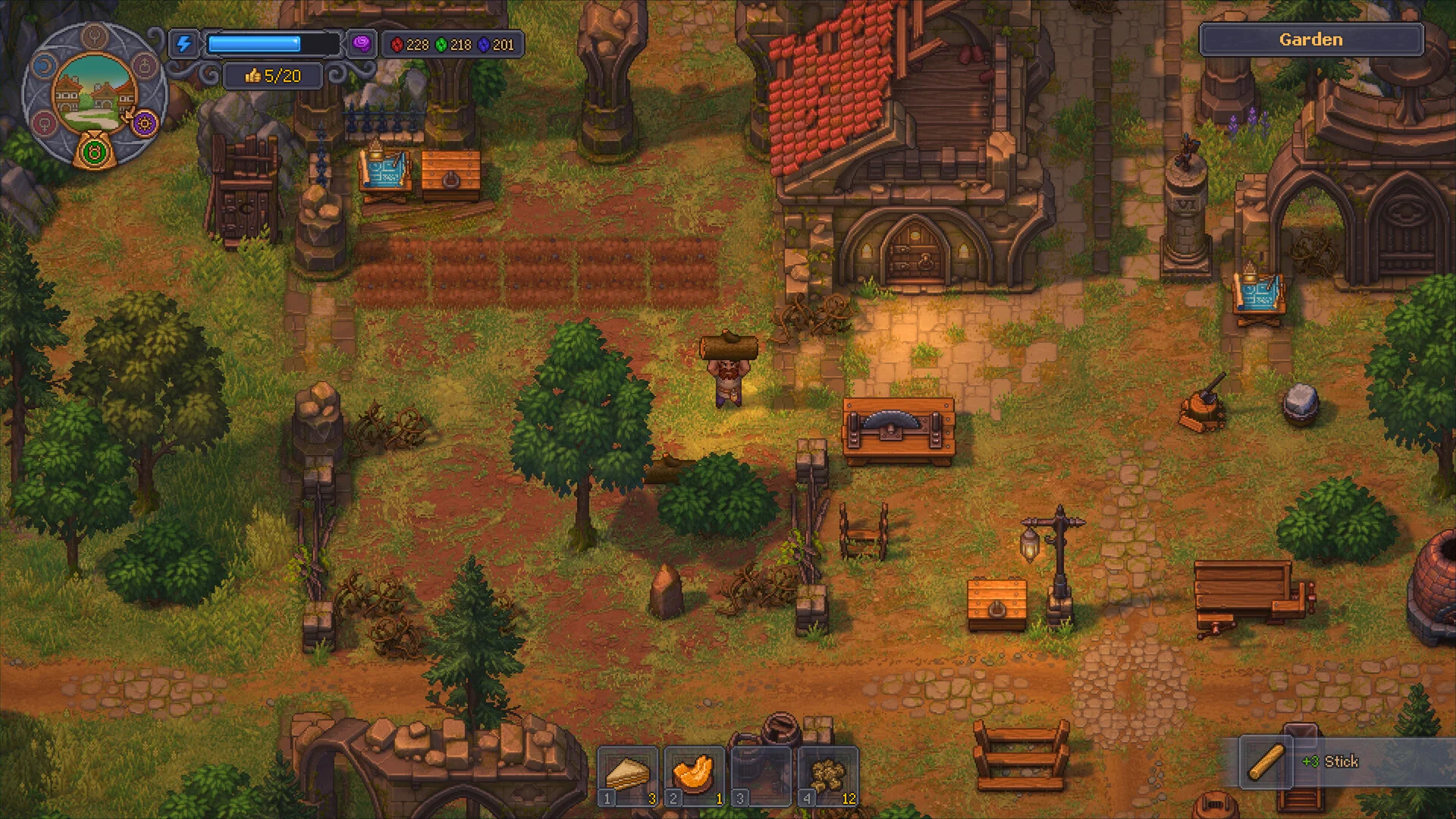
Later, machinery and conveyor belts push this idea further. Instead of personally carrying materials through every production stage, you begin arranging systems that can keep goods moving without constant supervision. It changes the player’s role in a meaningful way. You are still chopping, crafting, digging, cooking, and processing bodies, especially earlier on, but the long-term goal shifts toward organizing labor rather than personally performing every repetitive step.
That is exactly the kind of sequel improvement I want to see. Lazy Bear Games has taken a weakness that emerged naturally from the first game’s growing complexity and built part of the sequel around correcting it. Automation does not strip away the management. It gives the management somewhere new to develop. Unfortunately, the series’ other great source of friction has survived much of the transition.
Graveyard Keeper 2 loves dependencies. Technology points unlock recipes and buildings. Tools affect what tasks you can perform efficiently. Perks improve particular abilities. Inspirations provide another progression route and require Faith, a resource that can become increasingly expensive to spend as higher-level upgrades appear. Quest progression can lock parts of the technology tree, while certain activities remain unavailable until another requirement has been satisfied somewhere else.
There is pleasure in finally understanding those chains. One of the better rhythms described by the game is getting stuck on a set of quests, abandoning them for a while, exploring elsewhere, discovering an overlooked requirement, and returning to find several blocked objectives suddenly moving again. The original game already understood the satisfaction of learning how its strange world operates, and the sequel preserves that.
The difficulty comes from telling deliberate discovery apart from missing information. Quest descriptions can be sparse. Important relationships between NPC tasks are not always obvious. Some resources or mechanics receive little explanation despite sitting inside increasingly complicated chains.
Faith can become a bottleneck because upgrades and progression demands begin competing for it. Combat itself can remain inaccessible until the required protection level has been reached, preventing experimentation before the game decides you are prepared. Automation fixes the physical inconvenience of doing everything yourself, but it cannot fix confusion about what the game expects you to do next.
The new combat system makes that distinction even clearer. Parts of the Town have been taken by zombie hordes, and reclaiming them means entering battles built around capturing and holding zones. The Keeper can fight directly with weapons, while mercenaries or zombie soldiers can be positioned around the battlefield. Barricades, towers, and other defenses can help maintain captured areas until the objective is secured.
Conceptually, this is a smart expansion of the first game’s economy. Crafting weapons and armor now contributes to reclaiming territory. Zombie production feeds a military workforce as well as an industrial one. Winning battles opens parts of the Town, giving all that preparation a visible effect beyond improving another workstation.
The actual fighting is simpler than the production systems feeding it, though. Battles function as short bursts of territorial control rather than a tactical layer with the same depth as crafting or automation. That leaves combat in a slightly awkward position. It gives the sequel a larger sense of purpose, yet it rarely feels as developed as the management systems surrounding it.
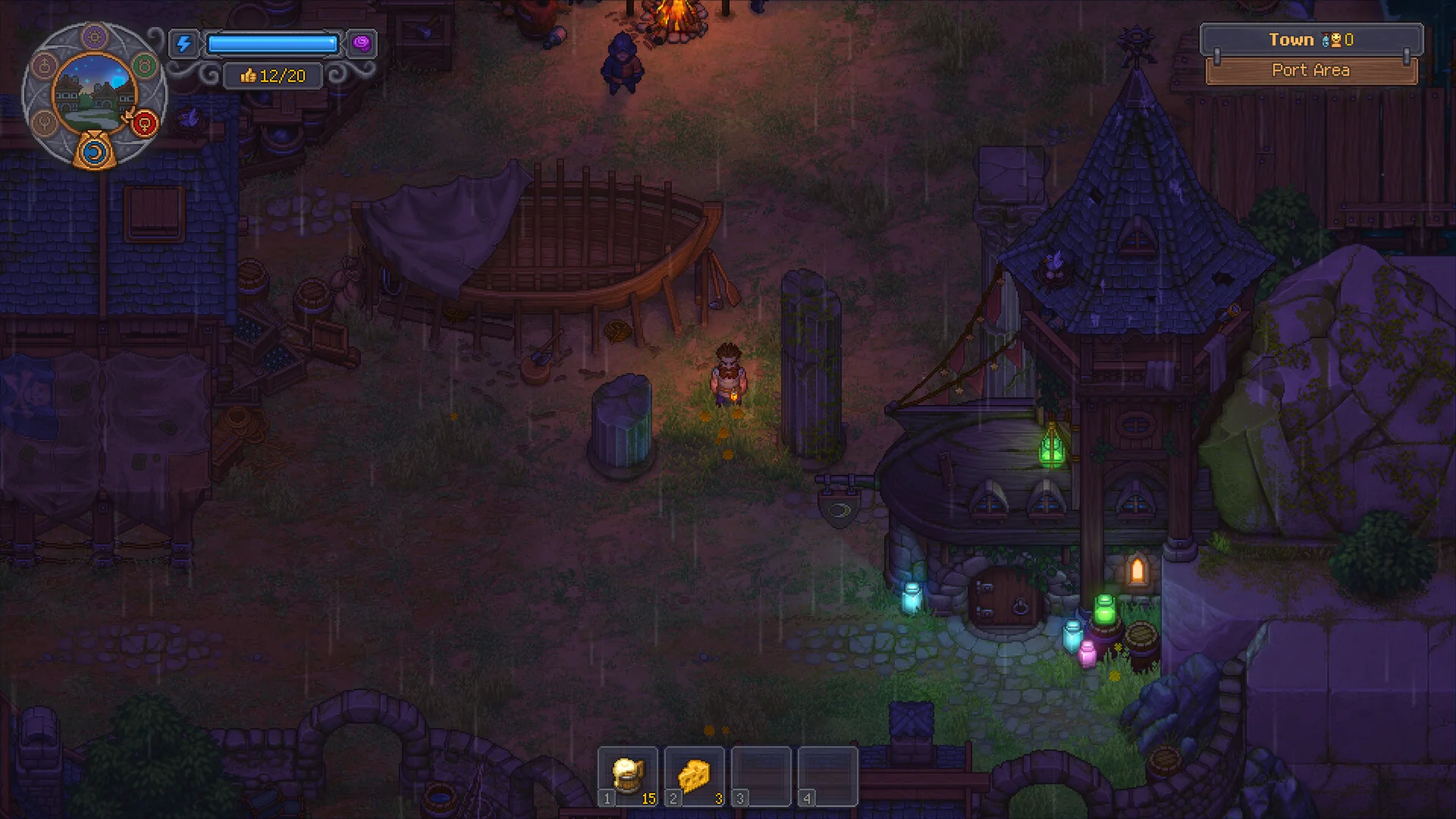
That difference says a lot about how Graveyard Keeper 2 has changed. The cemetery still matters, and preparing bodies still feeds several important mechanics, but gravekeeping now sits inside a much larger machine. For some returning players, that expansion will feel like the natural next stage for the series. Others may miss the narrower identity of a game where the cemetery carried greater weight on its own.
The story helps keep that expanding machinery recognizable. Larry’s return immediately restores some of the first game’s personality, while the mystery surrounding the two Keepers gives veterans extra context without making prior knowledge mandatory. The humor remains rooted in the same wonderful lack of ceremony around horrible behavior. Corpses are resources. Zombies are employees. Religious duties coexist comfortably with dismemberment, industry, and municipal administration.
Full voice acting gives those characters greater presence than before, while the option to restore the old mumbling vocals is a thoughtful concession to players attached to the original presentation. The pixel-art style has received similar treatment.
It remains recognizably Graveyard Keeper, with added environmental movement, lighting, shadows, and animation detail instead of a complete visual reinvention. That continuity suits a sequel whose strongest changes come from reorganizing familiar labor rather than discarding it. The Keeper may finally have conveyor belts to carry the planks, but figuring out why he needs those planks in the first place can still be the harder job.
The Review
Graveyard Keeper 2
Graveyard Keeper 2 understands exactly where its predecessor became exhausting and builds its strongest new system around that problem. Automation gives the expanding production chains real purpose, while the larger Town and zombie battles widen the series without erasing its macabre personality. Some familiar frustrations remain, especially unclear progression, Faith bottlenecks, and combat that never matches the depth of the management systems. Even so, this is a smart sequel that improves the work while preserving the weird charm that made the first game memorable.
PROS
- Automation meaningfully improves the original formula
- Stronger connections between management systems
- Morbid humor remains intact
- Expanded Town gives progression greater purpose
- Voice acting adds personality
CONS
- Progression can still be frustratingly opaque
- Faith creates noticeable bottlenecks
- Combat lacks the depth of the management systems
- Some mechanics remain poorly explained