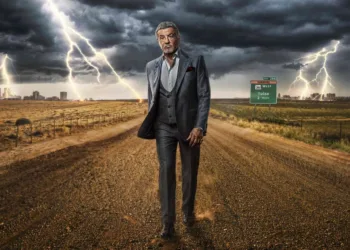



























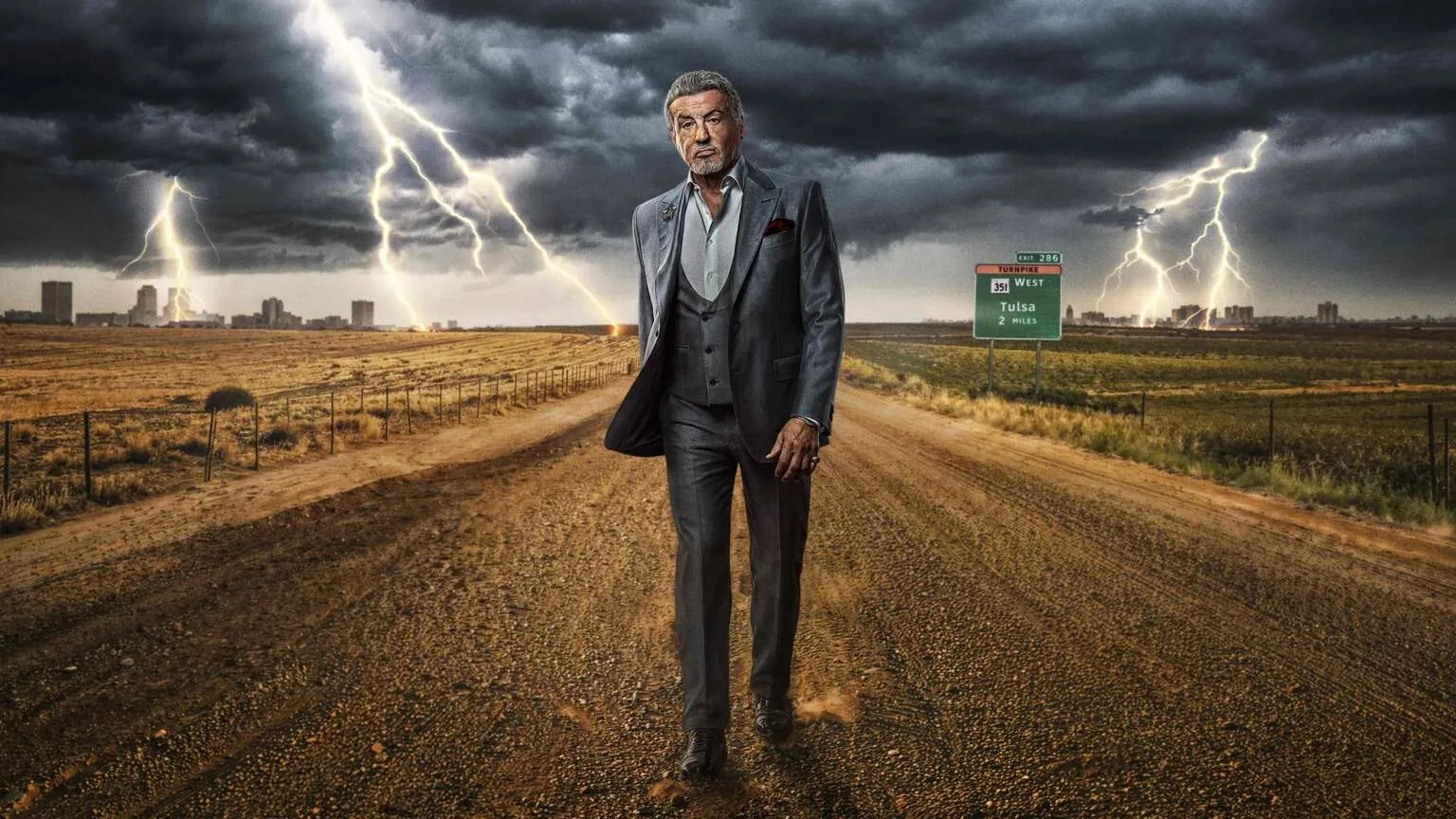

Dwight “The General” Manfredi starts the premiere holding nearly everything his Oklahoma exile was supposed to earn him. A federal license lets him distribute Montague Distillery’s 50-year-old bourbon nationwide. His arrangement with FBI agent Musso runs on cooperation rather than threats, and his relationship with Margaret Devereaux is going well. He expects the new governor, Cal Thresher, to be a friend, and he has bought peace with New York’s Quiet Ray by giving him a percentage of the distillery. Even the wardrobe has been approved. In the opening shot, his sister Joanne stands in a tailor’s shop and steers him toward a brighter palette, away from his New York mobster suits.
What follows in Tulsa King’s fourth season is the dismantling of that position, and the premiere does the first structural work. Terence Winter, back from the first season, writes the episode alone, and he builds the peak so he can spend it. At a meeting of bosses from around the country, Ray reminds Dwight and Kansas City’s Bill Bevilaqua how vicious he can be. Lieutenant Governor Amanda Clark, a law-and-order type who understands exactly what Dwight is, waits behind the governor. Ray, meanwhile, goes shopping for an assassin in Turco. The episode then closes on its biggest decision. While Mitch oversees an insurance scam at the car dealership, Dwight hears terrible news from Joanne, a personal loss I will leave unspecified.
The renewal for a fifth season, with production moving to New York, shapes that decision. Nobody watching believes the season will end its lead, so the writers spend the people around him. It is a sound instinct, and Stallone rewards it. The grief gives him his first extended chance since the opening season to play loss instead of swagger, and the stillness he finds there is some of the best acting the series has asked of him.
The harder question is what the show allows to last. Ray, Bevilaqua, Musso and Thresher all carry over, so this is not an anthology. What resets is cost. Tina Manfredi and Cleo Montague are written out and then ignored, and Jackie Ming’s death in season two gets cited without ever being put to work. Dwight is quickly an underdog again, an outside force again arrives to tear down his empire, and his crew again rallies because, as he tells them, they are family. The move to New York, already on the calendar, makes Tulsa’s holdings feel disposable. A federal bourbon license is a long-term asset in a series that has stopped believing in the long term.
Where the season is sturdy, its threads feed each other. Margaret is the hinge. She brokers between Dwight and Thresher, and her horse ranch is the land a German tech executive (Flula Borg) wants to seize through eminent domain for a data center, with Clark appearing to sit in the executive’s pocket. Politics, technology and Dwight’s private life meet in a single set of stakes. The criminal side works the same way. Bevilaqua plays both sides of the Dwight and Ray conflict, Vince (Vincent Piazza), a former Invernizzi capo, now works for Ray, and the Dwight-Bevilaqua relationship keeps swinging between alliance and hostility, each swing changing what the other threads can do. Pressure arrives from several directions with no single cartoon villain in front of it, and the show keeps its construction legible for the choice.
The parallel threads are another matter. Tyson’s rap career, run with Bodhi, detours into an Ecstasy side hustle with Spencer (Scarlet Rose Stallone) that runs afoul of well-connected dealers, a premise that could in principle reach Dwight. Four seasons in, however, Tyson has acquired no extra caution and still pays no price for his blunders, so a thread built to accumulate danger accumulates nothing. Mitch’s dealership scam and his romance with Spencer, which carries an eighteen-year age gap the script never addresses, keep him busy without altering anyone else’s course.
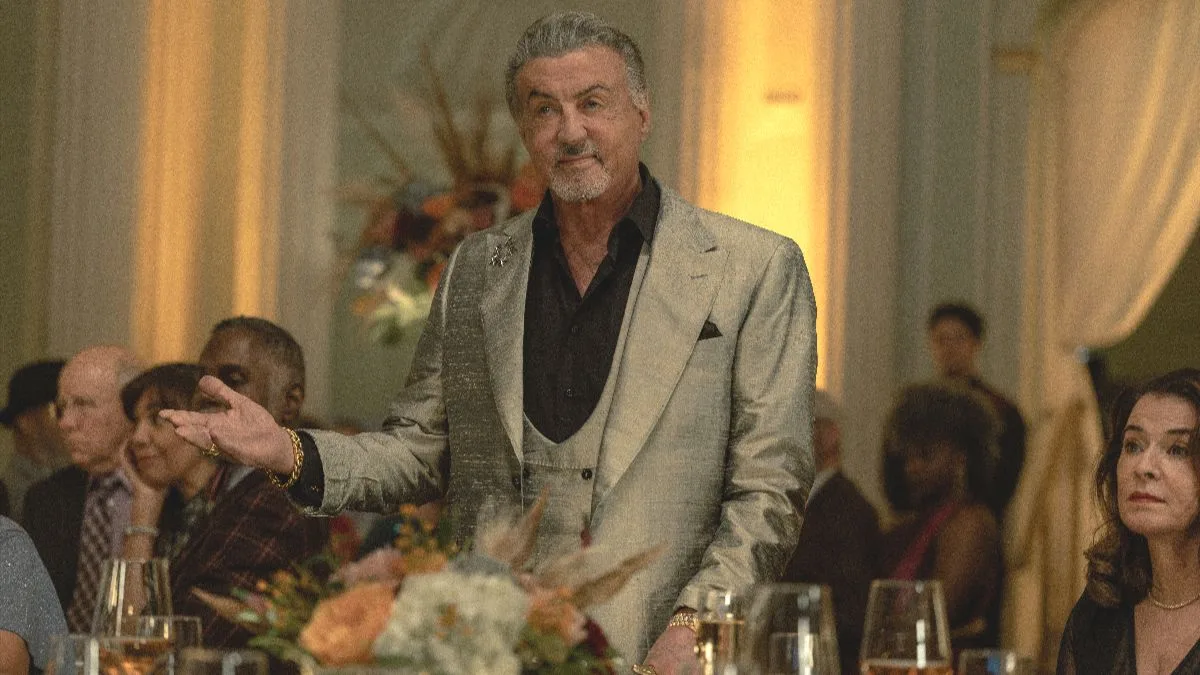
Bodhi’s flirtation with wine forgery, through a restaurateur peddling fake rare bottles at four figures apiece, arrives as one more parallel scheme. These threads supply activity without momentum: each begins, runs and is replaced, and few leave anything behind for the next scene to use. Bodhi at least earns his place, reasserting himself as someone who matters to Dwight beyond the quips, and Joanne slowly becomes the show’s emotional anchor, a promotion the writing never announces.
Tone is where the season’s control gets tested. Goodie and Vince shoot their way out of a white supremacist gathering at a restaurant where they happened to be eating, then leave on a comic ethnic line. Elsewhere a fossilized dinosaur skull is put to fatal use on someone’s head, and the violence runs graphic enough that this reads as the bloodiest season yet. Each scene entertains on its own terms. The premiere’s grief has to share a season with both.
The chatbot scenes carry the weight of that coexistence. Dwight, grieving, asks a chatbot whether God exists, and the scene is staged as though the answer carries real authority. On paper it is the season’s riskiest idea, since a gangster descended from the tradition of Goodfellas and Casino does not obviously take his spiritual questions to software. Stallone nearly saves it. He plays the exchange as an intimate confession, which turns a premise that reads as tasteless into a man talking to the only listener available at that hour. The “nearly” matters, because the show has already put a sister, a girlfriend and a crew that calls itself family within earshot, and the scene asks us to accept a text box as the best listener in Oklahoma.
Tulsa King returned for its fourth season on Paramount+ on October 16, 2026. The crime drama series follows former New York mafia capo Dwight “The General” Manfredi, who continues building his unexpected empire in Oklahoma while clashing with local power players, federal agents, and rival mobs. You can stream new episodes weekly exclusively on Paramount+.
Where to Watch Tulsa King Season 4 Online









Full Credits
Title: Tulsa King (Season 4)
Distributor: Paramount+
Release date: October 16, 2026
Rating: TV-MA
Running time: 40–50 minutes per episode
Director: Craig Zisk, Allen Coulter, Joshua Marston
Writers: Taylor Sheridan, Terence Winter, Sylvester Stallone, Dave Erickson, Joseph Riccobene
Producers and Executive Producers: Taylor Sheridan, Terence Winter, Sylvester Stallone, David C. Glasser, Ron Burkle, David Hutkin, Bob Yari, Thomas Kelly, Keith Cox
Cast: Sylvester Stallone, Martin Starr, Jay Will, Vincent Piazza, Annabella Sciorra, Frank Grillo, Neal McDonough, Garrett Hedlund, Dana Delany, Gretchen Mol, Kevin Pollak
Director of Photography (Cinematographer): Cameron Duncan, Joseph E. Gallagher
Editors: Christopher S. Capp, Ned Bastille, Matthew V. Colonna
Composer: Danny Bensi, Saunder Jurriaans
The Review
Tulsa King Season 4
Tulsa King’s fourth season builds a handsome peak and spends it with purpose. Stallone’s grief and the interlocking pressure around Margaret, Ray and Bevilaqua give the first stretch real structure. The spine bends where the show stops tracking cost: departed characters vanish, the parallel threads for Tyson, Mitch and Bodhi mostly circle without consequence, and the chatbot scenes lean on Stallone to rescue a shaky idea. Entertaining by the scene, uneven by the season, and with Tulsa already on its way out, it is hard to say what the structure is for.
PROS
- Stallone’s grief is the best acting the series has asked of him.
- Margaret’s ranch ties the political, technological and personal stakes together.
- Pressure comes from several directions with no single cartoon villain.
- Bodhi earns his place, and Joanne quietly becomes the emotional anchor.
CONS
- Written-out characters and past events leave little trace on later seasons.
- The Tyson, Mitch and Bodhi threads supply activity without momentum.
- Mitch’s romance carries an eighteen-year age gap the script never addresses.
- The chatbot scenes need Stallone’s performance to justify a risky premise.