

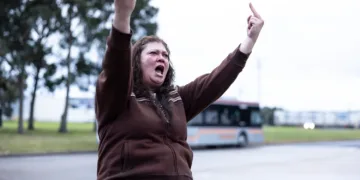


















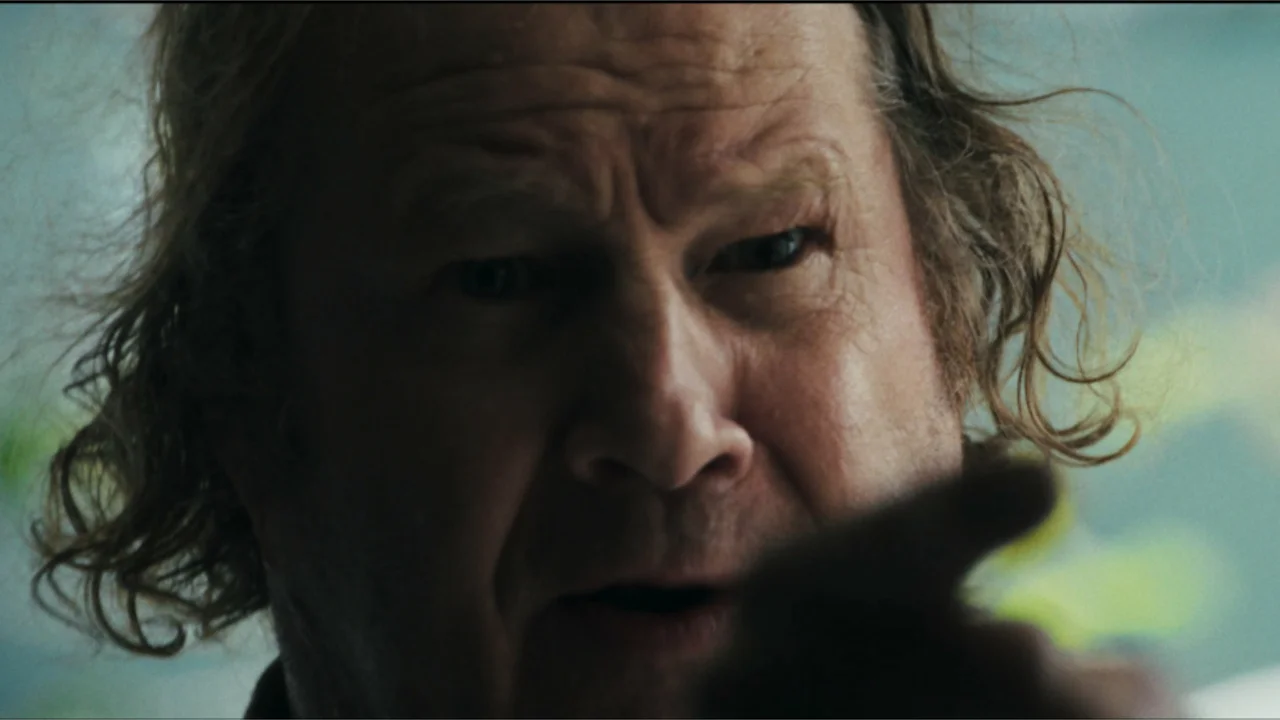

Ten tries to make money washing strangers’ windshields while rain is already doing the job. On Alvarado Boulevard, he pushes an unwanted service onto motorists because he needs something from them, and the weather has made his pitch particularly absurd. His van has broken down. Recently released from prison, he needs to reach the East L.A. Sheriff’s Department by 2 p.m. to register as a sex offender. Missing that appointment could put him back behind bars. He has picked a terrible way to solve an urgent problem.
The scene gives us two things to follow at once: the practical difficulty Ten faces and his disregard for everyone else’s wishes. Max DeFalco keeps both active throughout Ten Will. We can understand why this man needs money without accepting his behavior toward the people who might provide it. That distinction gives the comedy its uncomfortable traction. Each attempt to obtain transport offers a small, recognizable objective, while Ten’s manner makes helping him feel like an invitation to further trouble.
Mikul Robins is excellent at keeping that friction alive. His whining has the persistence of someone convinced that explaining his predicament again should produce a different answer. He narrows his eyes until reading his intentions becomes difficult, giving us little of the reassuring openness that often softens an abrasive screen protagonist. I appreciated how little the performance asks us to admire his endurance. The effort is visible, but so are the entitlement and evasiveness. Robins allows Ten to be watchable for reasons that have very little to do with liking him.
The deadline supplies a useful piece of storytelling machinery. Once a film establishes a fixed appointment, every failed solution consumes something the character cannot replace: time. DeFalco can move between hitchhiking, attempts to borrow a vehicle, and the windshield scheme without losing the audience’s sense of direction. Meanwhile, details of Ten’s offense remain withheld. The task is clear long before the man becomes clear, creating room for our investment in his progress to get ahead of our confidence in his account of himself.
Brandon D. Hill’s cinematography makes that progress feel agitated. A snap zoom rapidly tightens or widens the framing without requiring the camera to travel, and the repeated zooming here gives attention a nervous, searching quality. The image seems impatient with its own distance from Ten. Long-lens photography, which permits filming from farther away, also suits this production’s encounters with actual city activity. Footage at a fast-food drive-through was captured from a nearby parked car. That position allows the scene to occupy a functioning public space, with all the inconvenience and indifference that entails.
Traffic and helicopters remain audible, supplying a city that refuses to quiet down for one man’s emergency. Highway shoulders and a burned underpass give Ten places to pass through rather than settle into. These locations are useful dramatic choices: he needs assistance in environments where people are moving, waiting, or making their own temporary arrangements. Los Angeles keeps presenting him with possible connections that come attached to someone else’s business. His appointment has no special authority over the surrounding noise.
DeFalco’s largely nonprofessional ensemble makes those competing demands enjoyable to follow. Street preachers, drinkers, and sidewalk residents bring different tempos into Ten’s frantic day; Kathleen Deming’s hard-nosed neighborhood-watch figure adds another source of resistance. Robins holds the central objective steady while the people around him pull the film toward other possible stories. The permitless production gains something valuable from this approach. Its familiar deadline plot remains accessible, while individual encounters retain the capacity to interrupt it. You can feel the attraction of letting the camera stay with someone Ten would prefer to hurry past.
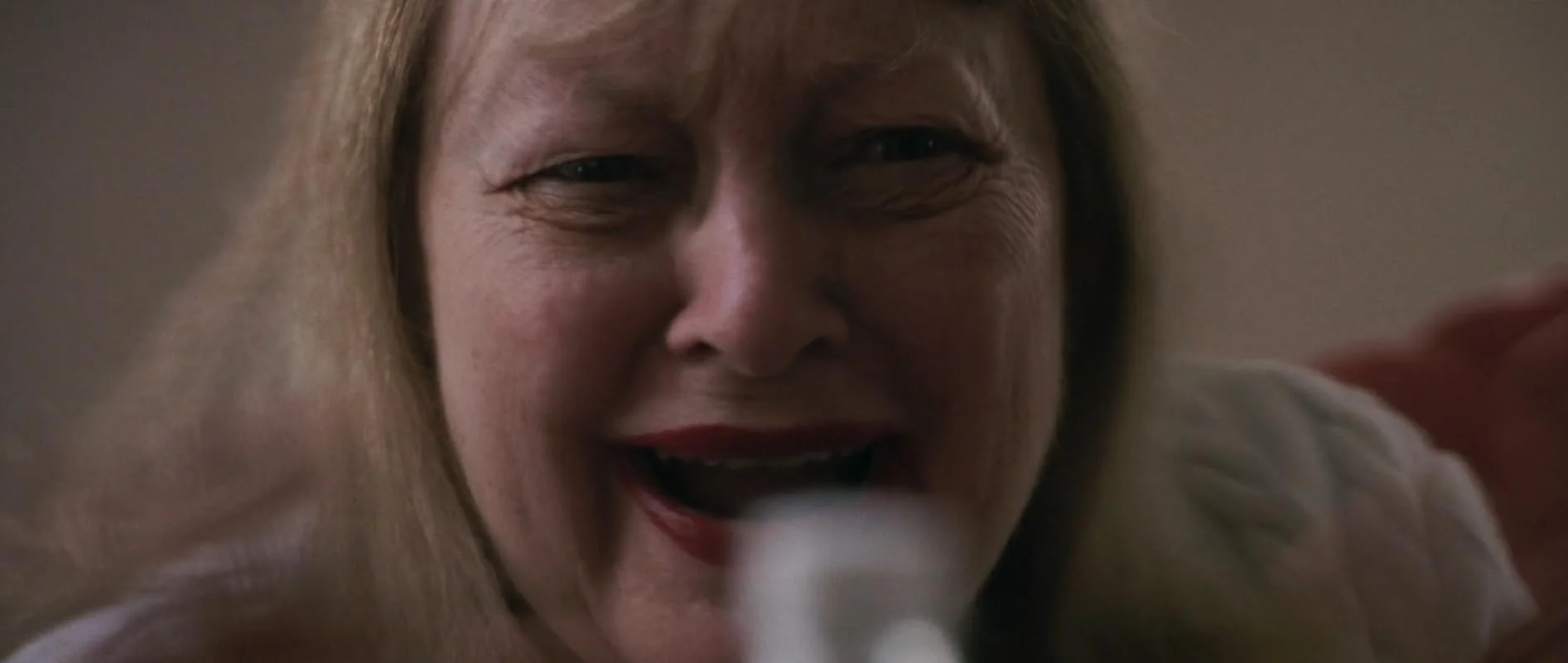
That freedom becomes especially noticeable during the visit to Lillian, his prison pen pal. Peggy Fields Richardson gives this housebound woman’s anticipation of romance an emotional credibility that changes the terms of the comedy. Ten arrives carrying his own expectations, and his proposal sits uneasily beside his desire to secure a different life for himself. Richardson makes Lillian’s hopes understandable without requiring an elaborate explanation of her loneliness. There is pleasure in seeing a supporting performance establish a personal stake so quickly, particularly after so many encounters organized around Ten’s needs.
The writing gives her less protection than the performance does. Ten’s manipulation supplies another complication in his day, but Lillian has invested in the possibility of a relationship. Her trust leaves her exposed, and the film spends less effort developing her response than it spends following his next predicament. That imbalance makes parts of the encounter feel patronizing. Richardson gives us reasons to take Lillian seriously; the surrounding construction is too ready to use her disappointment as material for Ten’s continuing troubles. Her limited mobility needs no added comic emphasis for that situation to hurt.
Harvey Fisher, playing her abrasive father, briefly changes the film’s use of time when he sings with a guitar. A deadline story trains us to measure interruptions against the protagonist’s goal. Here, DeFalco lets an interruption become an attraction in its own right. I liked that willingness to surrender momentum to someone else’s presence. It makes the neighborhood feel inhabited by people whose value exceeds their usefulness to Ten, while exposing the strain between the film’s curiosity about them and its need to keep him moving.
The ominous ending returns attention to the information Ten has withheld and the trust he has sought. Its force comes from changing the significance of an investment the film has carefully kept practical: wanting him to find transport or reach an appointment. There is a sharp distinction between recognizing a need and believing the person who expresses it, and Robins has preserved that uncertainty throughout. The final turn risks making the distinction feel like a trap sprung on the audience. Lillian’s earlier vulnerability gives it a less comfortable consequence: she has placed hope in Ten while we have had the comparative safety of watching him.
Ten Will held its world premiere at the Slamdance Film Festival on February 21, 2026, where it earned the Narrative Feature Grand Jury Prize Honorable Mention, followed by a theatrical run hosted on MUBI. Directed and written by Max DeFalco, this frenetic indie comedy-drama centers on Tennessee “Ten Will” Williams, a newly released convict whose broken-down van sets off a chaotic series of desperate schemes as he tries to rebuild his life while dealing with the harsh social fallout of his past.
Full Credits
Title: Ten Will
Distributor: MUBI, Slamdance Film Festival
Release date: February 21, 2026 (Slamdance Film Festival)
Running time: 1 hour 24 minutes (84 minutes)
Director: Max DeFalco
Writers: Max DeFalco
Producers and Executive Producers: Max DeFalco, Cheyenne Slowensky
Cast: Mikul Robins, Donna Dymally, Alicia Hecht, Terrell Lamb, Kathleen Deming, Sonny Frank, Peggy Fields Richardson, Harvey Fisher
Editors: Max DeFalco
The Review
Ten Will
Ten Will makes a clear deadline plot feel unruly through restless zooms, intrusive city noise, and encounters that refuse to follow its protagonist’s schedule. Mikul Robins holds it together without softening Ten’s entitlement. I especially liked the room DeFalco gives his supporting cast, though Lillian deserves a fuller response to the manipulation she experiences. The ending’s provocation can feel like an audience trap, but the filmmaking sustains an uncomfortable distinction between understanding someone’s immediate needs and trusting him.
PROS
- Robins’s absorbing, unapologetically abrasive performance.
- Clear deadline structure sustains tension.
- Restless photography and city sound intensify Ten’s agitation.
- Supporting performers give encounters independent life.
CONS
- Lillian’s response to manipulation receives insufficient development.
- Final provocation can feel like a trap for the viewer.