















The persistent legacy of a man, his dog, and the ripples of impact they’ve created in the world of action cinema is no mere coincidence. The ‘John Wick’ franchise, with its unique plot, character arcs, and choreographed artistry, has redefined and resuscitated the action genre. We invite you to dive into the heart of this transformation, from the masterfully woven universe inhabited by the formidable assassins to the balletic combat sequences that play out like deadly dances.
Unravel the influence of the stoic protagonist, the timeless humor, and the unerring precision in the realm of cinematography. Welcome to The Wick Chronicles, as we delve into the seven ways ‘John Wick’ has utterly transformed the landscape of action cinema.
Reimagining Mythology through Constructive Storytelling
The John Wick franchise has carved a unique niche for itself in the sphere of contemporary cinema, not just because of its storyline, but also due to its unique plot structure. The narrative, though uncomplicated and straightforward at its core – about a hitman seeking retribution for his pet’s demise – derives its immense impact from a layered characterization of the lead protagonist and the creation of a deeply mythologized backdrop.
World-building is a technique commonly associated with the realms of gaming, science fiction, and fantasy. It refers to the process of devising a unique, consistent universe that operates according to its own rules and norms. Derek Kolstad, the brain behind John Wick, employs this concept masterfully to forge an alternate version of our real world. In this parallel reality, assassins form a distinct class within society, and their existence is dictated by the norms of video games.
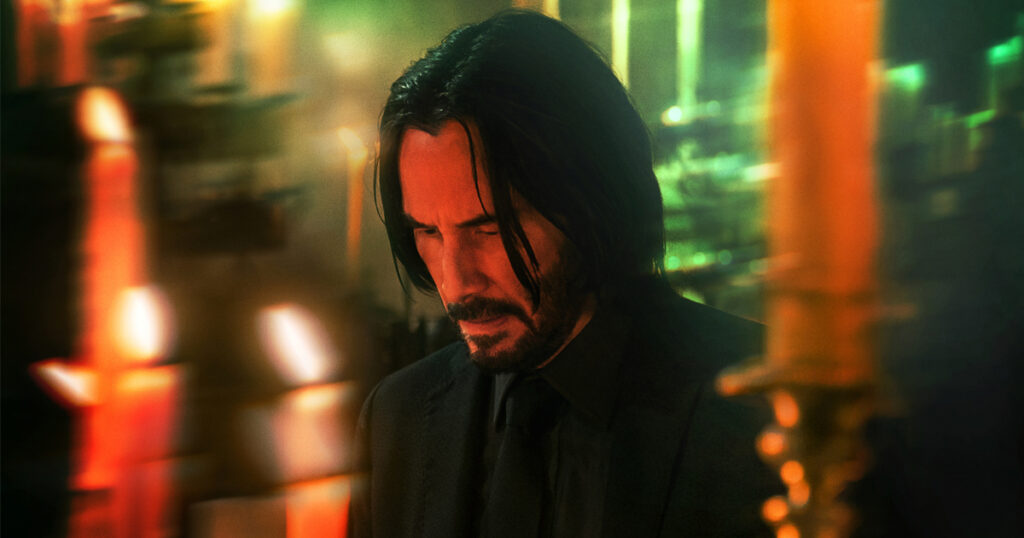
The titular hero is nearly undefeatable, the non-combatant public is always unscathed, and nameless enemies reappear with astonishing regularity, similar to generic game foes. Their combat abilities are often as unremarkable as those of Star Wars’ infamous stormtroopers. Wick overcomes these adversaries, vanquishes the leader, and moves to the subsequent stage, where he resumes the battle with enhanced gusto.
The unique mythology within this universe adds an undeniable allure to the whole narrative. Under the laws of the High Table, criminal networks function following a certain set of principles and rules. Assassins engage in commerce using a special currency (gold coins), and they communicate via a unique switchboard managed by distinctively tattooed secretaries. Continental hotels serve as neutral territories where no business can be conducted under any circumstances, and the signum symbolizes an unbreakable promise.
Through these narrative techniques, John Wick emerges as a refreshing antidote to the political and social themes prevalent in earlier movies of the genre. It introduces audiences to a new universe with its unique canon, proving that even in the present time, one can successfully establish a fresh brand without leaning on an existing popular franchise.
Masterful Combat Sequences: A Dance of Violence
The John Wick franchise has successfully integrated a vigorously cinematic form into its narrative through the harmonious blend of visual content. The primary objective and the secret behind the staging of the movie’s action lie in the intricately designed fight choreographies. After all, cinema is essentially a medium of movement – a kinetic spectacle of beauty and energy.
It’s not by chance that every installment of the John Wick saga incorporates a dance sequence. These sequences, set against the backdrops of disco clubs, concerts, and ballet, serve to accentuate the concepts of spontaneous synchronization, fluid choreography, and muscle memory, thereby transforming them into hand-to-hand combat scenes.

In these brutal dance scenes where violence and death waltz together, grace and style surprisingly emerge as defining characteristics. John Wick revives and emphasizes that the core appeal of classic action movies has always been the fighting sequences. The aestheticized combat choreographies are more than just techniques to defeat enemies; they are an art form – a bloody exchange of dialogue and a display of creative gymnastics.
These choreographies were customized according to the actors’ strengths, necessitating several months of training and preparation. The training primarily focused on Japanese and Brazilian jiu-jitsu and a variant of judo. With the directors having rich experience in stunt performances, the John Wick series stands out with its diverse styles of choreography and the wide range of weapons employed. The signature showcase, however, is the technique known as gun-fu.
This dynamic fusion of kung-fu and close-combat firearms was initially introduced by Hong Kong-based martial arts director John Woo in the 1980s. It was the directors of John Wick, Stahelski, and Leitch, who brought gun-fu to the forefront of mainstream cinema. The titular character, John Wick, is known for his acrobatic use of handguns, which, when mixed with other tactics, result in exhilarating and visually stimulating shooting scenes.
Important techniques such as Multigun and CAR (Center Axis Relock) were also instrumental in enhancing the movie’s pistol use. The former technique involves the seamless use of two or three types of firearms, while the latter is a close-combat tactic where weapons are held close to the body. This gives rise to iconic visuals of Wick, slightly hunched and holding his weapon with both hands at chest height.
The realistic portrayal of fight choreographies is further emphasized by the determination and dedication of the creators, both behind and in front of the camera. As per the directors, Keanu Reeves performed ninety percent of all stunts himself. The absence of framing or the use of a body double allowed the camera to focus on the actor, enhancing the illusion of realistic combat.
In this way, John Wick manages to strike a balance between realism and entertainment in action cinema. It has set the standard for Hollywood, inspiring both small and big budget productions across big screens and home entertainment alike.
Striking the Perfect Chord: Black Humor and Self-Mockery
The narrative theme of a retired assassin is not an especially innovative one in the realm of cinema, yet the protagonist’s quest for vengeance after the demise of his pet dog provides the ideal setting for a playful parody of the genre. John Wick cleverly subverts the audience’s anticipations, gently poking fun at stereotypes, while simultaneously emerging as an impressive example of action cinema in its purest form. Wick’s motives resonate easily with the viewers, particularly in the later series when he embarks on his journey towards peace and freedom.
The tone of the story is unmistakably clear, devoid of any subtlety. A case in point is when the antagonist from the first movie, Viggo Tarasov, receives the news about his son stealing John Wick’s car and killing his dog, and responds with a choked “oh” after a brief silence. This reaction cues the audience into the narrative’s theme of absurdity and self-mockery.

The ambiance of the movies is meticulously crafted through a fine balance of dark humor. Contrary to action comedies or Marvel films where prevalent humor tends to dilute the seriousness of critical moments, here the jokes coexist with the action, ironically highlighting John Wick’s lethal determination. This peculiar brand of gallows humor often arises from the ingenious methods of execution – employing a horse, a book, and most notably, the pencil, which reappears several times as the deadliest weapon since the Joker’s magic trick in The Dark Knight.
The lighter, more entertaining moments, such as the stylized use of on-screen subtitles, never trivialize the intensity of the violence or the dramatic essence of the events. Even the moments of physical comedy (like the climactic staircase sequence in the fourth installment, which encapsulates the essence of the entire series) are utilized as tools to embellish the narrative.
Once again, the power of John Wick lies in its harmonious blend of realism and entertainment – a balance of humor in action cinema that had been missing since the days of Die Hard. This equilibrium is something most modern adaptations of DC comics have struggled to achieve.
Masterful Cinematography, Set Design, and Precision Editing
The landscape of classic 21st-century action cinema was primarily shaped by three film series: the Bourne trilogy (2002–2007), the Taken series (2008–2014), and John Wick (2014–2023). Each series presented distinctive filmic approaches and characters that were notably characteristic of their individual narrative realizations.
In the Bourne series—Identity, Supremacy, and Ultimatum—director Paul Greengrass and stunt coordinator Dan Bradley formulated a unique stylistic approach defined by rapid shots and vibrant editing. The camera, often handheld, draws the viewer directly into the heart of the action, simulating the urgency and authenticity of events and occasionally creating a disorienting experience for the audience.

This approach was echoed by the creators of the popular movie, Taken. However, as the series progressed, the technique began to border on self-parody and was clumsily mimicked by other filmmakers. The editing often merely created an illusion of action and concealed the flaws of untrained or aging actors. The climax of this phenomenon was perhaps best exemplified in Taken 3, where one could observe countless editing cuts within a mere seven-second clip, making it almost dizzying for the audience.
But then, John Wick arrived, cruising in his black Ford Mustang, ready to reinvigorate the genre of action cinema. Directors Chad Stahelski and David Leitch, along with Keanu Reeves—who portrayed the eponymous character—revolutionized the action movie paradigm. They introduced long, expansive camera shots and precise editing, enhancing the viewers’ understanding and spatial orientation during on-screen events, while drawing attention to the real spectacle—the action. Each punch, kick, and gunshot was captured in explicit detail, making every move feel tangibly real.
Technically, a significant change was the active involvement of camera operators, who were traditionally less engaged in the action-shooting process. Stahelski, who directed the three sequels independently, welcomed camera operators to participate in rehearsals for the stunt choreography. This allowed them to understand exactly where to position the camera and what to capture. Thus, during actual filming, there were no ambiguities—only the execution of a meticulously preplanned scheme.
The set design was an integral part of this plan, with even the most commonplace action-movie setting, such as an abandoned warehouse, imbued with an artistic edge. The subsequent chapters of John Wick are particularly notable for their captivating visuals, drenched in neon hues of blues, purples, greens, and reds. Bursts of light, mirror reflections, and omnipresent rain seamlessly merged with the action, augmenting the interplay of reflections and colors. The interior settings showcased timeless elegance, spanning from exclusive criminal underground clubs and opulent hotel suites, to globally renowned architectural icons like Times Square, the Coliseum, and the Arc de Triomphe.
Blending Cinematic Masterpieces
The allusion to superhero films is not coincidental, as these movies—alongside horror films—survived the pandemic remarkably well and continue to spearhead the cinematic forefront. This success can be largely attributed to their ability to merge with other film genres seamlessly, creating a rich tapestry of cinematic experience. This creative tendency was expertly seized by the creators of John Wick, imbuing each sequel with a fascinating blend of influences from cinema’s classic epochs.
Foremost among these influences are the early days of silent cinema. Directors such as Buster Keaton and Charlie Chaplin mesmerized audiences with their almost circus-like performances. This influence is directly echoed several times in the John Wick series. An example can be seen in the opening sequence of Chapter Two in New York, where a scene from a Buster Keaton comedy is projected onto a building facade. This is a style of filmmaking that values maximized action with minimal expression. Chad Stahelski, one of the directors, stated, “We want to let you know that we’re having fun and that we’ve stolen it all from silent film artists.” Keanu Reeves, the protagonist of the series, is frequently likened to Keaton due to his stoically gentlemanly demeanor.

The influence of Asian cinema is also evident, which is not surprising considering Keanu’s well-known fondness for films from this region—a sentiment shared by Stahelski. As a result, Samurai stories, particularly Japanese classics by Akira Kurosawa and South Korean films by Park Chan-wook, as well as Hong Kong’s John Woo, served as significant sources of inspiration for the John Wick saga. Besides their technical achievements, these films also reference the samurai code—a set of morals and ethics that even professional killers abide by, thereby allowing the audience to develop a level of empathy for them.
Another classic genre that the series reveres is the Western. The fourth installment of John Wick serves as a homage to Sergio Leone’s work. Iconic imagery such as a duel at sunrise or a classic standoff between two gunslingers are overt examples. The creators also provide more subtle nods to the Western genre: for instance, when Wick leaps out of a window from a ludicrous height, the accompanying string music resonates with the beloved Western theme.
Moreover, the impact of neo-noir cinema is equally significant. John Wick, a reticent antihero (Keanu only speaks 380 words in the fourth film) who rarely displays emotion, goes on an odyssey through the criminal underworld, following a trail of clues leading to his next targets. When he emerges onto city streets, the directors draw from Michael Mann’s playbook, capturing a mysteriously raw beauty in the night-lit panoramas of New York City.
Watching John Wick’s thrilling journey is akin to playing cinematic bingo, where the joy lies in identifying references to cinema’s classics—or even spotting that popular Leonardo DiCaprio meme. Within the first ten minutes of the latest installment, audiences will be pointing at the screen, recognizing the “most epic transition in film history” (at the 22-second mark).
Transition from Stunt Performers to Filmmakers
The architects behind the resounding success of John Wick are stunt performers who successfully transitioned into the roles of film directors. These are professionals who possess an exceptional understanding of the art of filming action sequences and have the talent to illustrate clearly who is battling whom, and with what. This trend has its roots in the Hong Kong film industry of the 1980s and 1990s—the golden era of action cinema—which introduced global audiences to talents such as Jackie Chan, Jet Li, and current Oscar winner Michelle Yeoh. During this period, many choreographers and coordinators, who were also stunt performers, would frequently step behind the camera, using their unique skills and experiences to create the desired on-screen effects.
Hollywood has only recently started to appreciate this seemingly logical trend, and now, the baton of stunt performers transitioning to directors is being carried by Chad Stahelski (of the John Wick series) and David Leitch (known for Atomic Blonde, Deadpool 2, and Bullet Train). They are closely followed by Sam Hargrave (known for Netflix’s Extraction starring Chris Hemsworth) and JJ Perry (another Netflix contributor with Daily Shift featuring Jamie Foxx).

Stahelski and Leitch fine-tuned their skills as stunt doubles for Keanu Reeves and Brad Pitt, respectively. Over time, their roles evolved, promoting them to coordinators of choreography and later to second unit directors in high-profile blockbusters. In derivative action films, this assistant director—often someone with stunt experience—oversees the filming of subsidiary scenes and sequences not featuring the lead actors.
Stahelski performed this role for films like the Matrix series by the Wachowski siblings and The Hunger Games by Gary Ross. Leitch held a similar position in James Mangold’s Wolverine and Colin Trevorrow’s Jurassic World. The two men later founded a stunt studio, 87Eleven (a mark of quality today), which subsequently expanded into a production studio (87North). Their progression naturally led to aspirations of directing an entire film from beginning to end, leading to the creation of John Wick in 2014.
Simultaneously, brothers Joe and Anthony Russo created an equally successful action film disguised as a comic book—Captain America: The Winter Soldier. After the unexpected success of Wick, the Russos collaborated with Stahelski and Leitch, who choreographed a memorable airport fight scene in Captain America: Civil War. The positive outcome of this partnership also meant that Sam Hargrave, another stuntman turned director, took charge as the second unit director in Avengers: Endgame.
An essential factor of success in this transition from stunt performers to directors lies in the learning and training provided to actors to perform their stunts, changing the work culture and actors’ approach towards stunts. Nowadays, most actors eagerly participate in stunt training, even when it is not required.
This professional evolution, especially among stunt directors, explains why each subsequent chapter of John Wick outdid its predecessor in quality and execution. It’s no surprise that Chad Stahelski advocates for introducing an Oscars category for stunts. The artistry of fight choreography and the hard work invested by the performers have now become an integral part of cinematic spectacle—as exemplified by All at Once, the top film of 2022.
John Wick also pays homage to the iconic figures of B-movie action flicks. The series features genre champions such as Mark Dacascos, Scott Adkins, Hiroyuki Sanada, and Donnie Yen, and not to forget Cecep Arif Rahman and Yayan Ruhian, who gained fame from the movie Raid. In Parabellum, they portray a pair of hitmen whom John Wick spares after defeating them. This scene represents Stahelski’s acknowledgement and respect for Gareth Evans and the inspiration his movies—Raid and The Raid 2: The Departed—have provided.
The Keanu Revival: A Second Renaissance for Keanu Reeves
Finally, we have arrived at the star of our tale – the chosen one, Keanu Reeves. Looking back to 2014, it seems almost unimaginable, but during that time, Keanu’s star power was in a state of decline. Despite enduring public affection for the actor, his career was marked by a string of both artistic and commercial disappointments following the end of The Matrix trilogy. It was only with the arrival of John Wick in 2014 that Keanu’s career saw a significant revival, a renaissance if you will. Keanu exudes an undeniable charisma, his mastery of understated minimalism and economical acting often leads critics to unfairly accuse him of being wooden. EMPIRE magazine fittingly described him as the “Continually Underappreciated Warrior Poet”.
In creating the character of John Wick, Keanu channelled all his skills into a persona shrouded in mystery within the extravagant world of contract killers. With movements as graceful as a cat, he carved a new legend in the hallowed halls of action cinema. Dressed entirely in black and dancing amidst a hail of bullets, Keanu managed to transform the landscape of cinema for a second time.

In a past life as Neo in The Matrix, a groundbreaking, postmodern science fiction classic, Keanu blended elements of philosophy, Joseph Campbell’s theories of the hero’s journey, cyberpunk, martial arts, Japanese animation, and neo-noir apprehension.
Today, as John Wick, he stars in a similarly styled cinematic masterpiece that weaves together the elegance of samurai narratives, inventive weapon choreography, suspenseful thrills of a thriller, and the expansive world building of comic book narratives. The popularity of the series has increased with each subsequent instalment, and thanks to Keanu Reeves, the phrase “John Wick” has become a part of pop culture’s cinematic lexicon, synonymous with heart-pounding action. It’s a name whispered in hushed awe from the grimy alleys of Arrow to the high-stakes world of The Last of Us.