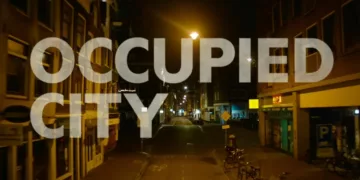


















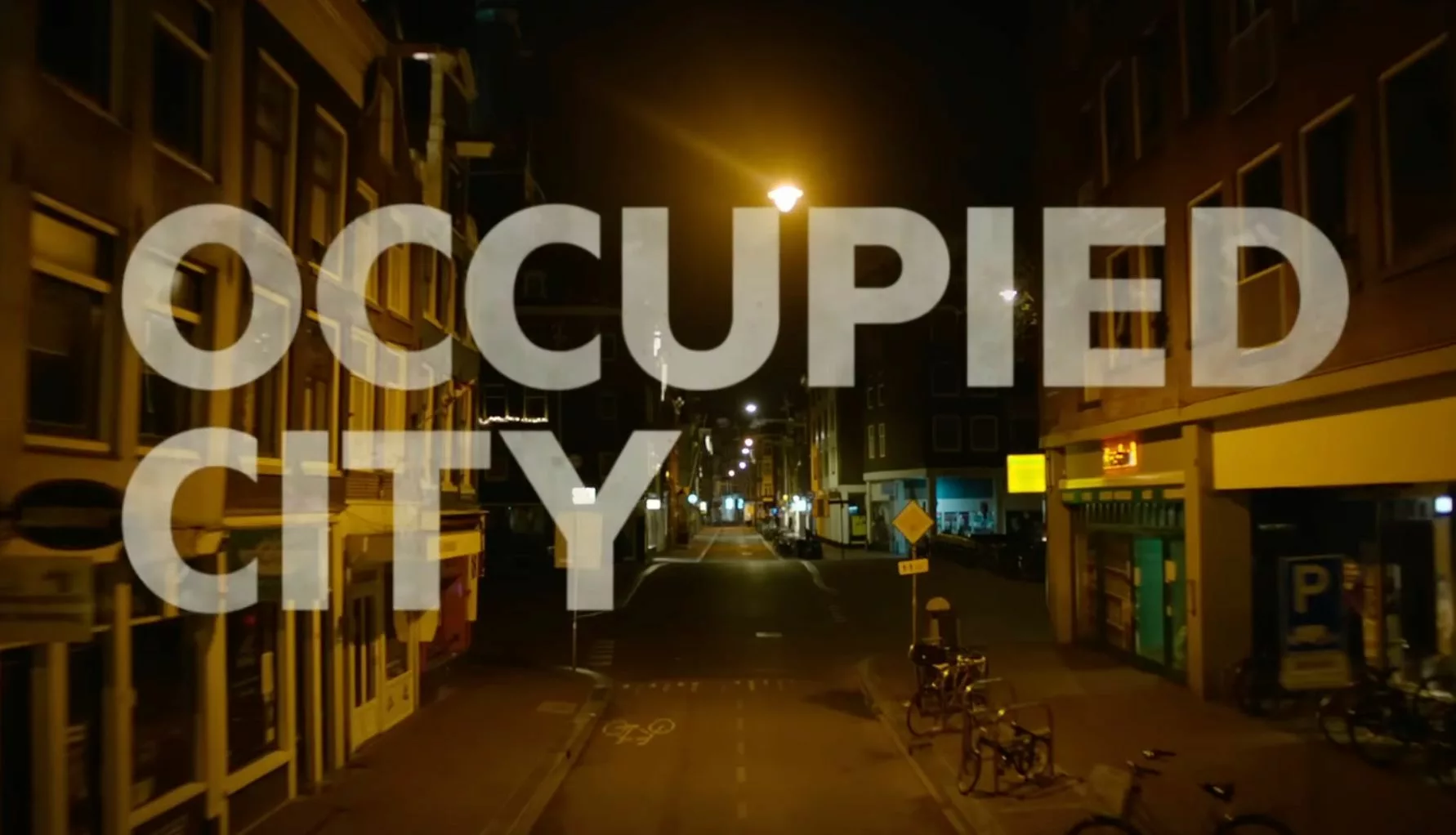

Steve McQueen has never been one to shy away from weighty subject matter. As a director, he’s fearlessly tackled topics like hunger strikes, slavery, racial injustice, and feminist awakening. Now with Occupied City, his ambitious first documentary feature, McQueen turns his discerning eye to the Holocaust. Specifically, he chronicles the harrowing Nazi occupation of Amsterdam from 1940-1945.
Given his previous critical successes like Hunger, Shame, and Best Picture winner 12 Years a Slave, expectations were sky-high for McQueen’s latest. And for good reason – the man has a knack for blending visual artistry with moral urgency. He’s a master of atmosphere who knows how to get under your skin. Occupied City may seem like unfamiliar terrain, swapping dramatic narratives for strict documentary form.
But with his wife Bianca Stigter’s research as a guide, McQueen once again dives into the darkest corners of our collective history. The question is whether he can truly illuminate the horrors of the Holocaust while also engaging audiences through a demanding 4.5 hour runtime. Reviewers and audiences have emerged divided. But one thing’s for certain – this is bold, boundary-pushing filmmaking tackling subject matter many wouldn’t dare confront so unflinchingly.
Reconstructing Occupied Amsterdam
Occupied City derives its structure and content from the meticulously researched Atlas of an Occupied City by Bianca Stigter. Steve McQueen’s wife and frequent collaborator, Stigter chronicled the cruel realities that befell Amsterdam’s Jewish population under Nazi control from 1940-1945. McQueen takes Stigter’s studious account as a blueprint. The result is a visually austere, intellectually dense work spanning a marathon 4.5 hours.
McQueen dispenses with standard documentary techniques like archival footage or talking head interviews. Instead, over 130 extended fragments we hear narrator Melanie Hyams flatly recount events that occurred at specific Amsterdam addresses during the occupation. The stories range from public atrocities like mass deportations to the intimate pain of families hiding or taking their own lives out of despair.
While Hyams’ clinically detached voice relays the horrors, McQueen’s camera fixes on the present-day versions of those locations. So as we learn of the suffering at Prinsengracht 263, home of Anne Frank’s secret annex, we watch silent footage of contemporary Amsterdamites bustling along the tree-lined canal, oblivious to its haunted history. This tightly-controlled juxtaposition creates an eerie dialogue between past and present. One thing endures as the other fades away.
Uncover a Haunting Tale: “Step into a world where horror meets social commentary in our latest Raging Grace Review. Discover how this film masterfully intertwines suspense with a poignant story of struggle and survival.”
Juxtaposing Eras
Occupied City’s most radical creative choice is its strictly controlled dual timeline structure. As the past echoes through Hyams’ narration, McQueen’s camera solely captures the present. This strict separation of eras visually and aurally creates a dynamic interplay ripe for analysis. Some find McQueen’s formal approach a riveting high-wire act. Others deem it a monotonous endurance test merely feigning insight.
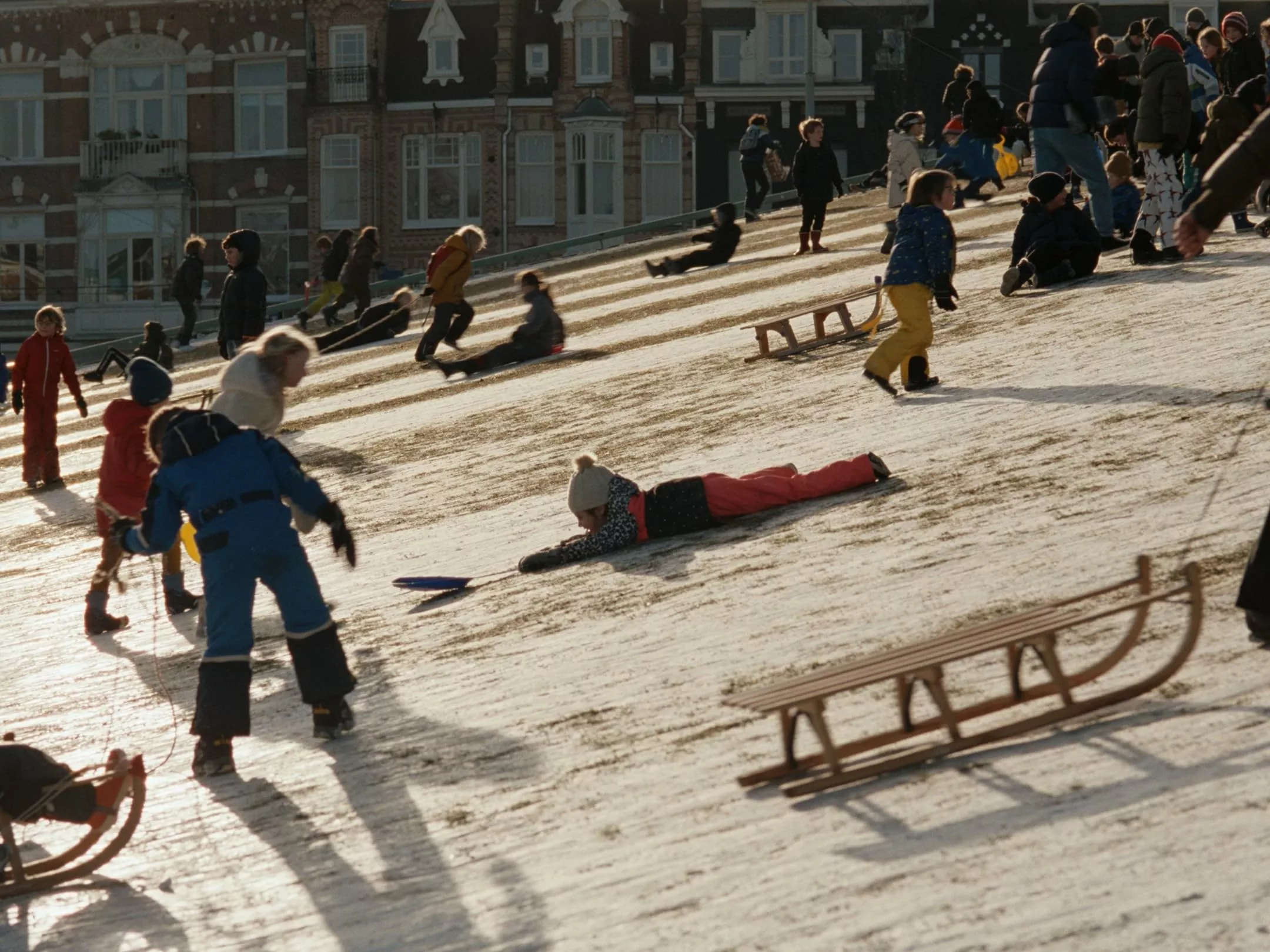
When it clicks, the film’s dialectic of times generates profound food for thought. Having the Amsterdam of today serve as direct backdrop for 1940s tragedy prods our understanding of how communal suffering reverberates through the ages. Or doesn’t. At one point Hyams chronicles the Nazi’s vicious crackdown on citizen protests while we watch modern demonstrators rail against pandemic restrictions. The sequences land like an intentional gut-punch. Do we fail to learn history’s lessons? Or does the juxtaposition diminish real authoritarian horror? The film purposefully resists tidy conclusions.
But meaning-making requires effort as McQueen’s clinical aesthetic often keeps emotional reality at arm’s length. Sifting through the anguish to find connecting tissue across eras demands an patient, discerning viewer. Others may feel battered into numbness by the horrors-on-parade structure. Worse, the film could play like a punishing game of “Where Are They Now?” exploitation, with the vibrant modern setting mocking past suffering.
McQueen wants his unorthodox documentary approach to challenge us. But many have questioned if his avant-garde leanings undermine conveying the Holocaust’s enormity. Does the populous deserve a less demanding portal into these essential lessons? Or could meeting the film’s stringent demands deepen our collective soul? Occupied City stakes its legacy on a faith that with focus and fortitude, the difficult path often proves most edifying.
Probing Humanity’s Dark Heart
Occupied City uses Amsterdam’s lived dual reality to delve into some of humanity’s thorniest dilemmas. How do normal people tolerate suffering right on their doorstep? What responsibilities bind us across generations? Do the ghosts of history leave traces in bricks and mortar? McQueen wants to spur soul-searching, not just recap tragedy.
The film conveys how quickly Nazi evil became commonplace, another mundane aspect of city living. While untold atrocities occurred nearby, Amsterdam residents picnicked in the park, opened shops, rode bikes. Only hushed tones or fearful glances hinted that anything was amiss. The theme recurs in segments pairing carefree routine with unthinkable cruelty – children play video games upstairs as Holocaust trains roll in below, relaxing apartments flank the concentration camp perimeter. McQueen exposes civilization’s flimsy veneer against barbarism.
In subtle and not-so-subtle ways, the film prompts difficult questions about historical amnesia. How could such an advanced nation devolve into genocidal mania virtually overnight? Do traces of fascist pathology still lurk in society’s DNA? Is it happening again through small “dog whistles” before our eyes? Disturbing COVID restriction protests underscore Occupied City’s themes of uneasy historical repetition.
Yet the film also hints at progression’s light piercing the fog of hatred. We see sites of Jewish suffering transformed into beacons of modern harmony – an inclusive school, a bustling cafe, an apartment filled with artists. Signs speak to enduring human resilience. Or signal how quickly past agonies fade as progress marches on. Glass half full or empty? McQueen provokes more than declares.
Just as society evolves, the film ponders whether physical spaces absorb and retain community trauma. Generally McQueen finds continuity between eras, as cheery moderns walk landscapes marked by loss. But in zoomed details or quiet moments, weighted absences emerge. The documentary’s haunted atmosphere and spiritual pall suggests certain history-soaked settings may never fully exorcise their demons. We inhabit spaces; but spaces may inhabit us too through memory’s uncanny tricks.
“Uncover the eerie secrets of ‘Baghead’, a film where horror meets the supernatural in a London pub. Dive into our Baghead Review to follow Iris’s chilling discovery of a witch that can revive the dead. Click here to experience the spine-tingling tale of a haunted inheritance, where conversations with the deceased come with a terrifying price.”
An Austere Canvas
Visually and sonically, Occupied City pursues an austere minimalism that mirrors its sober subject matter. McQueen’s meticulous compositions achieve almost subliminal control. Static camera placements feel like surveillance footage, the city an unsuspecting subject. Yet his roving lens also casts Amsterdam as the film’s haunted protagonist. Oliver Coates’ brooding score and ironic song choices provide tonal ballast. Together sight and sound foster the atmosphere of an open wound that never properly healed.
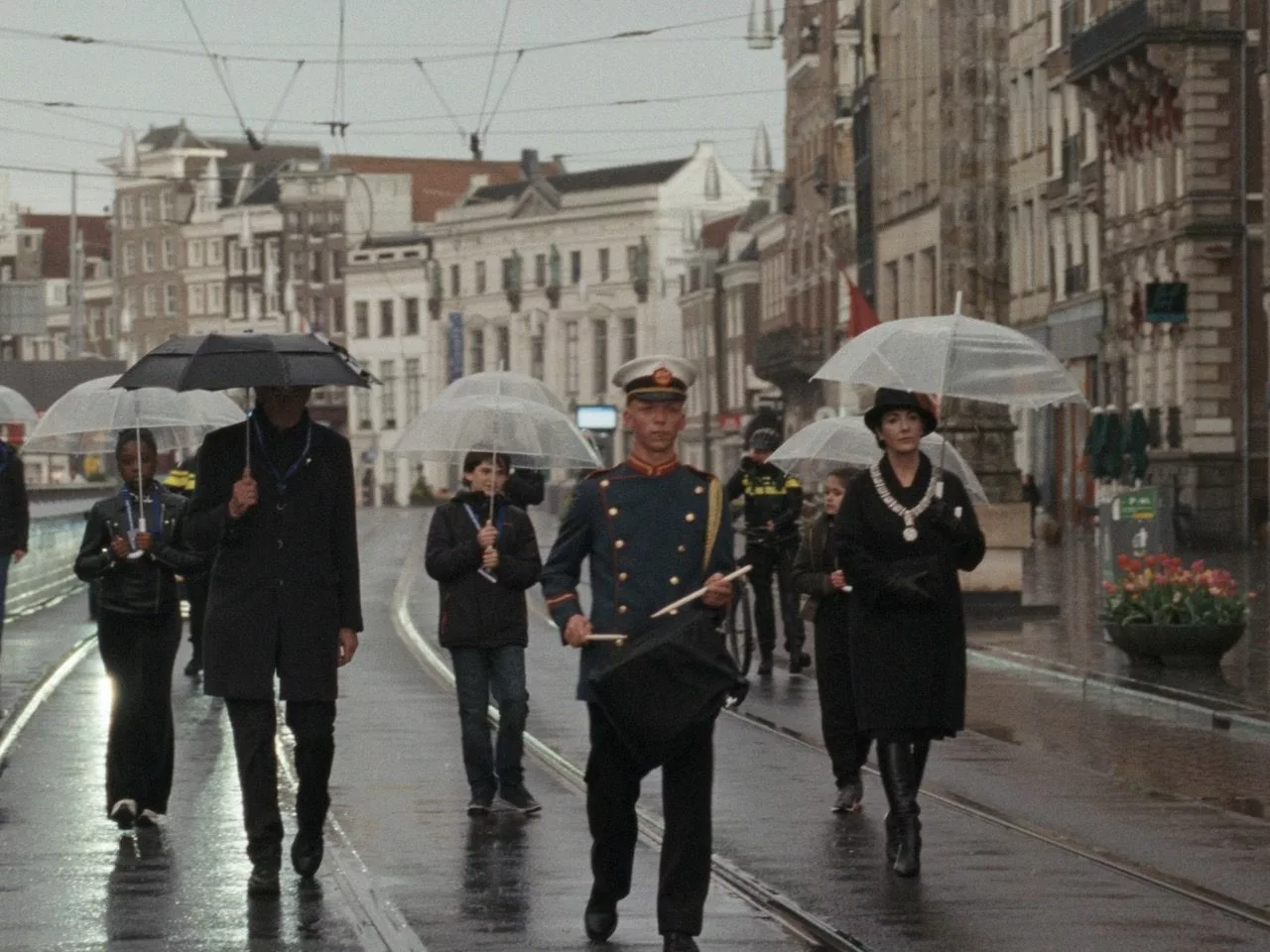
Shooting on serene 35mm, McQueen and DP Lennert Hillege hold shots far longer than comfortable, past the point of revelation. Their series of extended fixed perspectives peer down narrow alleyways, across quaint intersections, through unassuming windows. As our gaze lingers, phantom traces emerge – a strange rustle down an empty side street, shadows gathering in the canal’s ripple. The haunted images unsettle Amsterdam’s peaceful veneer.
In the sustained takes, Amsterdam itself becomes a central player. McQueen explores how specific sites hold community memory, for good and ill. His patient eye casts each nondescript locale as a character with hidden depths and buried secrets. Park paths, once crossed by Nazis, foster new connections; an old chocolate shop oozes loss in every brick. Hillege’s camera restores dignity through its unblinking witness.
This visual requiem finds aural analog in Oliver Coates’ hovering, minimalist score. Normally bustling city life plays out against ominous drones, spectral echoes, uncanny quiet. The music hovers like a dark fog. Ironic pop songs by Bowie or The Beat add bite, their flippant melodies colliding with mass extermination. As musical backdrop to Hyams’ detached narration, the mix keeps us off-kilter. Is such a tragedy beyond words? Or is a dispassionate chronicle the only fit eulogy? The discordant atmosphere suggests history’s tangled legacies resist easy encapsulation.
An Unflinching Challenge
There’s no questioning Steve McQueen’s audacious ambitions with Occupied City. He sought to deepen Holocaust discourse through a radical structure melding past and present. Such daring deserves praise even when its reach exceeds its grasp. Because for all it provokes, McQueen’s film often struggles to foster the empathy and intimacy essential for resonating insight.
As an aesthetic and intellectual exercise, Occupied City fascinates even when it grows inert. Few directors would even attempt such a severe high concept documentary endurance test. And McQueen finds striking correlation points between eras that merit reflection. Future visual essayists will mine the film’s densities.
Yet many have emerged from its marathon run-time more battered than enlightened. Is gaining a conceptual foothold worth the emotional distance required? McQueen risks his experiment reading like a flashy formal stunt, history’s urgent lessons taking backseat to an overly clinical style. Lifeless fact-listing neutralizes too many wrenching vignettes. The film’s standoffish atmosphere holds revelations at bay.
But even when it drifts into disengagement, Occupied City deserves praise for evolving popular Holocaust discourse. We’ve seen the grainy footage and teary first-hand testimonies. McQueen sidesteps tropes to locate whispers of a monumental evil that still echo, demanding contemporary interrogation. Other filmmakers will surely follow his lead mining this tragedy through unconventional frameworks.
Provocation over easy coherence. Austere remove in lieu of accessible empathy. Steve McQueen stays resolutely, rigorously on brand with Occupied City. For some that makes it a piercing new lens into humanity’s heart of darkness. Others will long for conventional clarity. But none can deny the director’s fierce conviction. As McQueen trains his unblinking eye on the Holocaust anew, we can’t turn away even when it stings.
The Review
Occupied City
A towering achievement in some regards, yet undeniably overreaching in others, Steve McQueen’s Occupied City merits strong respect more than wholehearted endorsement. Viewers intrigued by unconventional documentary aesthetics will find rewards wrestling with its daring formal rigor. But many craving an emotionally transparent portal into the Holocaust’s realities will leave chilled yet distanced. As a conceptual endeavor interweaving eras through architecture and absence, McQueen’s film fascinates more than it devastates. Still, it’s a testament to his fierce creative conviction.
PROS
- Bold, boundary-pushing filmmaking from a masterful director
- Intriguing formal structure juxtaposing past and present
- Evocative visual landscapes beautifully shot
- Thought-provoking thematic concepts related to evil and memory
- Contributes a new perspective to Holocaust cinema discourse
CONS
- Extreme length tests viewers' endurance and engagement
- Emotionally cold, clinical aesthetic distances more than connects
- Strict concept limits deeper humanity and intimacy
- Repetitive factoids numb more than illuminate