


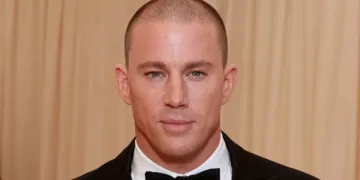

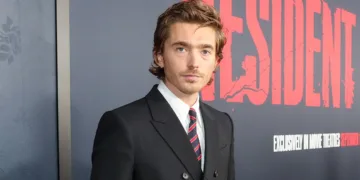
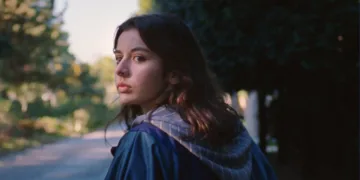
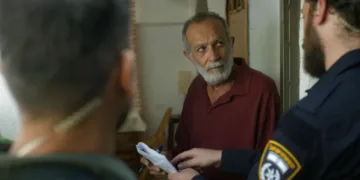
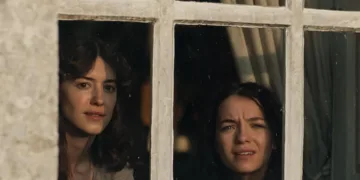


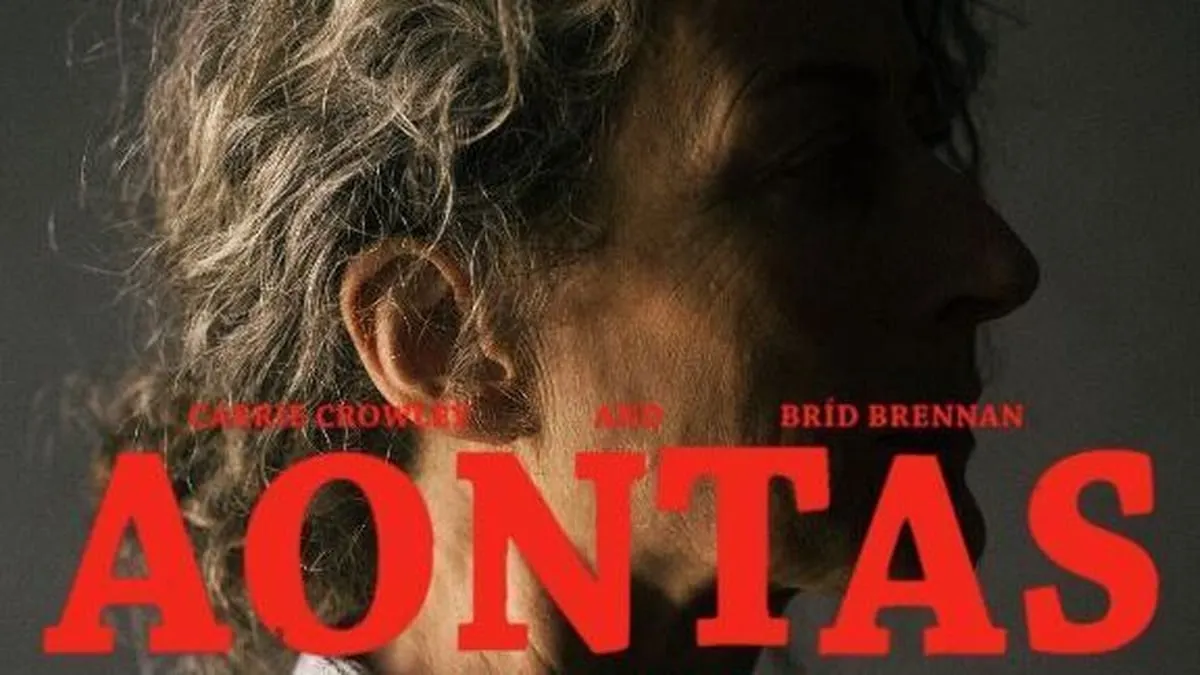

Aontas (Ireland, 91 min, dir. Damian McCann; co-written with Sarah Gordon; in Irish Gaelic with English subtitles; rated R) opens on the aftermath of a Credit Union robbery in a windswept Northern Irish village. From that first, blood-stained shot, the narrative moves backward, each scene recontextualizing the one before it.
McCann’s deliberate storytelling—supported by Sorcha Nic Giolla Mhuire’s crisp editing—recalls non-linear experiments in world cinema, from Christopher Nolan’s time-bending thrillers to daring narrative turns in India’s parallel stream (for instance, Anurag Kashyap’s No Smoking). Yet Aontas grounds its structure in the everyday, inviting comparisons to Bollywood dramas where atmosphere and character reveal carry as much weight as plot.
Visually, Damien Elliott’s lens captures neon-tinged streets and the muted hues of rural Antrim, while Daithí Ó Dronaí’s subtle synth score marries Irish folk resonance with global noir moods. The film’s quiet tension—echoing the restraint of Satyajit Ray’s social dramas—asks viewers to assemble motive, identity, and emotion piece by piece, without flashy mechanics or exposition. In doing so, Aontas stakes its claim on the world stage of thoughtful, character-driven cinema.
Mapping the Heist in Reverse: Structure as Suspense
In Aontas, each backward leap reshapes our understanding of what just transpired. A boiling kettle hisses us from a blood-soaked street back to a parked car; a coffee drip dissolves the line between culprit and victim. This technique echoes global experiments—from Nolan’s Memento to Mumbai director Sriram Raghavan’s noir-tinged corridor thrillers—yet Aontas anchors its device in intimate character moments, much like India’s parallel stream where narrative form serves emotional truth.
We first witness the raw fallout: a body carried from the Credit Union, Cáit wandering dazed, and Mairéad’s haunting silhouette. There’s no exposition—just visual jolts that demand questions.
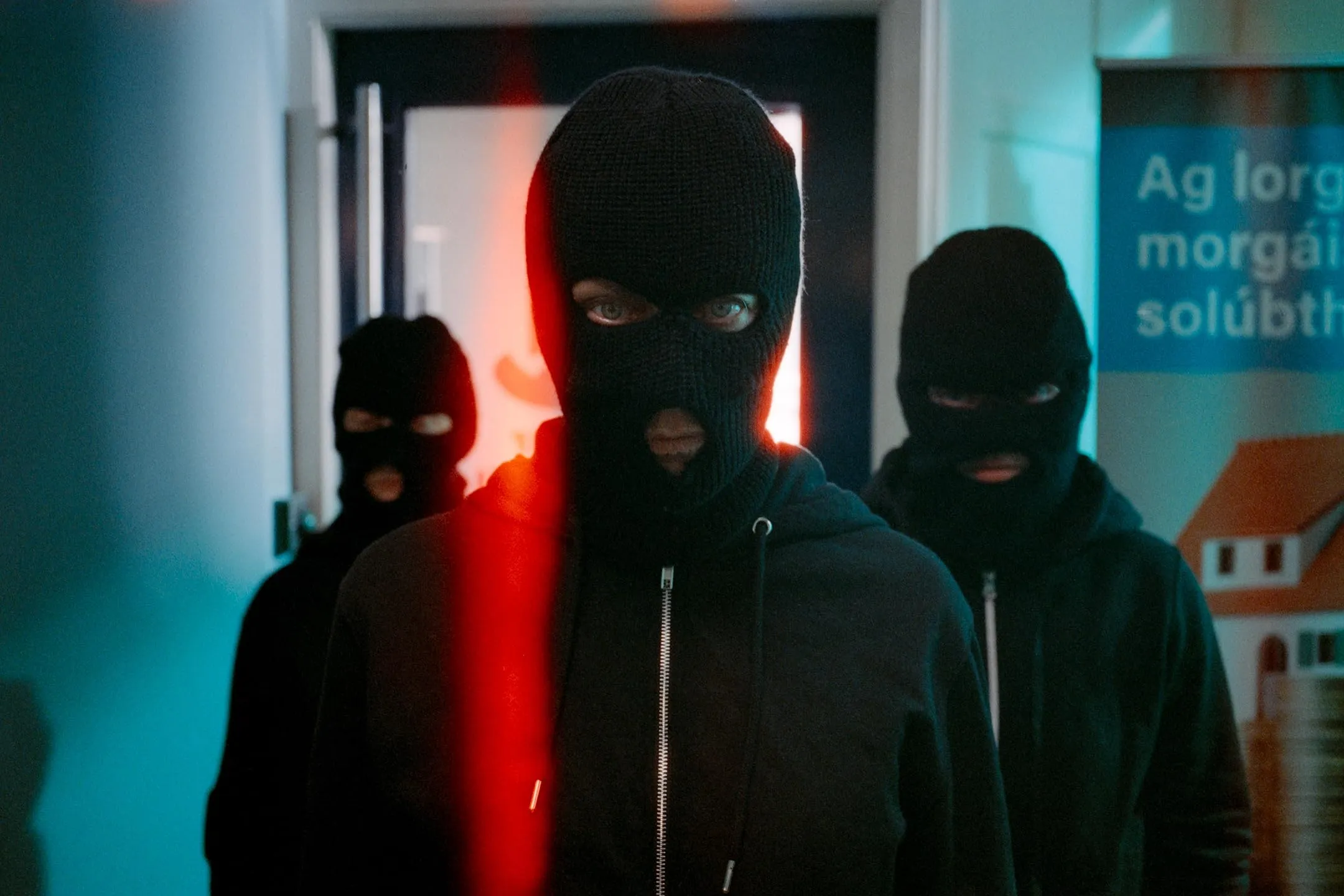
As the film rewinds, balaclavas appear mid-gesture, weapons exchanged in silent negotiation, and the first glint of motive emerges. Here, silence reigns: long takes hold the frame, letting viewers absorb displacement more than action.
Finally, we reach the roots of desperation. Village protests, whispered grievances at a dinner table, the economic pressures squeezing every small merchant. Relationships once opaque now crack open, revealing fractures born of systemic hardship—an echo of Bollywood works like Anurag Kashyap’s Black Friday, where social forces propel individual choices.
McCann’s pacing resists overt manipulation: he withholds key facts until their emotional weight can land. Clues lie in a tremor of a hand, the placement of a teacup, or a glance exchanged at dawn. Viewers become investigators, parsing gestures instead of relying on plot twists. In this, Aontas participates in a wider cinematic trend—one that prizes audience collaboration over spoon-fed answers, a trait shared by recent Indian art films exploring memory and justice.
Unmasking Personas: The Art of Performance in Reverse
Carrie Crowley’s Mairéad first appears as a silent observer on that blood-stained street, only for her badge to fold reality inward when we learn she serves as a police officer. Crowley channels the reserve of Smita Patil in early parallel-cinema works, using minimal movement—a slight shift in posture or a deliberate inhale—to signal buried conflict. In scenes where she cups a mug or lifts a mask, those tiny gestures carry the weight of her dual identity and build toward the emotional moment when her oath collides with desperation.
Bríd Brennan’s Cáit embodies reluctant complicity. Her loyalty to Mairéad is etched in tight shoulders and staccato replies, a performance as textured as performances in Bollywood thrillers like Vishal Bhardwaj’s Talvar. Brennan’s close-ups capture the curve of her lips when hope flickers, or the quick dart of her gaze when guilt surfaces. These silent confessions echo the moral ambiguity found in Indian art films where characters often confront the cost of survival.
Eva-Jane Gaffney’s Sheila offers small but crucial revelations—a tremor of the hand at a funeral, a whisper in a dim hallway. Sean T. Ó Meallaigh and Marcus Lamb shift from background figures to linchpins, mirroring how character actors in Indian cinema, such as Rajkummar Rao in Shahid, can transform fleeting appearances into pivotal moments. Their evolution underscores Damian McCann’s faith in ensemble storytelling.
Across every interaction—whether a farmers’ market chatter or a tense roadside standoff—the dialogue feels lived-in. The actors’ use of Irish Gaelic dialects, subtitled yet retaining regional song, evokes the authenticity prized in global art cinema. Much like the village scenes in Shekhar Kapur’s Paani, Aontas trusts its performers to root us in community, even as the timeline fractures around them.
Hidden Currents and Quiet Symbols
Aontas traces the weight of economic strain on a community much like contemporary Indian films such as Paani or Court illuminate water and legal crises in rural settings. Here, village shopkeepers and quarry workers find themselves squeezed by outside money and faceless corporate interests.
The heist becomes a form of redress—an illegal strike against those who have “robbed” locals through predatory lending—echoing the moral ambiguity of Shekhar Kapoor’s Bandit Queen, where desperation drives acts against a system stacked in favor of the powerful.
The film also examines how our judgments shift when context emerges. Mairéad’s police uniform stands in stark contrast to her masked self; just as in Vishal Bhardwaj’s Talvar, where initial impressions invert after new evidence, Aontas reveals that labels—law enforcer, robber—can fracture under pressure. These masks, whether literal balaclavas or professional titles, underscore how primal need can override social roles.
Community life and the pull of isolation coexist in a series of sharp vignettes: a silent funeral procession, a protest march at dawn, a hushed exchange beside the Credit Union’s shattered window. They recall the small-town realism of Masaan or Ship of Theseus, where collective rituals heighten the sense of belonging even as individuals face private turmoil.
Everyday items become anchors in time: a kettle’s whistle signals another reversal, a coffee machine’s drip marks shifting power dynamics. Absence of music in key moments, replaced by wind through ruined buildings or distant church bells, forces us to listen. Those ambient textures act like punctuation, inviting viewers to piece together meaning from sound as much as from the image.
Crafting the Reverse Fabric: Direction, Writing & Editing
Damian McCann treats Aontas as a cinematic puzzle that never eclipses human emotion. His approach channels the precision of Anurag Kashyap’s thrillers—where structure intrigues without overshadowing feeling—while keeping the focus firmly on characters. McCann resists spectacle, confident that viewers will stay engaged by subtle shifts in perspective rather than loud reveals. This confidence mirrors the trust seen in Satyajit Ray’s work, where patience rewards the attentive audience.
The screenplay, co-written with Sarah Gordon, relies on lean, purposeful dialogue. Lines in Irish Gaelic carry weight beyond their literal meaning, much like the sparseness in Aparna Sen’s scripts, allowing cultural nuance to breathe beneath the surface. Each exchange hints at deeper conflicts, ensuring that when Mairéad’s badge or Cáit’s tremor is revealed, it lands with true resonance. Gordon and McCann structure these revelations so that emotional payoffs arrive at moments of quiet clarity.
Editor Sorcha Nic Giolla Mhuire orchestrates the backward flow with invisible precision. Temporal shifts are marked by everyday sounds—a kettle’s hiss or a closing car door—recalling the editorial clarity in Indian experimental cinema. Transitions never jar; rather, they guide the viewer gently through each layer of the story, preserving narrative logic even as chronology unravels.
Pacing in Aontas thrives on stillness. Extended takes allow the setting—mud-slicked lanes, deserted shop fronts—to register fully. In this way, McCann follows the lead of filmmakers like Rituparno Ghosh, who valued unhurried scenes to reveal inner turmoil. By letting frames linger, the film invites the audience to inhabit its world, pausing only when a silence carries the weight of revelation.
Painting in Shadows and Syllables: Visuals, Sound & Design
Damien Elliott’s lens alternates between tight close-ups that capture a tremor of fear and expansive shots of Glenarm’s misty quarry paths. The shift from intimate framing to wide rural vistas evokes the visual strategies of India’s parallel stream—recall Mrinal Sen’s rural tableaux in Bhuvan Shome—where landscape breathes as much meaning as dialogue. Elliott favors natural light and a muted palette of greens, grays, and slate blues, underscoring the village’s economic austerity and mirroring the subdued tones in Rituparno Ghosh’s regional dramas.
Costuming and production design maintain that realism. Characters wear no-frills layers—charity-shop fleeces, chipped work boots, and thrifted scarves—reminiscent of the authenticity in Anurag Kashyap’s Gangs of Wasseypur, where every jacket and tool carries the weight of backstory. The Credit Union set, with its peeling wood paneling and dusty counter, feels lived-in, grounding the heist in a community on the brink.
Daithí Ó Dronaí’s score drifts in on misty synth lines that nod to contemporary noir soundtracks in global indie cinema, not unlike the ambient tension found in Pritam’s undercurrents for dark Bollywood thrillers. Instead of a full orchestral swell, moments of silence—wind through broken windows, distant machinery hum—emerge as vital punctuation, inviting viewers to attend to texture as narrative.
Finally, the use of Irish Gaelic dialogue, subtitled without heavy localization, mirrors the growing respect for regional voices in world cinema—much like Malayalam films Kumbalangi Nights or Marathi gems Sairat. Subtitles do more than translate words; they carry cultural rhythm, letting non-Gaelic audiences sense the pitch and cadence of a community’s soul.
Echoes Beyond the Timeline: Lasting Impressions
Aontas lingers in the mind long after its final reverse cut. When the film’s revelations surface, they upend our loyalties—what began as a simple heist blossoms into a portrait of people pushed to extremes. Viewers will find themselves replaying moments: the tremble in Mairéad’s hand, the glance Cáit casts at dawn’s pale light, each gesture rich with new meaning on a second watch.
Subtle narrative breadcrumbs reward repeat viewings. Like spotting a phrase of Ghazal poetry threaded through a Bollywood score, tiny details—a worn teacup handle, a folded photograph—reveal fresh layers each time. Fans of art-house thrillers and nonlinear storytelling, from Nolan’s intricate puzzles to Kashyap’s morally complex dramas, will discover kinship here.
Cinephiles who appreciate character-driven stories set within real communities—think the village rhythms of Masaan or the moral quandaries in Talvar—will feel at home in Glenarm’s mist-shrouded lanes. The film’s craftsmanship, from McCann’s precise direction to Nic Giolla Mhuire’s seamless edits and Elliott’s natural-light compositions, anchors this reverse narrative in raw authenticity.
For anyone hungry to dissect how context reshapes identity, Aontas offers a richly textured puzzle. This is best savored on the big screen, where every hush and every echo of Ó Dronaí’s synth score can be felt. Afterward, gather with fellow viewers—there’s much to debate once the credits roll.
Full Credits
Director: Damian McCann
Writers: Damian McCann, Sarah Gordon
Producers: Órfhlaith Ní Chearnaigh, Christopher Myers
Cast: Carrie Crowley, Bríd Brennan, Eva-Jane Gaffney, Seán T. Ó Meallaigh, Marcus Lamb, Art Parkinson
Director of Photography (Cinematographer): Damien Elliott
Editor: Sorcha Nic Giolla Mhuire
Composer: Daithí Ó Drónaí
The Review
Aontas
Aontas is a masterclass in understated tension, where reverse chronology casts fresh light on human fragility and moral ambiguity. McCann’s disciplined direction, Elliott’s evocative cinematography and Brennan/Crowley’s lived-in performances elevate a simple heist into an immersive character study. This richly textured puzzle both demands and rewards close attention.
PROS
- Reverse chronology intensifies suspense and engagement
- Carrie Crowley and Bríd Brennan deliver deeply felt performances
- Natural-light cinematography and authentic locations ground the story
- Sound design leans on ambient textures to heighten mood
- Gaelic dialogue with subtitles enriches cultural immersion
CONS
- Backward structure can momentarily disorient viewers
- Some character connections require a second viewing to clarify
- Minimal dialogue may slow pacing for those expecting rapid plot beats
- Sparse production design reflects budget constraints