






















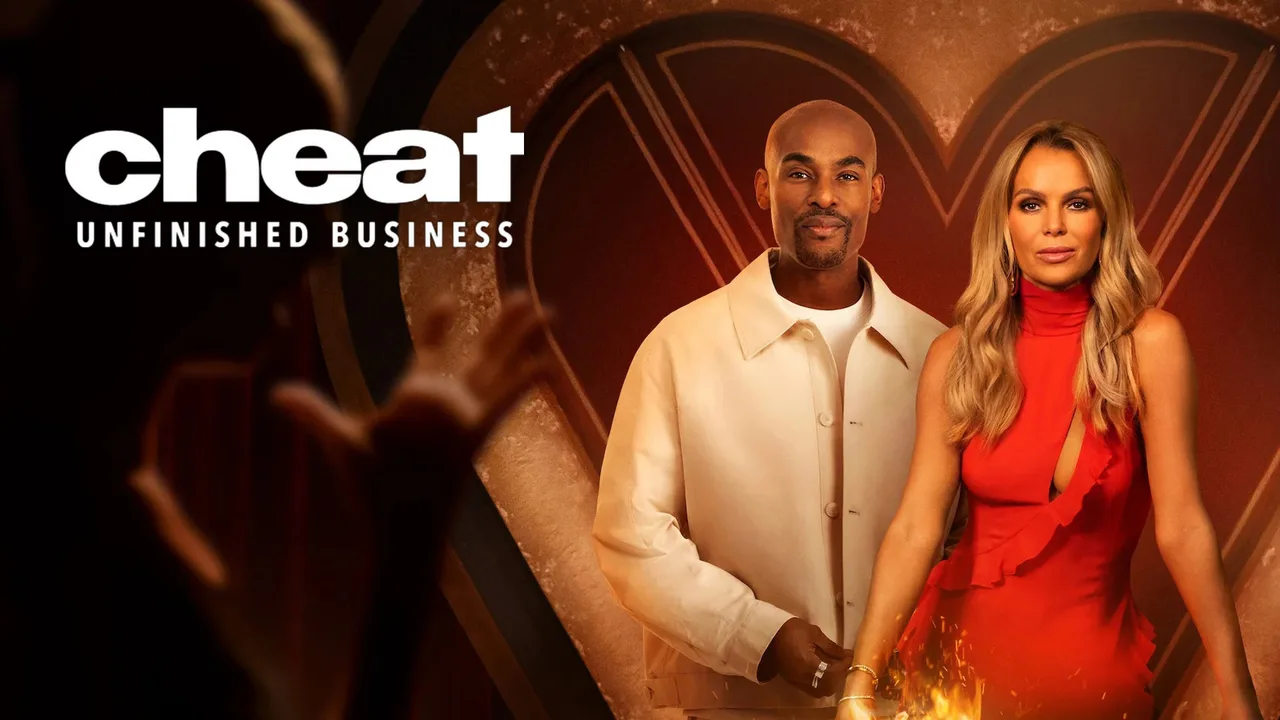

Netflix’s latest reality offering, “Cheat: Unfinished Business,” arrives as a curious artifact of 2025’s streaming landscape—a nine-episode series that positions itself as relationship therapy while operating as emotional voyeurism. Hosted by Amanda Holden, the show transports eight former couples to a luxury Majorca villa where they confront the infidelity that shattered their relationships. The premise promises reconciliation, closure, or new connections among the ruins of old ones.
The series attempts to occupy two distinct spaces simultaneously: legitimate relationship counseling and manufactured reality drama. Paul C. Brunson, relationship expert from “Married At First Sight UK,” provides professional guidance to participants grappling with betrayal, trust, and the possibility of second chances. Yet the villa setting—complete with communal bedrooms, an open bar, and omnipresent cameras—creates an environment designed for volatile interactions rather than healing.
This tension between therapeutic intention and entertainment value reveals itself as the show’s central contradiction. While positioning itself as a meaningful exploration of modern relationship dynamics, the series operates within the familiar framework of reality TV manipulation, raising questions about whether genuine emotional work can occur within such a constructed environment.
Manufacturing Intimacy: The Mechanics of Mediated Reconciliation
The show’s structural design reflects contemporary reality television’s evolution toward increasingly sophisticated emotional manipulation. Contestants inhabit a carefully curated space where private moments become public spectacle, and personal healing transforms into content. The villa’s communal living arrangements strip away privacy while the ever-present bar lowers inhibitions—a combination that feels calculated rather than conducive to genuine therapeutic work.
Central to the series’ format is “The Reckoning,” a recurring set-piece that transforms relationship counseling into theatrical performance. Participants gather around a banqueting table illuminated by moody lighting, with Billie Eilish’s haunting melodies underscoring their emotional revelations. A flame table runner serves as visual metaphor, burning bright or extinguishing based on couples’ relationship status. This dramatization of intimate pain speaks to reality TV’s relentless need to aestheticize human suffering.
Holden’s dual role as daytime counselor and nighttime glamour presenter embodies the show’s identity crisis. During daylight hours, she adopts the concerned expression of a therapist, nodding supportively as contestants share vulnerable moments. After dark, she transforms into a more traditional reality host, facilitating dramatic confrontations in revealing attire. This metamorphosis reflects the series’ inability to commit to either therapeutic legitimacy or entertainment spectacle.
The casting choices further complicate the show’s claims to authenticity. Several contestants emerge from other reality programs like “Love Island” and “Hot Mess Summer,” suggesting motivations that extend beyond relationship repair into social media influence and career advancement. The precision-engineered cliffhangers that conclude each episode prioritize viewer retention over participant wellbeing, revealing the show’s true allegiances.
The Monolith of Male Culpability
Perhaps most troubling is the series’ glaring gender imbalance in its portrayal of infidelity. All eight couples feature male cheaters, with no representation of female infidelity—a narrative choice that fundamentally misrepresents contemporary relationship dynamics. Current research indicates that infidelity rates among younger demographics show women cheating at rates equal to or exceeding men, making this editorial decision particularly jarring.
This skewed representation creates a dangerous cultural narrative that reinforces harmful stereotypes about gender and betrayal. The show’s framework essentially argues that men are inherently untrustworthy while women remain perpetual victims of male misconduct. Such binary thinking ignores the complexity of modern relationships and the various factors that contribute to infidelity across gender lines.
The irony deepens when considering Holden’s own public history with infidelity, which the show largely ignores. This selective amnesia about the host’s past while exclusively vilifying male participants creates an uncomfortable cognitive dissonance. The series essentially asks viewers to accept a moral authority figure whose own actions contradict the simplified narrative being presented.
The villa environment amplifies these gender dynamics by creating spaces where contestants can form new connections with others’ former partners. Yet even these potential betrayals are framed through the lens of male culpability, with women positioned as making understandable choices while men appear predatory. This framework limits the show’s ability to explore the genuine complexities of attraction, loyalty, and personal agency that define modern relationships.
Brunson’s professional guidance offers moments of genuine insight, yet his expertise becomes filtered through the show’s predetermined narrative structure. His advice about effort equaling interest and the distinction between first love and true love carries weight, but these pearls of wisdom feel diminished by the contrived circumstances surrounding their delivery.
The Commodification of Heartbreak: When Therapy Becomes Theater
The series exists within a broader cultural moment where personal trauma has become increasingly commodified for public consumption. Social media platforms have normalized the sharing of intimate details, and reality television has capitalized on this trend by creating formats that monetize emotional vulnerability. “Cheat: Unfinished Business” represents the logical endpoint of this trajectory—a space where genuine healing becomes indistinguishable from performance.

The show’s technical execution reveals sophisticated understanding of audience manipulation. The Majorca setting provides visual luxury that contrasts sharply with the emotional turmoil on display, while the dramatic elements like “The Reckoning” sequences borrow from successful formats like “The Traitors” to create tension. Yet these production values serve entertainment rather than therapeutic goals, raising ethical questions about the responsibility of platforms to prioritize participant wellbeing over viewer engagement.
The series’ cultural impact extends beyond its immediate viewership to influence broader conversations about masculinity, femininity, and relationship dynamics. By presenting such a skewed portrayal of infidelity, the show risks reinforcing divisions between genders rather than promoting understanding. The comment sections and social media discussions around the series already reflect this polarization, with viewers using the show to validate pre-existing beliefs about gender and betrayal.
For audiences seeking genuine relationship insights, the series offers limited value beyond Brunson’s professional interventions. The contrived environment and predetermined narrative structure prevent authentic exploration of the complex factors that contribute to infidelity and relationship breakdown. Instead, viewers receive a simplified morality tale that confirms rather than challenges existing assumptions.
The show’s entertainment value depends largely on viewers’ tolerance for manufactured drama and emotional manipulation. Those expecting authentic relationship counseling will find themselves disappointed by the series’ prioritization of spectacle over substance. The pacing across nine episodes feels stretched, with genuine dramatic moments diluted by extended sequences of villa life and contrived conflicts.
This is a series that squanders its potential for meaningful relationship exploration in favor of gendered stereotypes and manufactured drama. Recommended only for viewers seeking unchallenging reality TV content with minimal expectations for authenticity or insight.
Full Credits
Director: Gareth Birkett
Producers: Josh Blackmore, Georgia Hope, Lily O’Connell, David Reid, Henry Tredinnick
Executive Producers: Chantal Boyle, Ros Coward, Liz Gaskell, Iona MacKenzie
Cast: Amanda Holden, Paul Carrick Brunson, Biggs Chris, Rebecca Gormley, Craig Braham, Jazz Jessica, Kieran Hopkins, Amberley Elvines, Shaun Peach, Tegan Connor, André Awoyemi, Stephanie Eghene, Liam Southward, Olivia Wellbourne, Dan Lezar, Rebecca Cheng, Conor Wilson, Lucia Osborne
Editors: Matt Dzierzek, Ashlinn Gleeson
The Review
Cheat: Unfinished Business
"Cheat: Unfinished Business" represents a missed opportunity disguised as relationship therapy. While Paul C. Brunson provides legitimate expertise and the production values are polished, the series fundamentally fails by presenting a dangerously skewed portrayal of infidelity that reinforces harmful gender stereotypes. The show prioritizes manufactured drama over authentic healing, creating entertainment that feels both exploitative and culturally irresponsible. Those seeking genuine relationship insights should look elsewhere.
PROS
- Paul C. Brunson delivers professional relationship guidance
- High production values and luxurious Majorca setting
- Precision-engineered cliffhangers maintain viewer engagement
- Some contestants show genuine vulnerability and growth
CONS
- Completely skewed gender representation (all male cheaters)
- Prioritizes entertainment over therapeutic value
- Exploitative treatment of emotional trauma
- Reinforces harmful stereotypes about masculinity and femininity
- Questionable contestant motivations undermine authenticity