



















The cinematic space opens on a promise, New York, but Fernando Andrés’ camera, particularly the work of Drew Levin in these early sequences, denies us the crisp postcard. Instead, it captures the frantic energy of living on nothing, a panicky ballet of jumped turnstiles and borrowed joy.
Here we meet Ben and Jordan, two young men from Austin armed with ambition and fatally empty wallets. Their existential condition is established with brutal efficiency. Ben’s plan for metropolitan reinvention implodes through a single act of catastrophic judgment, a choice made not with malice but with the thoughtless purity of impulse.
The subsequent retreat to Austin offers no sanctuary; a girlfriend’s patience evaporates, and the friends find themselves unmoored. Their response is not despair but a gambit of radical dependency: a year spent living as ghosts in the homes of their friends. It is a scheme born of economic necessity, yet it feels like something more—a philosophical wager against the indifference of the world.
Folie à Deux
The film’s central nervous system is the symbiotic, parasitic bond between Ben and Jordan. Jacob Roberts gives Ben a jittery, abrasive energy; he is a vortex of poor impulse control, a walking agent of social entropy whose saving grace is a baffling, feral resilience.
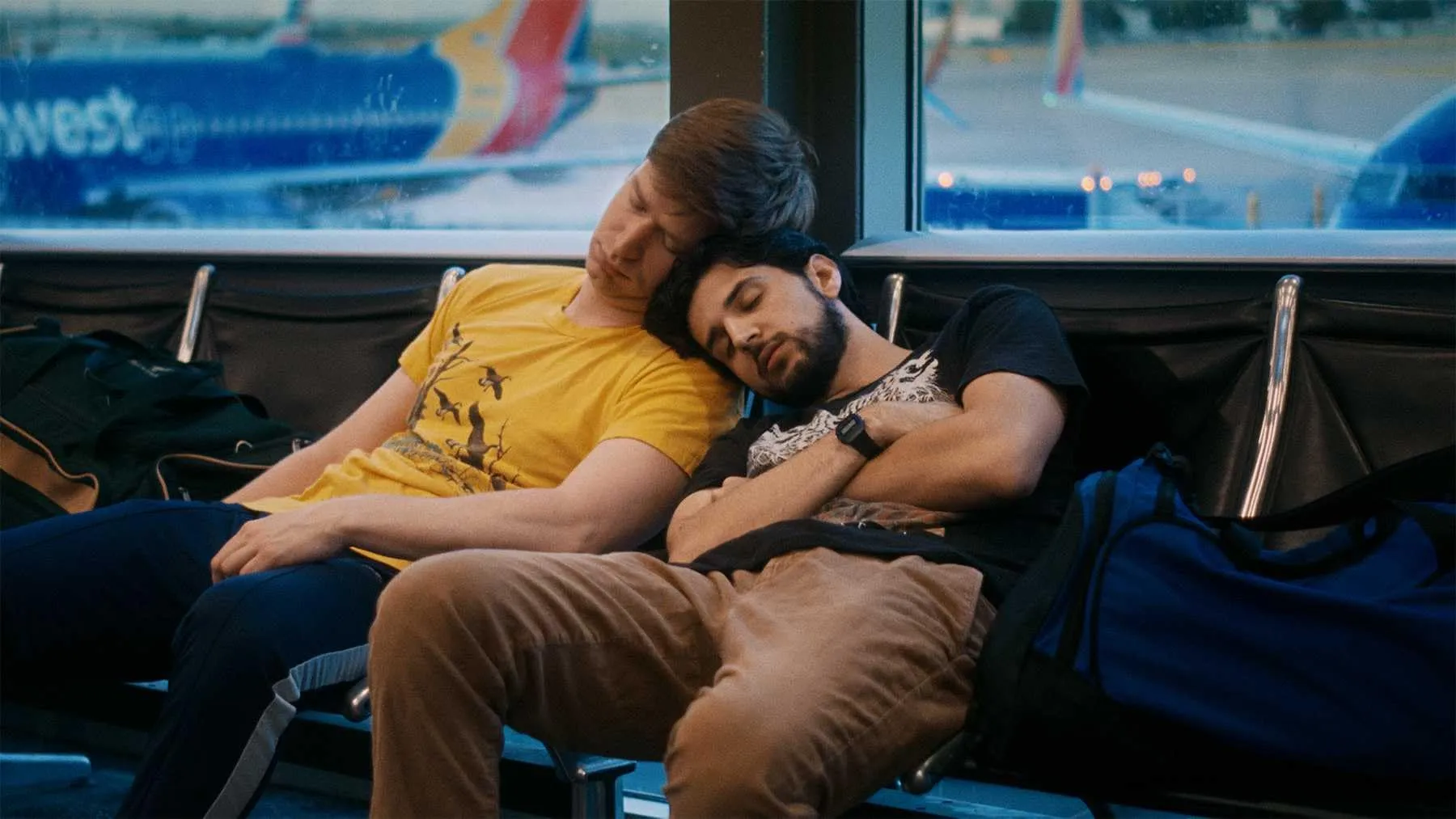
Opposite him, David Treviño’s Jordan is a study in potential energy, a steadier presence whose own artistic ambitions remain dormant, seemingly waiting for an external force to give them shape. That force is Ben. Their codependency is the film’s true subject, a closed circuit of need and quiet resentment. The actors map this difficult terrain with a startling lack of vanity.
We watch their shared history in their shorthand arguments and moments of silent understanding. The stress of their nomadic existence—a new couch, a new set of house rules—begins to warp the geometry of their friendship. Andrés occasionally employs a split screen, a formalist rupture that visually severs their connection, making plain how their shared physical space was perhaps the only thing holding their precarious emotional architecture together.
The Architecture of Anxiety
The film’s most potent antagonist is never seen. It is the crushing weight of economic reality, a pressure made explicit through a stark, recurring graphic device. With each new temporary shelter, the screen displays the apartment’s specs and its market rent.
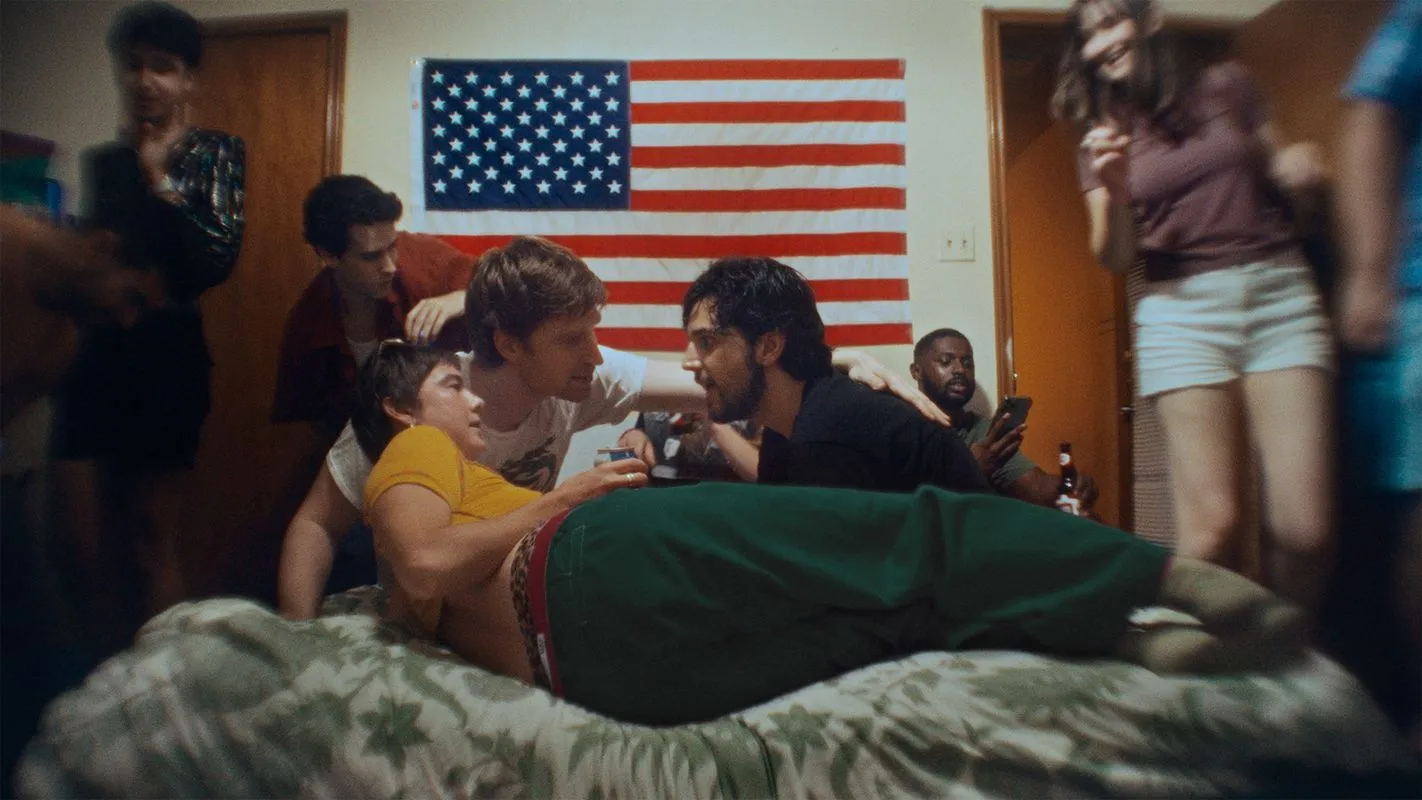
This is not just information; it is a judgment, a constant numerical ghost haunting the characters. The ledger transforms Austin’s gentrified landscape from a backdrop into a character in itself—a maze of unattainable sanctuaries and temporary perches. Ben’s work for a delivery app is framed not as a job but as a series of disconnected, anonymous transactions in this new hostile territory.
The narrative positions their couch-surfing not as a quirky adventure but as a tactical retreat in a war of attrition against scarcity. The camera lingers on the material details, contrasting the spartan discomfort of a friend’s sofa with the casual luxury of a tech-moneyed acquaintance’s high-rise, laying bare the invisible walls that structure their world.
A Deliberate Looseness
There is an aesthetic of the unpolished here, a formal imprecision that feels entirely by design. The film rejects the taut, coiled structure of a thriller for an episodic, sometimes meandering rhythm that mirrors the aimlessness of its subjects.
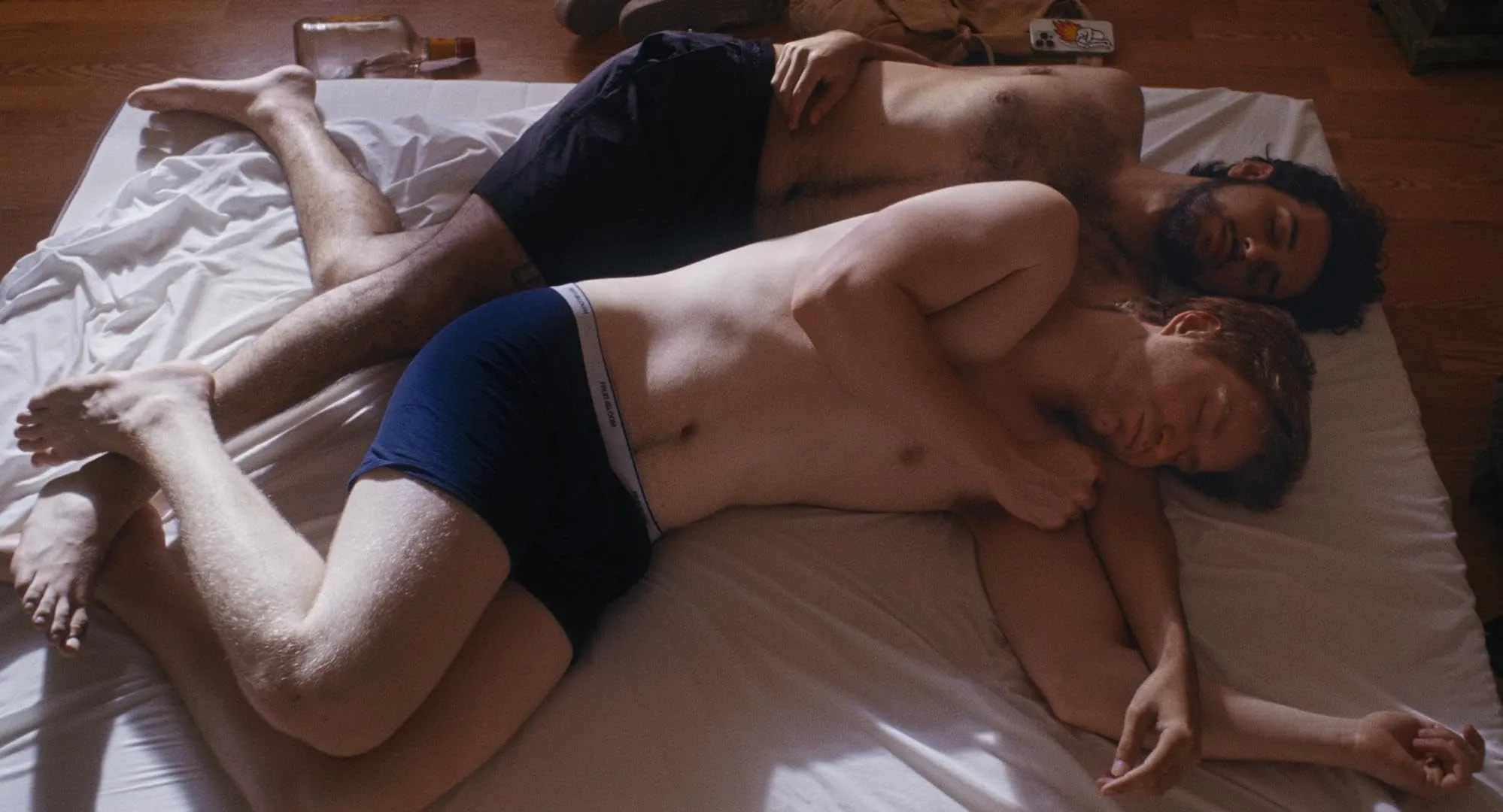
This is a story told in moments, in awkward silences at parties and late-night confessions in borrowed rooms. The lighting scheme avoids expressionistic shadow, opting for a flat, naturalistic look that offers no visual moral signposts. Nothing is hidden in darkness because the flaws are all out in the open.
Its presentation of queer identity is similarly direct, stripped of melodrama or subtext; it is simply a fact of this world, observed without comment. The film’s refusal to provide a tidy resolution feels less like an evasion and more like a statement. It understands that for these characters, growth is not a destination but a slow, painful process of attrition against one’s own worst instincts.
The film Rent Free premiered on June 7, 2024, at the Tribeca Festival in the U.S. Narrative Competition. The movie can be streamed on Amazon Prime Video and is available for rent or purchase on platforms like Prime Video and Apple TV. The DVD release date is set for August 5, 2025.
Full Credits
Director: Fernando Andrés
Writers: Fernando Andrés, Tyler Rugh
Producers: Fernando Andrés, Jacob Roberts, Temple Baker
Cast: Jacob Roberts, David Treviño, Molly Edelman, Neal Mulani, Sarah J. Bartholomew, Zeke Goodman, Temple Baker, Annabel O’Hagan, Jack Austin, Carson Barwinkel, Jeff Kardesch, Frank Mosley, Kristin Slaysman, Bill Wise, Macon Blair, Megan Bitchell, Jose Alarcon
Director of Photography (Cinematographer): Fernando Andrés
Editors: Fernando Andrés
Composer: Austin Weber
The Review
Rent Free
Fernando Andrés crafts a film that operates with a deliberate, unpolished authenticity. While its episodic rhythm and often maddening protagonists defy conventional narrative propulsion, the film succeeds as a sharp analysis of modern economic anxiety and the volatile mechanics of codependent friendship. It presents a world where the most significant antagonist is the looming spectre of a rent invoice, and survival is a messy, unglamorous negotiation. A surprisingly insightful character study disguised as a slacker comedy.
PROS
- An authentic and deeply felt depiction of a complex friendship.
- Sharp, integrated commentary on economic precarity.
- Strong, naturalistic lead performances from Jacob Roberts and David Treviño.
- Presents queer life with a refreshing, matter-of-fact honesty.
CONS
- The episodic, "slice-of-life" pacing may feel slow or meandering.
- The protagonists' poor impulse control can be genuinely exasperating.
- Its intentionally unpolished, indie aesthetic may not suit all tastes.