































Imagine you are in the middle of the most intense firefight of your life, only for the sky to open up and pull you into a different kind of war. This is the simple, violent premise of Osiris. The film yanks a team of elite soldiers straight from a terrestrial battlefield and drops them into the cold, metallic guts of an alien ship. There is no time for questions.
Their new reality is a hunting ground, and they have just become the prey. This is a sci-fi action movie with a thick layer of horror, a gritty B-picture that feels like a lost video game from my teenage years. It promises a relentless, loud, and single-minded experience, immediately making it clear that character arcs and complex motivations were left behind on Earth.
The Industrial Abattoir
The soundscape of Osiris is its most dominant feature, an almost unbroken assault of automatic weapons fire. The sound design is not just loud; it is textured with the echoes of a metallic environment, where every bullet ricochet and alien screech reverberates down endless corridors.
This overwhelming audio creates a genuine sense of combat fatigue in the viewer, a deliberate choice that mirrors the characters’ exhaustion. The action itself is staged with a straightforward brutality. The camera work is often tight on the soldiers, capturing the chaos from their perspective but rarely employing the disorienting shaky-cam that plagues many modern action films.
Instead, it holds steady enough for us to appreciate the choreography, which is less about elegant moves and more about the grim efficiency of trained soldiers facing an overwhelming force.
The production design leans into its limitations with impressive results. The ship’s interior feels like a vast, repurposed industrial warehouse, all harsh fluorescent lighting, sterile steel corridors, and heavy, circular doors that hiss open and shut.
This “used future” aesthetic, reminiscent of sci-fi from the 70s and 80s, feels grounded and functional. It may not be an imaginative vision of alien architecture, but it effectively creates a cold, hostile labyrinth. It speaks to a blue-collar vision of space, a place of work and danger, not sleek exploration.
The filmmakers cleverly use this spartan canvas for small sci-fi flourishes, like the enemy’s translucent plasma shields that glow beautifully before shattering under a hail of bullets. It is a testament to how a focused vision can stretch a modest budget to build a convincing, if familiar, battlefield.
The Beauty of the B-Movie Beast
In an age of seamless digital monsters, there is something uniquely satisfying about a creature you can almost reach out and touch. The alien antagonists in Osiris are performers in meticulously crafted suits, and the film is so much better for it. Their design is a familiar blend of armored insect and bipedal hunter, but their physical presence gives them a tangible weight that CGI so often lacks.

It reminds me of the sci-fi horror I grew up watching, where the monster’s threat felt immediate because you knew something was physically there with the actors. You see the way the creature’s feet connect with the steel floor, the way light glints off the practical texture of its skin, and the raw force of its physical interactions with the environment and the soldiers.
This commitment to practical effects positions the film as a loving throwback, a deliberate counterpoint to the weightless digital swarms of bigger-budget fare.
This practical approach extends to the film’s gore, which is visceral and effective. The makeup and creature effects are a clear high point, a display of craft and passion that demonstrates a deep love for the genre.
Every wound feels painfully real, serving not just as a shock but as a narrative tool to constantly remind us of the stakes. This is where the film’s independent spirit shines brightest, prioritizing tangible artistry over digital polish and creating a menace that feels frighteningly real.
Soldiers and Survivors
When a film is this dedicated to action, characterization often takes a back seat. The soldiers of Osiris are drawn with the broadest of strokes; they are archetypes designed to fill out a squad, a choice that prioritizes relentless momentum over emotional investment.

We have the gruff leader, the wisecracking specialist, and others who exist primarily to aim a weapon and shout functional dialogue. This lack of depth prevents any real connection, but it is also a staple of the B-movie genre, ensuring nothing slows the pace.
Max Martini carries the role of the squad leader with a commanding, weary presence that anchors the chaos around him. He projects a believable mix of grim determination and exhaustion, making him a compelling focal point even with sparse material.
The film’s most recognizable face is Linda Hamilton, whose appearance feels like a delightful nod to sci-fi history. Her role as a hardened survivor is small and her screen time is limited, functioning as a fun piece of stunt casting that adds a spark to the second half.
The moment she appears, she brings the entire legacy of her past roles with her, instantly establishing her character’s credibility as a formidable fighter. She brings a grizzled authenticity to the part, even if it is brief, and it is a clear highlight to see her back in her element, battling extraterrestrial threats.
A Marathon When It Needed a Sprint
The greatest challenge facing Osiris is its own clock. With a runtime approaching two hours, the film stretches its simple premise to a breaking point, a critical miscalculation in its editing and structure. A good action film understands rhythm, the need for peaks of intensity and valleys of tension.
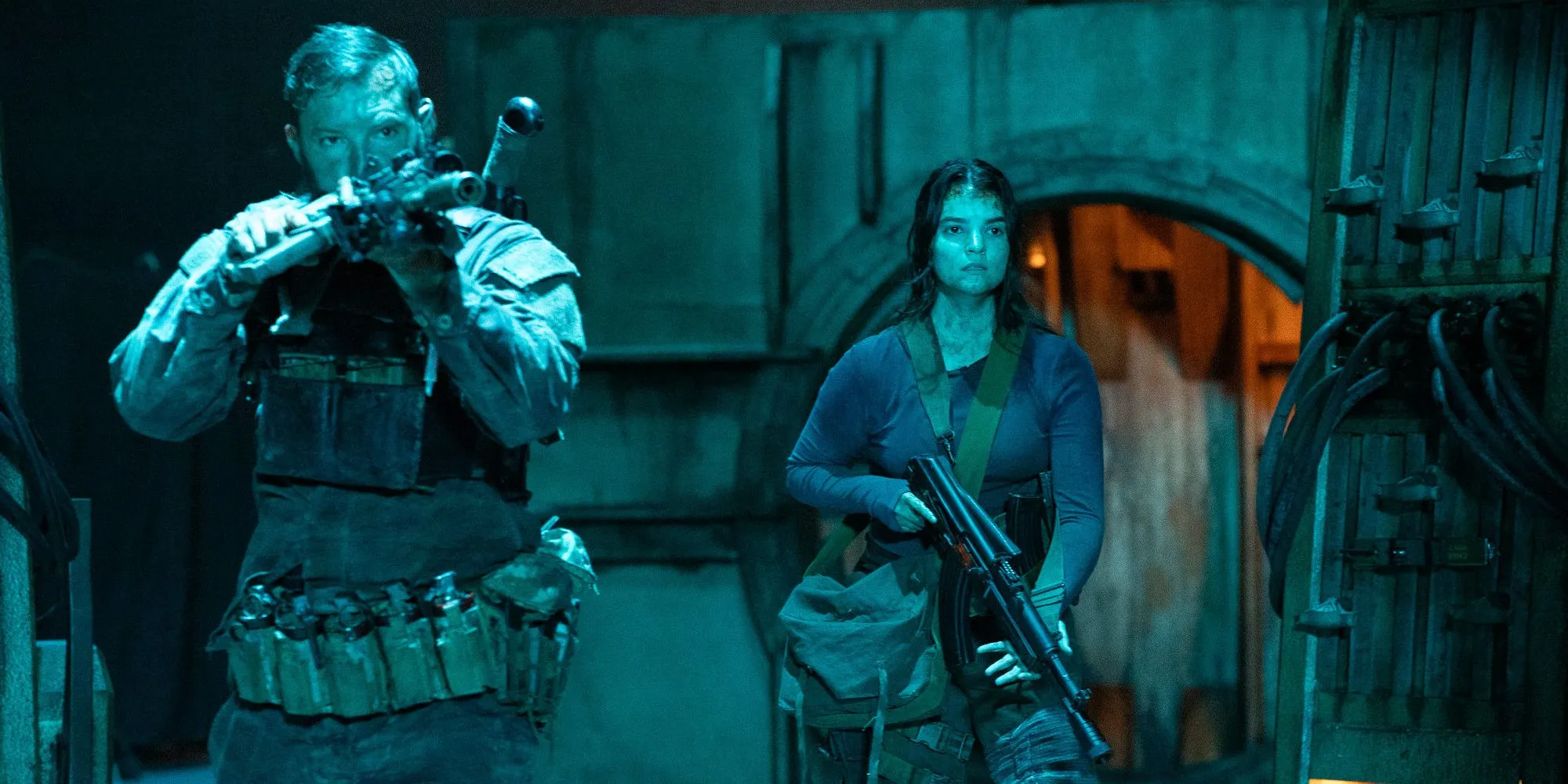
Osiris, however, is almost all peaks, and the relentless assault paradoxically flattens the experience. The action sequences, so thrilling in the first act, gradually become monotonous through repetition. The film’s structure is a straightforward gauntlet, like a series of video game levels, which works for interactive entertainment but struggles to sustain a passive viewer for so long.
The lack of quiet moments means the tension never has a chance to properly build and release, making the later firefights feel less impactful than the first. It is a film with an independent budget that unfortunately adopts the runtime of a blockbuster epic, a common pitfall for ambitious genre pictures.
It tries to offer a massive quantity of action, but its resources cannot support the variety needed to make that length feel earned. There is a fantastic, 80-minute action movie trapped inside this 110-minute one, a testament to how crucial an editor is in finding a film’s true, most powerful form.
The science fiction action film “Osiris”, directed by William Kaufman, is scheduled for release on July 25, 2025. It will be available in select theaters and on video on demand platforms such as Prime Video and Apple TV. Vertical is distributing the film.
Full Credits
Director: William Kaufman
Writers: William Kaufman, Paul Reichelt
Producers: Andrew Lewis, Isaac Lewis, Jon Wroblewski, Christian Sosa, Max Martini
Executive Producers: Paul Reichelt, David Gendron, Ali Jazayeri
Cast: Max Martini, Brianna Hildebrand, LaMonica Garrett, Linds Edwards, Jaren Mitchell, David Meadows, Michael Irby, Linda Hamilton
Director of Photography (Cinematographer): Mark Rutledge
Editors: Sara Kaufman
Composer: John Roome
The Review
Osiris
Osiris is a frustratingly admirable sci-fi actioner. It succeeds brilliantly as a showcase for practical effects and raw, intense combat, creating a tangible and brutal world on a modest budget. However, its relentless pace and overlong runtime turn its greatest strengths into weaknesses, transforming an exciting sprint into an exhausting marathon. A much leaner film is buried within, but as it stands, Osiris is a B-movie gem that desperately needed a more ruthless editor.
PROS
- Excellent use of practical "man-in-a-suit" creature effects.
- Gritty, effective production design that creates a tangible sense of place.
- Intense and well-staged action sequences.
- Impressive makeup and gore effects for a low-budget film.
- A fun, nostalgic supporting performance from Linda Hamilton.
CONS
- An excessive runtime that drags the pacing down significantly.
- Repetitive action sequences become monotonous over time.
- The story is derivative and offers few narrative surprises.
- Characters are thin, one-dimensional archetypes.