






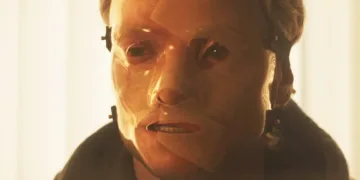

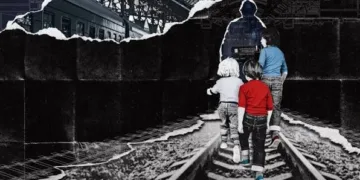

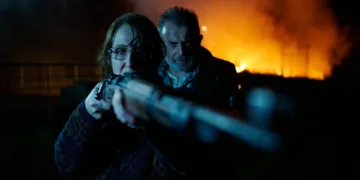














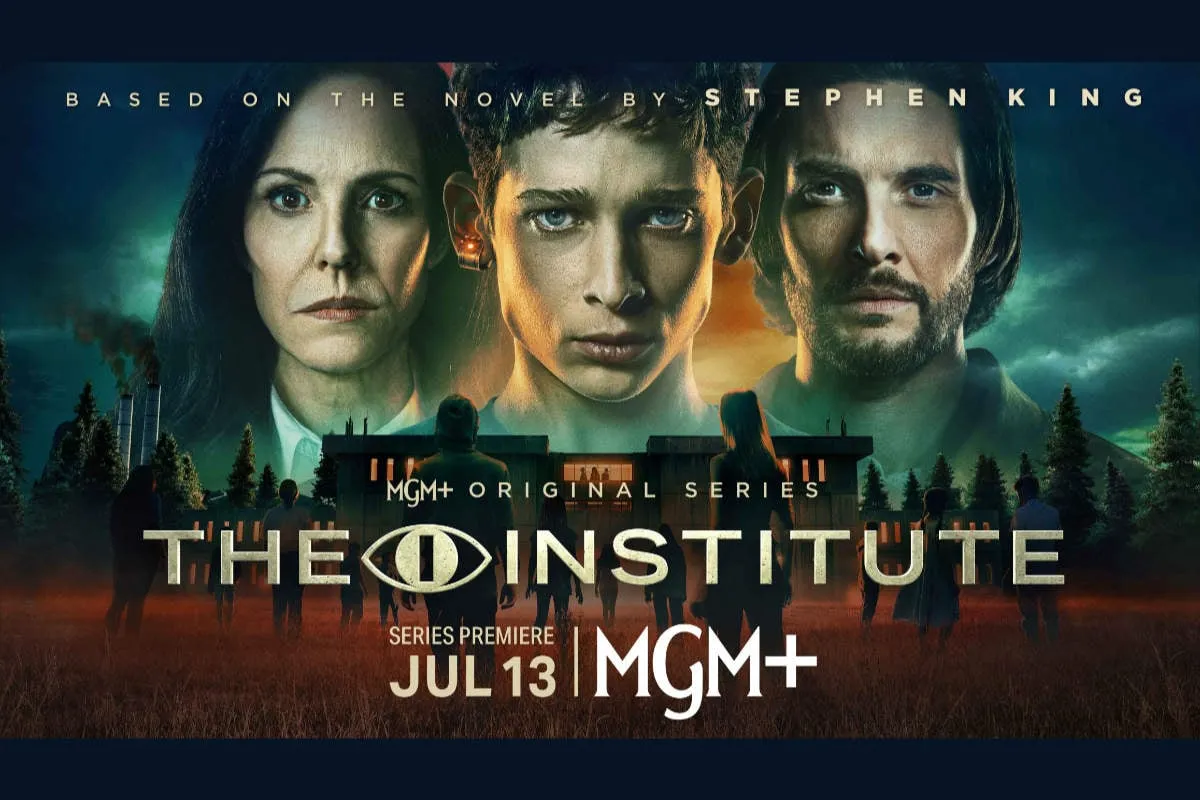

The disappearance of a boy genius from his suburban bedroom feels like a story from a bygone era, but his awakening grounds us in a distinctly modern nightmare. Luke Ellis, a teenager with mild telekinetic talent, opens his eyes not to a monster but to something far more chilling: the cold logic of a sterile, concrete facility.
This is the Institute, a place that exists in the shadows of an ordinary American town. Its purpose is the systematic collection of gifted children, a generation categorized and reduced to clinical acronyms—are you TK (telekinetic) or TP (telepathic)? This classification is the first step in a process of dehumanization.
The central conflict is not one of good versus supernatural evil. Instead, the horror is bureaucratic and human-led. A detached adult staff subjects its young captives to a regimen of painful and invasive experiments, all in service of some grand, undeclared agenda. The series immediately establishes a grim atmosphere, locating its terror not in jump scares or otherworldly entities, but in the all-too-recognizable dread of institutional cruelty and the quiet suffering it inflicts upon the vulnerable.
A Narrative Divided Against Itself
The series presents its most compelling argument for existing from within the stark, concrete walls of its titular facility. Inside this claustrophobic pressure cooker, the narrative is sharp, focused, and deeply unsettling.
We follow Luke Ellis and his fellow captives as they navigate the daily horrors of clinical torture and psychological warfare, their small acts of rebellion and budding alliances forming the emotional core of the story. This is where the show’s allegorical power resides, in the harrowing depiction of youthful resilience against an oppressive, systematic cruelty.
When the camera stays within the Institute, the series feels urgent, vital, and uncomfortably relevant, reflecting a world grappling with the ethics of state-sanctioned control.
But the show repeatedly chooses to leave. We are frequently transported to the sleepy adjacent town and the parallel story of Tim Jamieson, a former police officer with a troubled past. As a “night knocker,” his slow-burn investigation into local oddities feels like a story from a different, more conventional series. While actor Ben Barnes brings a requisite charisma to the role, his plotline moves at a glacial pace, a throwback to a procedural drama that feels entirely disconnected from the visceral horror unfolding just up the road.
This structural decision to intercut the two plots is the show’s most significant misstep. Every cut away from the Institute’s immediate peril to Tim’s leisurely investigation acts as a narrative tranquilizer, deflating the tension so carefully built.
It is a peculiar form of self-sabotage, reflecting a trend in streaming-era television to pad runtime and broaden appeal by grafting a familiar genre onto a more challenging premise. The result is a fractured experience where the story’s potent, radical heart is consistently interrupted by a detour that feels both unnecessary and safe.
A Generational Talent Rises From the Concrete
If the narrative structure of The Institute is its primary weakness, its young cast is its undeniable, saving strength. The series places an immense weight on the shoulders of Joe Freeman as Luke Ellis, and he proves more than capable of carrying it.
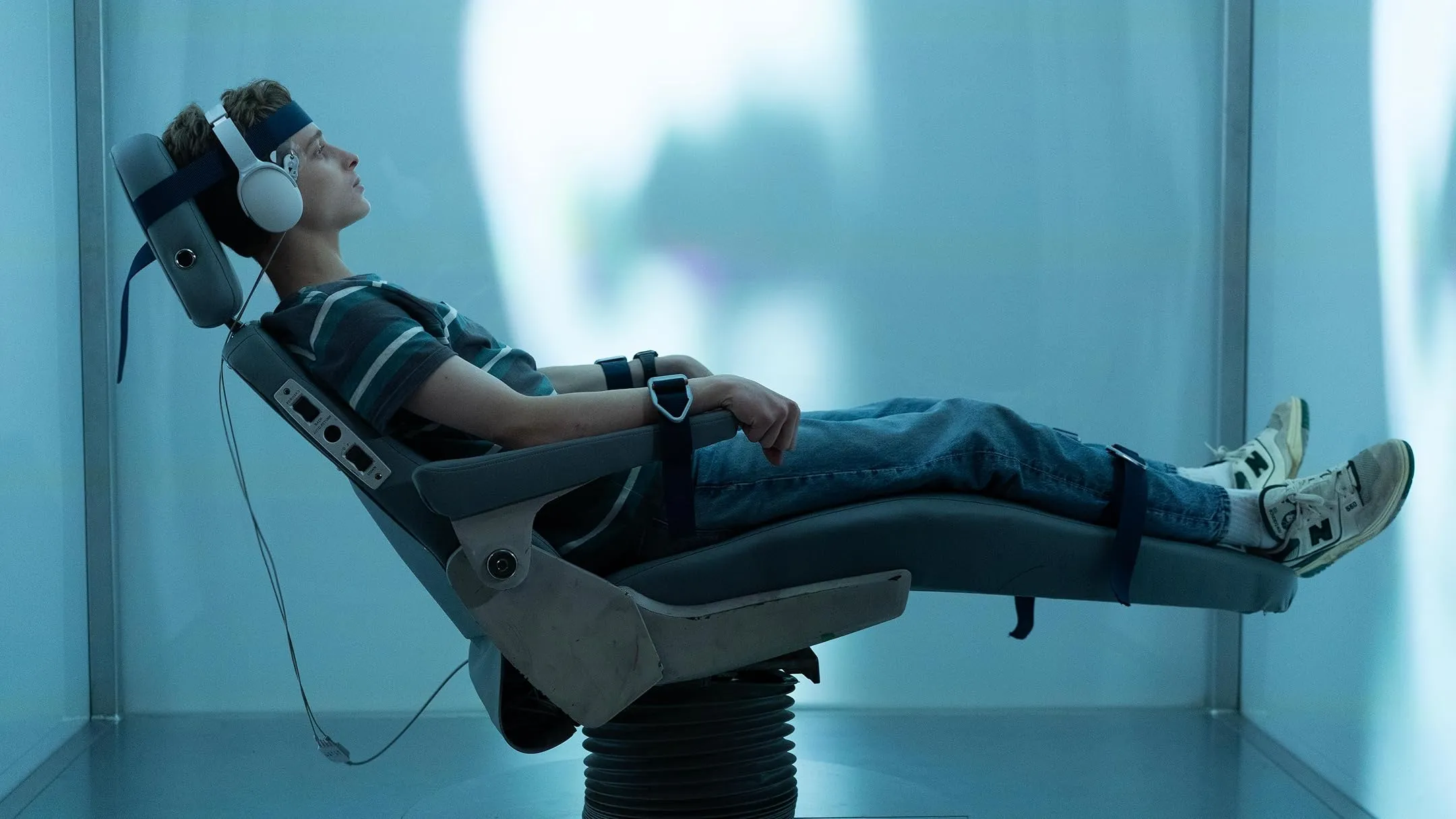
In an industry quick to discuss an actor’s lineage, Freeman’s performance silences cynicism by simply being excellent. He navigates the difficult demands of the role with a maturity that is remarkable, shifting seamlessly from the intellectual arrogance of a boy genius to the raw fear of a captive, and then again to the hardened defiance of a leader forged in trauma.
His portrayal is the emotional anchor, providing a necessary human focus that prevents the show’s grim premise from becoming an exercise in misery. He makes Luke’s journey feel specific and deeply personal, ensuring the audience is invested beyond the high concept.
Freeman is not an isolated talent in a sea of mediocrity. He is surrounded by a strong ensemble of young actors who create a believable ecosystem of fear and solidarity. Fionn Laird, as the fiercely rebellious Nick, offers a vital, angry counterpoint to Luke’s calculated intellect, representing the heart-first rage of their generation.
Together, the young cast builds a convincing camaraderie born from shared crisis. Their whispered conversations and tentative alliances provide the show’s most authentic moments. It is through their collective performance that the stakes of the Institute’s project become tangible, grounding the fantastical elements in a compelling emotional reality that the script alone does not always achieve.
The Hollow Crown of Cruelty
An institution is only as menacing as its leadership, and it is here that The Institute presents a curious puzzle. At the top of the hierarchy sits Ms. Sigsby, portrayed by the decorated Mary-Louise Parker. The performance is a study in contradiction, oscillating between moments of delightfully deranged glee and a strange detachment that suggests an actor who is not fully convinced of her own character’s motivations.
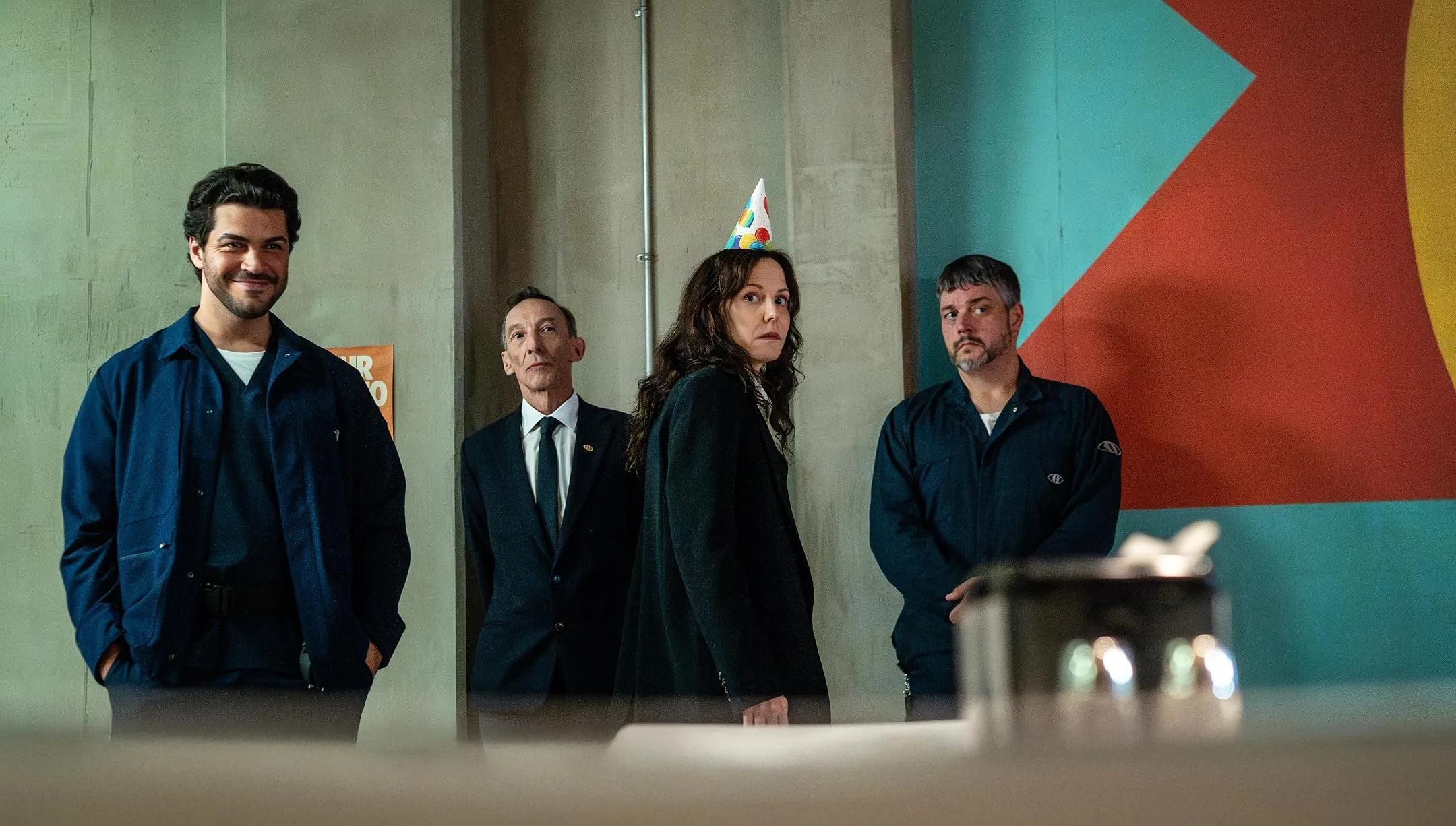
The show attempts to layer her with bizarre personal habits, including a self-flagellating ritual, but these eccentricities feel like narrative appliques—quirks added to create a depth that is not intrinsically there. The result is a villain who is enigmatic not because she is complex, but because her portrayal feels inconsistent, leaving a vacuum at the center of the show’s power structure.
This vacuum is eagerly filled by the chilling efficiency of her subordinates. The true terror of the Institute is not embodied by its director but by the bureaucratic menace of its staff. The veteran character actors Julian Richings and Robert Joy are perfectly cast as high-level functionaries whose horror lies in their quiet, unnerving professionalism.
They are the architects of the system, the men who watch from behind the glass. Below them is Jason Diaz as Tony, the burly handler who represents the final, brutal expression of their policies. He is the hands-on instrument of torment, the muscle that carries out the clinical orders from above. This tiered system of villainy is far more resonant than any single monstrous leader; it suggests the true evil is the institution itself, a machine where every component, from the administrator to the enforcer, performs their function with terrifying competence.
The Architecture of Apathy
For a series built upon a foundation of child abduction and torturous experimentation, The Institute is curiously devoid of terror. It opts for a specific flavor of horror—clinical, psychological, and procedural—that in theory could be profoundly unsettling. Yet the execution keeps the audience at a safe distance.
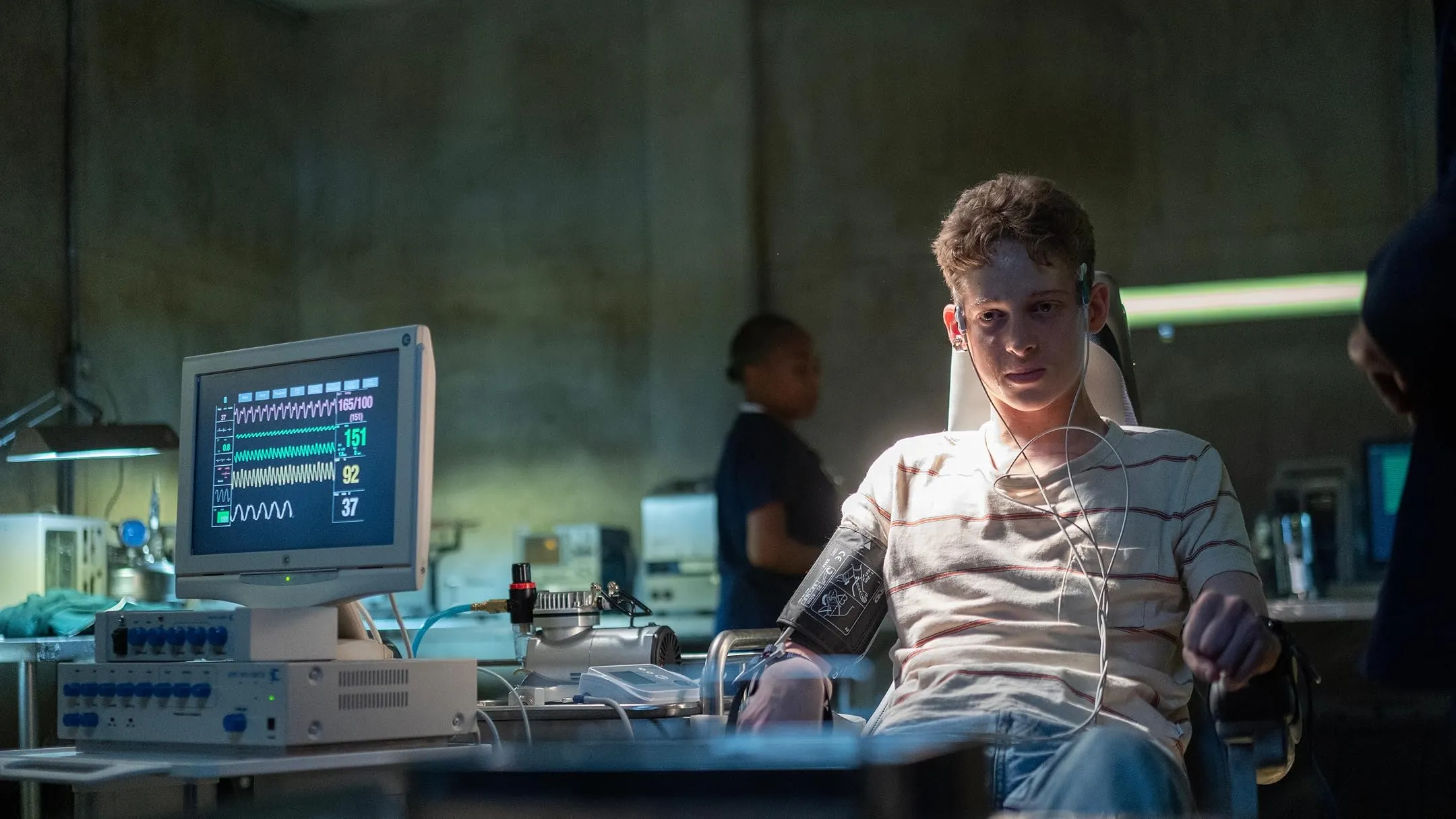
The overarching threat posed by the facility remains a vague, intellectual concept for too long, with a noticeable failure to escalate the stakes in a way that generates genuine suspense. The horror is something to be observed rather than felt, a grim portrait of cruelty that rarely quickens the pulse. This emotional detachment is mirrored in the show’s aesthetic.
The visual palette is a deliberate study in austerity, all sterile concrete, muted colors, and cold, unflattering light. It stands in stark contrast to the vibrant, Spielbergian energy of its genre cousins, choosing a solemnity that, without the necessary narrative tension to support it, reads as merely stale.
This struggle for atmosphere is critically wounded by the show’s pacing, a clear victim of streaming-era bloat. The story feels unnaturally stretched to fit its eight-episode container, a structural decision that serves the platform more than the plot. Consequently, the narrative sags considerably in the middle, caught in a loop of repetitive scenarios and conversations that stall momentum.
It’s in these moments that the viewer’s patience is tested, and the carefully constructed grim tone is occasionally shattered by lines of inorganic dialogue. These clunky exchanges pull us out of the experience, reminding us that we are watching a construction that is not quite as seamless as it needs to be.
The Sum of Its Familiar Parts
The Institute ultimately stands as a testament to its own internal conflict: a series where the raw, compelling talent of its young cast is perpetually held back by a cautious and fractured narrative design.
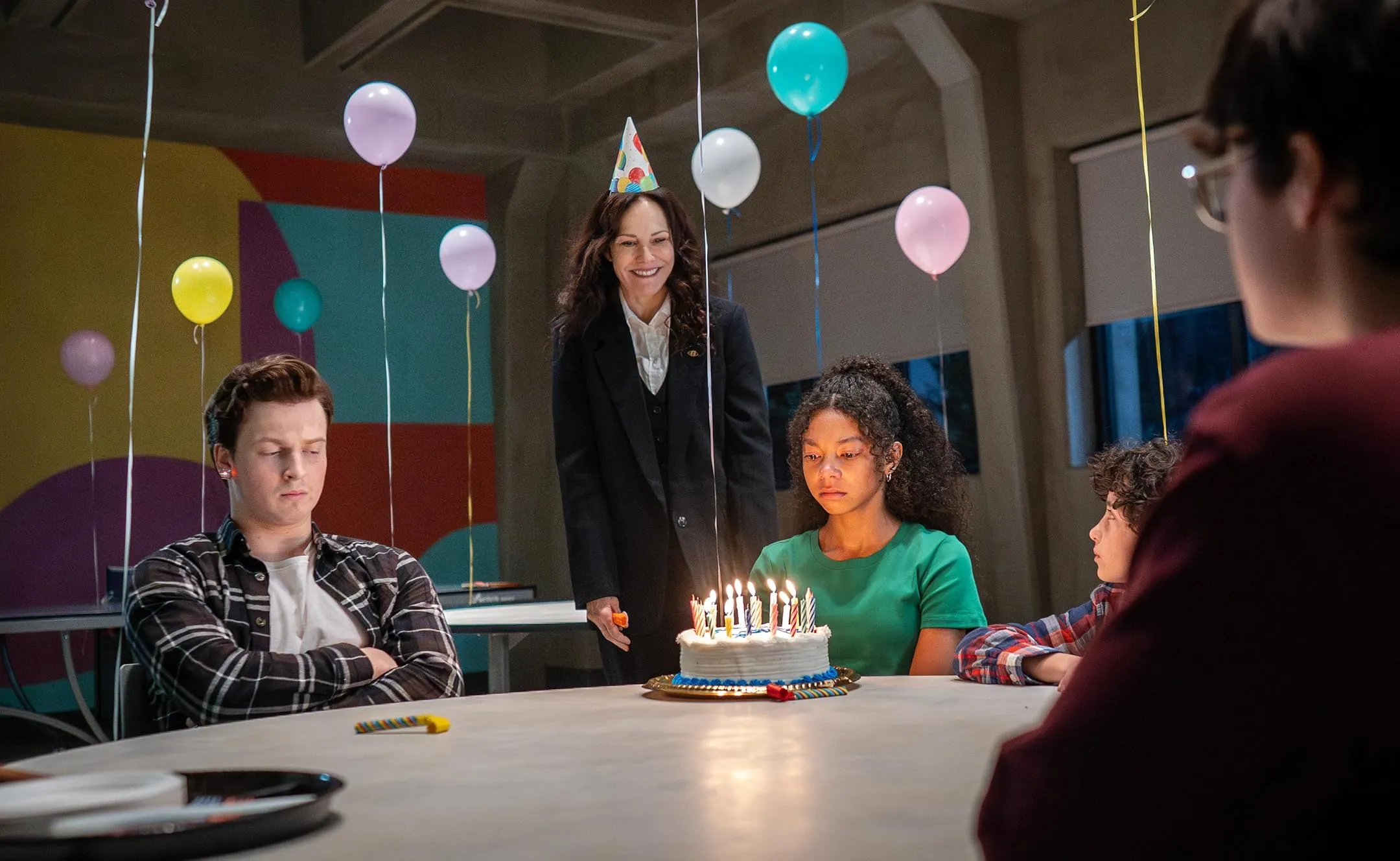
It is a handsome, professionally executed production that assembles a checklist of familiar Stephen King tropes—gifted children, a sinister bureaucracy, a mysterious small town—without synthesizing them into a distinct identity.
The show provides a perfectly adequate genre placeholder, serviceable for a weekend binge, but its profound lack of daring ensures it will likely be forgotten as soon as the next original idea arrives.
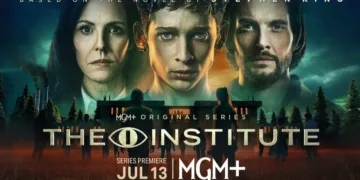
The Institute will premier on July 13, 2025 at 9 p.m. ET/PT on MGM+.
Full Credits
Director: Jack Bender
Writers: Benjamin Cavell, Stephen King
Producers: Jack Bender, Benjamin Cavell, Stephen King
Cast: Ben Barnes, Mary-Louise Parker, Joe Freeman, Simone Miller, Fionn Laird, Hannah Galway, Julian Richings, Robert Joy, Viggo Hanvelt, Arlen So, Birva Pandya, Dan Beirne, Martin Roach, Jane Luk, Brendan Beiser, Mary Walsh, Jordan Alexander, Jason Diaz
The Review
The Institute Review
The Institute is a frustratingly mixed offering. It is elevated by a truly impressive young cast, led by a star-making performance from Joe Freeman, who give the grim proceedings a necessary human heart. However, their excellent work is consistently undermined by a flawed dual narrative that sabotages tension and a sluggish pace that drains the story of any real horror. While professionally made, the series feels like a safe, sterile assembly of familiar Stephen King parts that never coalesces into a memorable whole, becoming a competent but ultimately forgettable experiment.
PROS
- A powerful and compelling lead performance from Joe Freeman.
- The talented young ensemble cast creates a believable sense of camaraderie.
- The supporting adult staff are effectively creepy and menacing.
CONS
- A fractured narrative structure that consistently kills momentum.
- A significant lack of suspense and genuine terror.
- Pacing issues make the series feel bloated and slow, especially in the middle.
- The story feels overly familiar, like a collection of well-worn tropes.