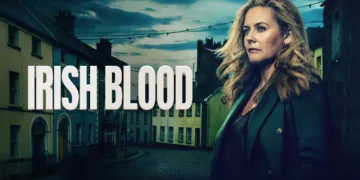




























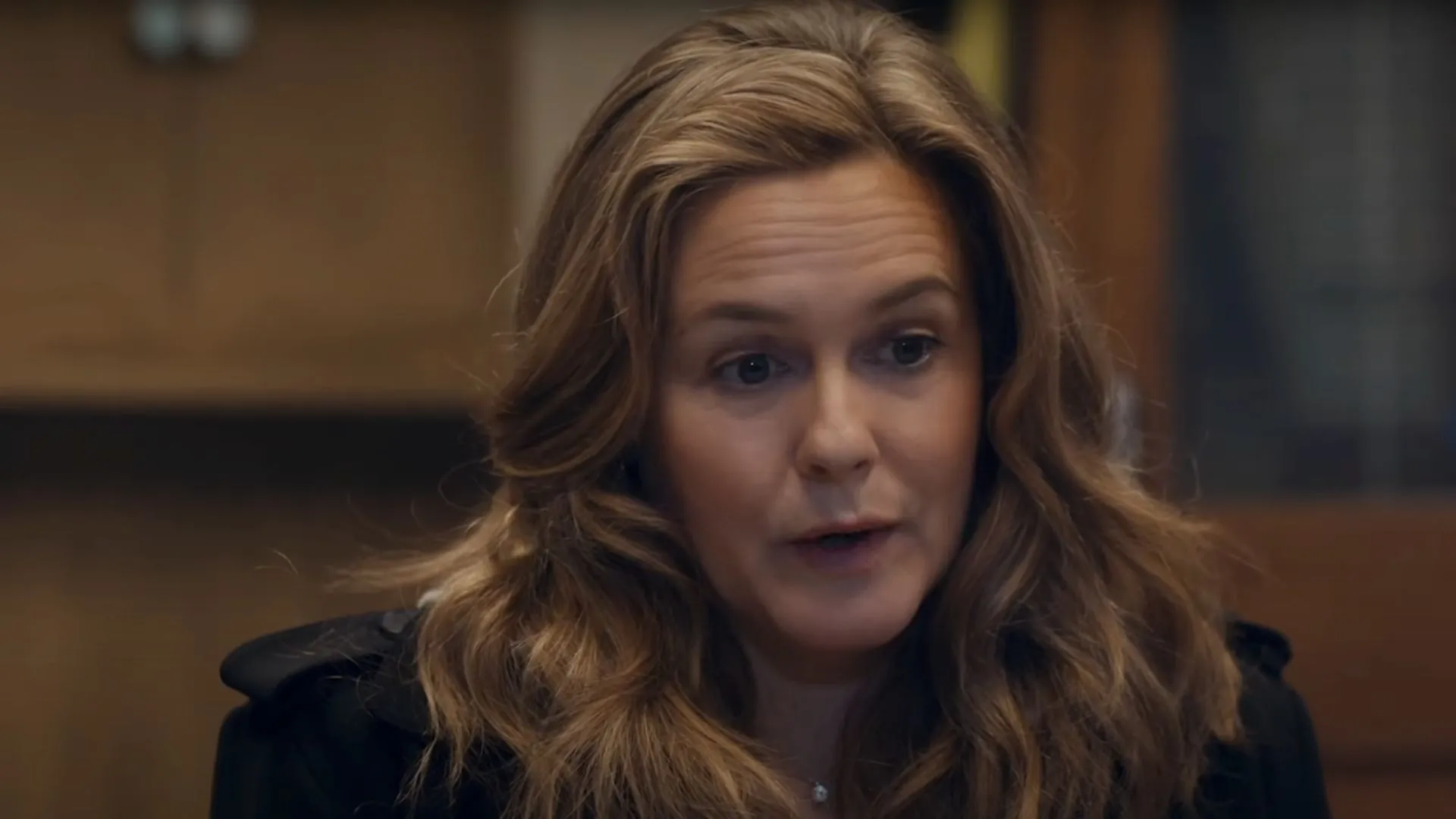
A woman stares directly forward. “You wanna know how I ended up here?” she asks. “Actually, I blame my father.” With this, Irish Blood introduces Fiona Fox, a Los Angeles divorce attorney who has weaponized the anger from her childhood. Her successful career is built upon the foundational belief that her father, Declan Murphy, was a simple scoundrel who abandoned his family thirty years ago.
This narrative has been her shield and her sword. When a cryptic package from Ireland arrives, it summons her across the ocean for a confrontation she has spent a lifetime rehearsing. She expects a bitter reckoning. She finds a wake. Her father is dead, and the story that has defined her existence unravels.
The abandonment was a lie, a fabrication meant to protect her from a man whose life was far more complicated and dangerous than she ever imagined. This discovery sends her on a disorienting quest for truth through a country and a family that are entirely new to her.
The Armor and the Heir
Fiona Fox arrives in Ireland wearing her profession like armor. She is a construct of trauma, a sharp, cynical lawyer whose emotional distance is her greatest asset in the courtroom and her biggest liability in life. Her practice, which specializes in making philandering men pay, is less a career than a calling, a continuous reenactment of the injustice she believes her mother suffered.
This carefully maintained persona, honed in the sterile conference rooms of Los Angeles, begins to fracture the moment she breathes the Wicklow air. The confrontation she planned becomes an investigation she is unprepared for, forcing a raw vulnerability to the surface. Her purpose, once clear and vengeful, becomes clouded with grief and confusion. This internal shift is where the series finds its footing, exploring the space between the person we perform and the person we are when stripped of our defenses.
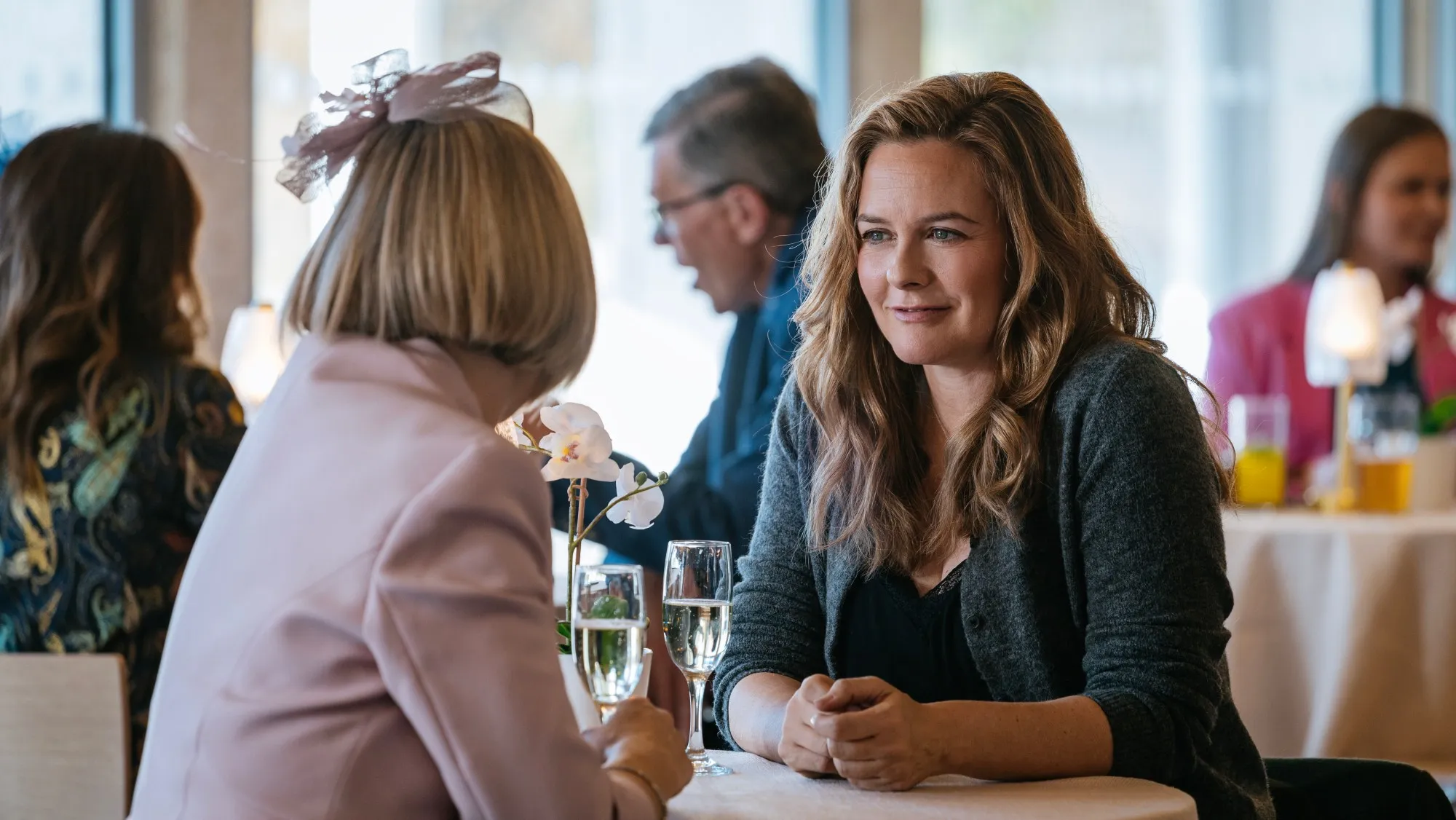
Alicia Silverstone’s performance skillfully captures this duality. She delivers Fiona’s cutting, comedic lines with a practiced ease in the early scenes, showcasing the character’s well-honed defensive mechanisms when dealing with an overly familiar seatmate on the plane or a nosy town local. When the truth about her father’s death upends her world, Silverstone transitions seamlessly into a more dramatic register.
Her face becomes a map of conflicting emotions when she first enters her father’s home, not as a righteous avenger but as an anonymous mourner. She grounds Fiona’s conflict, letting the character’s hardened anger coexist with the sorrow for a parent she is only beginning to know in death. The performance makes the internal struggle between the angry child and the grieving adult feel authentic.
This transformation is mapped across the season with deliberate care. Fiona evolves from a woman seeking the closure of confrontation to an amateur sleuth driven by the need for truth. The shift is visible in her demeanor and even her wardrobe, as the severe power suits of her Los Angeles life are gradually replaced by softer, more practical attire. The shedding of blazers for sweaters and heels for boots is a visual metaphor for the dismantling of her own emotional fortifications.
Ghosts in the Family Album
The central plot of Irish Blood is an act of biographical excavation. Fiona’s investigation is less about a single crime and more about reconstructing the life of Declan Murphy. He was not just an absent father; he was a man entangled in shady business dealings and connected to a dangerous criminal element, a figure whose absence was a desperate act of protection.
The story uses flashbacks and dreamlike sequences to build their relationship posthumously. In these scenes, an adult Fiona converses with the father she lost as a child, allowing her to process her idealized memories against the harsh light of reality. These conversations in her mind are a psychological arena where she can finally ask the questions that have haunted her.
A briefcase filled with his mementos, each object a key to a specific childhood memory, serves as the narrative engine. A worn book, a fishing lure, a photograph—each propels the investigation forward, acting as a non-linear diary of a hidden life.
As she follows these clues, she stumbles upon another inheritance: a family. Her grandmother Isadora is a formidable matriarch, her aunt Una is watchful and warm, and her uncle Finn is wary. They are strangers who share her bloodline. Their initial interactions are tentative and awkward, complicated by Fiona’s decision to hide her identity. Yet, an underlying warmth permeates their scenes, a sense of deep-rooted connection that Fiona has never experienced.
This newfound community offers a profound contrast to her sterile, isolated existence back home, where her only meaningful relationship seems to be with her assistant. The connections she forges with them, hesitant at first, become an anchor in the storm of her discovery. The show also explores the difficult dynamic with her mother, Mary, the keeper of the original lie.
The decades of deception cast a long shadow, a burden Mary carried alone. Their eventual emotional reckoning over the truth of Declan’s life is a poignant exploration of parental protection, forgiveness, and the unforeseen costs of shielding a child from a painful reality.
A Quaintly Perilous Wicklow
Irish Blood positions itself as a cozy crime drama, a genre that prioritizes character and atmosphere over grit and gore. The show’s tone is a delicate mixture of lighthearted humor and serious family mystery. It navigates these shifts with reasonable success, balancing Fiona’s witty, cynical narration against moments of genuine emotional weight and physical peril.
A scene can pivot quickly from a humorous misunderstanding about Irish slang to a tense confrontation in a dark alley. The result is a series that feels dangerous in one moment and comforting in the next, mirroring the protagonist’s own disoriented state. The picturesque Irish setting is essential to this effect.
The rolling hills and charming towns of Wicklow are more than a scenic backdrop; they create an atmosphere that is at once beautiful and subtly menacing, an emerald veneer over hidden secrets and long-held grudges. The landscape is a character in its own right, its ancient beauty a silent witness to the modern troubles brewing within it.
Fiona does not investigate alone. She gathers a small, unconventional team of allies who help her navigate this new world. Musa, the quiet and handsome owner of a local boxing gym, has a direct connection to her father. He serves as a grounding presence, his steadfast loyalty a stark contrast to the transactional relationships Fiona is used to.
His chemistry with Fiona provides a slow-burning romantic subplot. Roisin, a delightfully quirky local police officer, becomes an unlikely partner. Her offbeat methods and deadpan humor provide both comic relief and surprising insight, giving Fiona a quasi-official entry into the investigation.
Back in Los Angeles, her tech-savvy assistant, Tess, offers remote support, a digital lifeline that connects the old world of Ireland with the hyper-connected world Fiona comes from. Together, these characters form a support system that helps ground Fiona as she confronts her family’s past.
A Tangled Narrative Thread
The series employs a dual storytelling structure, a choice that produces mixed results. It weaves the compelling, season-long mystery of Declan’s life and death through episodic subplots involving local crimes. This approach seems to be a concession to television formula, an attempt to provide regular, contained resolutions within a serialized narrative.
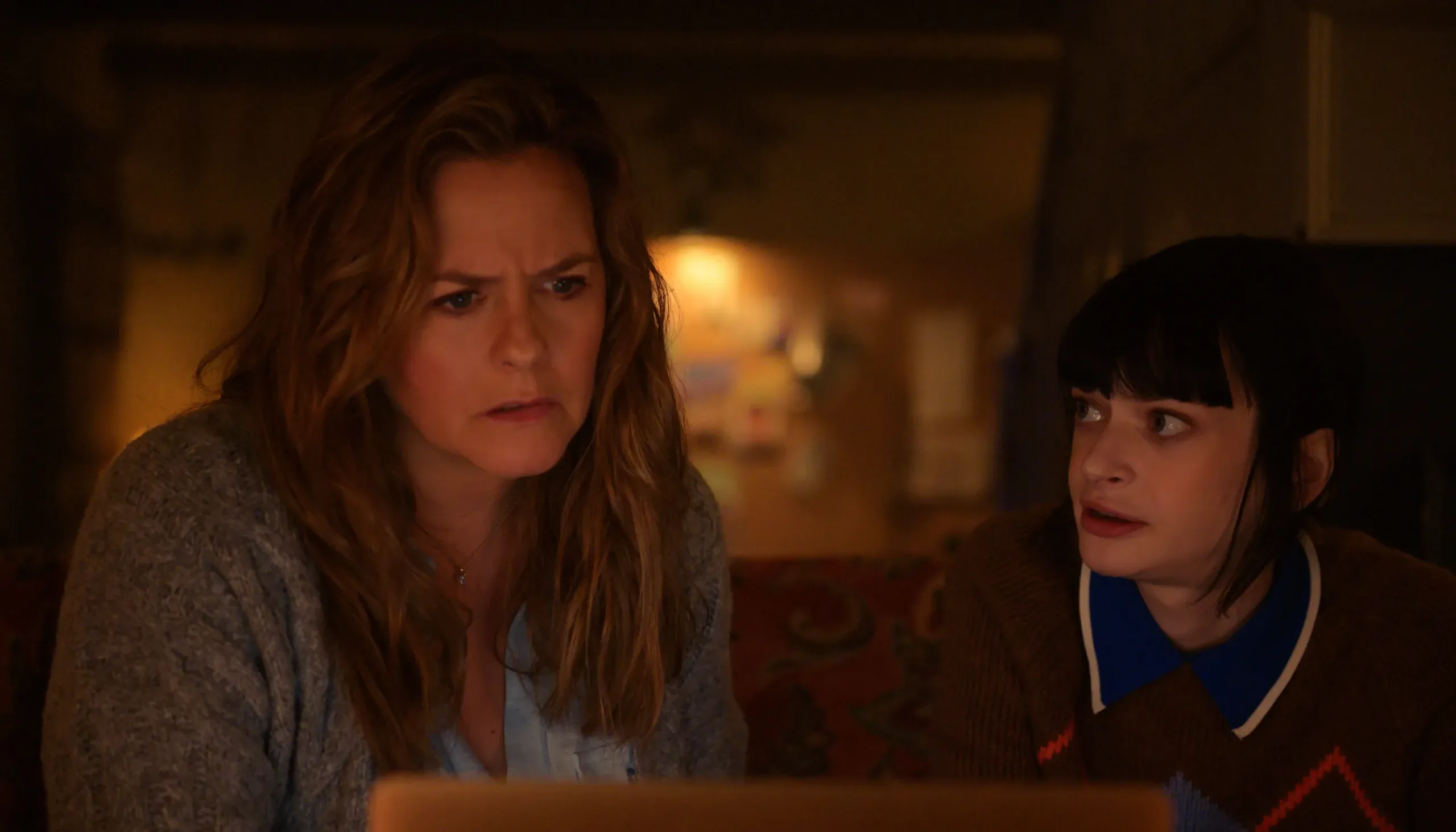
The show is at its most potent when it focuses on its central arc. Fiona’s character development, her integration into the Murphy clan, and the slow unraveling of her family’s history carry the significant emotional stakes. This is the heart of the story, where the writing is sharpest and the performances are most affecting.
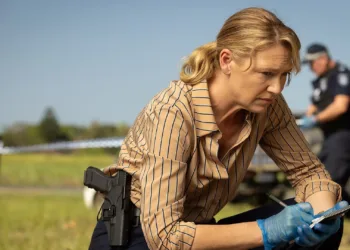
By comparison, the standalone weekly mysteries often feel underdeveloped and perfunctory. A case involving horse racing or MMA fighting can feel like a narrative detour, diffusing the tension of the main plot. These procedural elements serve primarily as vehicles to deliver the next clue for the central mystery rather than being satisfying puzzles in their own right.
They are the weakest element of the show’s construction, lacking the emotional weight of Fiona’s personal quest. The pacing of the main investigation is steady, building across the six episodes toward a finale that provides some answers. It resolves the immediate questions surrounding Declan’s fate while introducing a larger criminal conspiracy. The story ends on an effective cliffhanger, reframing the season as a prologue to a larger conflict and ensuring the audience has a reason to return.
“Irish Blood” premiered on Acorn TV with its first two episodes on Monday, August 11, 2025, in the United States. Subsequent episodes of the six-episode season are being released weekly on Mondays. The series is a co-production between Canadian and Irish companies, with filming taking place in Dublin, Ireland. It is distributed worldwide by AMC Studios.
Full Credits
Director: Molly McGlynn
Writers: Christina Ray, John Krizanc, Mike O’Leary
Producers: Paige Haight, Catherine Magee, Lorraine Hewson
Executive Producers: Christina Ray, Paul Donovan, Scott Garvie, Christina Jennings, Paul Lutz, Aaron Martin, Ailish McElmeel, Molly McGlynn, Alicia Silverstone
Cast: Alicia Silverstone, Jason O’Mara, Wendy Crewson, Djouliet Amara, Kal John, Ruth Codd, Simone Kirby, Henry Garrett, Dearbhla Molloy, Stephen Hogan, Vincent Walsh, Barry John Kinsella, Faith Delaney, John Doran, Gavin O’Connor, Leonardo Taiwo, Aaran Donoghue, Dave Rowe
Director of Photography: Owen Behan, Mark Hannon, Cillian Ward, Daniel Barnwell
Editors: Mairead Mc Ivor
The Review
Irish Blood
Irish Blood succeeds on the strength of Alicia Silverstone's engaging performance and a compelling central mystery rooted in family secrets. While its weekly procedural elements feel underdeveloped and occasionally detract from the main narrative, the strong character work and atmospheric Irish setting make it a worthwhile watch for those who favor emotional depth over intricate plotting. The series is a promising character study that effectively uses its star power and setting, even if its storytelling mechanics are sometimes uneven.
PROS
- Alicia Silverstone's compelling lead performance.
- A strong central mystery focused on family history and secrets.
- Engaging character development for the protagonist.
- Richly atmospheric Irish setting that enhances the tone.
- Warm and effective supporting cast dynamics.
CONS
- Underdeveloped and often perfunctory "mystery-of-the-week" subplots.
- The narrative structure can feel uneven, weakening the overall tension.
- Tonal shifts between comedy and drama are not always seamless.