

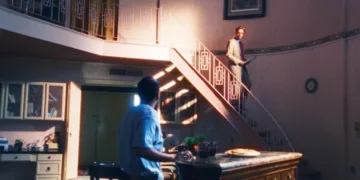

















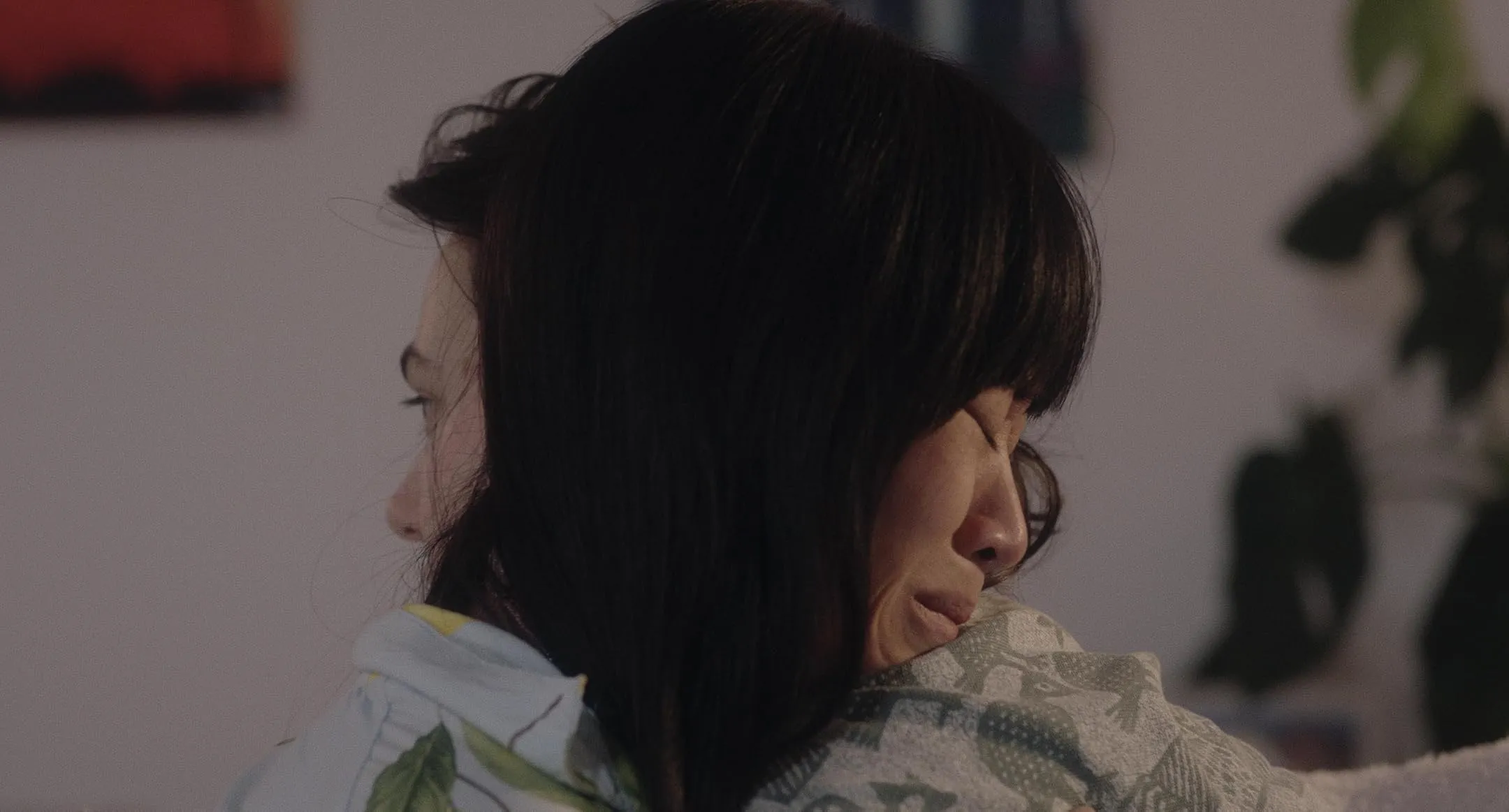

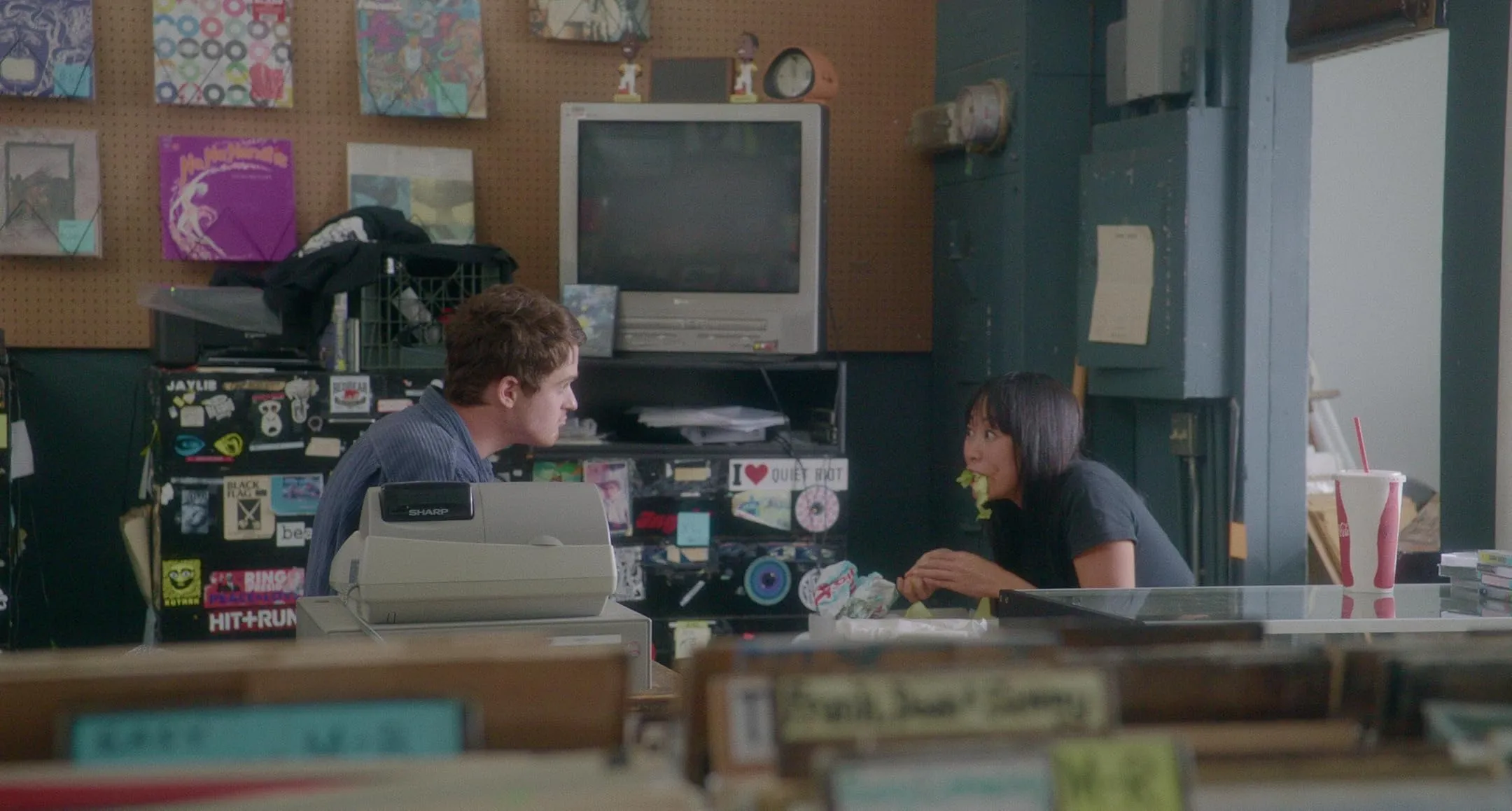
That Alien, Sound presents itself as a distinct artifact of American independent cinema, mixing the familiar contours of a Los Angeles dramedy with a high-concept science fiction premise. The film introduces us to Mika and her boyfriend Shannon, whose lives revolve around a record store, a setting that immediately grounds the story in a specific cultural milieu.
This comfortable reality is fractured when a cosmic sound wave hijacks Mika’s body. The new entity, who becomes known as Sound, experiences the physical world with a raw, unfiltered wonder. Her fascination with taste, touch, and sight is portrayed with an affecting naivety. In stark contrast, Shannon reacts with a grounded, almost hostile skepticism.
He interprets this profound change not as an alien phenomenon but as a psychological crisis, perhaps a dramatic rejection of their relationship. This initial conflict establishes the film’s central inquiry into the unstable nature of identity and the friction between perception and reality.
The Human and The Harmonic: A Duality of Being
The film’s emotional weight rests on the dynamic between its two leads, a pairing that serves as a microcosm for broader societal tensions about identity and acceptance. Mia Danelle’s performance as Sound is the narrative’s vibrant anchor. Her portrayal is deeply physical; she moves with a puppeteer’s awkwardness, her limbs not yet fully hers, and her facial expressions register every new sensation with an arresting lack of inhibition.
She captures a state of pure experience, exemplified in a key scene where she attends her brother’s terrible band practice. She finds pure joy not in the technical quality of the music but in the raw, energetic act of its creation and reception. This perspective serves as an implicit critique of a culture that often quantifies art instead of simply absorbing it. Her character embodies a powerful, almost spiritual desire to see the world anew.
Shannon, played by Will Tranfo, provides the necessary counterpoint. He is not a simple antagonist; he is a sympathetic figure paralyzed by fear, a character whose reaction reflects a specific cultural anxiety. His hostility is born from the desperation to reclaim the predictable stability he thought defined their relationship, a stability often prized in Western models of partnership. He represents the difficulty many people have with radical, unexplained change in a loved one, a change that threatens his own sense of self and reality.
This film asks a poignant question through him: how do we respond when the familiar becomes alien? Offering a different path, Mika’s brother, Deyo, represents a more modern, compassionate worldview. His immediate acceptance of “Sound” is not just supportive; it positions him as a voice of a younger generation more fluent in the language of fluid identity, providing a hopeful counter-narrative to Shannon’s rigid fear.
A Lo-Fi Symphony on Identity and Art
Director Brando Topp’s approach embraces the ethos of lo-fi American independent filmmaking, recalling the spirit of movements that prioritize personal expression over polished production. The direction feels intentionally loose in its early stages, reflecting the chaotic process of Sound’s assimilation into a human form. This stylistic choice, reminiscent of the character-driven focus seen in aspects of the French New Wave, prioritizes authenticity over a rigid plot.

However, its thematic concerns with self-reinvention are distinctly American. The film’s central theme questions the nature of art by championing a purely experiential valuation. Sound’s philosophy is a quiet rebellion against the commodification of creativity, where art is often reduced to a product to be rated and sold.
The sci-fi premise is the vehicle for this exploration, a potent metaphor for alienation. It speaks to the universal feeling of being an outsider, while also resonating with more specific contemporary conversations around neurodiversity and the construction of identity. The visual style is crucial to this effect.
The cinematography uses the natural, often harsh, sun-drenched light of Los Angeles to create a hyper-realistic world. This tangible sense of place makes the fantastical elements more jarring and, strangely, more believable.
The interplay between the mundane setting and the extraordinary event is where the film finds its unique voice. Humor is also used strategically, with moments of quirky comedy balancing the script’s heavier philosophical discussions about materialism, environmental decay, and human cruelty, keeping the story accessible without diluting its message.
The Road to a New Identity
The film’s narrative threads and thematic inquiries coalesce in its final act, which employs the classic American cinematic trope of the road trip. This structure is a foundational myth in American storytelling, a physical journey that mirrors an internal quest for meaning. As Sound, Shannon, and Deyo travel to a music festival to attempt a transmission back to space, the journey becomes a crucible for their conflicts.
The confined space of the car forces a direct confrontation with their beliefs and fears, set against a transient landscape. During this trip, the alien metaphor becomes fully realized. It is a potent symbol for the strangeness Shannon perceives in his partner and, perhaps, for Mika’s own unspoken, internal search for a different way of being.
This film uses the road trip structure to chart a course toward personal, rather than societal, discovery. The resolution it offers is one of hope over nihilism, a notable choice in a science fiction landscape often crowded with dystopian warnings.
Where many stories use extraterrestrial contact to comment on humanity’s impending doom, this film offers a smaller, more intimate form of salvation found in connection, acceptance, and artistic expression. It consciously sidesteps grand apocalyptic statements in favor of a heartfelt and deeply personal message.
That Alien, Sound uses its quirky framework to suggest that the most profound revolutions are the ones that happen within, championing the beauty of second chances and the courage required to see the world differently.
That Alien, Sound is a comedy, adventure, and science fiction film. It was released on digital platforms on August 18, 2025.
Full Credits
Director: Brando Topp
Writers: Brando Topp
Producers: Brando Topp, Mia Danelle, David Gomez, Sean Hokanson, Streets Ahead Productions
Executive Producers: Mia Danelle
Cast: Mia Danelle, Will Tranfo, Amy Hill, Richard Masur, Deyo Forteza, Joy Guyette, Asanti Kofi, Malcolm Kelner, Quinn Marcus, Jeremy W. Roberts
Director of Photography (Cinematographer): Arkie Tadesse
Editors: Brando Topp
The Review
That Alien, Sound
That Alien, Sound is a heartfelt and inventive indie film that uses its sci-fi premise as a clever metaphor for identity, alienation, and the search for meaning. Anchored by a transformative lead performance from Mia Danelle, the movie champions hope and personal connection over cynicism. While its loose narrative might not resonate with everyone, its sincere exploration of art and perception makes it a charming and thought-provoking watch that speaks to the courage required to embrace a new self.
PROS
- A compelling and physically expressive lead performance by Mia Danelle.
- Creative use of a sci-fi concept to explore deep themes of identity and perception.
- A genuinely heartfelt and optimistic message about art, connection, and reinvention.
- An authentic indie spirit that feels personal and passionate.
CONS
- The narrative structure can feel rambling and unfocused at times, especially in the first half.
- Its quirky, indie tone may be off-putting for some viewers.
- The boyfriend character's persistent frustration can feel grating, even if it serves the story.