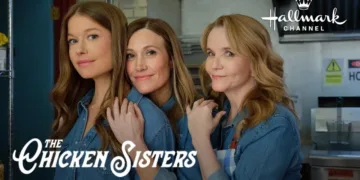




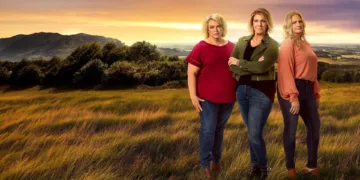















Returning to the fictional Southern town of Merinac for the second season of The Chicken Sisters feels like putting on a favorite old record. There’s a warmth to its grooves, a familiarity that’s instantly comforting. The show’s creative team understands this, leaning into the lived-in atmosphere eight months after the rival chicken joints, Mimi’s and Frannie’s, have merged.
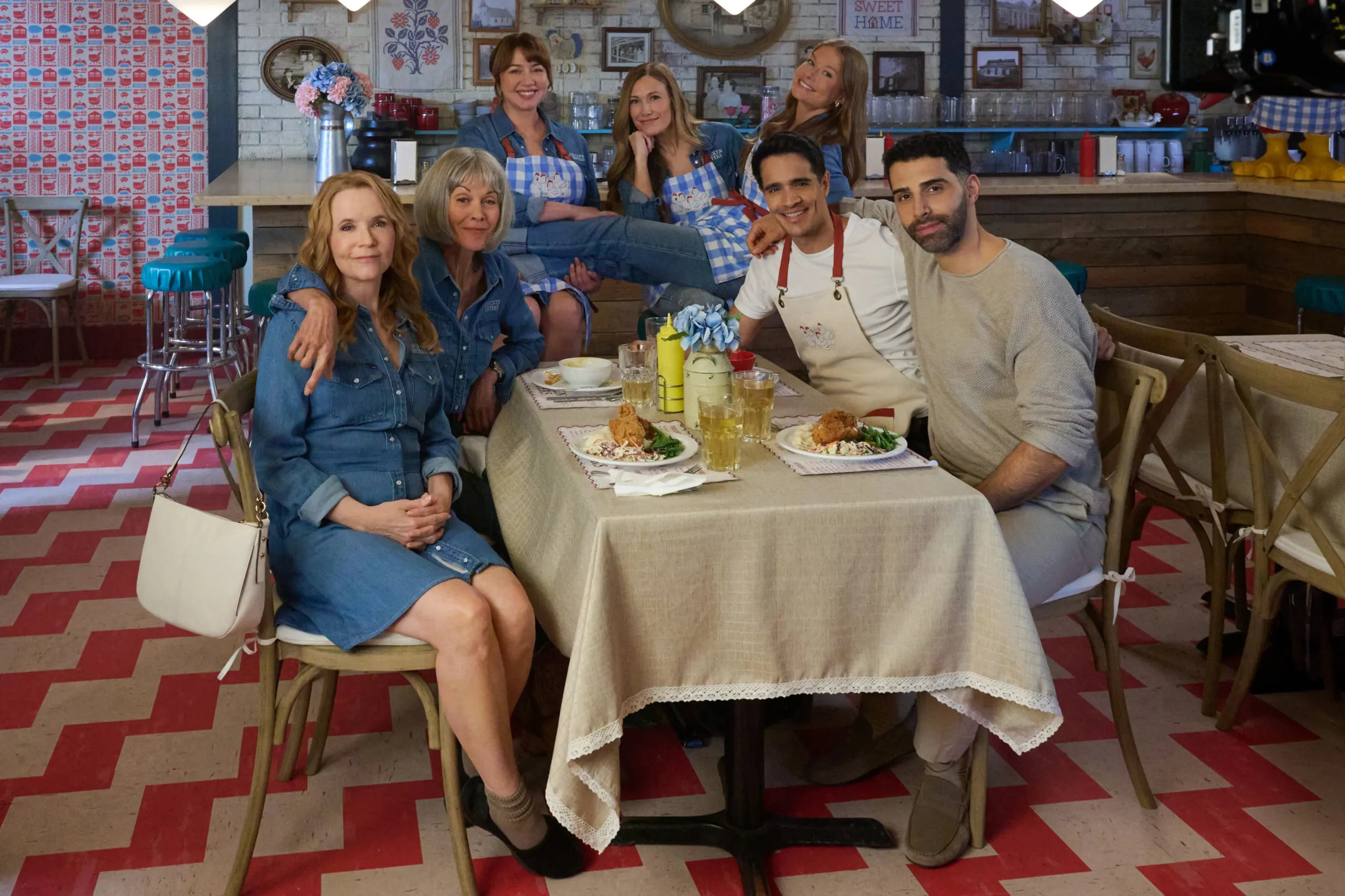
The once-feuding Moore and Hillier families exist in a state of fragile peace. Amanda (Schuyler Fisk) and her mother-in-law Nancy (Lea Thompson) now care for Amanda’s sharp-tongued mother, Gus (Wendie Malick), while sister Mae (Genevieve Angelson) is back for good and planning a wedding.
The series smartly uses our existing knowledge of these characters to build its new foundation. It doesn’t waste time with reintroductions. Instead, it places a narrative fuse right in the center of town: the impending broadcast of Ultimate Kitchen Clash, the reality show that started it all. Everyone is about to watch, and we know this peace is not built to last.
Personal Stakes and Secret Recipes
Before the public spectacle begins, the show wisely spends time exploring the private anxieties simmering beneath the surface. The narrative structure here is patient, layering individual character arcs that give the central conflict its weight. Amanda’s separation from Frank Jr. is a particularly well-drawn portrait of a relationship’s lingering ghost.
His refusal to sign the divorce papers is more than a plot point; it is a symbolic anchor, keeping Amanda tethered to a life she is actively trying to shed. In the context of a small Southern town, where personal histories are public record, this limbo is a form of social purgatory. The show subtly captures this through small, telling details, like Frank Jr.’s continued use of Amanda’s laundry machine.
It’s a pathetic, almost comical gesture that underscores his inability to accept the finality of their split. This dynamic is made richer by the unresolved energy between Amanda and her coworker, Sergio. Their connection represents a potential future, one that is both enticing and terrifying for a woman relearning how to define herself outside of her marriage. His presence forces Amanda to confront her own desires, which have been long suppressed.
Meanwhile, Mae’s quest to identify her father before her wedding adds a thread of deep personal longing. Her search is not just about having someone to walk her down the aisle; it is about understanding her own origins and completing a part of her identity that has always been a question mark.
This storyline taps into a timeless narrative concerning family secrets and the gravitational pull of the past. Gus’s adamant refusal to speak about Mae’s father elevates her character beyond the archetype of the cantankerous matriarch. Her silence is a wall built around a past hurt, and the performance by Wendie Malick hints at a profound vulnerability beneath the hardened exterior.
This mystery also speaks to the nature of small-town life, where secrets are often open ones, known but unspoken. The evolving relationship between Gus and Nancy, two former rivals forced into cohabitation by circumstance, provides a source of gentle comedy and unexpected warmth. Their shared space becomes a microcosm of the larger family merger, a place where old wounds are cautiously navigated and a new, unconventional form of kinship is forged.
Frank Jr.’s self-imposed exile completes this picture of a family in flux. His decision to open a soulless, fast-food version of his family’s legacy is a poignant act of self-sabotage, positioning him as a lonely outsider looking in on the community he abandoned.
The Hidden Camera in the Henhouse
The season’s central conflict ignites with the broadcast of Ultimate Kitchen Clash, a narrative choice that brilliantly taps into our cultural moment. The episode premiere serves as a potent commentary on the deceptive nature of reality television and the pervasive surveillance of modern life.
I remember being hooked on the first season of The Real World, fascinated by what felt like a raw, unfiltered look into people’s lives. Of course, we now understand that “reality” is a carefully constructed product, edited for maximum drama. The Chicken Sisters uses this concept as a narrative grenade.
The town gathers for the viewing party in a scene of idyllic community support, a visual that the director, through warm lighting and a sense of bustling energy, establishes as the “before” picture. The atmosphere is celebratory, filled with the murmur of excited voices and the clinking of glasses. The sound design here is crucial, creating a baseline of cheerful noise that will soon be shattered.
The reveal that the television crew used hidden cameras is a masterful twist. This information, dropped casually just moments before the show airs, instantly shifts the mood from festive to anxious. It transforms the characters from participants into unwitting subjects of a social experiment. The show they thought was about cooking is actually about them.
When the hidden footage of Amanda’s kiss with Sergio plays, the effect is devastating. The direction and editing in this sequence are superb. The camera pushes in for tight close-ups, capturing every flicker of shock, betrayal, and humiliation on the characters’ faces. We see Frank Jr.’s simmering resentment boil over into righteous fury.
We see their daughter Frankie’s youthful innocence curdle into confusion. Most powerfully, we see Amanda’s face, exposed and vulnerable under the gaze of her entire community. The sound drops out, replaced by the tinny, cheerful audio from the television, creating a sickening contrast between the public spectacle and the private agony unfolding in the room.
This single, expertly crafted scene functions as the story’s inciting incident, a public shaming that detonates the fragile peace and sends shrapnel through every core relationship, forcing each character to reckon with the consequences of a secret made brutally public.
Community as the Main Character
For all the turmoil kicked up by the reality show, the series remains grounded in the relationships between its female characters. This focus on a multi-generational ensemble of women feels very contemporary, part of a welcome shift in television towards telling these specific stories. The show thoughtfully explores the resilience of female bonds in the face of public scandal and private pain.

It positions itself within a larger cultural conversation about female solidarity, suggesting that these connections are the true foundation of the community. The repaired relationship between sisters Amanda and Mae provides the story with its emotional anchor.
Having moved past their rivalry from the first season, they now operate as a genuine support system, their scenes together marked by an easy chemistry and a shared history. They challenge each other, particularly with Mae’s “swear jar” for Amanda’s white lies, but it comes from a place of love and a desire to see the other grow.
The series also excels in its depiction of other female dynamics. The mother-daughter relationships, particularly between the formidable Gus and her two very different daughters, are layered and authentic. The burgeoning friendship between the teenage girls, Frankie and Linzey, offers a hopeful counterpoint to the adult drama.
Their storyline, in which Linzey flees her own family drama to find solace with Frankie, reinforces the idea that chosen family can be as vital as biological kin. While the show operates within the comfortable, mainstream conventions of its network, it uses that accessible framework to explore surprisingly nuanced emotional territory.
It avoids the easy sentimentality that can sometimes plague family dramas, instead grounding its warmth in believable character work and strong performances from its ensemble cast. The series affirms that a town is not just a place on a map; it is a complex web of relationships. In Merinac, it is the strength, humor, and unwavering support of its women that ultimately holds that web together.
“The Chicken Sisters” Season 2 premiered on Sunday, August 10, 2025, on the Hallmark Channel. New episodes air weekly at 8 p.m. ET/7 p.m. CT on Hallmark Channel and are available for streaming the next day on Hallmark+.
Full Credits
Directors: Paul Fox, Kimmy Gatewood, Shannon Kohli, Monika Mitchell
Writers: Mano Agapion, Kerry Carney, Leila Cohan, K.J. Dell’Antonia (based on the novel by), Erin Gibson, Annie Mebane, Deena Rosenblatt, Jessica Wood
Producers: Bradley Gardner (executive producer), Jamie Goehring (executive producer), Annie Mebane (executive producer), Larry Grimaldi (executive producer), Ani Kevork (executive producer), Hannah Pillemer (executive producer), Jameson Parker (executive producer), Fernando Szew (executive producer), Shawn Williamson (executive producer), Ian R. Smith (produced by), Michael Meilander (supervising producer), Jonathan Shore (supervising producer)
Cast: Schuyler Fisk, Genevieve Angelson, Lea Thompson, Wendie Malick, James Kot, Cassandra Sawtell, Caitlin Howden, Ektor Rivera, Samer Salem, Matthew James Dowden, Rukiya Bernard, Kelcey Mawema, Margo Martindale, David James Elliott
Director of Photography: Stephen Jackson
Editors: Jon Anctil, Alison Grace, Andrew Gust, Dan Krieger
The Review
The Chicken Sisters Season 2
The second season of The Chicken Sisters successfully builds upon its foundation, using a clever reality TV storyline to ignite compelling drama. While it operates within the comforting bounds of its genre, the series shines through its strong ensemble performances and its thoughtful exploration of female relationships and community resilience. It’s a warm, engaging, and smartly constructed season that delivers both comfort and conflict.
PROS
- Strong ensemble cast with standout performances.
- Nuanced character development and layered personal dramas.
- Clever use of a reality TV plot to explore modern cultural themes.
- A heartfelt focus on multi-generational female relationships.
CONS
- Adheres closely to the conventions of the family-friendly drama genre.
- Some plot developments may feel familiar to viewers of similar series.