

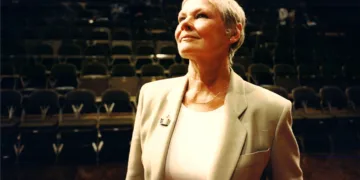











It all starts with a knock at the door, a familiar trope that We’re Not Safe Here uses to pull you into its intimate nightmare. We meet Neeta, an artist whose creative well has run dry, her canvases as empty as she feels after a recent loss. She’s vulnerable, quiet, and exactly the kind of person who would open her door late at night for a friend in need.
That friend is Rachel, a colleague who shows up in a state of pure panic. She doesn’t need a place to stay; she needs someone to listen to a story that has taken root inside her. Neeta’s house, filled with her own mysterious and unsettling paintings, quickly transforms from a sanctuary into a pressure cooker for psychological dread.
The film’s core question materializes almost immediately: can a story be a contagion? It explores what happens when one person’s horror is so potent it begins to bleed into the listener’s reality, turning passive empathy into active terror.
Claustrophobic Performances and Atmospheric Dread
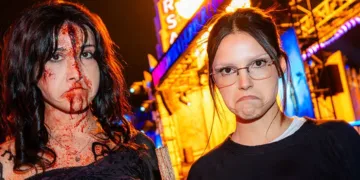
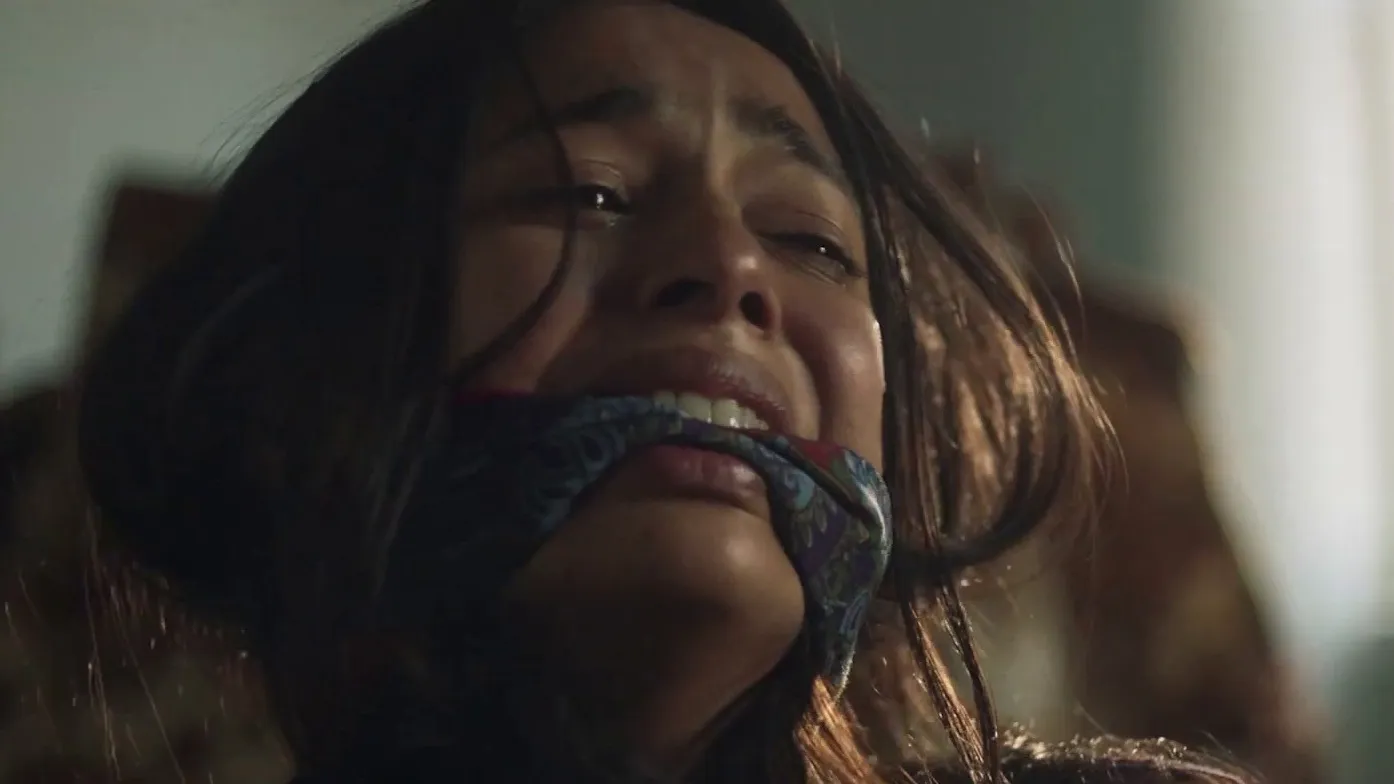
The film rests almost entirely on the shoulders of its two leads, and they carry the weight masterfully. The entire experience hinges on us believing them, and we do. Hayley McFarland’s performance as Rachel is the engine of the terror. Her telling of a childhood ghost story is the film’s centerpiece, a long, winding monologue that feels raw and immediate.
It’s a masterclass in narrative tension. McFarland doesn’t just recite lines; she physically relives the trauma, her voice cracking and her eyes darting toward unseen corners of the room. This makes the simple act of speaking feel more threatening than any jump scare. Across from her, Sharmita Bhattacharya gives a wonderfully subtle performance as Neeta.
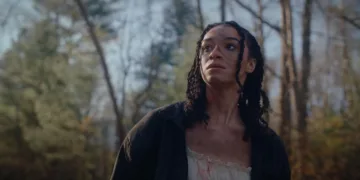
She is our anchor and the story’s emotional barometer. We watch her skepticism slowly dissolve, her face registering every subtle shift as the story seeps under her skin. Her character’s pre-existing grief and creative block make her a perfect vessel for this transmitted trauma. Bhattacharya’s performance makes you believe in Neeta’s creeping dread.
Director Solomon Gray uses the single location to great effect. Neeta’s home becomes a claustrophobic stage, with Gray’s camera fixing on the actors’ faces, forcing us to search their expressions for the truth. The set design itself is a key player; Neeta’s own unsettling artwork hangs on the walls, a silent chorus reflecting the narrated horror.
The cinematography often suggests an unseen observer, holding on a dark hallway for just a moment too long, or it places us directly in a character’s unnerving perspective, making us question what is real. This technique, combined with a sparse and eerie sound design, creates a persistent atmosphere of apprehension where every creak of the house feels like a part of Rachel’s story coming to life.
A Narrative Built on a Whisper
We’re Not Safe Here builds its entire experience around a single narrative device: the campfire story. It is an interesting attempt to capture the power of oral tradition, where fear is a shared, live experience. In many ways, it feels like a cinematic equivalent of a narrative-driven indie game that relies on one core mechanic to carry the entire emotional load.
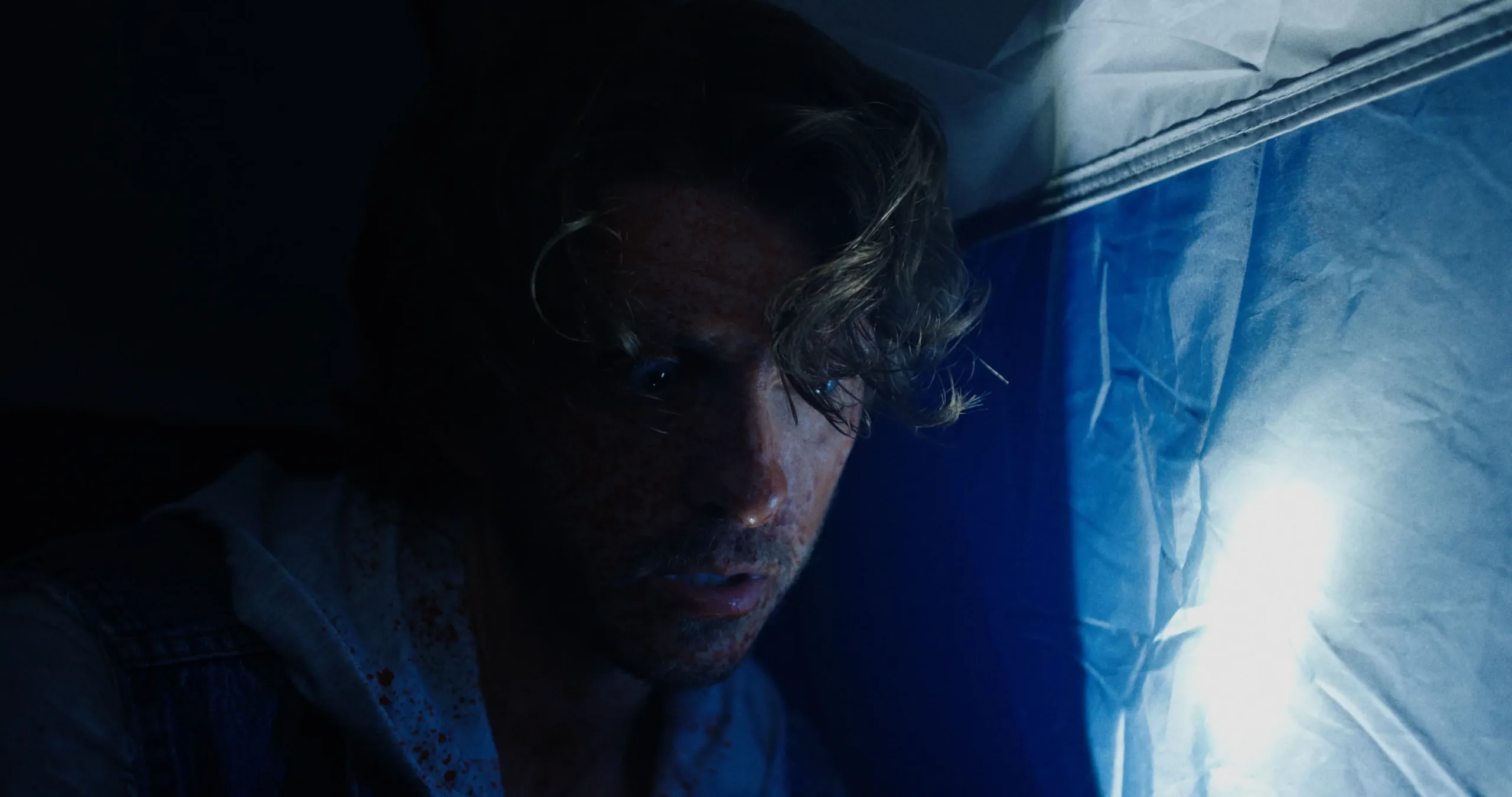
The risk with this structure is immense. When the story itself isn’t strong enough, the whole experience weakens. For a while, the film’s slow-burn method is effective, building a palpable sense of anticipation as Rachel’s tale unfolds. The problem is that the narrative is too thin to sustain its runtime. The pacing falters because the initial tension has nowhere to go.
It’s like a game that spends the first hour in a detailed tutorial, only for the main quest to be disappointingly short. The frequent interruptions to the story feel like manufactured horror beats, breaking the hypnotic spell of the monologue.
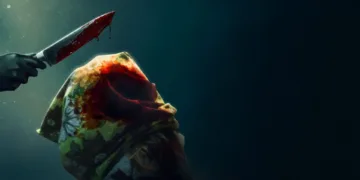
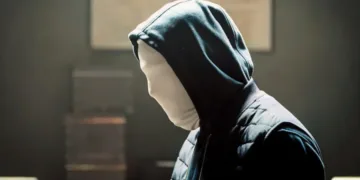
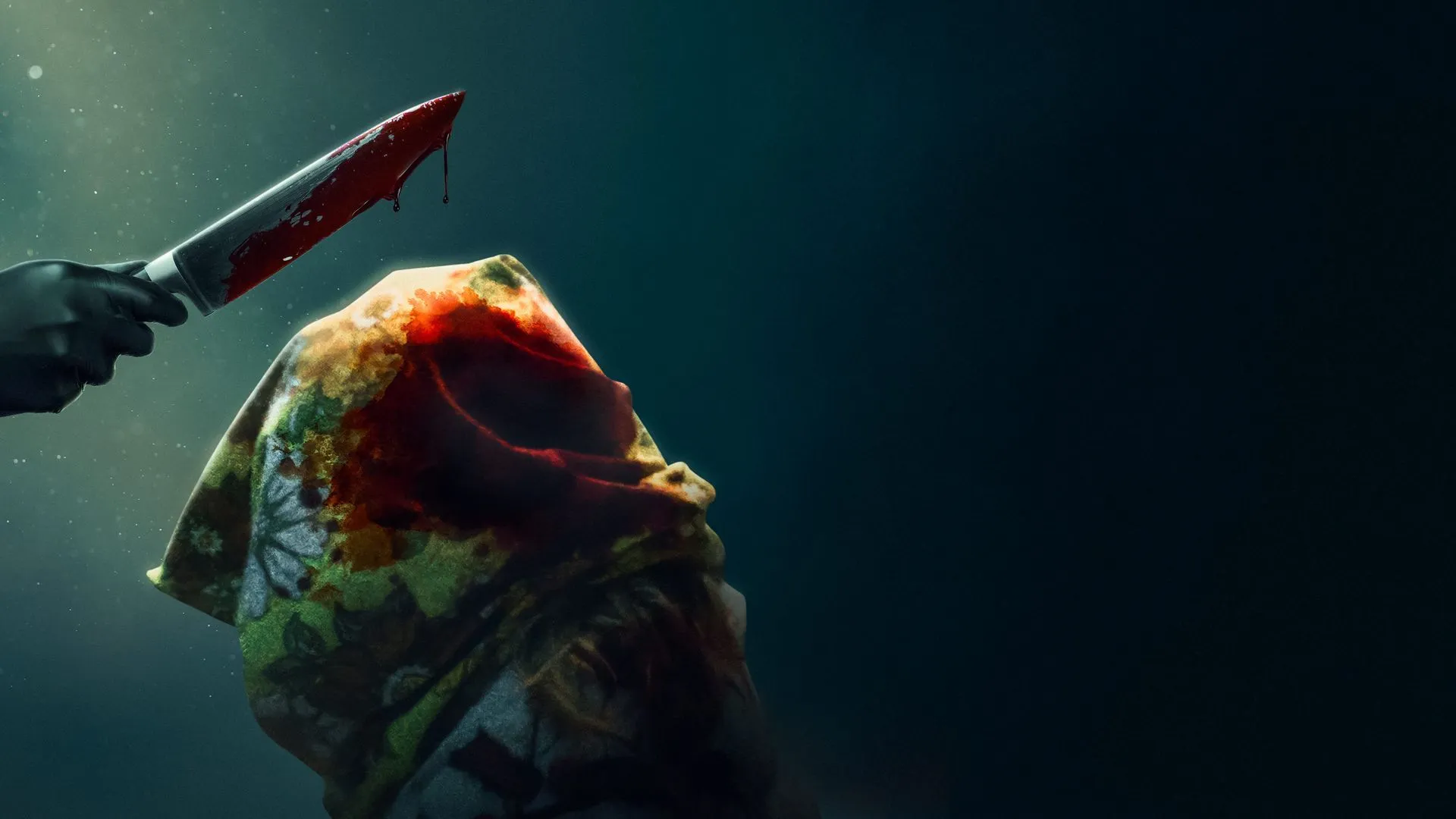
The film also makes a critical error in how it handles its supernatural threat. The mysterious figure in the bloody pillowcase is a striking image, but it’s shown too early and too often. Each appearance diminishes its power, stripping away the mystery that made it frightening. It’s a classic case of showing your hand too soon, demystifying the threat and removing our ability to imagine something far worse.
The plot then attempts to expand in the final act with Neeta’s investigation, but this sequence feels underdeveloped and tonally jarring. The shift from intimate psychological horror to a clumsy investigative procedural feels as if the film lost confidence in its own unique premise.
A Promising Haunting with No Ghost
The careful buildup of dread throughout We’re Not Safe Here unfortunately leads to an unfulfilling end. The film’s climax doesn’t offer a satisfying release of tension or a profound revelation; it simply stops, leaving the central ideas feeling unexplored.
The ending evokes not a thoughtful ambiguity that lingers in the mind, but a simple dissatisfaction. It raises compelling questions about the nature of trauma, belief, and storytelling, but it provides no meaningful threads for the audience to follow. It feels less like a deliberate artistic choice and more like the script ran out of road.
The story’s core image, the bloody pillowcase, is a visually potent concept that never develops into something more meaningful. It evokes powerful ideas of suffocation, hidden identity, and death shrouds, but the film treats it as a surface-level gimmick. Unlike truly iconic horror symbols that have deep narrative roots, this one remains a prop.
Ultimately, this is a film with a clever premise, supported by skilled direction and two excellent lead performances. Its strengths, however, are held back by a script that stretches a short film’s concept to feature length without adding the necessary substance. It feels like a proof of concept, showcasing Solomon Gray’s clear talent for creating mood. He’s a director to watch, but this particular story feels like an echo in a beautifully designed, yet mostly empty, room.
We’re Not Safe Here is a supernatural horror film released by Saban Films. The movie premiered in select theaters and was available on demand starting August 22, 2025. A generic PG-13 horror flick, it’s available to rent or buy on several streaming platforms, including Prime Video, Fandango at Home, and Apple TV.
Full Credits
Director: Solomon Gray
Writers: Solomon Gray
Producers and Executive Producers: Solomon Gray, Sonny Mallhi, Tom Schraeder, Joe Stockton
Cast: Hayley McFarland, Sharmita Bhattacharya, Margaret Wuertz, Caisey Cole
Director of Photography (Cinematographer): Nate Spicer
Editors: Joe Stockton
Composer: Tom Schraeder, Joe Stockton
The Review
We're Not Safe Here
Supported by two powerful lead performances and a palpably tense atmosphere, We're Not Safe Here is a compelling exercise in psychological dread. Director Solomon Gray masterfully crafts a claustrophobic world where a simple story becomes a weapon. The film's thin narrative, however, cannot sustain its feature length, leading to a slow pace and an anticlimactic ending that undermines its brilliant setup. It is a fascinating, if flawed, indie horror that showcases immense potential but ultimately feels like an unfinished thought. A watch for the performances, but a letdown for its story.
PROS
- The two leads deliver captivating and believable portrayals of terror and anxiety.
- The direction and sound design create a masterful sense of claustrophobic dread.
- The idea of fear as a narrative contagion is an interesting premise for a horror film.
- The film expertly uses its limited setting to heighten tension.
CONS
- The central story feels stretched and is too thin to support a feature-length film.
- The extremely slow burn builds anticipation but ultimately falters and drags.
- The film concludes abruptly without a meaningful payoff.
- The primary supernatural figure is shown too often, which reduces its impact.