




























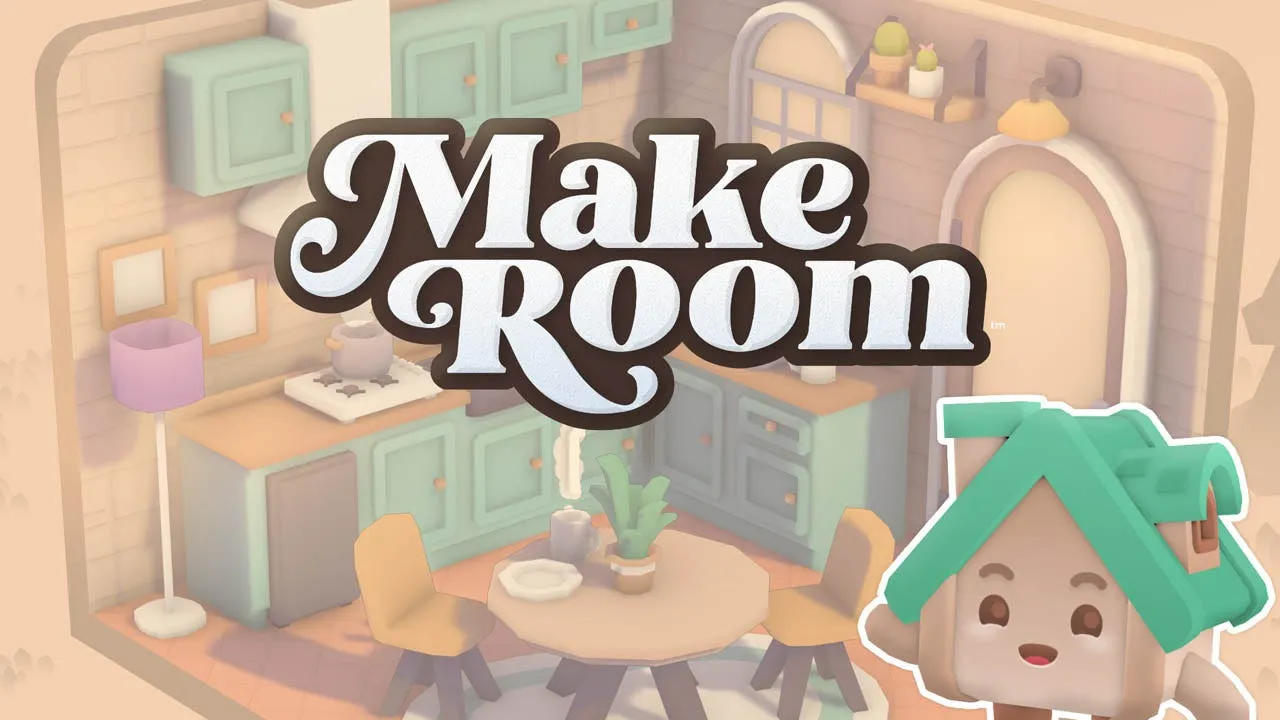

There is a distinct, quiet satisfaction that comes from creating a miniature world. Many of us remember it from childhood, carefully arranging items in a shoebox to construct a scene from a book. Developer Kenney’s MakeRoom is a digital sandbox that perfectly captures this feeling. It is a game built around the simple, pressure-free joy of decoration.
With no timers and no fail states, its purpose is to provide a serene space for creative expression. Players are given the tools to design a wide variety of tiny environments, from cozy living rooms and self-contained campers to peaceful gardens, all rendered in a delightful, toy-like aesthetic.
An Expansive Creative Suite
The core of the MakeRoom experience lies in its comprehensive and remarkably flexible design toolkit, which feels both accessible to newcomers and deep enough for dedicated creators. The fundamental mechanics are immediately understandable: players can select any object, place it within the scene, and then manipulate it through rotation, resizing, and recoloring.
This simple loop is the foundation for all creation in the game. What gives this system its power is the sheer volume of the object library. With a catalog reported to contain over one thousand unique items, the potential for personalization is immense.
This is not simply a matter of having ten different chairs; the library spans numerous categories, including couches, tables, beds, elaborate electronics, an impressive variety of houseplants, and even charmingly static pets to populate your scenes.
This extensive selection encourages players to think beyond simple room layouts and create detailed, lived-in spaces. A desk is not just a desk; it can be cluttered with tiny, specific objects like laptops, notepads, and coffee mugs, each placed with care.
The player’s creative agency extends beyond individual objects to the environment itself. The foundational structure of a room can be completely customized, from the texture and color of the wallpaper to the type of flooring underfoot.
Even the background visible through windows or beyond a garden’s edge can be changed, allowing you to decide if your beach house actually looks out onto a beach or a fantastical forest. This level of control reinforces the “diorama” concept, where the creator is in charge of every single element within the frame. Some of the game’s pre-designed levels introduce a light preliminary objective of cleaning.
You might enter a dusty, abandoned room and be given tools like a mop to clean up puddles or a duster to sweep away cobwebs. This mechanic cleverly creates a small “before and after” narrative for the player, providing the satisfaction of restoring a space before remaking it.
Furthermore, players can add subtle animated effects to bring their static scenes to life. A flicker of fire in a fireplace, a wisp of smoke from a chimney, or the soft “Zs” rising from a sleeping cat are small touches that add personality and dynamism to the final creation.
Perhaps the most significant design choice in the toolkit is the object placement system, which philosophically separates MakeRoom from many of its genre predecessors. Mainstream design games, most notably The Sims franchise, have built their creative suites upon a rigid, tile-based grid.
This approach is excellent for architectural simulation, ensuring that walls connect perfectly and furniture conforms to a logical floor plan. MakeRoom, however, is not simulating architecture; it is simulating artistry.
Its default freeform placement system treats the 3D space as a canvas, not a blueprint. This allows players to nudge items with minute precision, slightly overlap objects to create new shapes, and angle furniture in ways that defy a simple grid. The result is a far more organic and hand-crafted feel, where the final scene reflects artistic intuition over geometric adherence.
An optional snap-to-grid function does exist, but it often feels like a minor concession rather than a primary feature. Its implementation can be finicky, sometimes failing to align correctly with a room’s walls. This limitation subtly guides players back toward the manual placement system, reinforcing the idea that the game’s creative magic is found in the freedom from absolute order.
From Guided Design to Boundless Freedom
MakeRoom intelligently structures its content to accommodate a wide spectrum of players, from those who appreciate a guiding hand to sandbox purists who demand complete autonomy. This is accomplished through its distinct modes of play. For players who might feel overwhelmed by a blank canvas, the game offers a series of pre-made levels situated on “MakeRoom Island.”
These levels function as a gentle and effective onboarding process. Rather than presenting strict puzzles, they offer open-ended prompts that encourage experimentation. A level might begin with a messy room and ask you to clean it, then suggest you “add a table and a chair.” The choice of which table or which chair is left entirely to the player, allowing them to express their own style while learning the game’s core mechanics.
This design is highly reminiscent of the narrative-driven gameplay in Unpacking, where players are given items to arrange within a pre-defined space. While Unpacking uses this mechanic to tell a specific story, MakeRoom uses it to unlock new content. Completing these challenges rewards players with new sets of furniture tied to the level’s theme, which can range from a cozy, book-filled reading nook to a high-tech spy headquarters or a fantastical potion lab.
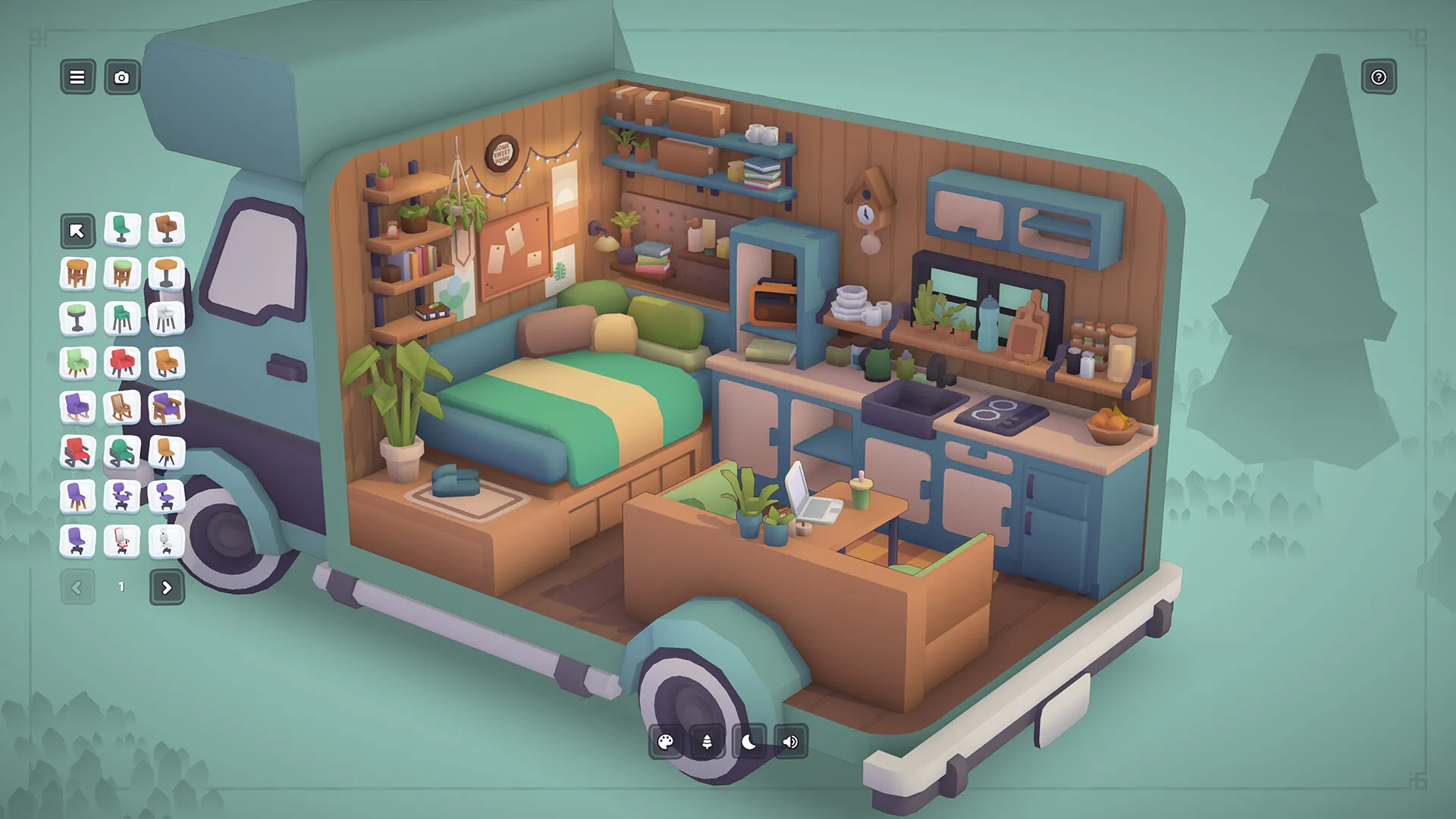
Once a player is comfortable with the tools, they can graduate to the Free Build mode, which represents the game’s true sandbox heart. Here, the experience is one of pure creation, starting with one of three foundational templates. Players can select a standard, empty room or a plot of garden land, both of which can be resized and reshaped to fit their vision.
The third option, a compact camper van, offers a different sort of challenge. Its fixed, constrained dimensions force players to think cleverly about space utilization, turning the design process into a puzzle of efficiency and ergonomics. This mode is where players can truly build their dream projects from the ground up, unburdened by any objectives.
The game’s most ambitious feature, and the one that promises the most longevity, is its custom furniture creator. This is a significant step beyond the curated experience of other modes, providing a toolset that allows players to construct their own assets from a collection of primitive shapes like blocks, planks, and cylinders.
While it can feel complex and even intimidating at first, its potential is enormous. Dedicated players can design unique pieces of furniture that perfectly match their aesthetic, something no pre-made library could ever fully accommodate. This feature elevates MakeRoom from a decoration game to a genuine creation tool, comparable in spirit, if not in scale, to the modding capabilities of games like Minecraft.
The value of this system is amplified by its full integration with the Steam Workshop. Players can upload their custom furniture, room designs, and entire dioramas for others in the community to download and use. This fosters a vibrant ecosystem of user-generated content that can keep the game fresh and exciting long after the developer-made content has been explored.
Charming Presentation, Minor Imperfections
The visual and auditory presentation of MakeRoom is central to its identity as a cozy, relaxing game. Its most defining characteristic is a pronounced tilt-shift art style. This photographic technique, which manipulates depth of field to make real-world scenes appear like miniature scale models, is applied here with great effect. It instantly imbues every scene with a sense of tangible, toy-like charm.
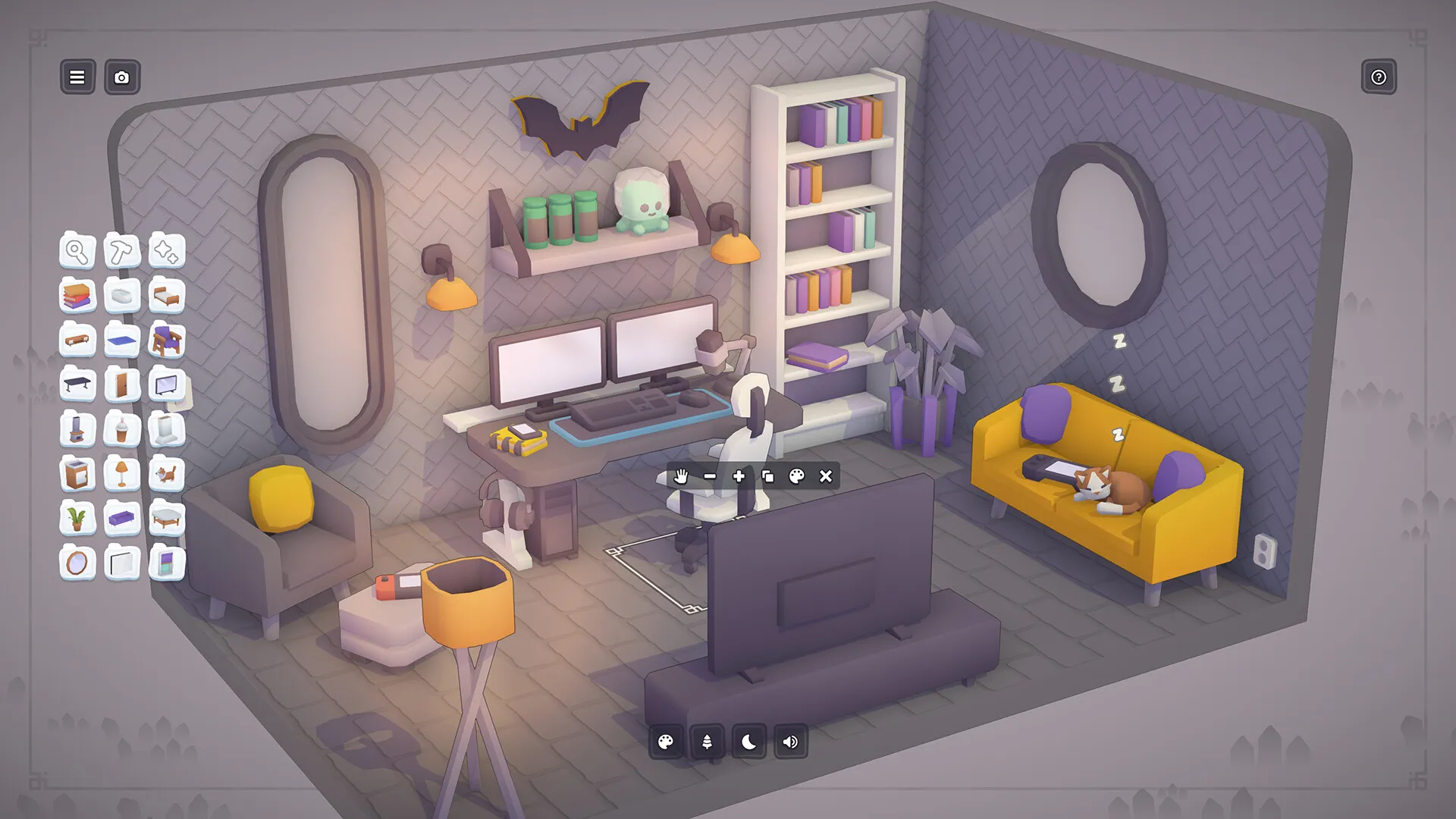
Every object, from a plush sofa to a tiny teacup, looks like something you could hold in your hand. This is enhanced by a “soft” aesthetic with gentle lighting and a cohesive color palette that ensures different object styles can coexist harmoniously within a single scene. The overall look is a prime example of the “wholesome games” aesthetic, prioritizing warmth and appeal over photorealism.
The experience is further smoothed by a calm, unobtrusive musical score. The soundtrack consists of gentle, looping melodies that effectively create a relaxing atmosphere for long design sessions, even if the tracks themselves are not particularly memorable or dynamic. They serve their purpose perfectly, providing a pleasant audio backdrop that never distracts from the creative process.
Beyond its core audiovisuals, the game includes several quality-of-life features that demonstrate a thoughtful design process. The inclusion of a dedicated photo mode is a crucial addition for a game so focused on visual creation. It provides players with filters and camera controls to capture the perfect shot of their handiwork, ready to be shared.
The game also features robust controller support, which is a significant boon for the growing number of players on handheld PCs like the Steam Deck. MakeRoom feels perfectly suited for this style of play, allowing for a comfortable “couch-friendly” design session.
Despite its polish, the game is not without a few minor usability quirks that can momentarily disrupt the flow of creation. The organization of the vast item library is a notable point of friction. The menu’s categorization can feel slightly arbitrary at times. For example, “tables” and “desks” are sorted into separate categories, as are “chairs” and “armchairs.”
This can lead to moments of frustrating searching when an object is not where you intuitively expect it to be, though a search function does help to alleviate this. Another small issue arises during precise item placement.
While the freeform system is a strength, getting an object to sit perfectly flush against a wall can sometimes be tricky, requiring fussy camera adjustments. These are ultimately small scuffs on a beautifully presented package. They are the kinds of minor imperfections common in ambitious indie titles and do little to detract from the game’s immense charm and deep creative satisfaction.
The Review
MakeRoom
MakeRoom is a masterclass in cozy design, offering an immense and flexible toolkit for anyone who loves miniature creation. Its dedication to pressure-free creativity, combined with a gorgeous tilt-shift art style, makes it a standout title in the sandbox genre. While minor interface quirks occasionally surface, they are small blemishes on an otherwise deeply satisfying and endlessly charming experience. It successfully translates the simple joy of building a diorama into a polished and compelling digital format.
PROS
- Exceptional creative freedom with a vast library of over 1000 objects.
- Powerful custom furniture creator offers deep personalization.
- Beautiful tilt-shift art style creates a distinct, charming miniature aesthetic.
- Excellent balance of guided levels for newcomers and a pure sandbox for experts.
CONS
- Item menu categorization can be confusing and slow down workflow.
- Placing objects precisely against surfaces can sometimes be finicky.
- The depth of the creation tools may feel overwhelming at first without a tutorial.