

















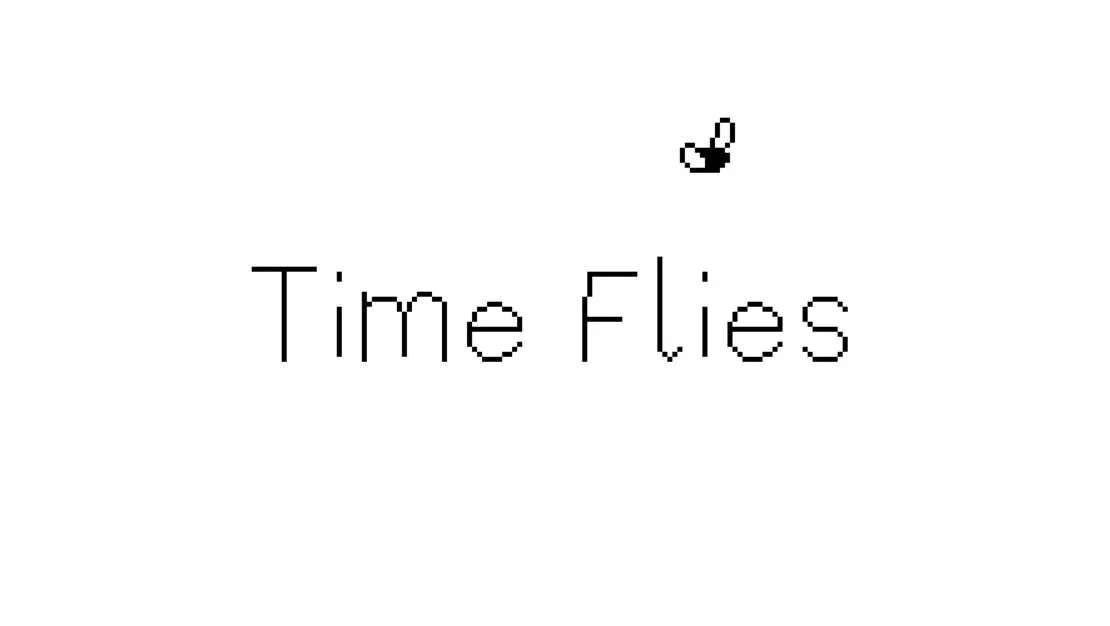

What if you had less than 90 seconds to achieve all your life’s goals? Time Flies poses a version of this question, casting you not as a person but as a common housefly with a surprisingly ambitious bucket list. This is a game built on a brilliantly simple and poignant hook. Your fly’s lifespan is a literal timer, its duration in seconds determined by the average life expectancy of the country you select.
Choosing the United States, for instance, grants you just under 77 seconds per life, based on actual World Health Organization data. Your objective is to explore your surroundings and check off every item on your to-do list before your brief time is up. The result is a wonderfully quirky experience, a sort of playable existential joke that is equal parts humorous and a lighthearted reflection on making the most of the time we have.
Every Second Counts
The core mechanics of Time Flies are an exercise in elegant restraint. Control is simplified to its absolute essence: you only use the left stick to direct your fly. There are no buttons for jumping, attacking, or interacting. Your primary tool for affecting the world is your own tiny, fragile body. This physics-based approach forces a complete reevaluation of what interaction in a game can be.
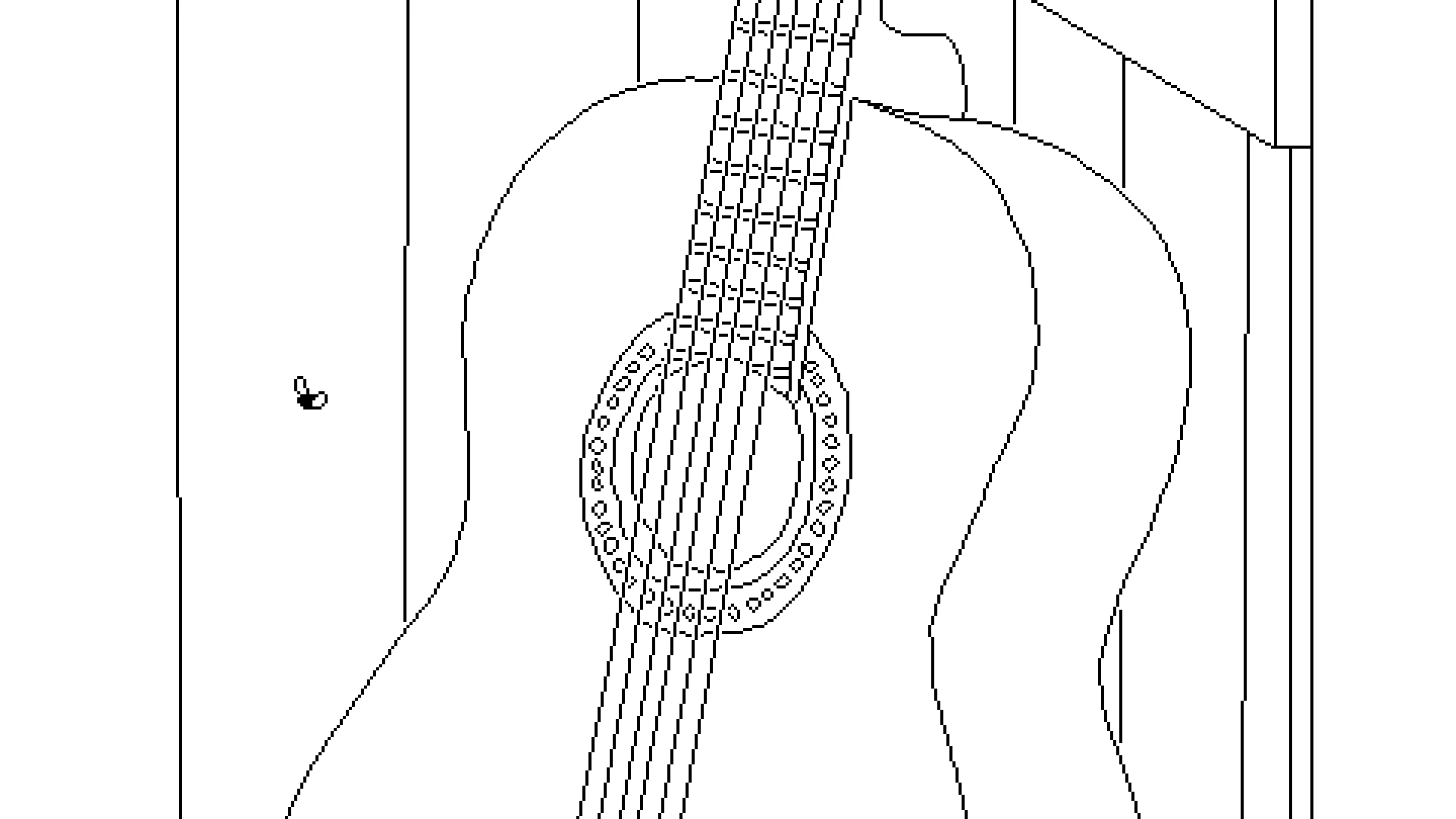
You nudge a bottle to get it rolling, you drag your body across a wet canvas to leave a streak of paint, you fly through the strings of a guitar to make a sound. The flight itself feels smooth and responsive, giving you a satisfying sense of command over your brief existence, which makes the moments where you lose control all the more impactful.
This stark simplicity stands in sharp contrast to games with complex control schemes, finding its strength not in what it adds, but in what it strips away, leaving only the pure relationship between the player’s movement and the environment.
The game is structured across four distinct areas, each with its own thematic bucket list. To unlock the next stage, you must accomplish every single objective on the current list within a single life. This “perfect run” requirement is a demanding challenge that elevates the gameplay from a casual exploration into a high-stakes performance.
It is one thing to discover how to complete a task; it is another thing entirely to execute a dozen of them in sequence before the clock hits zero. The lists themselves are a source of poignant design. While many objectives are playful, the final item on each list is always related to death, a recurring reminder of the game’s central theme.
This gives the checklist, a common video game trope, an unexpected emotional weight. It channels your focus, providing clear goals in your chaotic, short life, yet it simultaneously underscores the finite nature of that life. You are not just checking boxes; you are building a legacy, however small.
This entire experience unfolds under the relentless pressure of the ticking clock. The timer is not merely a limitation; it is the game’s primary antagonist and its most powerful motivating force. Every second that drips away is a tangible loss, a fact reinforced by the audible ticking that permeates the entire game.
The nature of the objectives, presented as vague prompts like “Make Friends” or “Find Beauty,” encourages experimentation and creative thinking rather than cold logic. You must learn through doing, and more often, through dying. The crumpled corpses of your former selves remain scattered around the level, a grim but useful feature.
They serve as a visual history of your efforts, a memorial to your failures that also functions as a practical map of dangerous areas and failed strategies. This process of trial, error, and repetition makes success feel genuinely earned.
Fortunately, the game provides a few tools to manage its stiff challenge. When you fly near an interactable object, the camera zooms in and time briefly pauses. This mechanic is a critical strategic resource. It gives you a moment to think, to observe the physics of a situation, and to plan your next move without burning through your precious seconds.
This brief respite is your main defense against the ever-present clock. Additionally, you can find and manipulate grandfather clocks and other timepieces within the levels. Pushing their hands backward adds a small amount of time to your life. This turns the game into an exercise in route optimization, not unlike a speedrun.
An optimal path is not just the shortest distance between objectives, but one that strategically incorporates these time-extending clocks. You begin to see the levels not just as spaces to explore, but as intricate puzzles of timing and efficiency, where every movement must be deliberate and purposeful.
Mischief in the Mundane
The genius of Time Flies lies in its ability to transform mundane settings into extraordinary playgrounds. A familiar living room, a cluttered study, or a sterile museum become dense environments filled with interactive potential.
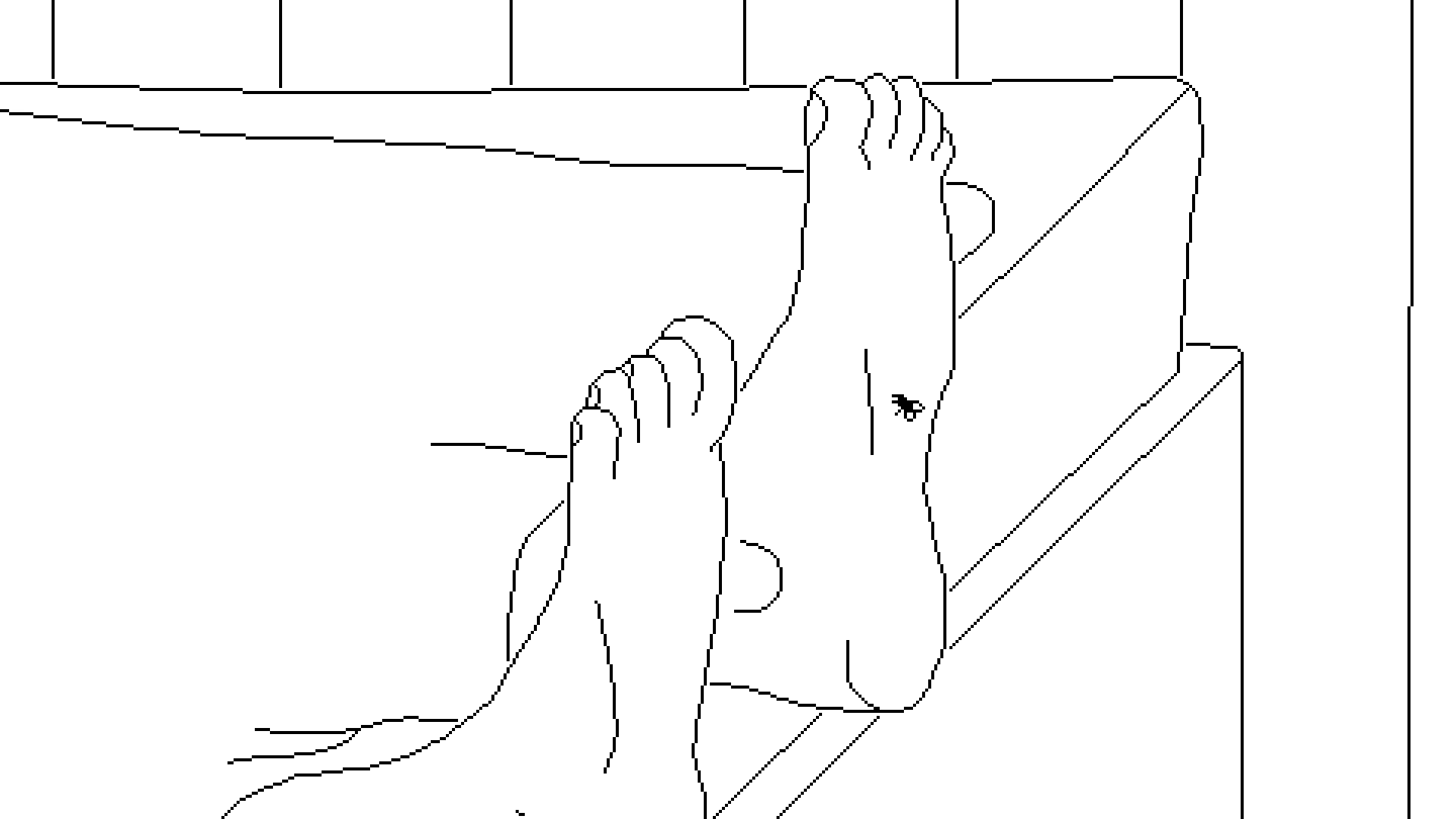
The game creates a powerful sense of scale, contrasting the grand ambitions on your bucket list, such as “Start a Revolution,” with the humble domesticity of your surroundings. This juxtaposition is a constant source of charm and humor. The camera intelligently guides your eye, zooming in on key objects to signal their importance without resorting to glowing icons or intrusive interface elements.
This subtle direction encourages a natural sense of curiosity, making you feel like you are discovering the world’s secrets on your own terms. A spinning globe, a messy painter’s easel, a stack of old records—these everyday items are reimagined as instruments for fulfilling a fly’s deepest desires.
The game shares a clear lineage with the checklist-based chaos of Untitled Goose Game, yet its humor possesses a different flavor. Where the goose created anarchy for its own sake, the fly’s mischief is driven by a desperate, existential urge to experience everything before its time runs out. The solutions to your bucket list items are frequently pun-based and delivered with a perfect deadpan wit.
You “get rich” by landing on a dollar bill, you “travel the world” by walking across the surface of a globe, and you “leave your mark” by tracking ink across a doormat. The joy comes from these small moments of discovery, the “aha!” of connecting a vague phrase to a physical action. This intellectual comedy is balanced with a healthy dose of slapstick.
Your short life can be extinguished in an instant by a host of environmental hazards. Flying too close to a flickering candle flame, getting stuck on a strip of fly paper, or straying into the path of a Venus flytrap all result in an immediate and unceremonious death.
These dangers are not random obstacles but natural elements of a human world that are lethal to a creature of your size and fragility. This integration reinforces the theme of vulnerability and the precariousness of existence. The instantaneous nature of death, followed by an immediate restart, encourages bold experimentation.
The penalty for failure is so slight that you are free to try absurd things just to see what happens, a design philosophy shared with many modern roguelites. The slapstick value of watching your fly instantly perish after a foolish mistake is considerable and prevents the frequent deaths from becoming frustrating. The game’s overall tone is a masterful blend of the surreal and the ironic.
It finds a strange profundity in its own absurdity, asking you to contemplate mortality one moment and then challenging you to figure out how a fly might “get drunk” off a spilled drop of wine the next. It is this balance of silly humor and sincere reflection that makes the world so memorable.
A Sketchbook Existence
The visual presentation of Time Fies is central to its identity. The game adopts a stark, 1-bit art style that resembles a series of lively doodles from a philosopher’s notebook. It is unpolished in a deliberate and expressive way, a choice that sets it apart from the pristine graphics of mainstream titles. Every line is shaky and imperfect, as if drawn by a slightly unsteady hand.
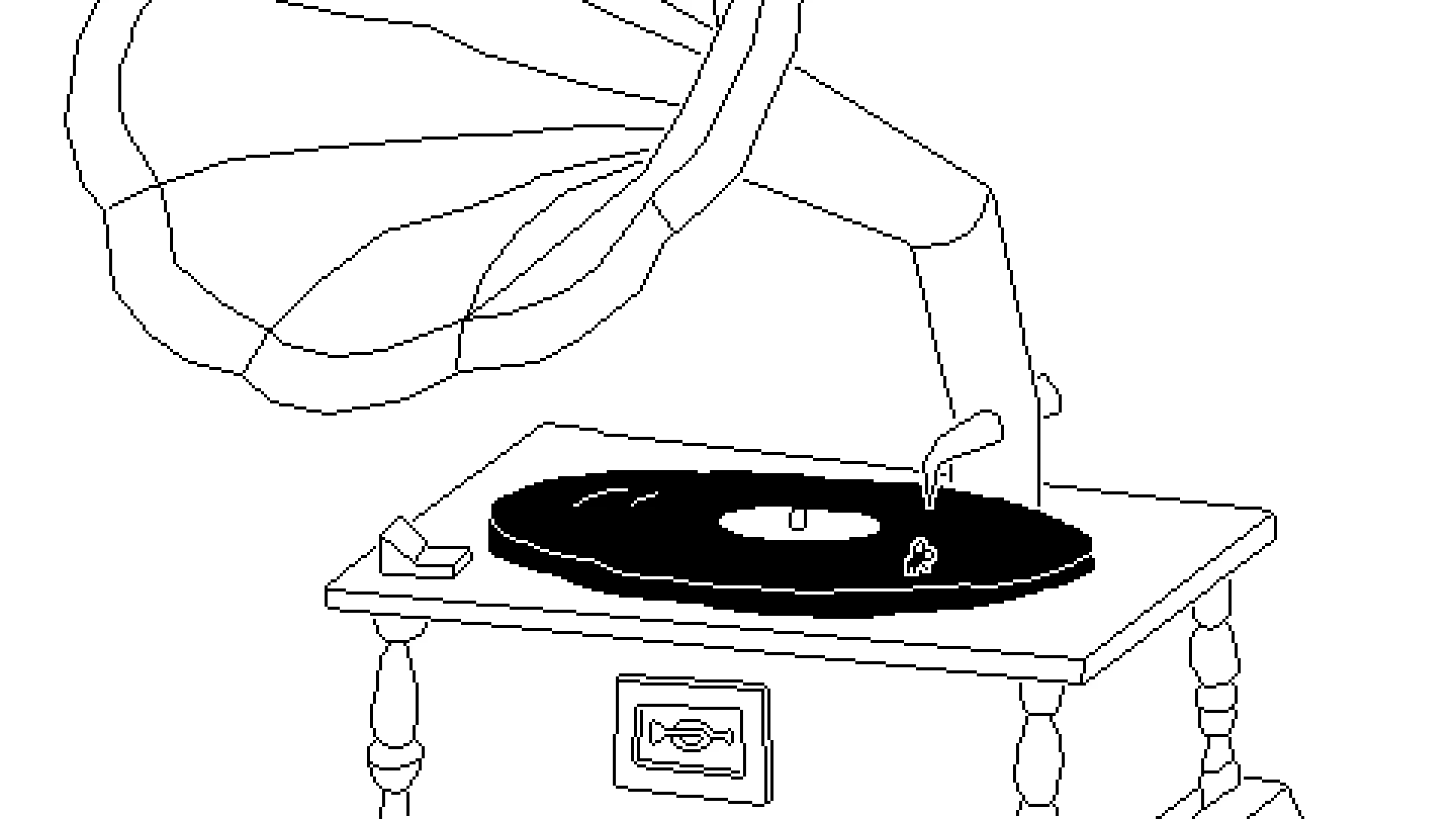
This “pencil-esque” quality gives the world an organic and fragile feeling that perfectly matches the protagonist’s plight. The aesthetic has been compared to early Macintosh graphics, a throwback style that feels both nostalgic and refreshingly bold. The artists made the conscious decision to render the world entirely in black and white, with no gradients or shading.
This minimalist palette forces the player to focus on shape, movement, and interaction above all else. It is a striking look that proves that graphical power is not a prerequisite for strong artistic direction.
The choice to avoid color makes the world incredibly clear and readable, though a minor critique can be leveled at the few sections that take place in dark spaces. In these moments, the art style inverts to white lines on a black background. While a clever visual trick, some have found these areas to be less pleasant to look at and slightly harder to navigate, as the high contrast can be jarring.
This small issue, however, does little to detract from the overall strength of the visual design. The game’s aesthetic is a testament to the idea that confident art direction can be far more impactful than raw technical fidelity. The hand-drawn world is not just a backdrop; it is a core part of the game’s character and its message about finding beauty in simple, imperfect things.
This philosophy of “less is more” extends to the sound design, which is sparse but exceptionally effective. The entire experience is underscored by two persistent sounds: the soft, incessant buzzing of your fly’s wings and the steady, metronomic ticking of the clock.
Together, these two elements form the game’s sonic heartbeat. The buzzing establishes your presence in the world, while the ticking serves as a constant, oppressive reminder of your impending doom. This creates a baseline of tension that makes the quiet moments feel earned and the loud moments feel startling. Layered on top of this foundation are various ambient sounds that breathe life into the sterile, black-and-white environments.
You will hear the gentle drip of a faucet, the warm crackle of a jazz record spinning on a turntable, or the static-laced audio of a television flickering through channels. Many of these sound sources are interactive, like a tunable radio that allows you to scan for different stations. These details add a profound sense of place, suggesting a lived-in human world that is completely oblivious to the tiny, epic drama of your fly’s life unfolding within it.
A Life Well Lived
Time Flies is a short game, with a full completion taking most players around two hours. In an industry that often equates length with value, this brevity could be seen as a flaw. Here, however, it is one of the game’s greatest strengths. The short runtime is a deliberate design choice that perfectly mirrors the game’s central theme of a fleeting existence.
The developers demonstrate a remarkable confidence in their concept, presenting their ideas with focus and clarity before bowing out. The game never overstays its welcome or stretches its mechanics thin. This respect for the player’s time feels like a core part of the game’s philosophy. The developers are so committed to this idea that they even break the fourth wall at one point to gently rib themselves about the game’s length, showing a self-awareness that is both charming and indicative of a focused creative vision.
For players who wish to spend more time in its world, the game offers several compelling reasons to return after completing the main bucket lists. The most significant of these is the hunt for 12 puzzle pieces hidden throughout the four levels. These collectibles are described as impressively well-hidden, requiring careful observation, precise timing, and out-of-the-box thinking to find.
This offers a different kind of challenge, one that favors meticulous exploration over the speed and efficiency required by the main game. A separate list of achievements provides another set of goals, rewarding you for performing specific and often humorous actions, such as landing on the head of every human in the game.
This content encourages a more playful and thorough approach to the levels. The game also has a high “pass the controller” factor, making it a wonderful experience to share with friends and family, much like its spiritual predecessor, Untitled Goose Game.
It is important to note that despite its simple appearance, Time Flies is an experience intended for adults. The game contains depictions of nudity, alcohol consumption, and drug use, elements that contribute to its quirky and sometimes dark sense of humor. Its core message is a mature one. The game serves as a playful and surprisingly touching meditation on life’s brevity.
It holds a mirror up to our own frantic attempts to check items off our to-do lists, reminding us that time is always slipping away. It suggests that a life well lived is not just about accomplishing goals, but also about finding moments to simply exist, to listen to an old record, or to spin aimlessly in the air. It is a clever, funny, and uniquely poignant work that leaves a lasting impression long after the final tick of the clock.
The Review
Time Flies
Time Flies is a masterclass in minimalist design. It transforms a simple, absurd concept into a surprisingly poignant and clever meditation on life's brevity. Its unique art style, tight gameplay loop, and witty, existential humor combine to create an experience that is both memorable and meaningful. While its short length is a deliberate feature that serves its theme, it is a focused, polished gem that confidently achieves everything it sets out to do. It’s a short, sweet existence that is absolutely worth living.
PROS
- Brilliantly clever concept that connects gameplay directly to its theme.
- Striking, minimalist hand-drawn art style.
- A perfect blend of witty, absurd humor and poignant reflection.
- Satisfying gameplay loop that encourages experimentation and route optimization.
CONS
- Very short runtime may leave some players wanting more.
- Mature themes and content make it unsuitable for a younger audience.
- Minor navigational difficulty in the inverted dark areas.