


























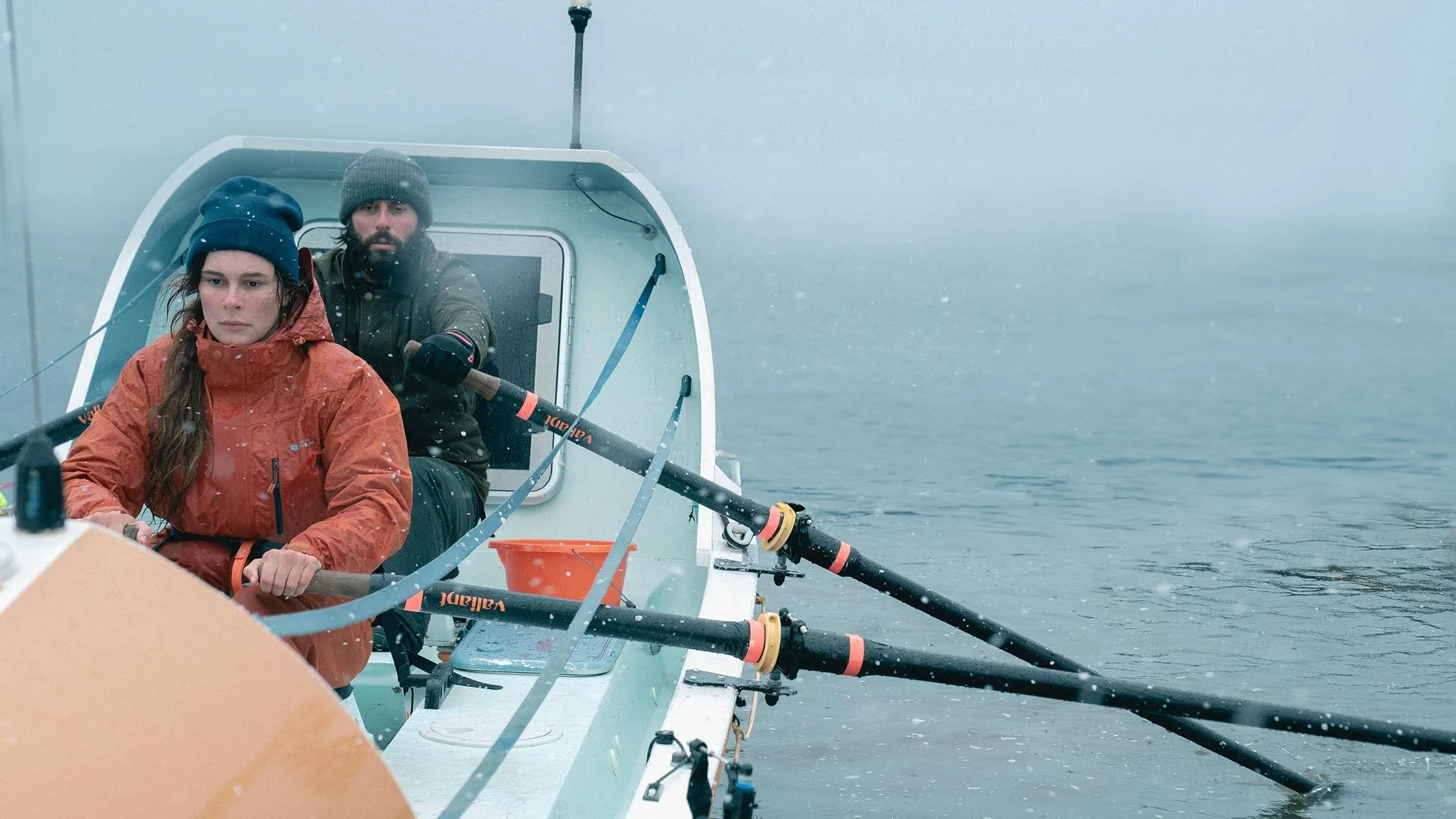

The film Row begins where most stories of this sort end: with the wreckage. A small boat, stained with blood and secrets, washes up on a Scottish shore. Onboard is Megan, the lone survivor of a four-person crew, alive but psychologically shattered. This powerful opening sets the stage for the film’s central, haunting question. It is not “will they survive?” but “what is the cost of survival?”.
The premise follows a doomed attempt to row across the Atlantic and break a world record. Megan’s ordeal is recounted to a detective through a haze of trauma. The film presents a psychological thriller where the unforgiving ocean is matched only by the internal storms brewing within the vessel’s claustrophobic hull as the crew’s trust in one another disintegrates.
The Chronology of Collapse
Director Matthew Losasso structures his film as a formalist gamble, moving between Megan’s catatonic recovery and the harrowing flashbacks of the voyage. This non-linear approach is a deliberate attempt to mirror the fractured nature of memory after a cataclysmic event, rejecting a simple, linear telling for something that feels closer to the chaotic process of recollection itself.
The audience is placed directly into Megan’s disoriented mind, becoming less a viewer and more an archaeologist of a ruined timeline. We are not passive observers; we are detectives sifting through the unreliable evidence of a broken consciousness. The film’s structure reflects a very modern condition, mirroring the disjointed way we consume information and experience, where cohesive narratives are often absent.
This structural choice does, however, come at a price. Each cut back to the quiet, sterile hospital room can feel like an emergency brake pulled on the building tension. The audience, poised on the edge of a visceral thrill as the situation on the boat deteriorates, is repeatedly asked to step back and become a cool-headed analyst of Megan’s psyche. The stop-start rhythm, stretched over a considerable runtime, sometimes makes the film feel longer than its actual voyage (which, one imagines, felt quite long enough).
This deliberate pacing can feel ponderous, a slow drift that risks losing its audience in the lulls between moments of crisis. Megan’s narration is a form of post-traumatic testimony, filled with contradictions and nightmarish visions. The film asks us to question everything she remembers, making the search for an elusive, perhaps non-existent, truth the real journey.
Four People in a Boat (And None to Spare)
The crew of the tiny vessel forms a micro-society under extreme duress, a floating petri dish for observing human nature stripped of its comforts. Daniel, the skipper, is the picture of tenacious, almost pathological, ambition. He’s not just a sailor; he’s a modern Icarus, a flawed CEO on a doomed vanity project, rowing furiously against the current of his powerful father’s expectations.
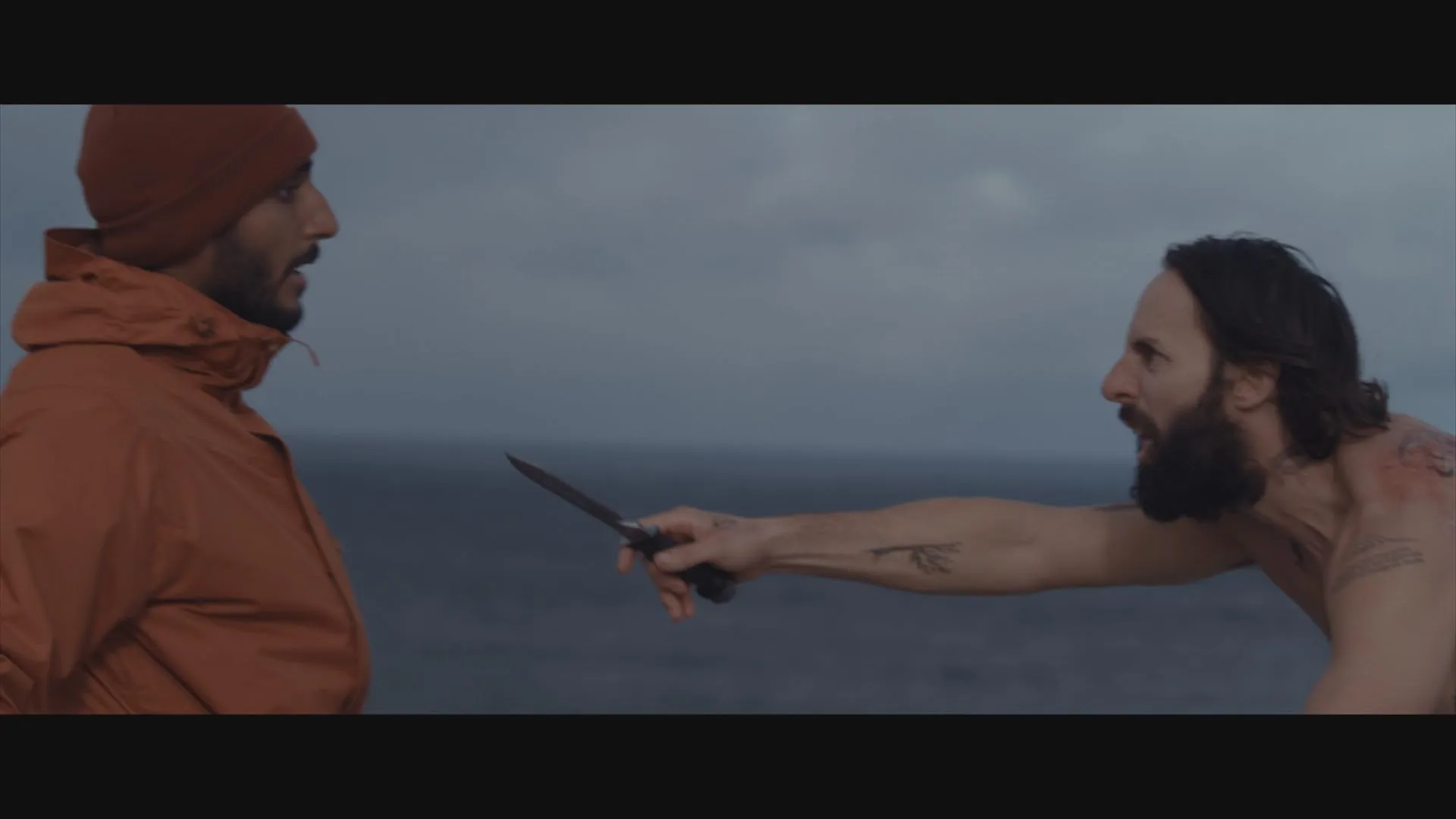
Lexi is Megan’s friend, a spark of normalcy that the vast, empty ocean seems determined to extinguish. Then there is Mike, the last-minute replacement, the suspicious outsider whose presence immediately destabilizes the group’s delicate equilibrium.
He is the unknown variable, the societal interloper whose very existence challenges the closed system. Megan herself remains an inscrutable center, a quiet observer whose passivity might be a symptom of shock or a calculated, chilling survival strategy.
Their descent into paranoia is a timeless human story, a controlled experiment in social collapse. When the automatic rudder fails and precious rations dwindle, their carefully constructed civilization begins to crack. The failing equipment becomes a potent symbol for their failing social contract. Is it sabotage or a series of unfortunate events? The answer almost doesn’t matter.
The suspicion alone metastasizes, turning allies into threats. The performances are fittingly intense, reflecting the pressure-cooker environment. Akshay Khanna portrays Daniel with a frightening, vibrating single-mindedness, the look of a man trying to outrun an inevitable failure. Bella Dayne’s withdrawn performance makes Megan a perfect blank slate onto which the audience and the other characters can project their own mounting fears.
The Aesthetics of Dread
Row is, if nothing else, a significant technical achievement in creating a sustained mood of unease. The cinematography captures the immense, godlike indifference of the ocean, presenting it as the film’s primary antagonist. Zoran Veljkovic’s camera finds both serene, alien beauty in a placid sunset and terrifying, sublime power in a wave the size of a building.

Overhead drone shots flatten the boat into a fragile speck, reinforcing the crew’s cosmic insignificance in the face of an unthinking natural force. The sound design works in concert with these visuals to generate a specific kind of aquatic dread.
The constant creaking of the hull, the relentless slap of water, and a chilling, ancient-sounding choral refrain all contribute to an oppressive and deeply isolating atmosphere. The tight camera work inside the boat’s cabin makes the space feel suffocating, amplifying the psychological pressure to an almost unbearable degree.
The film’s ambiguous ending will likely frustrate viewers seeking the catharsis of a neat resolution. This ambiguity, however, is the point. The film denies us a clear verdict, forcing us to inhabit the same unsettling uncertainty as its protagonist. The true horror is not knowing what happened, but understanding that the truth itself may have been a casualty of the ordeal.
Row is less about what happened on the boat and more about the uglier aspects of human nature that surface when the tide of civilization recedes. It serves as a bleak cautionary tale for an era obsessed with breaking records and pushing boundaries, questioning the human cost of such extraordinary sacrifice.
Full Credits
Director: Matthew Losasso
Writers: Matthew Losasso, Nick Skaugen
Cast: Sophie Skelton, Bella Dayne, Joanna Roth
The Review
Row
Row is a technically accomplished and psychologically chilling survival film, anchored by strong performances and a palpable sense of dread. Its ambitious, non-linear structure is both its greatest strength and its most significant weakness, attempting to mirror a traumatized mind at the cost of narrative momentum. The deliberate pacing and ambiguous nature create a demanding viewing experience. This is a bleak, atmospheric study of human nature under pressure that succeeds more as a mood piece than a consistently gripping thriller.
PROS
- Stunning cinematography that captures the ocean's dual nature of beauty and terror.
- An effective and oppressive sound design that heightens the sense of isolation.
- Intense and committed performances from the small ensemble cast.
- Successfully builds a claustrophobic and deeply paranoid atmosphere.
CONS
- The non-linear narrative structure frequently disrupts the build-up of tension.
- Slow, deliberate pacing can make the film feel sluggish and overlong.
- The ambiguous conclusion may leave some viewers feeling unsatisfied.
- The story's momentum lags in the second half.