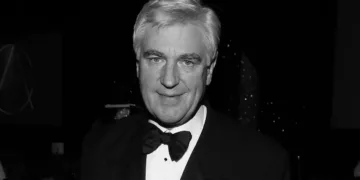































Stuart Craig, the British production designer whose work shaped films from Gandhi and The English Patient to the eight Harry Potter features, has died at 83 after living with Parkinson’s disease. His family said he died peacefully at home; tributes from longtime collaborators praised both his eye for detail and his generosity on set.
Across a career spanning more than four decades, Craig won three Academy Awards, for Gandhi (1982), Dangerous Liaisons (1988) and The English Patient (1996), and earned multiple additional nominations, including for four Harry Potter titles. Industry tallies also credit him with a broad record at the BAFTAs, where he notched double-digit nominations and several wins. Colleagues including producer David Heyman and director David Yates called him a singular builder of worlds whose leadership elevated every department around him.
Born in Norwich in 1942 and trained at the Royal College of Art, Craig worked his way through the art departments of 1960s and ’70s British productions before a breakthrough as production designer on The Elephant Man. He became a frequent partner to Richard Attenborough and Roland Joffé on large-scale historical dramas, then shifted gears with Notting Hill before embarking on the project that defined his late career. Beginning in 2001, Craig and his crew transformed a repurposed airfield at Leavesden into a vast workshop capable of generating Hogwarts, the Ministry of Magic and dozens of other sets that gave the Wizarding World its physical character.
Those designs extended beyond cinema. Craig helped develop the Wizarding World theme-park environments and later returned for the Fantastic Beasts films, translating his layered period aesthetic to new locations and eras. In memorials shared by peers and guilds, he was remembered as a meticulous draughtsman whose sketches anchored ambitious builds, and as a patient mentor who insisted that fantastical spaces feel logically inhabited.
Craig is survived by his wife, Patricia, two children and four grandchildren. His long collaboration with set decorator Stephenie McMillan—spanning The English Patient, Notting Hill and the entire Potter run—was frequently cited as central to his approach: elegance and wit in the small choices, clarity and scale in the grand ones.