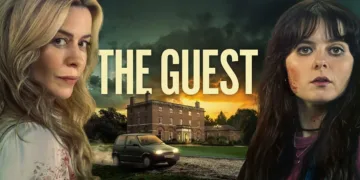

























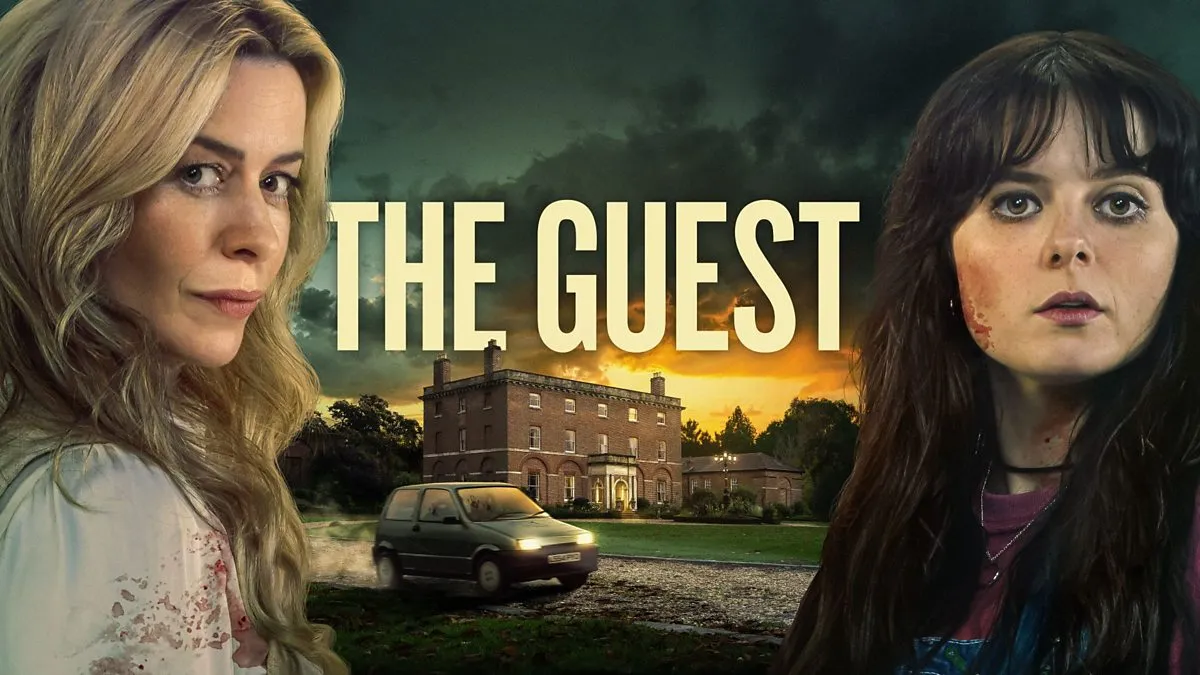

The psychological thriller often begins with a simple transaction, an offer that appears too good to be true because it is. The Guest operates squarely within this tradition, building its premise on the collision between two women separated by circumstance.
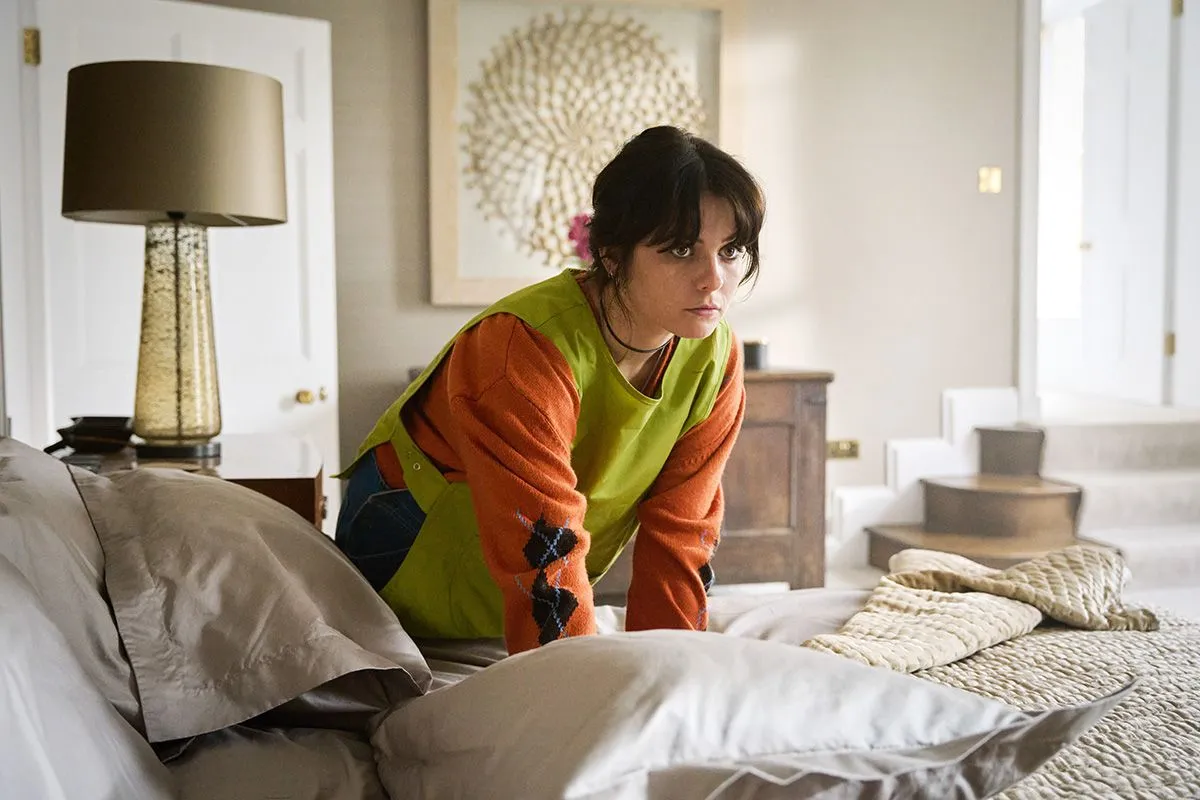
The story poses a familiar question: what happens when a life of quiet desperation is interrupted by an offer of unearned salvation? We first meet Ria, a young woman in Cardiff whose existence is a study in limitations. She cleans homes for dismissive clients to support herself and her inert boyfriend, Lee. Her days are defined by financial strain and the feeling of being stuck, a reality so oppressive that stealing from a supermarket donation box becomes a plausible option.
Into this world steps Fran, a businesswoman whose wealth and self-possession seem almost otherworldly. She sees Ria’s predicament and extends a hand, offering a cleaning job at her magnificent home for a generous wage. This initial arrangement, however, is merely the entry point. The job soon transforms into a strange mentorship, pulling Ria into a four-part drama where generosity masks a far more sinister and manipulative agenda.
A Transactional Mentorship
The central mechanism of The Guest is the evolving relationship between its two leads, an intricate construction of power, class anxiety, and dependency. The narrative charts its course from a professional agreement to a mentor-protégé dynamic of deeply unsettling intimacy. Fran’s guidance is framed as a form of liberation.
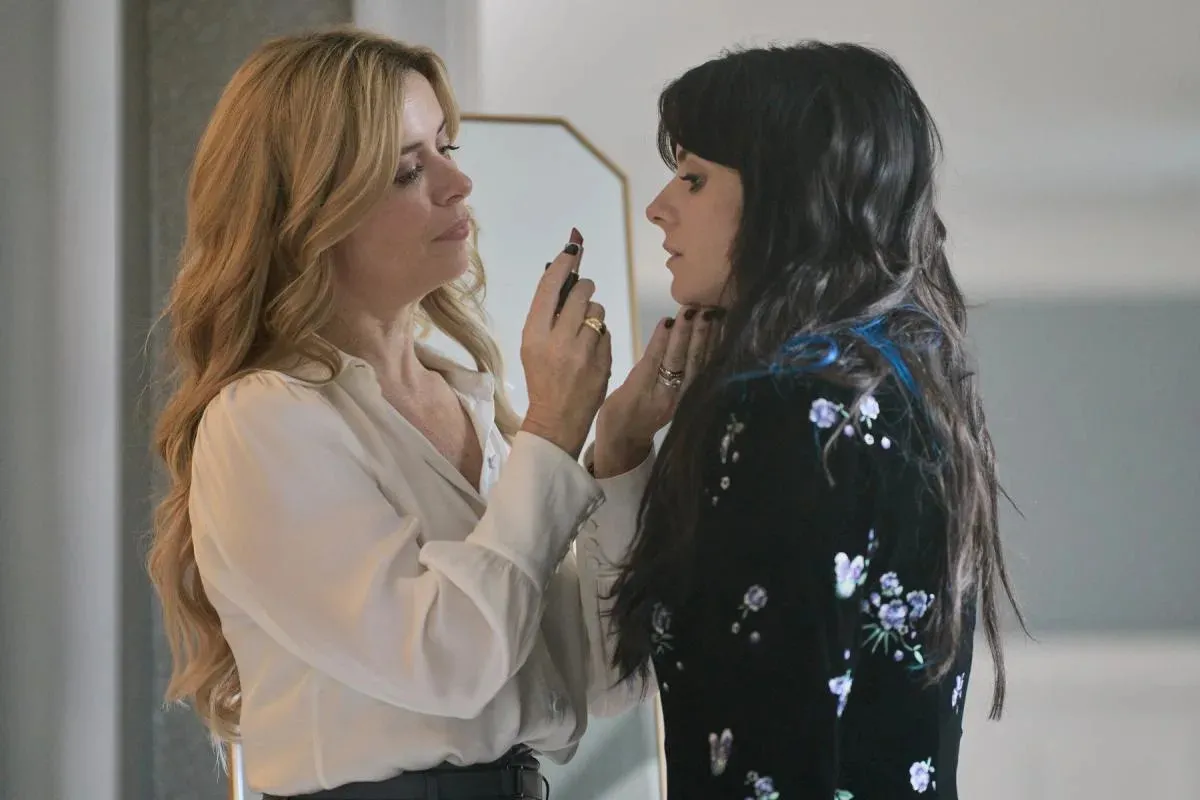
She lectures Ria on the vital importance of being “selfish” and learning to “take what you’re owed,” presenting these ideas as the keys to her own success. These lessons, however, function as a patient form of psychological conditioning. They are designed not to free Ria but to remake her, chipping away at her innate caution and replacing it with a harder, more cynical worldview that mirrors Fran’s own.
The methods of control are both subtle and overt. Fran offers Ria expensive clothes from her own wardrobe, transforming her appearance to better fit into a world of wealth. She provides access to prescription pills, a casual gesture that fosters a chemical reliance alongside an emotional one. This constant blurring of professional and personal lines creates a deep, troubling bond.
The dynamic is charged with psychosexual undercurrents, suggesting Fran is not just mentoring Ria but attempting to mold her into a younger extension of herself, an acolyte in her personal philosophy of ruthless ambition. This personal drama unfolds against a backdrop of pronounced social disparity. The series explores its themes of class and mobility through stark, often blunt, visual language.
Ria’s world is depicted in shades of grey; her flat is cramped, poorly lit, and carries the weight of financial precarity. In direct opposition, Fran’s mansion is an opulent, sterile expanse of polished surfaces and showroom-perfect cabinetry. It is a home that feels curated rather than lived in, a testament to “new money” aesthetics that value appearance above all else.
The show’s commentary on this wealth gap is anything but subtle. The script does not trust its audience to grasp the themes without reinforcement, so Fran delivers explicit speeches about her own background, insisting that she and Ria are fundamentally the same, separated only by the fortune of having a rich father. The ideas are presented with such directness that the viewer is left with little room for interpretation, a narrative choice that prioritizes message over nuance.
Performances as Ballast
As the story’s structural integrity begins to waver under the weight of its own plot twists, the performances provide a necessary and welcome ballast. The series functions almost entirely because its two lead actors sell the escalating drama with unwavering commitment. Gabrielle Creevy gives Ria a grounded realism that is essential for the show to work at all.

Her portrayal is natural and deeply sympathetic, preventing the character from becoming a simple pawn of the narrative’s wilder impulses. Creevy excels at conveying Ria’s internal state through quiet, non-verbal cues: a flicker of doubt in her eyes when Fran’s kindness seems too intense, a tensing of her shoulders in a room that feels unsafe.
She skillfully charts Ria’s arc from a trusting, somewhat overwhelmed young woman to a more calculating figure who rediscovers a sharp instinct for self-preservation. This careful, layered portrayal of Ria’s dawning awareness keeps the audience invested in her survival, even as the events surrounding her defy easy belief.
Opposite her, Eve Myles crafts a wonderfully watchable and multifaceted antagonist. Her work in creating the enigmatic Fran is a masterclass in tonal control. She possesses a fascinating ability to pivot instantly from a warm, maternal nurturer to a cold, menacing manipulator, often within a single line of dialogue.
This volatility makes Fran a consistently unpredictable and threatening presence. Myles fully embodies the “new money” polish of the character, delivering Fran’s philosophical monologues on success and survival with a chilling sincerity that makes them feel like articles of faith. She avoids caricature, instead building a portrait of a woman whose benevolence and cruelty spring from the same damaged source.
The supporting players add valuable texture to the central conflict. Sion Daniel Young finds a degree of nuance in the role of Lee, Ria’s boyfriend. He balances the character’s frustrating lethargy and emotional immaturity with a flicker of genuine affection and visible defeat, preventing him from being a simple obstacle for the heroine.
Veteran actor Clive Russell appears as Derek, the estate’s gardener, a figure who functions as a classic harbinger from a gothic novel. His cryptic warnings are a walking piece of foreshadowing, a conventional but effective tool for building early dread.
The Architecture of Suspense and Silliness
As a piece of narrative engineering, The Guest is a machine of two distinct and unequal parts. Its initial episodes are constructed with formidable efficiency, demonstrating a clear understanding of the thriller’s mechanics. The pacing is fast and propulsive, effectively building a thick atmosphere of suspense through a steady diet of unresolved questions and ominous cliffhangers.
The direction uses its locations well, making the cavernous mansion feel both alluring and threatening. We are presented with a locked room, a mysterious man sighted in the guesthouse, and a secret affair. These are familiar but effective hooks, deployed skillfully to pull the audience deeper into the story’s central mystery. For its first half, the show maintains a commendable level of narrative control.
Then, the architecture begins to show its cracks. The plot starts to rely heavily on a series of contrivances and character choices that push past suspense and into the realm of the silly. The story’s internal logic begins to fray as it demands its heroine make baffling decisions simply to advance the plot.
For instance, Ria’s choice to immediately film her new boss’s infidelity feels less like an authentic character moment and more like a writer’s shortcut to create leverage and escalate conflict. The narrative increasingly leans on genre tropes, culminating in over-the-top events like a dramatic fall from a balcony, a device so common it feels borrowed.
A viewer’s enjoyment becomes conditional, entirely dependent on a willingness to forgive these lapses and embrace the preposterous turns. This structural wobble leads to an unsatisfying payoff. The resolutions to the carefully arranged mysteries are underwhelming and largely predictable, opting for the most obvious explanations.
The answers provided simply do not possess the same ingenuity as the questions posed in the setup. The finale feels particularly hurried, leaving certain plot threads dangling or tied up with a tidiness that betrays the complexity of the initial premise. The result is a sense of deflation, a feeling that a promising construction was abandoned for a hasty conclusion.
A Fleeting, Familiar Entertainment
The Guest positions itself as a contemporary successor to the domestic psychological thrillers of the 1990s. It clearly borrows its thematic DNA from films like The Hand That Rocks the Cradle and Single White Female, stories centered on class anxiety, domestic invasion, and obsessive female relationships. It is a type of story built for the current media environment, functioning as an “easy watch.”
Its surface-level suspense and fast-moving plot make it a fitting example of ambient television, a show that can hold one’s attention without demanding too much of it, perfect for an evening of distracted viewing. Its value is best understood as a balance of its components.
The show’s strongest assets are the excellent lead performances and a premise that is immediately engaging. Its most significant liabilities are a plot that sacrifices coherence for shock and a weak final act that fails to deliver on its initial promise.
What remains is a fun, fast-paced diversion that succeeds as a fleeting piece of entertainment. It provides a terrific showcase for its talented leads, who elevate flawed material through their committed work. The production is memorable for the actors who inhabit it, not for the rickety story they were asked to tell.
The Guest, a four-episode Welsh thriller series, premiered on BBC One on September 1, 2025. Produced as a co-production between BBC Cymru Wales and Quay Street Productions, all episodes were made available for streaming on BBC iPlayer on the same day as the broadcast debut. Filming for the series took place in Cardiff, Wales, between September and November 2024.
Full Credits
Director: Ashley Way
Writers: Matthew Barry
Producers and Executive Producers: Karen Lewis, Matthew Barry, Rebecca Ferguson, Nick Andrews, Davina Earl, Nicola Shindler
Cast: Gabrielle Creevy, Eve Myles, Sion Daniel Young, Emun Elliott, Bethan Mary-James, Julian Lewis Jones, Joseph Ollman
The Review
The Guest
The Guest is a thriller that succeeds almost entirely on the strength of its two lead performances. Gabrielle Creevy and Eve Myles are magnetic, creating a compelling central dynamic that is far more interesting than the increasingly implausible story surrounding them. While the series begins with a gripping, fast-paced setup, it ultimately sacrifices narrative coherence for cheap shocks, leading to a rushed and unsatisfying conclusion. It is a disposable yet entertaining diversion, a showcase for its actors that is let down by its own rickety architecture.
PROS
- Excellent and grounded lead performances from Gabrielle Creevy and Eve Myles.
- A fast-paced, suspenseful opening that effectively hooks the viewer.
- Sharp visual contrasts that highlight the themes of class disparity.
CONS
- The plot descends into implausibility, relying on contrived twists.
- An underwhelming and rushed finale that fails to satisfy the initial setup.
- The commentary on social themes lacks subtlety.