

























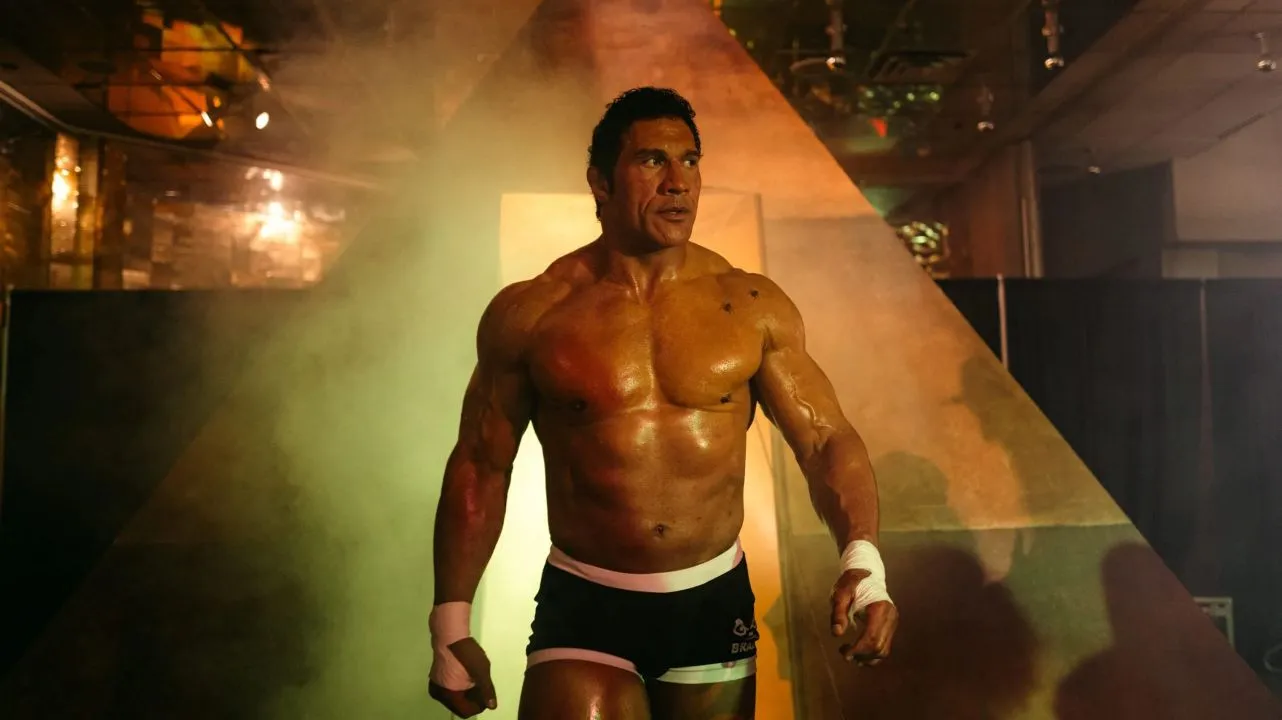

A grainy video image flickers. We hear a voice, disarmingly gentle and sweet, describing the pure high of domination, the moment an opponent crumples and submits. On screen, a man built like a monument, Mark Kerr, assaults another with merciless bare-knuckle punches, reducing a face to a bloody pulp.
This opening sequence of The Smashing Machine establishes the film’s central friction: the chasm between the brutal spectacle of early Mixed Martial Arts and the quiet, complex man at its center. This is not a story about the glory of winning, but an intimate document of one man’s war with himself.
Benny Safdie’s film follows the pioneer UFC champion through his peak years in the late 1990s, a period defined by opioid addiction, a volatile romance, and the immense pressure of being an undefeated titan. It is a gritty, unvarnished portrait of a person fighting to reclaim his humanity from the mythic persona he created.
The Deconstruction of a Star
The first thing one notices is the absence of Dwayne Johnson. In his place is Mark Kerr, a man whose body tells a different story from the one audiences have come to know. The work of prosthetic designer Kazu Hiro is astonishing, supplying the mangled cauliflower ears and a thickened nose that alter Johnson’s familiar geography.
His physique is reshaped from a movie star’s sculpted form into the puffier, top-heavy build of a professional fighter, a body designed for function over aesthetics. This complete physical change erases a global icon, allowing for an immediate belief in the character. This transformation is the foundation for a performance that dismantles the very persona Johnson spent two decades building.
He trades his signature charisma for a profound stillness, his million-dollar smile for a haunted, beady-eyed stare. His Kerr is a quiet man, thoughtful and soft-spoken, with a delivery that feels practiced, as if learned from a self-help seminar. This gentle surface hides a violent rage he can barely contain. This duality is the character’s engine.
In the ring, he is a confident, destructive force. At home, he is insecure, emotionally dependent, and frighteningly fragile. A scene of him weeping alone in a locker room after his first professional loss speaks volumes about a man whose entire identity is tethered to invincibility. Johnson’s work here is the key to the film’s examination of the psychological cost of being seen as a machine. His performance captures the painful struggle of a man trying to feel human again.
An Arena of Two
Mark Kerr’s most punishing fights happen far from the octagon, within the walls of his bland Arizona home. His relationship with his girlfriend, Dawn Staples, is the film’s turbulent emotional core, a second arena where the psychic blows land with greater force than any physical strike. Emily Blunt gives a searing performance as Dawn, a woman who is a difficult and fascinating creation.
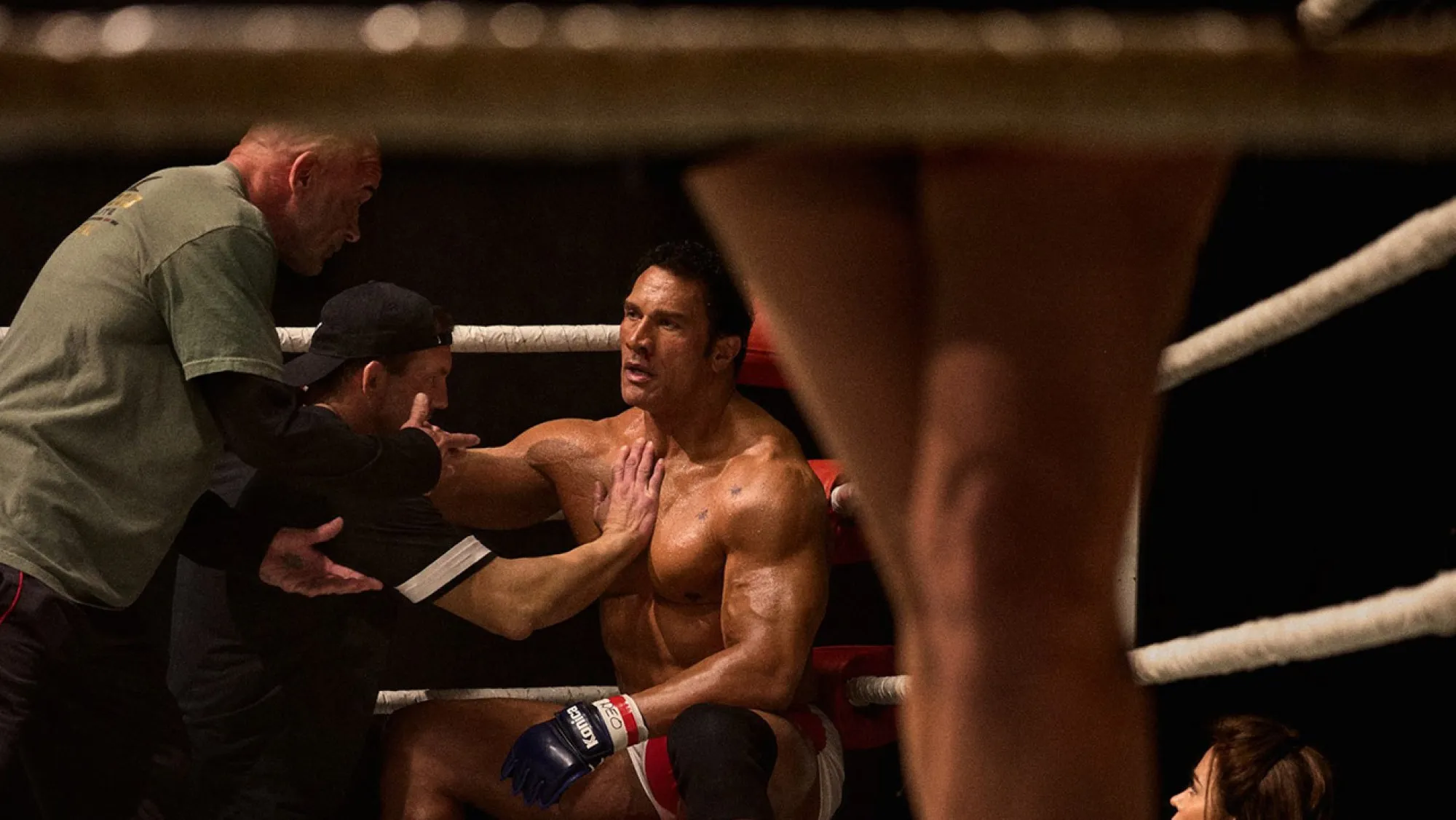
She is fiercely protective one moment and cruelly provocative the next, her actions both a bedrock of support and a trigger for Mark’s instability. Blunt refuses to soften her character’s edges; Dawn is needy, with a sharp tongue and a sullen arrogance that often manifests at the worst possible moments.
She is not a simple character; she is a complex person with her own needs and neuroses that frequently collide with Mark’s. The chemistry between Johnson and Blunt feels authentic and dangerous. Their interactions, a constant cycle of affection and sabotage, provide the film’s primary source of conflict. Safdie gives these domestic scenes the same weight as the title bouts.
A squabble over whether her cat can sit on the leather couch is not trivial filler; it is a battle for control, a window into the fragility of two people pushing each other’s buttons. Their pre-fight argument in Japan, which sends Mark into his first loss, shows how deeply their codependency is woven into his professional life. This relationship is the true arena where Mark’s demons are confronted, making his battles at home more suspenseful than any championship match.
The Aesthetics of Bruised Realism
Benny Safdie’s solo directorial effort finds a new rhythm, distinct from the frantic, high-anxiety energy of his work with his brother. The style of The Smashing Machine is patient and observational, an atmospheric slow-burn that allows quiet moments of vulnerability to land with devastating force. The film’s visual language is rooted in a documentary-like aesthetic.
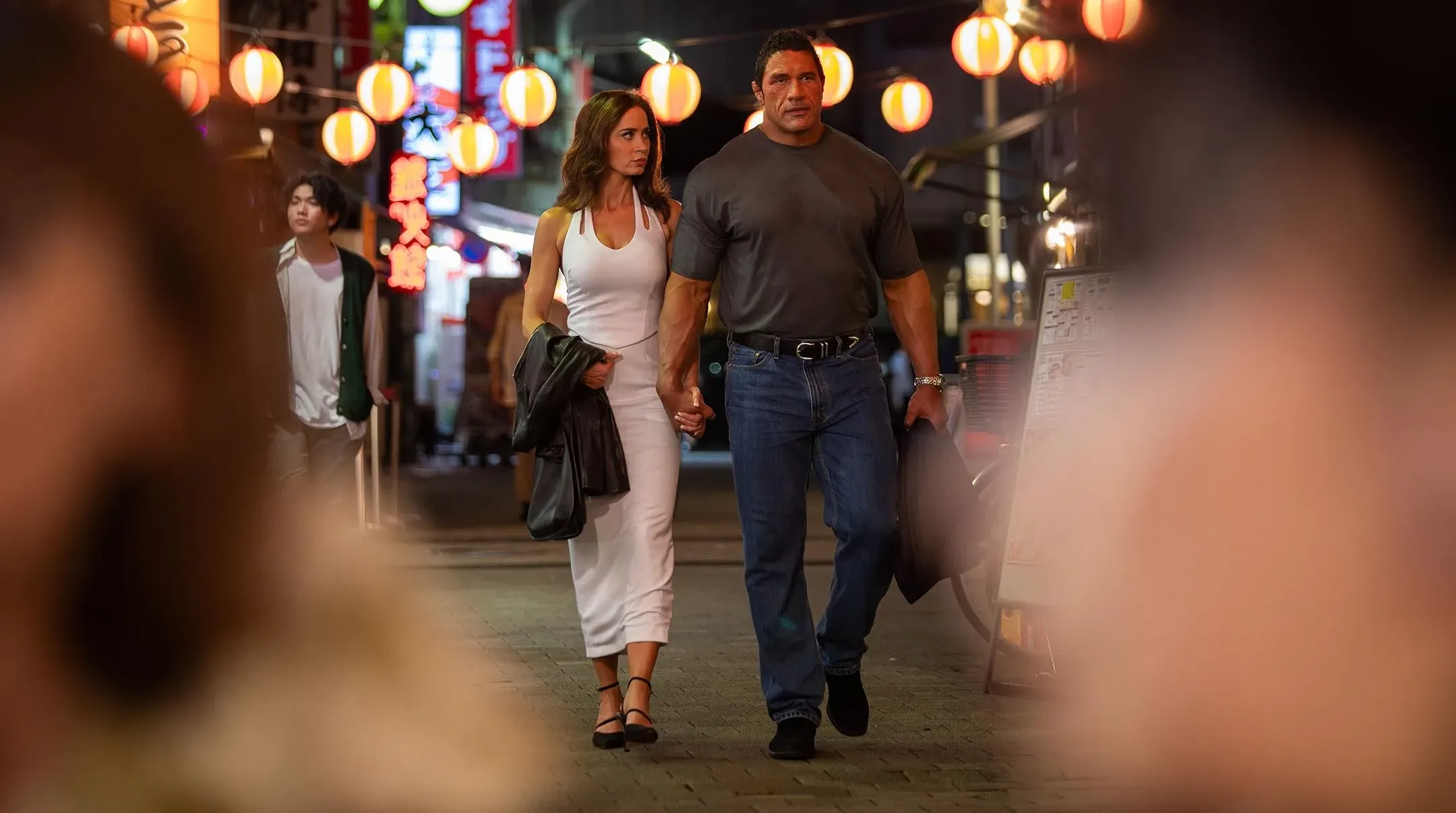
Cinematographer Maceo Bishop uses grainy film stock and long lenses that create a raw immediacy, giving the audience a “fly-on-the-wall” perspective on intensely private moments. The production design reinforces this lack of glamour, from the chintzy hotel ballrooms of early UFC events to the sterile atmosphere of the Kerr household.
Nala Sinephro’s ambient, free-jazz score works against the on-screen action, creating a contemplative mood that highlights Kerr’s internal state rather than the external violence. This approach actively subverts sports movie conventions. Fight scenes are brief, brutal, and unshowy. A training montage, set ironically to Elvis Presley’s version of “My Way,” feels more mournful than triumphant.
The film is far more interested in the psychological aftermath of violence than the spectacle of it. Casting real-life MMA fighters like Ryan Bader and Bas Rutten in significant roles further grounds the film in an undeniable authenticity, making its world feel thoroughly lived-in.
Victory in Surrender
The film’s power is secured by its performances, its challenging central relationship, and Safdie’s grounded directorial vision. The Smashing Machine uses the setting of professional fighting to explore something deeper.
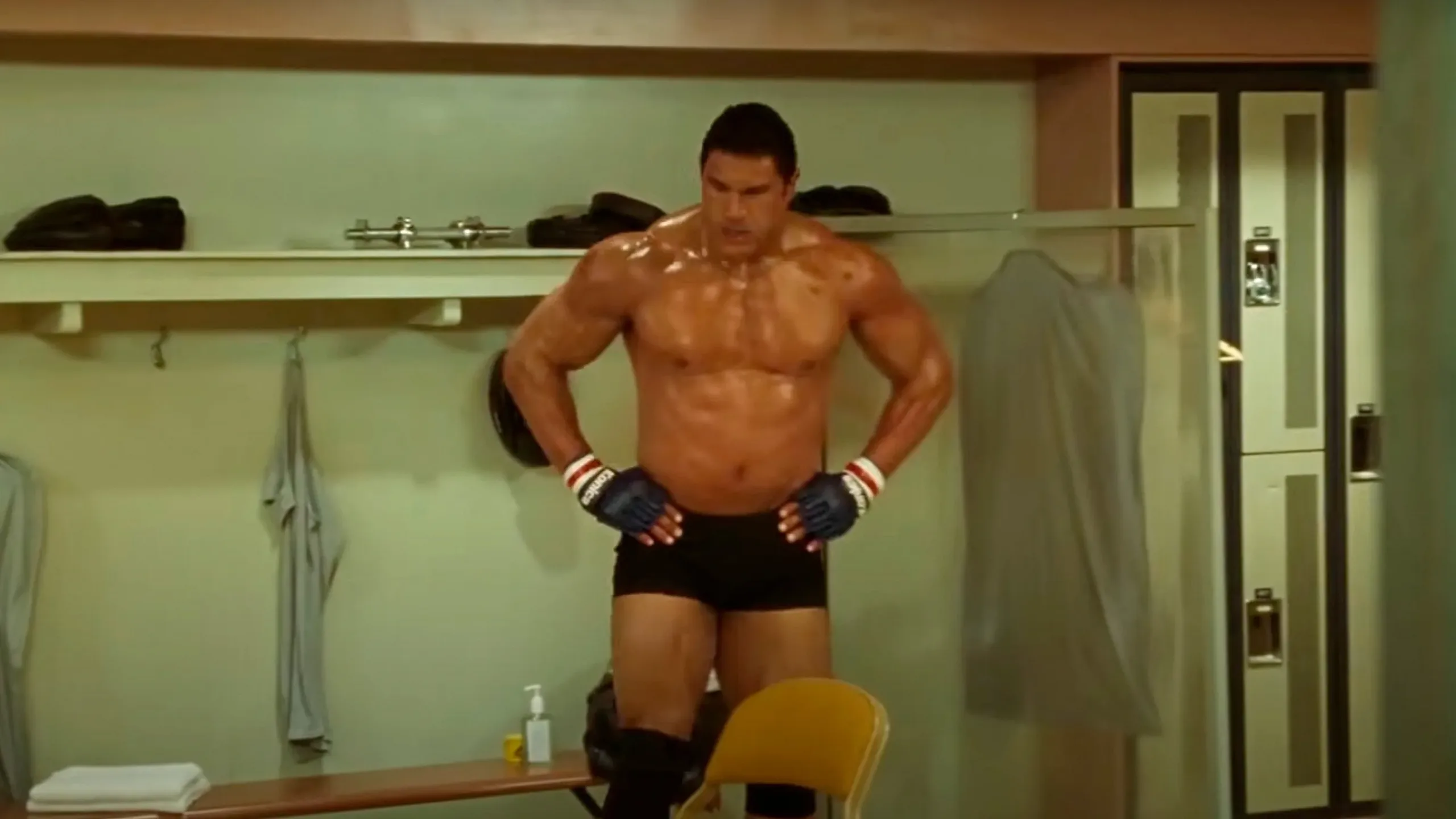
Its subject is the difficult, painful process of a man dismantling his own myth to find what lies beneath. The story redefines what victory looks like. The ultimate prize is not a championship belt but a quiet moment of self-realization, an acceptance of one’s own imperfections and a willingness to learn how to lose.
It is a poignant and effective character study that locates its strength in weakness, not in force. The film is a successful challenge to the expectations audiences have for its star and its genre, presenting a victory found not in a final knockout, but in a quiet, human surrender. It questions the very nature of strength, suggesting it is found in the courage to fall apart.
The Smashing Machine, an American biographical sports drama film with a running time of 123 minutes, had its world premiere at the 82nd Venice International Film Festival on September 1, 2025. The film was shot on 16mm and 70mm IMAX film and is set to be released in US theaters by A24 on October 3, 2025. As of its premiere, it was also scheduled for theatrical release in the UK, France, and other global locations, but no streaming platform has been announced.
Full Credits
Director: Benny Safdie
Writers: Benny Safdie
Producers and Executive Producers: Benny Safdie, Dwayne Johnson, Eli Bush, Hiram Garcia, Dany Garcia, David Koplan, Tracey Landon
Cast: Dwayne Johnson, Emily Blunt, Ryan Bader, Bas Rutten, Oleksandr Usyk, Lyndsey Gavin, Satoshi Ishii, James Moontasri, Yoko Hamamura, Stephen Quadros, Paul Cheng, Andre Tricoteux, Marcus Aurélio
Director of Photography (Cinematographer): Maceo Bishop
Editors: Benny Safdie
Composer: Nala Sinephro
The Review
The Smashing Machine
Benny Safdie’s film is a masterfully raw character study, anchored by a career-redefining performance from Dwayne Johnson and a searingly complex turn by Emily Blunt. As an anti-biopic, it sidesteps genre glory in favor of a gritty, intimate look at the painful humanity behind a champion’s myth. A powerful examination of vulnerability disguised as a sports drama.
PROS
- A truly transformative and vulnerable lead performance from Dwayne Johnson.
- Emily Blunt’s complex and layered portrayal of a difficult character.
- Benny Safdie’s intimate, patient, and gritty directorial style.
- Effectively subverts traditional sports movie expectations.
- An authentic, unglamorous depiction of the early MMA world.
- A deeply affecting study of addiction, codependency, and identity.
CONS
- The deliberate, observational pacing may feel too slow for some viewers.
- Its intense focus on bleak domestic conflict can be emotionally taxing.
- The final act leans into slightly more conventional storytelling.