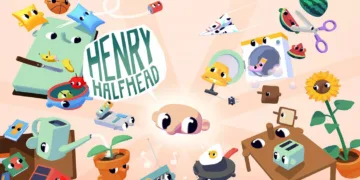

























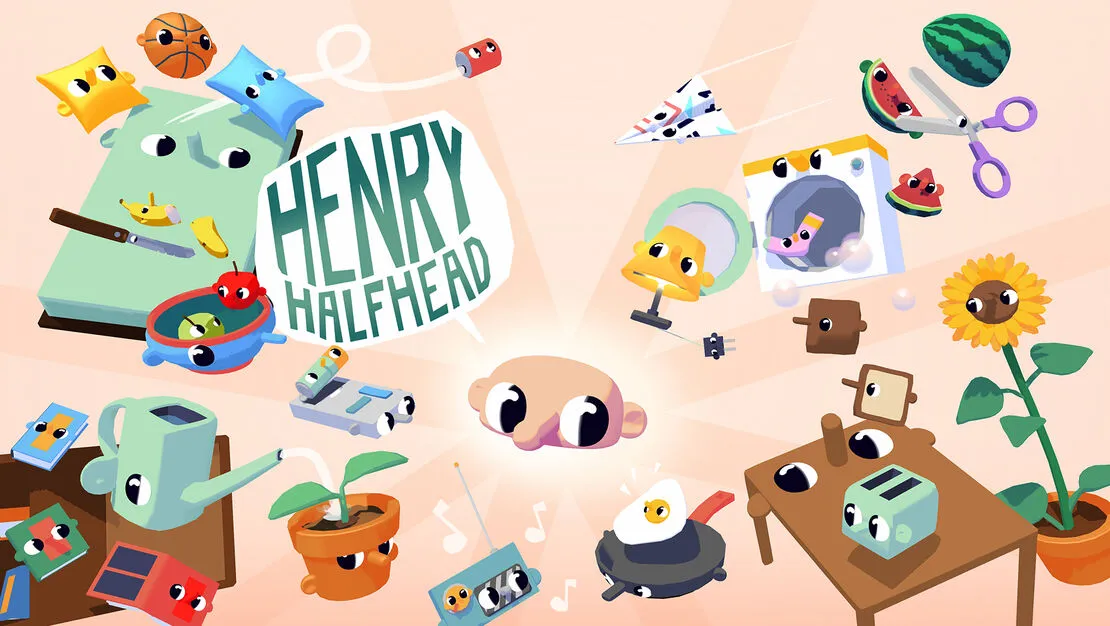

Most indie puzzle games hook you with clever mechanics or striking visuals. Henry Halfhead opens with something far stranger: a character who exists as nothing except half of a severed head. No torso, no limbs, no explanation for how he survives or why he looks this way. This Swiss-developed title, born from a 2018 student project, builds its entire experience around Henry’s ability to possess and control everyday objects throughout his lifetime.
The concept feels absurd until you start playing. Henry can slip into nearly any item within reach, transforming mundane household objects into tools for exploration and puzzle-solving. A rubber ball becomes your method of bouncing across rooms, while a pencil lets you roll and draw on surfaces. The game follows Henry’s journey from curious infant to working adult, using object possession as both gameplay mechanic and narrative device.
This biographical adventure spans roughly two hours across six chapters, each representing a different life stage. Players can tackle the experience alone or invite a friend for local co-op chaos, where two Henry characters can wreak havoc simultaneously. The game’s accessible controls and whimsical presentation mask a surprisingly thoughtful exploration of creativity, aging, and the ways society shapes our behavior as we grow older.
The Physics of Possession
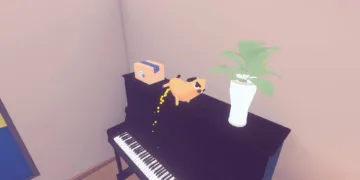
Henry Halfhead’s core mechanic revolves around a simple button hold that highlights every possessable object in your vicinity. With approximately 300 different items scattered throughout the game, each possession feels distinctly different thanks to carefully crafted physics systems. A rubber ball bounces with springy enthusiasm, while a heavy chair moves with awkward, furniture-appropriate weight. Soft beds offer gentle rebounds, and rolling pencils provide precise but limited mobility.
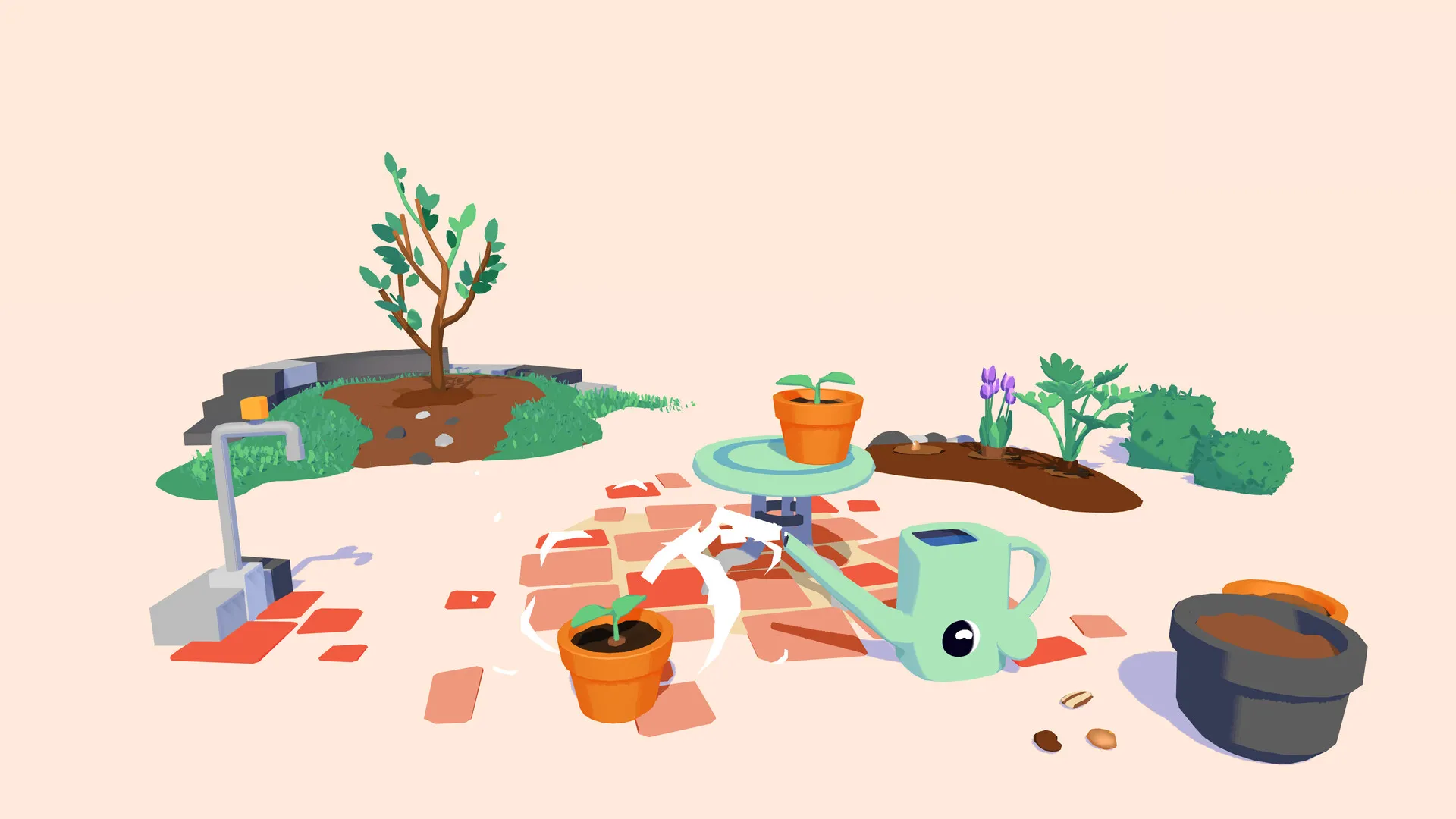
This variety extends beyond movement mechanics into contextual interactions. Electronics require power outlets before they function, knives can slice through food items, and art supplies let you create genuine drawings on surfaces. The game encourages experimentation by making nearly every visible object interactive, creating a sandbox environment where curiosity drives progression.
The possession system works seamlessly in most scenarios, with intuitive controls that make switching between objects feel natural. However, camera issues emerge in tighter spaces, where the fixed perspective can make precise movements frustrating. These problems become particularly noticeable during puzzles that require careful positioning or timing.
Local co-op amplifies the mechanical chaos by introducing a second Henry who can possess different objects simultaneously. This creates emergent moments where players must coordinate their chosen forms to solve puzzles or simply enjoy the absurdity of two possessed household items working together. The co-op implementation feels organic rather than tacked-on, with many puzzles offering multiple solution paths that accommodate different player approaches.
Growing Pains: A Life in Objects
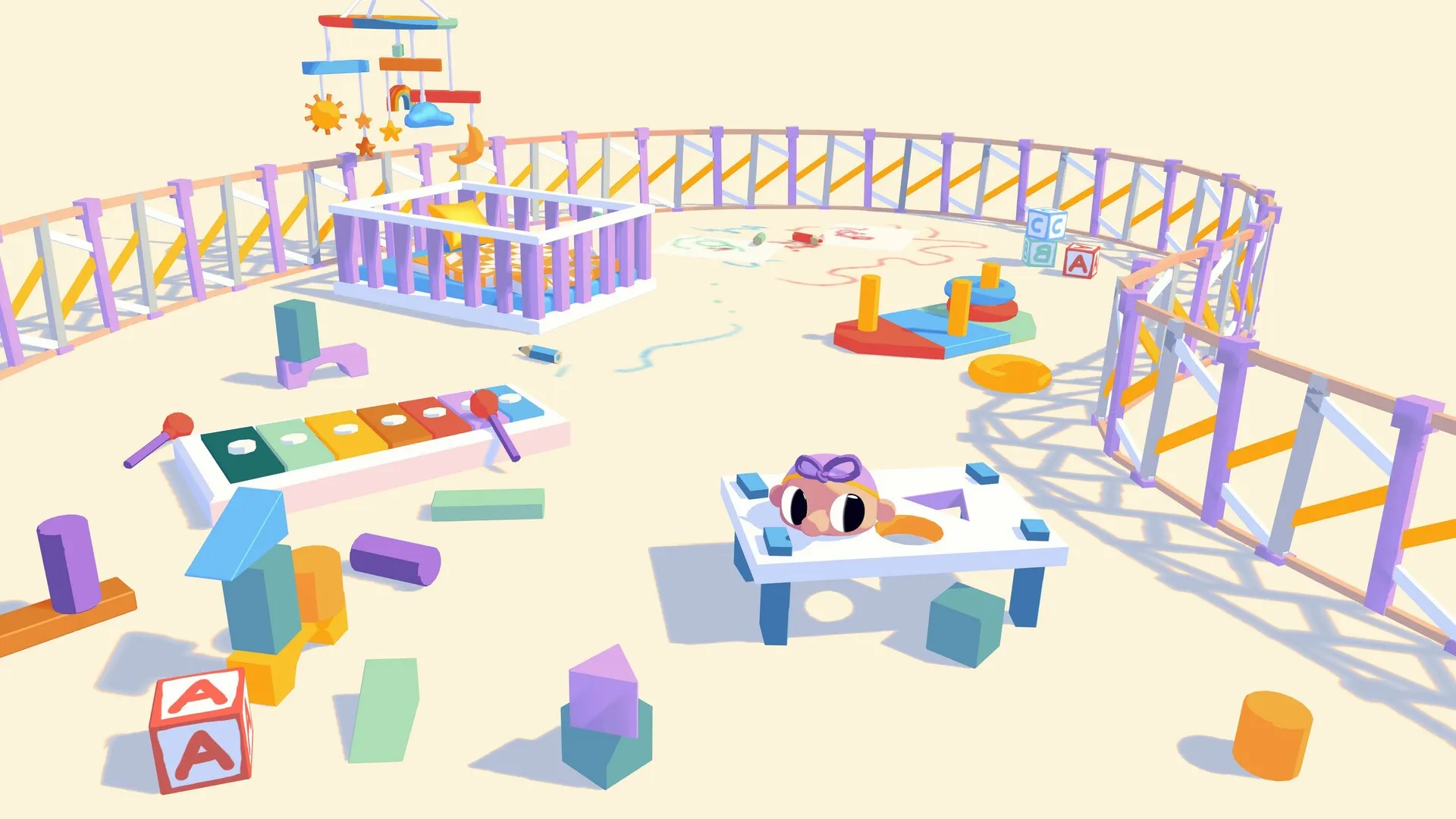
The narrative structure follows Henry’s aging process through six distinct life stages, each accompanied by environmental changes that reflect his growing responsibilities and diminishing freedom. As an infant, Henry explores without consequences, possessing toys and creating harmless chaos. School-age Henry must learn to follow rules, completing worksheets and sitting still when instructed. Adult Henry faces the monotony of work, sorting packages and riding depressing bus routes to his cramped apartment.
A warm narrator guides this journey with encouraging commentary that initially feels nurturing and appropriate. The voice provides helpful hints while celebrating player creativity and experimentation. However, as Henry ages and the world becomes more restrictive, this same gentle tone begins feeling patronizing. The narrator’s childlike cadence remains constant even as the gameplay shifts from joyful exploration to mundane task completion.
This tonal disconnect serves the game’s thematic purpose while creating an uncomfortable player experience. The visual design supports this progression through increasingly sterile environments. Early levels burst with colorful toys and possibilities, while later stages feature muted office spaces and cramped living quarters. The contrast highlights how creativity gets squeezed out of adult life, replaced by efficiency and conformity.
The game’s pastel color palette and minimalist UI design maintain clarity throughout these transitions. Objects remain easily identifiable against clean backgrounds, preventing visual clutter from overwhelming the possession mechanic. Environmental storytelling works through these design choices, showing Henry’s shrinking world without explicit exposition.
Player choice exists within this framework, but with meaningful consequences. Early chapters reward mischievous behavior and creative problem-solving. Later sections penalize the same actions, forcing players to conform to adult expectations or face subtle social disapproval from the narrator. This creates a genuine tension between maintaining childhood wonder and accepting grown-up responsibilities.
Half Empty or Half Full?
Henry Halfhead succeeds at creating memorable moments through its unusual central concept and charming presentation. The physics variety keeps object possession engaging throughout most of the experience, while the narrator adds personality that makes the world feel alive. The game’s accessibility makes it welcoming to players of all skill levels, and the co-op implementation provides additional entertainment value for shared sessions.
However, repetition undermines the initial magic as similar puzzle types recur with different cosmetic variations. Despite the impressive object count, many items function identically, making the variety feel less meaningful than it first appears. Camera problems in confined spaces compound these issues by making precision movements unnecessarily difficult. Some objectives lack clear feedback, leaving players uncertain whether they’ve completed tasks correctly.
The pacing reveals the game’s core problem: an idea that works brilliantly in short bursts but struggles to sustain engagement over its full runtime. The novelty of possessing household objects fades faster than the game anticipates, and the repetitive puzzle structures cannot carry the experience alone. The thematic content about aging and creativity provides emotional weight, but these deeper meanings may not resonate with players seeking pure entertainment.
Henry Halfhead feels perfectly suited for mobile platforms, where touch controls would enhance the tactile nature of object manipulation. The short play sessions and experimental gameplay align naturally with mobile gaming patterns. On traditional consoles, the experience sometimes feels stretched thin despite its brief runtime.
This title will appeal most strongly to players who enjoy experimental indie games like Katamari Damacy or Untitled Goose Game, where mechanical novelty and whimsical presentation take precedence over traditional game structures. Players seeking substantial puzzle challenges or extensive replay value should look elsewhere. Henry Halfhead offers a charming but brief glimpse into a creative concept that doesn’t quite reach its full potential, leaving players with fond memories of specific moments rather than a completely satisfying experience.
The Review
Henry Halfhead
Henry Halfhead presents a genuinely creative concept with charming execution that unfortunately runs out of steam before reaching its potential. The object possession mechanic creates delightful moments of discovery, and the thematic exploration of aging adds unexpected depth. However, repetitive puzzles and pacing issues prevent this from becoming truly memorable. The game succeeds as a brief, whimsical experiment that showcases innovative thinking, even if it doesn't sustain that innovation throughout its runtime.
PROS
- Creative object possession mechanic
- Charming visual presentation
- Thoughtful aging narrative
- Accessible gameplay
- Local co-op support
CONS
- Repetitive puzzle structures
- Camera issues in tight spaces
- Limited replay value
- Pacing problems
- Some unclear objectives