




























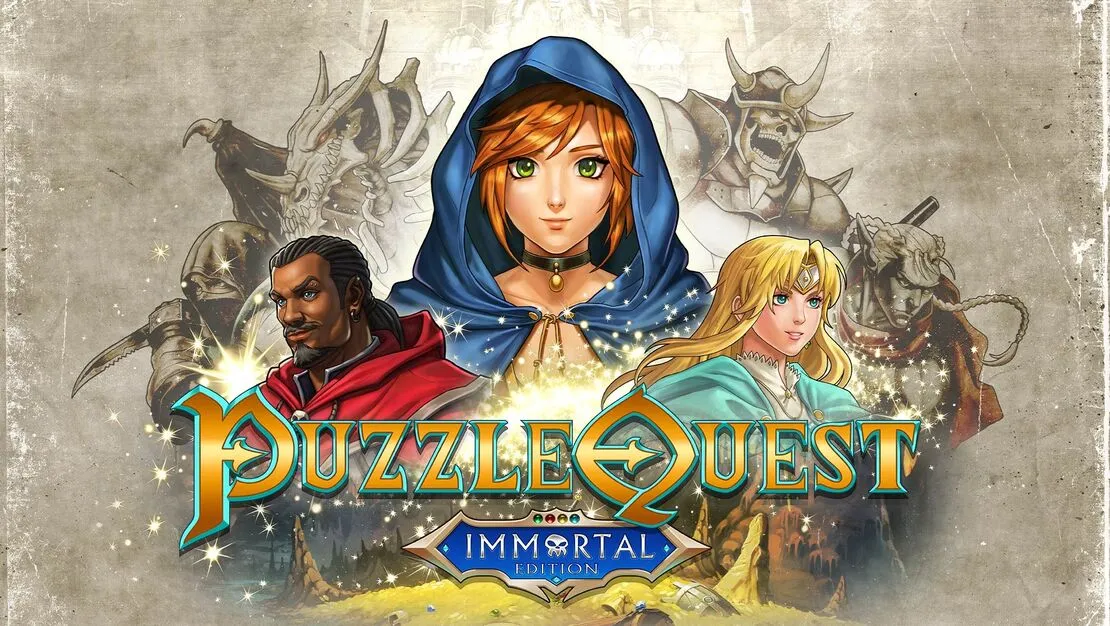

The match-3 RPG hybrid represents a fascinating case study in how gaming mechanics transcend cultural boundaries while maintaining their essential appeal across different contexts. Puzzle Quest: Immortal Edition, the 2025 definitive version of the 2007 classic, demonstrates how certain gameplay formulas achieve near-universal resonance by tapping into fundamental patterns of human engagement that exist independently of regional traditions.
Originally developed for the Nintendo DS and PlayStation Portable, Puzzle Quest emerged during a period when handheld gaming was establishing distinct aesthetic and mechanical languages separate from their console counterparts. This Immortal Edition consolidates content from Challenge of the Warlords, Revenge of the Plague Lord, and Attack of the Golem Lord expansions while introducing the Swordmaster class and over 40 new items. At $14.99 across multiple platforms, it positions itself as both nostalgic artifact and contemporary gaming experience.
The game’s core premise—resolving fantasy combat through strategic gem-matching on an 8×8 grid—reflects a uniquely Western approach to synthesizing disparate entertainment traditions. Where Eastern puzzle games often emphasize pure pattern recognition or meditative repetition, Puzzle Quest grafts competitive strategy and character progression onto its match-3 foundation. This hybrid form speaks to broader currents in globalized entertainment, where successful properties increasingly blend mechanical systems from different cultural contexts to create something that feels both familiar and novel across diverse markets.
Mechanical Harmony and Cross-Cultural Strategy
The turn-based combat system in Puzzle Quest operates according to principles that echo traditional board game design while embracing the immediate feedback loops characteristic of digital puzzle games. Players alternate turns matching colored gems that correspond to different types of mana—earth, fire, air, and water—which fuel class-specific spells and abilities. Skull gems deliver direct damage, purple gems provide experience points, and gold gems offer currency. Matching four or more gems in sequence grants additional turns, creating cascading opportunities for tactical advantage.
This mechanical structure reflects distinctly Western approaches to game design, where systematic complexity and player agency take precedence over intuitive flow or emergent simplicity. The thirteen available character classes—Warlock, Wizard, Priest, Warrior, Bard, Blood Mage, Druid, Elementalist, Knight, Monk, Paladin, Ranger, Rogue, and the new Swordmaster—each possess unique starting spells and favored skills that encourage distinct strategic approaches. A Warlock begins with Ice Bolt and progresses toward the powerful Raise Dead spell, while an Elementalist starts with Prismatic Bolt and can unlock Prismatic Blast.
The progression systems demonstrate how RPG mechanics can be successfully grafted onto puzzle frameworks without losing their essential character. Players allocate skill points across elemental masteries, improving mana generation, resistance, and storage capacity while also investing in battle effectiveness, cunning for wildcard efficiency, and morale for life points and spell resistance. Equipment systems provide statistical bonuses and new tactical options, creating the familiar RPG loop of incremental improvement and strategic customization.
What makes this mechanical synthesis culturally significant is how it bridges the gap between the immediate gratification associated with casual puzzle games and the long-term investment patterns typical of Western RPG design. Each battle becomes both an immediate tactical challenge and a step toward broader character development, satisfying different psychological reward structures simultaneously.
Structural Diversity and Cultural Continuity
The content structure in Puzzle Quest reveals how successful games can maintain thematic coherence while offering mechanical variety that prevents repetitive engagement. Beyond the core combat system, the game incorporates overworld exploration, story-driven quests, and side activities that each employ the match-3 framework in different configurations. The Citadel building system allows players to construct forges, mage towers, temples, and other structures that unlock new gameplay features like spell research and magical item creation.
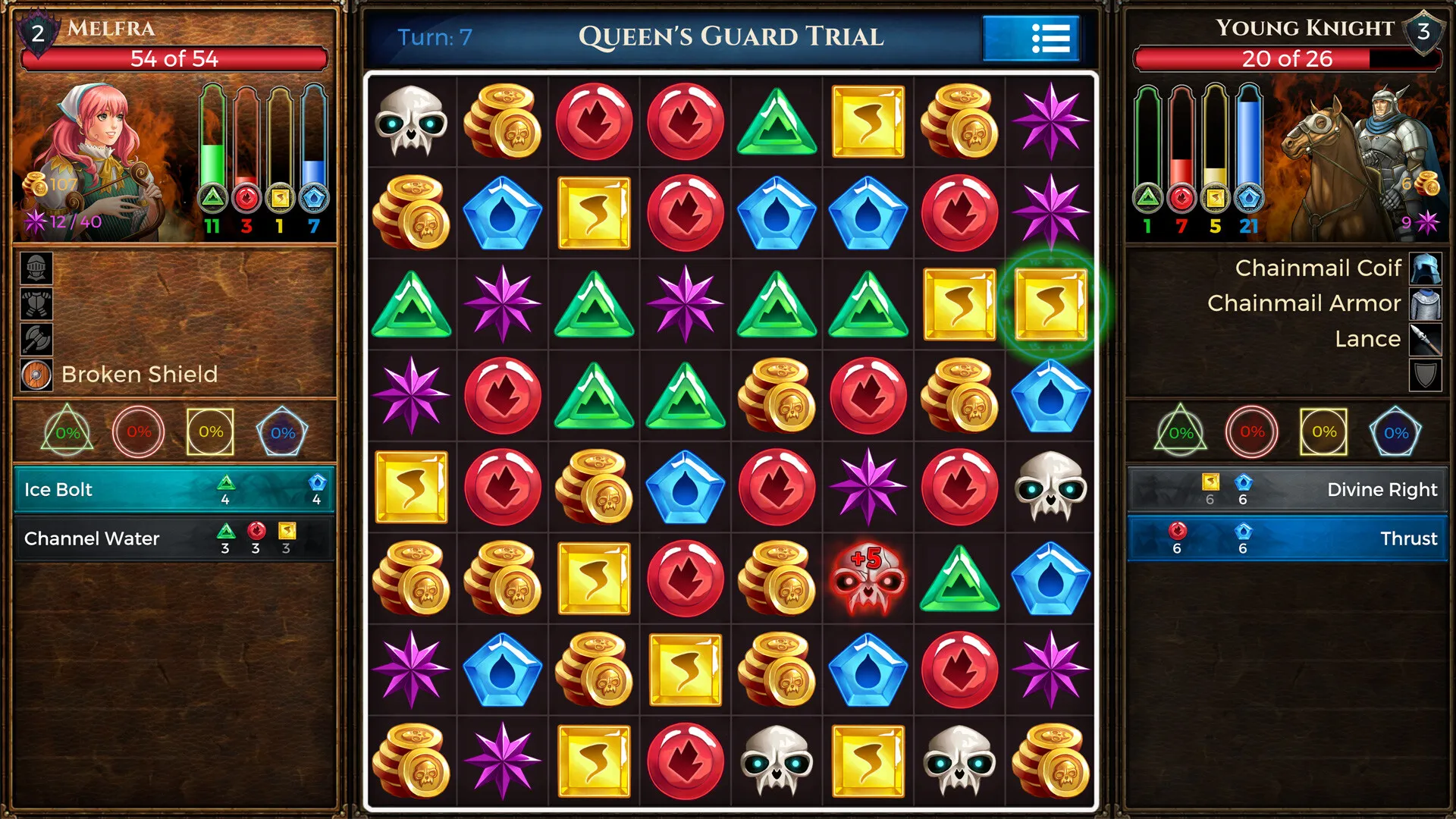
These alternative puzzle modes—board clearing challenges, solo mana collection objectives, and monster capture sequences—demonstrate how a single mechanical foundation can support diverse play patterns. The monster capture system, where players can learn enemy spells by successfully defeating and studying them, reflects traditional RPG design philosophy where exploration and experimentation yield mechanical rewards. Similarly, the spell research conducted at mage towers transforms the puzzle grid into a tool for magical discovery rather than combat resolution.
The story structure follows conventional fantasy RPG patterns, with a main questline supplemented by optional side content and exploration opportunities. While the narrative itself adheres to familiar Western fantasy tropes, the integration between story progression and puzzle mechanics creates moments where thematic content and gameplay systems reinforce each other. Battles against specific enemy types require different strategic approaches, making narrative encounters mechanically distinct rather than merely cosmetic variations.
The difficulty adjustment system, which allows players to modify challenge levels before each encounter while scaling rewards appropriately, reflects contemporary quality-of-life design principles that prioritize player agency over rigid progression structures. This flexibility acknowledges different cultural approaches to challenge and accomplishment, allowing the same content to serve players who prioritize narrative progression alongside those who seek mechanical mastery.
Aesthetic Translation and Technical Accessibility
The visual presentation in Puzzle Quest: Immortal Edition demonstrates how older gaming aesthetics can be successfully updated without losing their essential character or cultural specificity. The updated 4K artwork and refined user interface maintain the static portrait style and bright, colorful gem designs that characterized the original while improving clarity and definition. This approach represents a form of cultural preservation, maintaining visual languages that carry specific historical and regional significance while making them accessible to contemporary audiences.
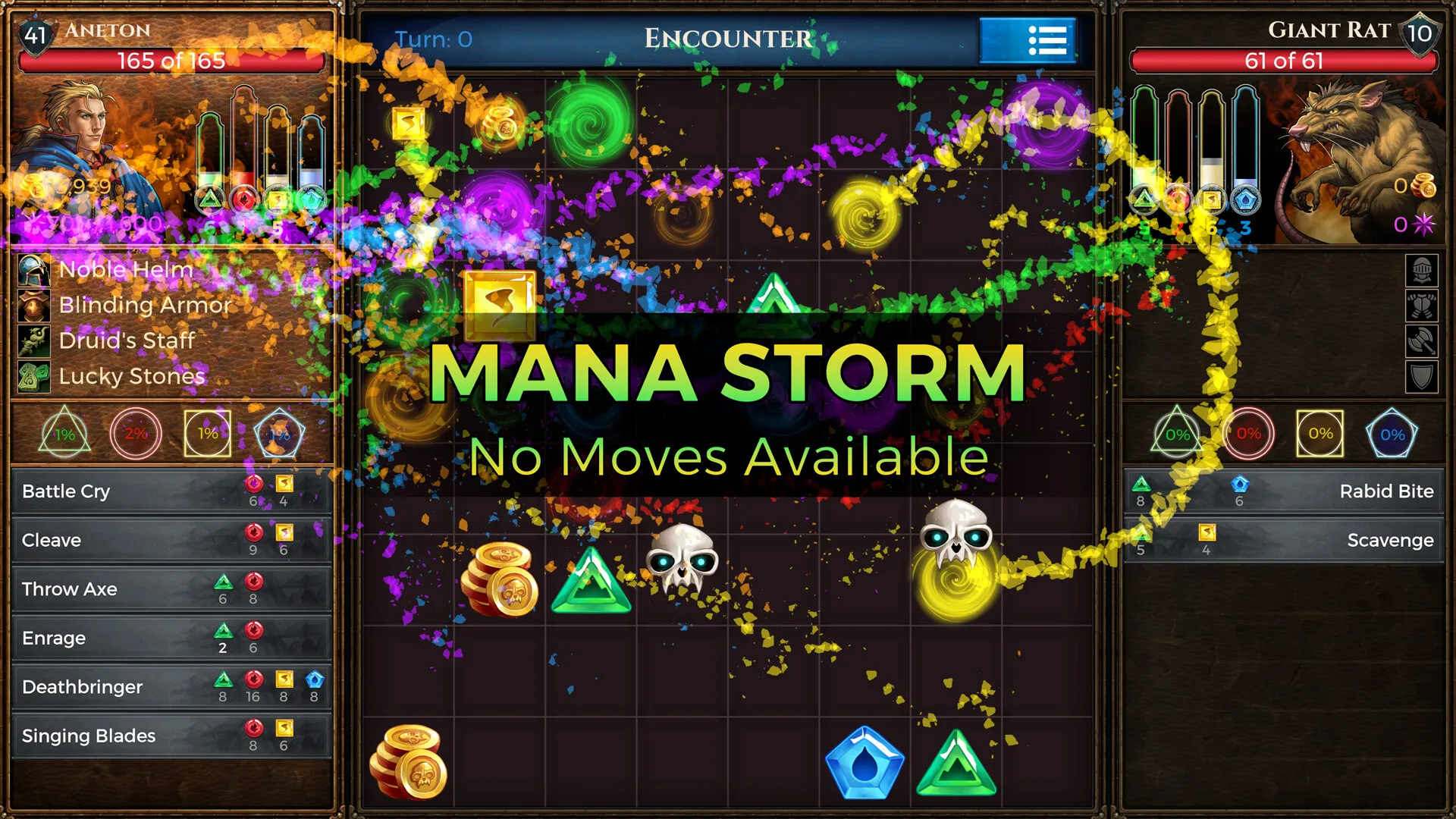
The fantasy art style draws heavily from Western medieval and mythological traditions, with character designs and environmental artwork that would be immediately recognizable to audiences familiar with European fantasy literature and gaming conventions. However, the gem-matching interface employs visual principles that transcend specific cultural contexts—color coding, geometric patterns, and spatial relationships that function similarly across different cultural frameworks for understanding visual information.
Audio design supports the fantasy setting with orchestral music that reinforces the medieval European aesthetic, though it remains understated enough to avoid interfering with the puzzle-solving focus. This balance reflects a pragmatic approach to cultural specificity, providing enough thematic reinforcement to maintain immersion while recognizing that extended puzzle sessions require audio that can recede into the background when necessary.
The control implementation across different platforms—mouse and keyboard on PC, controller support, and touch controls on Steam Deck—demonstrates technical accessibility that transcends regional hardware preferences. Cloud save functionality enables seamless transitions between different play contexts, acknowledging how contemporary gaming consumption patterns involve multiple devices and play sessions that may be interrupted and resumed across different environments.
Technical stability and performance appear consistent across platforms, with quality-of-life improvements like adjustable animation speed and improved inventory management that reflect modern design sensibilities while preserving the core gameplay experience. The absence of multiplayer modes, which were present in some previous versions, represents a notable omission that limits the social dimensions of play while focusing attention on the single-player content and progression systems.
The Review
Puzzle Quest: Immortal Edition
Puzzle Quest: Immortal Edition succeeds as both cultural artifact and contemporary gaming experience. Its mechanical synthesis of match-3 puzzles and RPG progression creates addictive gameplay loops that transcend regional design preferences. While the visual updates feel modest and multiplayer absence disappoints, the comprehensive content package and strategic depth justify its existence. This definitive edition preserves what made the original culturally significant while making necessary concessions to modern accessibility expectations.
PROS
- Deep strategic gameplay that rewards planning
- Extensive character customization across 13+ classes
- Comprehensive content package with multiple expansions included
- Excellent value proposition at $14.99
- Strong cross-platform technical implementation
CONS
- Modest visual improvements over previous versions
- Missing multiplayer modes from earlier releases
- Story follows predictable fantasy RPG conventions
- Gem clarity occasionally suffers in updated art style
- Limited innovation beyond quality-of-life improvements