


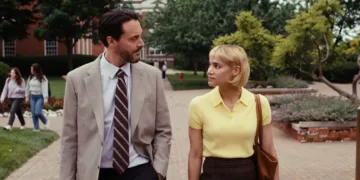

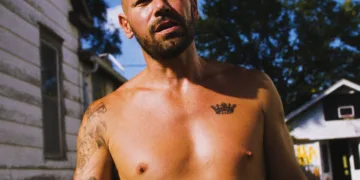
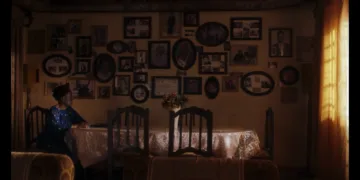

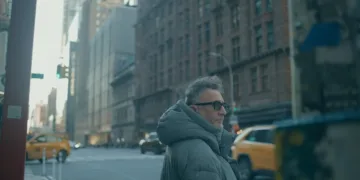











The question of what a family owes its most volatile member anchors David Vincent Smith’s feature debut, He Ain’t Heavy. Expanded from an earlier short, the film stares straight into the cost of substance dependence and keeps its gaze fixed. Smith builds the drama inside a narrow, resource-strapped frame: one rotting house in rural Western Australia functions as both cell and crucible, a pressure chamber for morality. The claustrophobia is deliberate, and it works.
Jade (Leila George) lives inside the aftershocks of her brother Max (Sam Corlett). He is deep in violent drug dependence, and she chooses an extreme intervention: sedate him, drag him to their late grandparents’ house, and lock him inside an empty room. Their mother Bev (Greta Scacchi) complicates the plan; years of denial and soft indulgence have shaped the terrain Jade must now cross. The piece plays like domestic tragedy on an antique scale, and it arrives, the film suggests, from lived experience.
The Ethical Labyrinth of Rescue
Jade’s choice functions as a self-rescue maneuver (save him to save herself). Thirty years old and stalled while peers build ordinary lives, she keeps pushing a family boulder uphill. Formal avenues have failed, so she stages one last attempt. The film treats that decision as an experiment in applied ethics, small in scale but enormous in consequence.
Max answers with curses and force. The film renders him as a loved man eclipsed by a hostile persona, and it keeps the distinction intact. Jade’s loyalty orbits the man named Max; her struggle targets the consuming condition that keeps replacing him with a counterfeit version she calls Not-Max. Glimpses of earlier tenderness, a shared cigarette or a stray fragment of song, flicker like burned film, proof of someone worth hauling back from the edge. The split between person and affliction becomes the film’s guiding idea.
Jade and Bev argue two models of care. Bev, fragile and well-meaning, confuses comfort with help. She clutches an old picture of her little boy and cannot square it with the danger in front of her. Jade treats the situation with a cool, almost surgical logic. The question sits on the table without decoration: which wound cuts deeper, walking away and letting death approach or locking a door and forcing a chance at survival? The film refuses easy moral math and watches the bruises accumulate.
The Theatre of Confinement
What the actors do here feels like excavation. Sam Corlett’s Max is ferocious in body and mind, yet he refuses empty theatrics that often cling to addiction portrayals. He keeps a small glimmer of childlike innocence flickering under the rage, which keeps the audience invested in the possibility of repair. The junkie affect lands with unnerving credibility. The performance suggests a human being trapped inside a costume that will not come off.

Leila George shoulders the heaviest weight. Exhaustion rides every line she speaks, but an austere, almost bureaucratic resolve keeps her moving. She becomes the jailer because the story offers no other workable role. Greta Scacchi, as Bev, plants the film in lived texture; the beaten-down mother negotiates instinct and consequence in every scene, and the tension reads without fuss. The trio forms a closed system where every choice heats the room another degree.
Smith’s staging squeezes maximum effect from a single address. The grandparents’ home, layered with memory, turns into a theatre for psychological warfare, and the tightness becomes hard to breathe through. The direction keeps two legitimate outlooks, the daughter’s and the mother’s, in measured counterpoint. Writing and performance carry the load by design, and the film holds that bet with steady hands. It announces a filmmaker of promise from Australia, confident enough to trust actors, language, and space.
Momentum and the Mythology of Suffering
The story speaks to an Australian reality, which gives the personal ordeal immediate cultural charge. A private attempt to confine chaos echoes a public struggle to contain it inside institutions; the house becomes a small-scale model of a system under strain. The film treats suffering as a kind of household mythology that everyone already knows, even if no one wants to name it.
The script stays locked and focused, with a few beats that stretch plausibility. Questions arise around how easily Max might break out or how alert the police might be, small concessions that preserve the chamber intensity. The pace overcomes those bumps; momentum accumulates, and the emotional truth takes priority. Once that current grips the viewer, the quibbles recede. Pressure becomes propulsion, and propulsion becomes meaning.
The atmosphere stays severe, often punishing, yet the film keeps a plainspoken human core. One image lingers: Bev washing Max’s self-inflicted wounds, a secular Pietà that translates maternal love into triage. A short flashback nods toward systemic breakdown, with Max languishing in a crowded emergency ward during a panic attack; the crisis begins upstream, long before the lock clicks. The film lands as a bruising piece of work. After the ordeal, the final sense of committed peace feels earned.
The movie is an intense Australian drama titled He Ain’t Heavy, which explores the devastating impact of drug addiction on a family. Inspired by true events and an expansion of writer/director David Vincent Smith’s short film, I’m Not Hurting You, the film centers on a desperate sister, Jade (Leila George), who kidnaps her violent, drug-addicted brother, Max (Sam Corlett), and locks him in an empty house in a last-ditch effort to force him through detox. The conflict is heightened by the presence of their well-meaning but coddling mother, Bev (Greta Scacchi). The film had its world premiere at the Sydney Film Festival in June 2024 and was released theatrically in Australia on October 17, 2024, distributed by Bonsai Films.
Credits
Title: He Ain’t Heavy
Distributor: Bonsai Films, Gravitas Ventures
Release date: October 17, 2024 (Australia theatrical)
Rating: MA
Running time: 103 minutes
Director: David Vincent Smith
Writers: David Vincent Smith
Producers and Executive Producers: Jess Parker, Kristina Ceyton, Jonathan Page
Cast: Leila George, Sam Corlett, Greta Scacchi, Liam Graham, Alexandra Nell, Christopher de Groot
Director of Photography (Cinematographer): Michael Tessari
Editors: David Vincent Smith
Composer: Christopher de Groot
The Review
He Ain't Heavy
The film is a gut-wrenching, single-location triumph fueled by raw performances. Smith’s debut turns a desperate, ethically compromised act into a profound inquiry into the limits of love and familial duty. The intense, unflinching focus on addiction is difficult viewing, yet the truth in its central conflict makes the harrowing journey worthwhile. A powerful piece of domestic cinema.
PROS
- Exceptional, emotionally raw performances from the central trio (Corlett, George, and Scacchi).
- Masterfully utilizes a single, tight location to create visceral claustrophobia and pressure.
- Profound exploration of the disease of addiction as an entity separate from the person.
- The direction is intelligent, balancing difficult subject matter with strong, compelling dramatic momentum.
- Possesses a genuine, personal feeling that enhances the film's authenticity.
CONS
- Contains narrative gaps concerning real-world elements like police procedures or Max's physical ability to escape.
- The film's atmosphere is consistently dark, unrelenting, and may be emotionally draining for some viewers.