





























Luv Ya, Bum! opens like a case file. The subject is O.A. “Bum” Phillips, public image under examination, myth checked against record. A Stetson sets the silhouette, an index of a self-fashioned Texas persona. The film traces his ascent through the Houston Oilers years from 1975 to 1980, the “Luv Ya Blue” surge that converted a faltering team into steady AFC playoff presence.
Directors Sam Wainwright Douglas, David Hartstein, and Andrew Alden Miller assemble archival footage with present-day interviews, a layered evidentiary chain. Voices include Terry Bradshaw and Peyton Manning. The mission is straightforward: chart the man, the work, and the wake he left across the league and within his own family. Character study, yes. Also a history lesson conducted with tape, film grain, and memory.
The Soft Focus of Leadership
The film situates Phillips against the era’s usual ethical codes. He resisted the ritual of “macho bravado” in football leadership. Earlier models, including Sid Gillman, favored yelling and cursing, a method calibrated to fear. Phillips instituted encouragement. The shift functions as an intervention in system design. Coach as father figure. Coach as friend.
Skeptics read the softness as liability. Player response tells a different story. Loyalty rises. Work rate spikes. The so-called “misfit toys” produce at the highest level. His line, “Winning is only half of it… having fun is the other half,” captures a process ethic, performance measured by joy and craft.
The portrait never drifts from pragmatism. Phillips adds technical instruction. His defensive “numbers technique” becomes part of standard practice, evidence that kindness rests on structure. The film frames a blunt inquiry: can compassion secure results in a collision sport? The Phillips record supplies an affirmative.
Chiaroscuro of the Astrodome
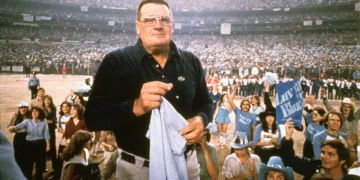
The late 1970s arrive with saturated nostalgia. Houston moves like a boomtown, identity built at speed. The Astrodome turns into a cinema of its own, an architectural camera obscura. Archival angles lean toward expressionistic framing. That giant inverted bowl fills with “Luv Ya Blue,” anthem and crowd fusing into a single pulse that stamps the city’s self-image.
The timeline narrows to the rivalry with the Pittsburgh Steelers. Games play hot, respect stays intact. The film draws clean symmetry here, and Bradshaw’s admiration for Phillips lands as the key exhibit. Earl Campbell receives a focused sequence that studies mass, acceleration, and punishment, the body as unstoppable argument.
Phillips’s quip about roll call distills the legend with dry wit, a coach measuring greatness with attendance logic. The Renfro catch and non-catch stands unresolved by design. A perfect noir object: evidence exists, certainty recedes. The Astrodome lights do the rest. Brightness isolates. Shadows thicken. Memory flickers between them.
Lineage and Veracity of Witnesses
The directors apply a classic documentary chassis. Authority arrives early through a deep bench of talking heads. Peyton Manning, Jerry Jones, J.J. Watt, among others, speak as a kind of gridiron chorus, repeating a single throughline of character. Dennis Quaid’s narration supplies regional weight and unhurried tempo. The craft choice is clear: let testimony build cadence, then cut to tape for proof.
The narrative pivots to inheritance. Wade Phillips appears, Super Bowl head coach. Wes Phillips appears, NFL offensive coordinator, Super Bowl champion. The achievements surpass the father’s ultimate trophy case and point back to the same principle of encouragement.
The film treats this as a trait that transfers across generations. The structure declines the usual arc of exposé or scandal reveal. Integrity holds its shape. The last image is steady: Bum Phillips as a class act, identity secured by the loyalty of the people who played for him.
The documentary film Luv Ya, Bum! chronicles the life and career of legendary NFL coach O.A. “Bum” Phillips, focusing heavily on his transformative tenure with the Houston Oilers from 1975 to 1980, the “Luv Ya Blue” era. The film features extensive archival footage and interviews with numerous football icons, illustrating Phillips’ unconventional, family-first coaching philosophy. It premiered at SXSW in 2025 and was released in select theaters on October 24, 2025.
Credits
Title: Luv Ya, Bum!
Distributor: Blue Harbor Entertainment (for VOD), AMC Theatres (Theatrical), Fandango (Theatrical)
Release date: October 24, 2025
Rating: Not Rated (NR)
Running time: 86 minutes
Director: Sam Wainwright Douglas, David Hartstein, Andrew Alden Miller
Writers: Andrew Alden Miller
Producers and Executive Producers: Paul Jensen, David Hartstein, Vance Howard (Executive Producer)
Cast: Terry Bradshaw, Earl Campbell, Jerry Jones, Archie Manning, Peyton Manning, Dan Pastorini, Wes Phillips, Wade Phillips, Dennis Quaid, J.J. Watt
Director of Photography (Cinematographer): Mark Burns
Editors: Sam Wainwright Douglas, Don Swaynos
Composer: Brett Orrison
The Review
Luv Ya, Bum!
The film is a masterful character study, framing Phillips' unconventional leadership as a moral question for modern sport. It is structurally sound and rich in archival texture. The sheer volume of high-profile testimony affirms his status. The narrative stands as an essential document of the "Luv Ya Blue" era and a compelling argument for an ethical coaching model.
PROS
- A philosophically resonant character study on leadership through kindness.
- Masterful deployment of archival footage creates a palpable atmosphere.
- An impressive roster of high-profile interviewees provides credible context.
- Successful analysis of the enduring family legacy across generations of coaching.
- The film captures the intense nostalgia of the 1970s Houston "boomtown."
CONS
- The narrative is sometimes too frictionless, lacking the critical tension of contradiction.
- Certain historical details, such as the specifics of his Oiler firing, remain hazy.
- The overwhelming praise from subjects occasionally sacrifices objective distance.