






























The 1960s Mexico City of No One Saw Us Leave feels lacquered and airless, a city of polished façades and closed rooms. From a true story, the drama opens with a quiet rupture in that surface. Leo Saltzman removes his children, Isaac and Tamara, from their home and sets a course for Paris. A morning routine never enters the picture.
The move reads as premeditated abduction, the terminal event of a hollow marriage. Their mother, Valeria Goldberg, comes back to an empty house. Missing passports confirm her fear. Her husband has taken the children. That single action lights the fuse for an international hunt driven by maternal desperation. The project frames itself as an inquiry into family dysfunction where the stakes stay human and immediate.
Patriarchy’s Proxy War
The kidnapping arrives like an order handed down. Leo acts under his father’s will. The series marks the reach of Samuel, the Saltzman patriarch, a wealthy figure who demands the children be removed. The marriage sits on the other side of that power: a cold merger of two prominent Jewish families, a dynastic arrangement without affection.
Flashbacks show partners living in silent proximity, sharing space while sharing little else. A specific spark appears. Valeria has an affair with her brother-in-law, Carlos. The abduction functions as weaponized revenge, an honor claim after public embarrassment. Children become assets in a dispute among adults. Status turns into a legal and social instrument.
Samuel stands behind his gate and tells Valeria she will never see her children again. The pattern recalls boardroom politics applied to the domestic sphere, a kind of private Cold War where negotiation yields to coercion.
The Agent and The Apparatus
Valeria, played by Tessa Ia, carries the emotional mass of the series. She drives the narrative. Desperation hardens into defiance, and that defiance becomes action. Her father, Moishe, hires a Mossad agent and counsels caution. She insists on joining the pursuit in Paris.

Crisis transforms her. Leo, played by Emiliano Zurita, sits in a different register. The show sketches a man of profound weakness, a vacuum of will. He phones his father for instructions. In Paris he proves inept as a caregiver, adrift with children who want their mother.
The frame keeps returning to Samuel, played by Juan Manuel Bernal. He operates as a manipulator, a puppeteer who corrodes his son’s life while tightening lines of control. Power becomes the text: the patriarch, the proxy, the apparatus. A family becomes an institution with marching orders.
A Beautiful Document of Nothing?
The story fits inside five episodes, a choice that keeps the line tight. The thriller mechanics move with cat-and-mouse clarity across Europe. Craft stands out. Costumes and production design rebuild the 1960s with expensive precision, and the cinematography renders the period with rich, pleasing images.
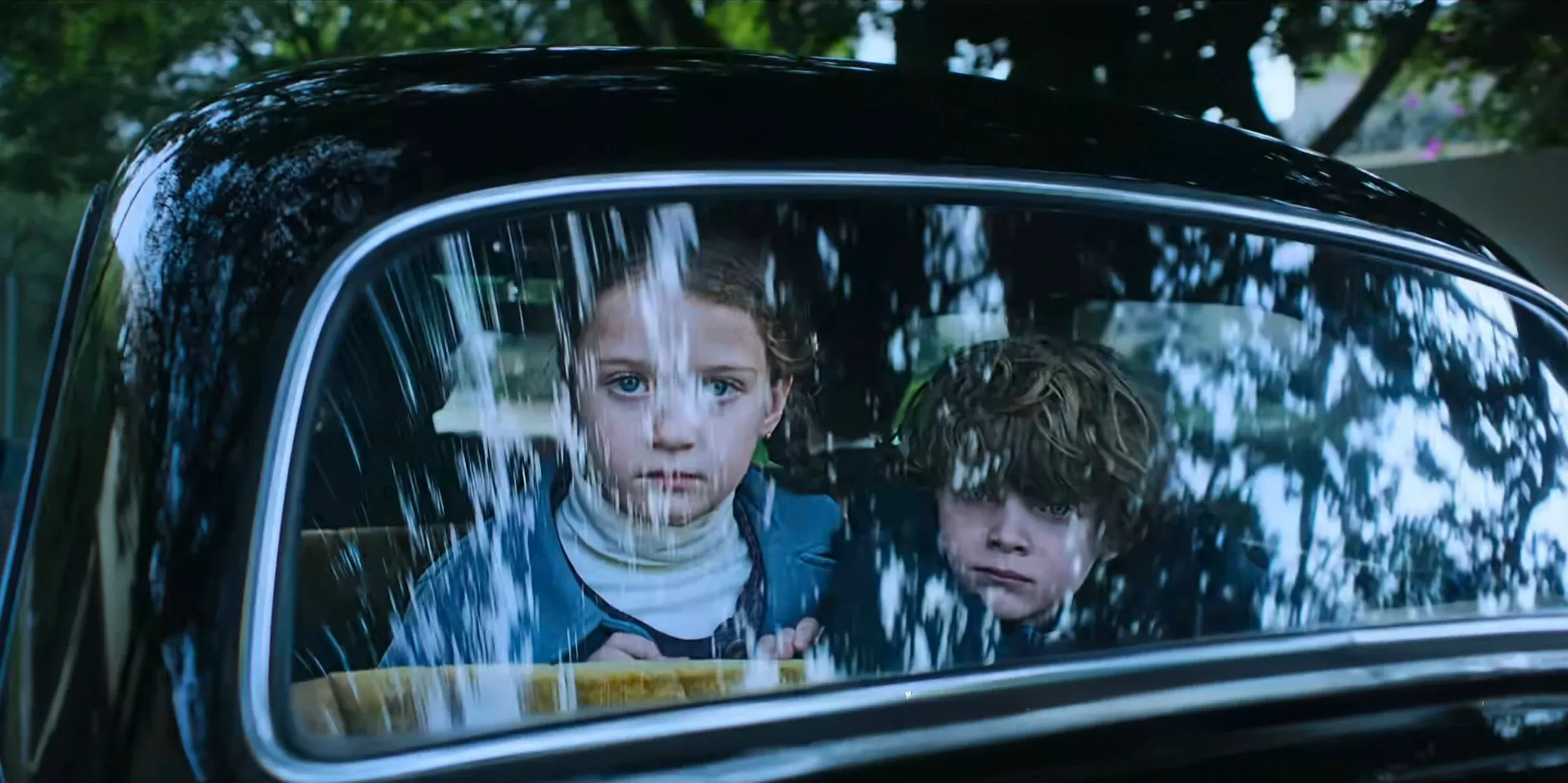
The series looks immaculate. A question lingers. The source is the autobiographical novel of the real-life daughter. That origin raises the function of this art. The material can read as a study of intergenerational trauma and the objectification of children. It can also read as a high-budget airing of a single family’s misery. The work searches for a firm philosophical anchor and rarely secures one.
Pain appears with perfect framing and careful staging, yet the argument remains blurry. The audience is left testing an uneasy idea: beautifully crafted suffering that may point to a pattern in patriarchal cultures, or simply document a wound that resists interpretation. Both readings sit side by side, and the series invites the viewer to live with that contradiction.
No One Saw Us Leave (original title: Nadie nos vio partir) is a Mexican limited series that premiered on Netflix on October 15, 2025. The series is a psychological thriller and family drama based on the autobiographical novel by Tamara Trottner. It recounts the true story of Valeria, a woman from the Mexican elite in the 1960s, whose husband kidnaps their two young children as an act of revenge, leading to a desperate, years-long international search. The series is produced by Alebrije Producciones and Peninsula Films.
Full Credits
Director: Lucía Puenzo, Nicolás Puenzo, Samuel Kishi Leopo
Writers: María Camila Arias, Tamara Trottner
Producers and Executive Producers: María Camila Arias, Monica Lozano, Pepe Bastón
Cast: Ana Claudia Talancón, Tessa Ía, Alejandro Speitzer, Emiliano Zurita, Alexander Varela Pavlov, Flavio Medina, Juan Manuel Bernal, Gustavo Bassani, Karina Gidi, Lisa Owen, Marion Sirot, Natasha Dupeyrón
The Review
No One Saw Us Leave
No One Saw Us Leave is a visually polished and tightly constructed thriller, anchored by a fiercely compelling performance from Tessa Ia. It excels in recreating its 1960s setting and maintaining a tense chase across Europe. However, its aesthetic precision masks a philosophical void. The series meticulously documents a painful family collapse but never decides what it wants to say about it. The result is a beautiful, harrowing, and ultimately hollow viewing experience, a story about suffering that struggles to find its own meaning.
PROS
- Successfully recreates the 1960s Mexico and European setting.
- Tessa Ia delivers a powerful and desperate portrayal of Valeria.
- The 5-episode miniseries format keeps the thriller plot tight and engaging.
- The show is visually rich and well-shot.
CONS
- Lacks a clear message or deeper purpose beyond retelling a true story.
- Leo is portrayed as an ineffective and reliant character, diminishing the central conflict's complexity.
- Feels more like airing a specific family's private drama than telling a story with universal resonance.
- Outside of the central family members, most characters feel one-dimensional.