






















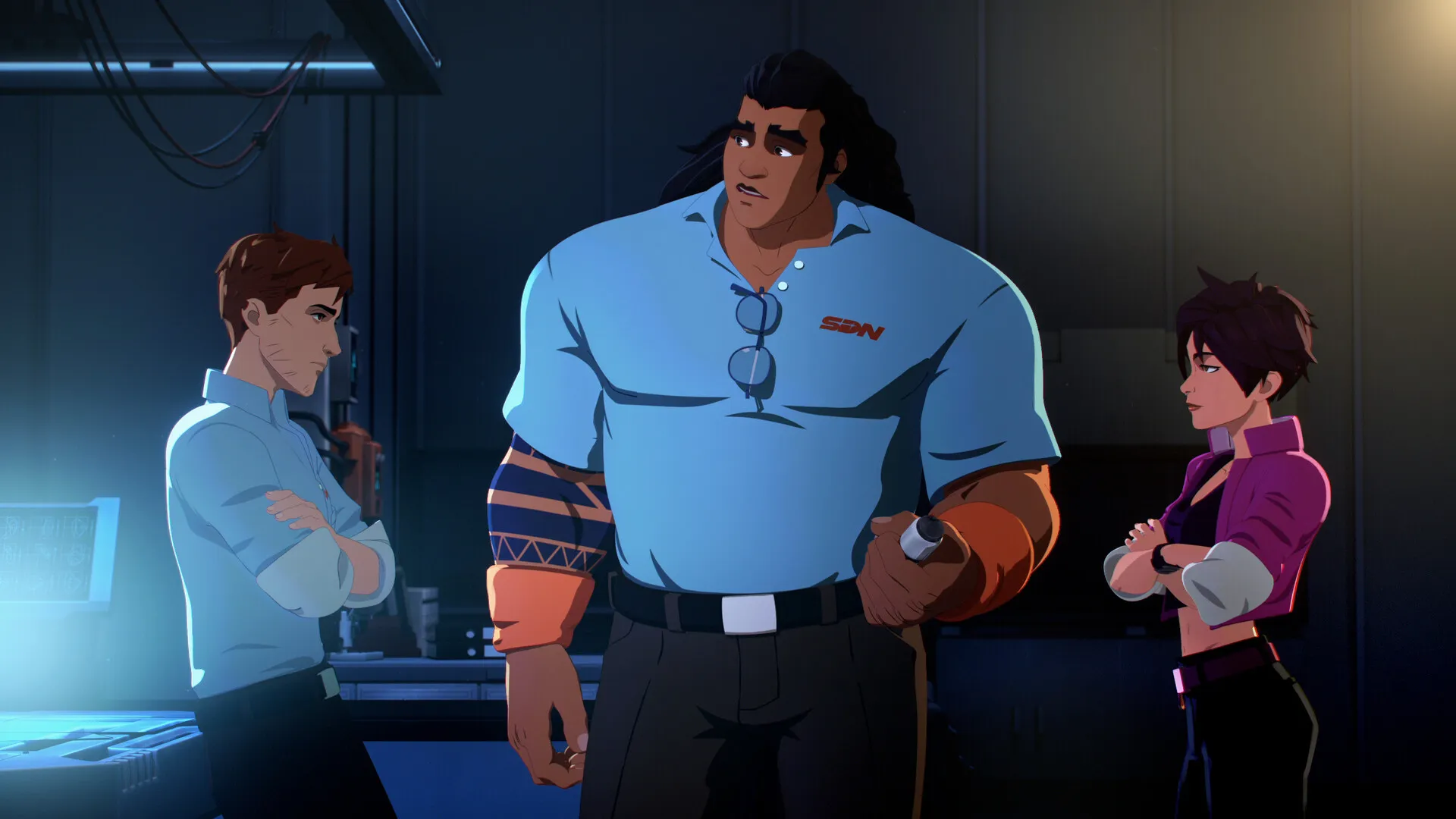

Dispatch retools the superhero premise into a management-focused adventure. The player serves as a handler for the SDN corporate agency, overseeing missions rather than fighting on the front line. The story follows Robert Robertson, formerly Mecha Man, who receives a second chance after a career-ending mishap.
His assignment is the “Z-team,” a crew of rehabilitating ex-villains. AdHoc Studio, staffed by veterans of Telltale Games, presents the game in episodic form with a cinematic, choice-driven structure. The writing leans sharp and profane, and the tone includes adult themes that match its mature rating.
Narrative Foundation and The Corporate Cape
The central perspective examines life after heroism and the routine grind of agency work. Robert, a third-generation mech pilot, loses his heroic career when Shroud destroys his suit. SDN hires him as a dispatcher and places him over the agency’s lowest-performing squad.
This setup frames a workplace comedy with dramatic edges, built around a flawed lead who manages a gallery of losers with potential. The world focuses on money, burnout, and the emotional cost of hero work, a grounded angle closer to the muted humanity of early Invincible than the oversized scale of an MCU film.
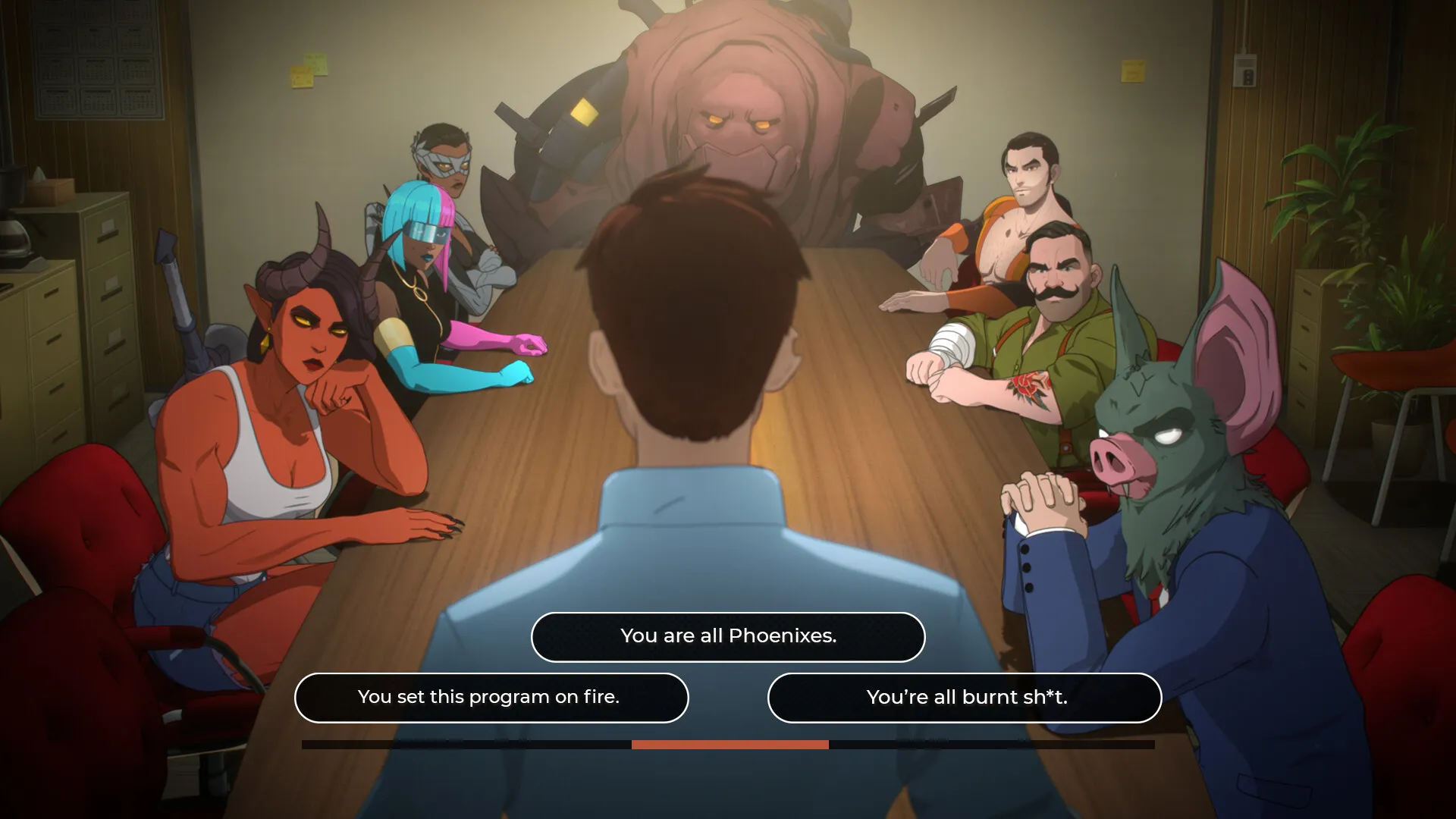
Dialogue carries much of the personality. Characters trade quick barbs and crass jokes that fit the rating, and those exchanges sketch relationships fast. Robert’s scenes with the ex-villain roster create the core draw. Invisigirl, for example, comes across as sassy and violent and clearly needs structure. Player outcomes affect that growth. Successful calls and tough choices shift how the Z-team develops, which turns the cast into a set of arcs the player actively steers.
From a story design angle, the season establishes a clean loop for character progression. Each interaction tests Robert’s competence as a dispatcher and mentor. The frame doubles as a rehabilitation story for his team and a recovery arc for him. The comparison points inside the text make sense here. The series tone mirrors Invincible’s smaller human stakes, and the narrative cadence follows Telltale’s tradition of branching conversations and remembered choices.
Dual Gameplay: Choices and Coordination
The core loop splits between choice-driven scenes and a top-down management layer. The narrative segments use time-limited dialogue selections. Exploration is removed, and direct movement is absent. Player responses set relationships and pacing, and the familiar “X will remember that” notification flags moments that may carry weight later.
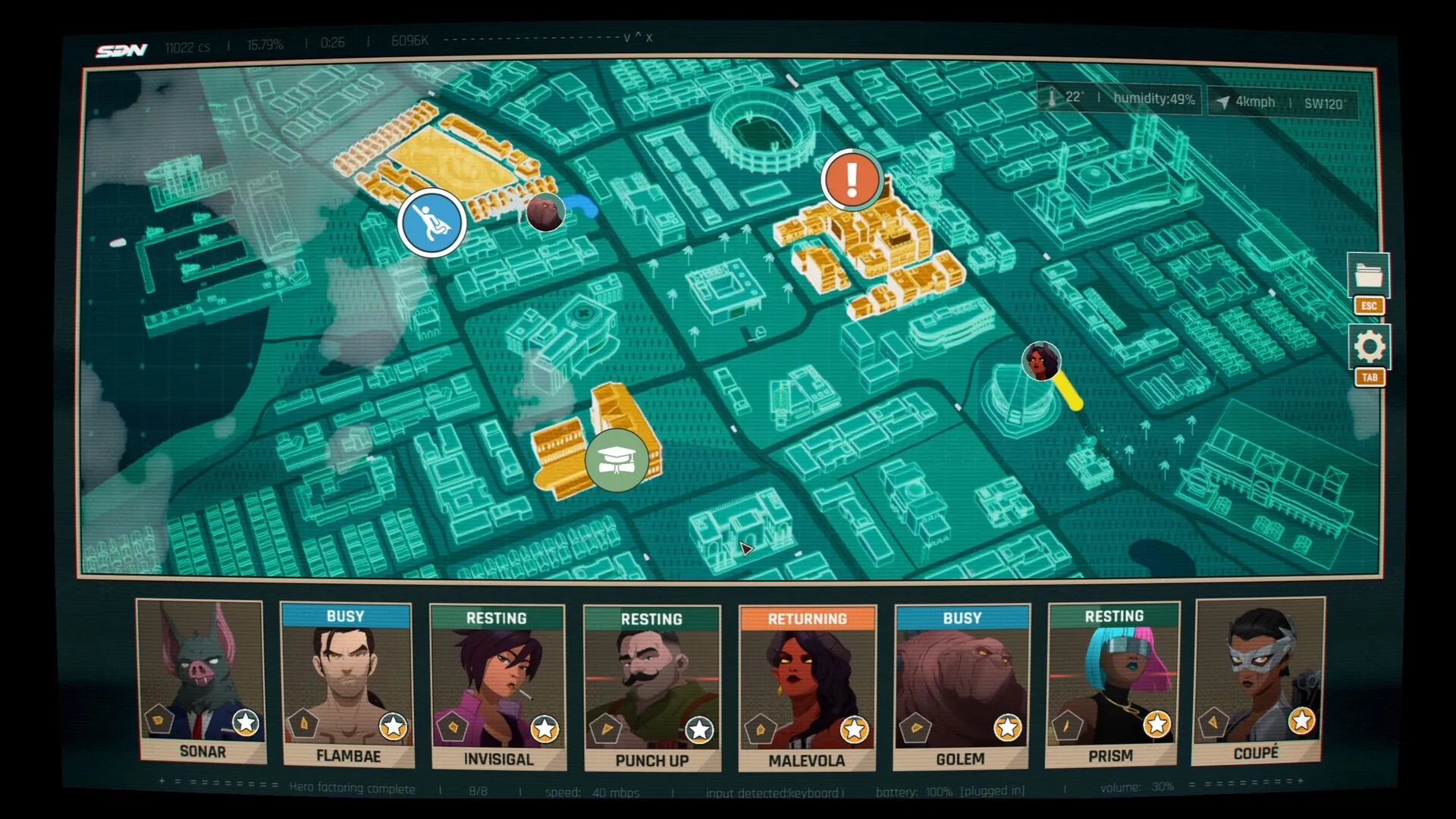
The other half operates as a superhero dispatch sim presented from an isometric map of Los Angeles. Incidents appear on timers, ranging from a bank robbery to a PR seminar. Mission success depends on aligning hero stats with requirements. Attack, Valor, and Charisma become levers that turn this layer into a light tabletop-style problem set. The design introduces a clear resource model.
Missions take real time to resolve, and heroes enter a rest period afterward. The player must juggle availability and risk. Sending multiple heroes raises the chance of success while shrinking the bench for the next call. The result is a steady pressure that mirrors Robert’s frazzled mindset as he tries to keep the Z-team productive.
Compared with classic Telltale formats that emphasized exploration inside scenes, Dispatch trims movement and pivots to scheduling. The trade creates a different rhythm. Dialogue decides tone and relationships, while the map decides outcomes and bandwidth. The cohesion between those halves holds because each system feeds the other. A strained conversation can push the player to protect a fragile character in the next assignment. A thin roster after a successful multi-hero deployment can shape the next dialogue choice into a plea for patience or a reprimand for mistakes.
Technical Polish and A-List Performances
Presentation depends on strong audio and a clear visual style. Voice work carries much of the narrative weight and lands with precision. Aaron Paul gives Robert a mix of wit and fatigue. Laura Bailey channels Invisigirl’s anger. Jeffrey Wright appears, and members of the Critical Role crew round out the roster.
The performances lift the punchy script and sharpen both jokes and quiet beats. The visuals read like a polished streaming animated show, with clean animation that sells character reactions and comic timing.
Accessibility features reinforce the story-first approach. Players can turn off Quick-Time Events, which some critics viewed as weak additions to action. The hacking minigame allows unlimited retries. These toggles let players concentrate on dispatch strategy and branching conversations. Early episodes did surface minor technical issues, including screen tearing and audio desync, though these did not meaningfully undercut the experience described here.
Promising Trajectory and Lingering Questions
The opening chapters combine a strong premise, the ex-hero who manages ex-villains, with a dispatch system that feels distinct. Familiar superhero ideas sit inside the structure of an office comedy, and that blend supports the game’s tone. The stat juggling, rest timers, and snap assignments produce a satisfying challenge that fits the managerial fiction.
Writing and presentation set a high bar for future installments. Fans of narrative choice games shaped by the Telltale lineage should find plenty to like as the season continues. One question remains, and it trails every branching story of this type. Do the choices carry long-term weight once the plot tightens near the end of the season. The early episodes build a strong hook, and the lasting impact of those decisions will decide how well Dispatch pays off its pitch.
The Review
Dispatch
Dispatch delivers a high-caliber narrative experience, driven by exceptional voice acting and sharp, mature writing that successfully refreshes the superhero genre. The game successfully marries its cinematic story segments with a surprisingly fun, challenging resource management layer. The strong character dynamics and the pressure of managing the Z-team make the initial episodes highly compelling. It represents a triumphant return to form for the ex-Telltale developers, setting up an eagerly anticipated episodic run, though minor technical issues and the shallow nature of some interactive segments slightly diminish the execution.
PROS
- Stellar voice acting and A-list cast
- Sharp, mature, witty writing
- Engaging superhero management sim layer
- Grounded workplace comedy premise
- Strong, relatable character dynamics
CONS
- Minor technical issues (screen tearing, desync)
- Quick-Time Events (QTEs) are anemic
- Long-term impact of choices is unproven