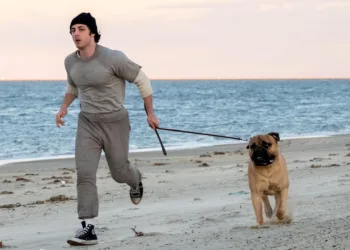


























Documentary filmmaker Vlad Yudin’s James Can Eat approaches professional competitive eating with the eye of a systems thinker. The film follows James Webb, Australia’s top-ranked competitor and currently fifth in the world, as he targets the sport’s peak stage, the Nathan’s Hot Dog Eating Contest. Yudin reshapes a spectacle into a study of design and discipline. He treats the circuit like any high-demand sport, mapping strategy, preparation, and risk with clarity.
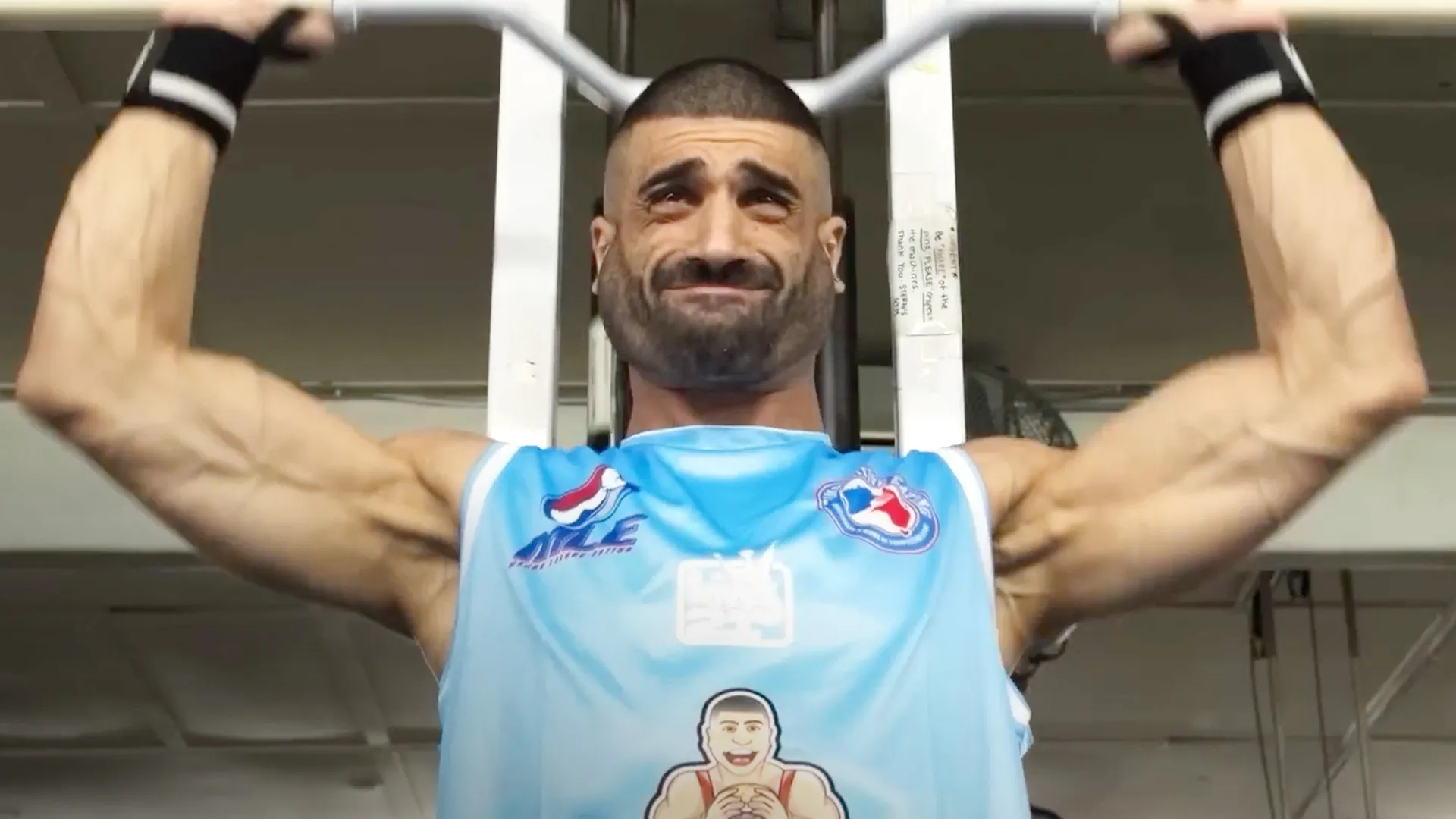
Webb serves as a strong anchor for this approach. His past as a professional soccer player informs a gym-built frame and a methodical mindset that reset expectations about what an elite eater looks like. The documentary frames the central drive with precision. Webb pursues a world championship and faces the physical and personal demands that come with that goal. The film sets an early thesis: this pursuit demands extreme control of the body and unwavering routine.
The Price of Physical Ambition
The regimen on display mirrors elite training in other sports. Webb’s schedule stacks intense workouts with stomach expansion sessions and recovery from painful challenges, including a ten-pound pizza finished in a single sitting. The portrait that emerges is a portrait of an athlete.
Yudin pairs this focus with scenes from Webb’s family life, capturing the careful balance with his fiancée Kate and his young daughter Kennedy. These scenes work like a second track in the edit, adding an emotional tempo line that runs alongside the competition arc. Webb’s work as a social media streamer introduces another layer of practice, with separate challenge content tuned for an online audience.
The backstory deepens this rhythm. Webb once battled Guillain-Barré syndrome, and the film links that crisis to a present-day belief in effort, repetition, and mental toughness. Yudin keeps the physical cost visible. The camera lingers on pain, nausea after contests, and the difficulty of feeling satisfied during family meals. The film acknowledges risk without softening it. Webb’s healthy appearance reads as a surface that coexists with strain, and the cut shapes a clear message about tolls paid by the body and the mind.
Strategy and Subversion in the Circuit
The film stages its drama around Nathan’s as the key crucible. The run-up builds like a training montage with lesson modules. Yudin explains pacing, technique, and tactical choices in both practice and competition, breaking complex processes into readable beats. Webb enters an American-dominated field as an Australian challenger. A rivalry thread forms with Joey Chestnut, presented as the established champion.
The structure then introduces a conflict that pushes the narrative into sharper relief. Webb alleges intentional sabotage or manipulation at the Nathan’s event. This claim adds a contested space to the film’s design. Yudin places it alongside a reference to earlier concerns about treatment of foreign competitors, pointing to the Takeru Kobayashi situation years earlier.
The documentary keeps this material inside the sports frame while widening the set of obstacles that a competitor might face. The effect is a story that measures capability on the table and friction outside the table, with both forces shaping the outcome that Webb chases.
The Wide-Angle View of Consumption
Yudin treats the subject with seriousness and polish. The presentation is clean and composed, which lends credibility to the athletes and their routines. The film stretches beyond Webb’s arc to consider the world around the circuit, and the pacing adjusts to accommodate those passages. That structural ambition broadens the conversation and shifts the emotional register at key moments.
Interviews place the sport next to issues of world hunger and food waste. Participants argue that the yearly total of food used in contests is tiny compared to the daily waste from a single major retailer, and they link the circuit to charitable tie-ins. The documentary also includes animal welfare and rights voices. Protest scenes at Nathan’s appear on screen, and advocates explain their view of beef’s origins.
These segments add thematic weight and set the sport inside ongoing debates about consumption, ethics, and supply chains. The trade-off is a wider scope that can loosen the grip on Webb’s personal throughline for stretches of time. The film asks the audience to hold two frames at once, the intimate quest for a title and the public arguments that shape how the quest is perceived.
James Can Eat functions as a case study in how form and content interact. The training details read like mechanics that support a narrative goal, each drill tied to a beat in Webb’s championship chase. The family moments provide emotional calibration that affects how the competition scenes land. The sabotage dispute shifts tension from pure performance to system-level fairness and history within the circuit.
The social issue passages reframe the act of eating on stage inside conversations about waste and welfare. Yudin’s choices create a layered experience that carries athletic rigor, personal stakes, and public scrutiny in the same frame. The result presents competitive eating as a designed practice with rules, strategies, and consequences, and it presents Webb as a competitor whose belief in work and preparation shapes every scene that leads to Nathan’s.
The documentary film James Can Eat premiered on August 22, 2025. It is available to stream on several platforms, including Amazon Prime Video, Apple TV, and Google Play, giving viewers digital access to the story of competitive eater James Webb.
Credits
Director: Vlad Yudin
Writers: N/A (Information not available in search results)
Producers and Executive Producers: Vlad Yudin, Edwin Mejia Jr.
Cast: James Webb, Joey Chestnut, George Shea, Kate Webb, Kennedy Webb
Director of Photography (Cinematographer): Doo Soo Kim
Editors: Adio Ash
The Review
James Can Eat
James Can Eat provides a fascinating and candid portrait of high-stakes ambition, successfully redefining competitive eating as a discipline built on painful dedication and psychological grit. It stumbles slightly when tackling too many heavy themes, but James Webb’s compelling story and the shocking revelations about the sport’s corruption make it utterly memorable.
PROS
- Excellent, intimate profile of James Webb's athletic discipline.
- Elevates competitive eating into a serious athletic pursuit with genuine stakes.
- Strong, grounded narrative thanks to Webb’s personal backstory and family dynamic.
- Candidly addresses corruption and potential bias against foreign competitors in the circuit.
- Does not shy away from the intense physical and psychological toll on the competitors.
CONS
- pts to cover too many themes, causing structural shifts and lack of tight focus.
- Tangential explorations of food waste and world hunger, while relevant, detract from the central narrative.