



























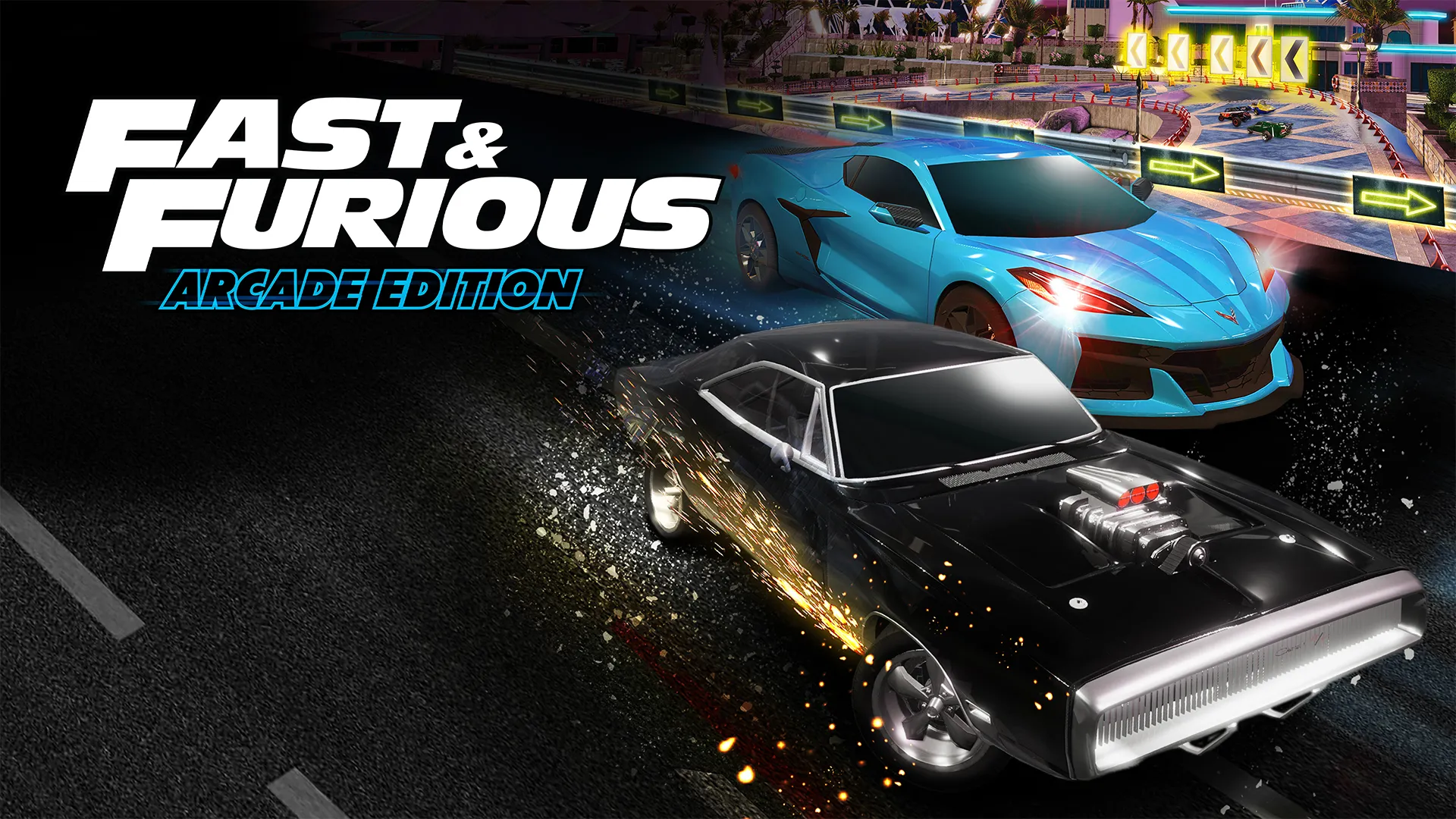

Fast & Furious: Arcade Edition arrives as a loud, unapologetically over-the-top, high-speed racer. It is a direct home console port of the 2022 arcade cabinet that brings coin-op intensity to PlayStation 5. The project comes from Raw Thrills, co-founded by Eugene Jarvis of Cruis’n fame, and that lineage steers the design toward a faithful translation of an arcade sprint built around breakneck speed and constant action.
The Fast & Furious license supplies recognizable car models while the moment-to-moment play leans into absurd spectacle with exploding roads, hostile drones, and occasional sharks. The experience targets pure sensation and sits apart from the heightened reality of the films.
The Rollercoaster of Core Gameplay
Racing here mirrors a theme park ride with unbroken motion and extreme velocity. Tracks stack cinematic set pieces and large-scale destruction, evoking earlier arcade destruction racers such as Split/Second.
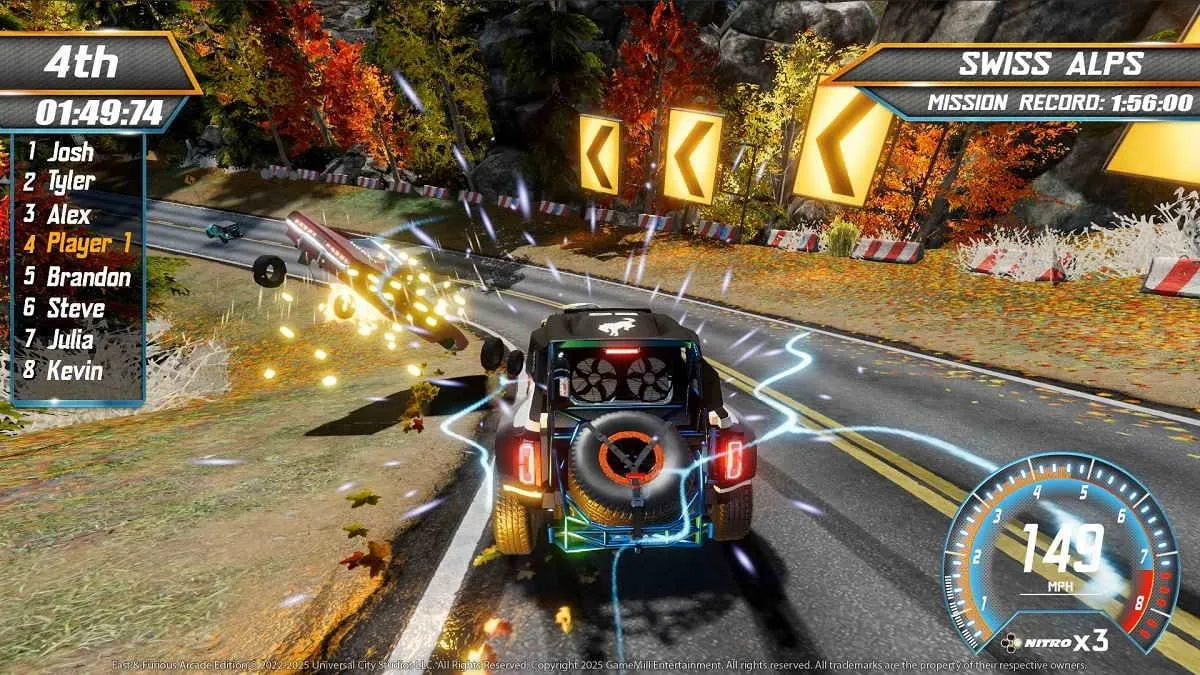
Jumps clear canyons, routes smash through buildings, and sections erupt while you drive through them. The game spans six global locations that include stylized versions of Abu Dhabi and Hong Kong. Courses sometimes branch with alternate paths or shortcuts, yet the structure stays fixed on quick sprints to a finish line.
Each race posts an official objective like stopping a bomb or preventing a missile launch. These beats frame the scenario while victory depends on finishing first. Systems center on nitro and takedowns. You start with three nitro boosts per race and refill through aggressive driving, while takedowns come from ramming competitors.
Contact produces exaggerated collisions, and the physics model carries little weight, so cars spin and lift into the air during impacts. The loop rewards constant acceleration, frequent boost use, and opportunistic rams rather than technical cornering or careful race craft.
Licensing Misses and Twitchy Handling
The garage lists eight licensed vehicles that include the Dodge Charger R/T. The license application lands unevenly across the roster, with a limited selection that omits many fan-favorite Japanese models. Customization options create further friction.
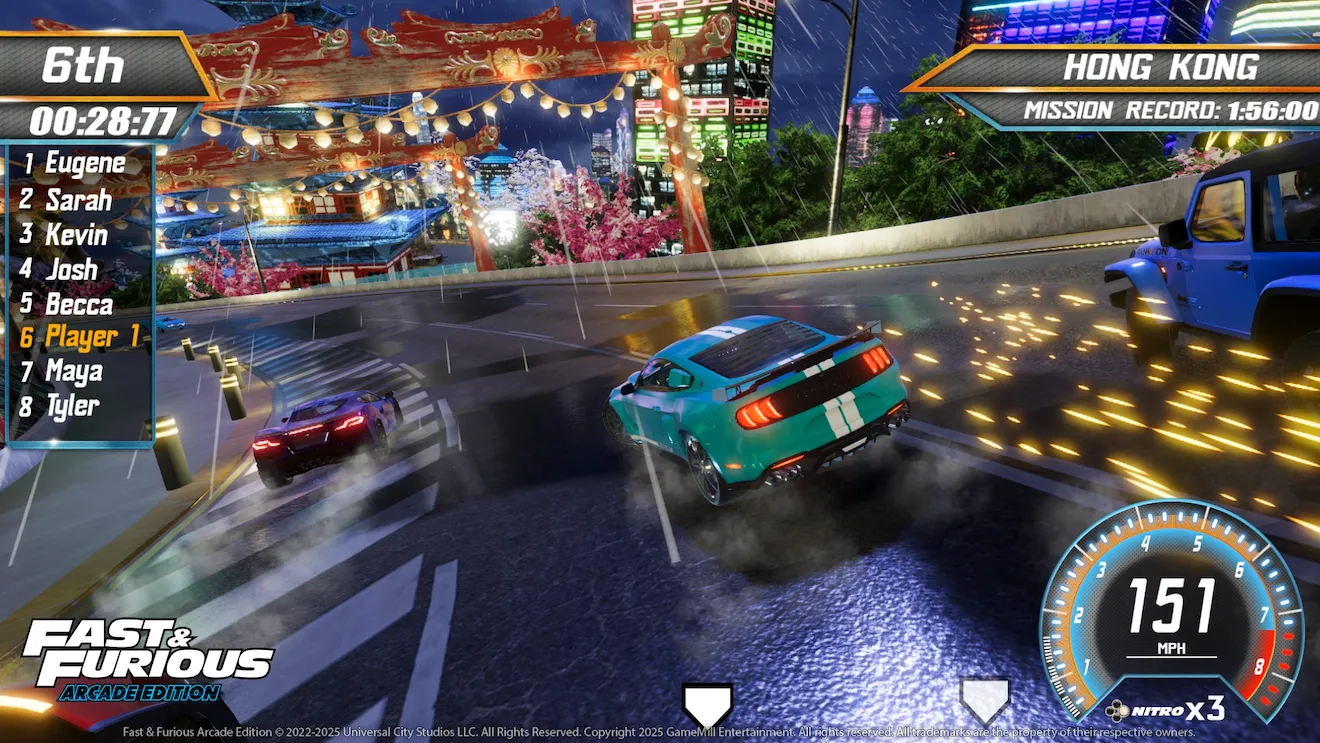
Dom Toretto’s Charger cannot be set to its familiar black finish and the signature supercharger is unavailable. On-paper stat differences matter little in practice. Vehicles feel similar under load, and secondary moves such as drifting or pulling a wheelie provide little competitive gain.
Progression funnels players toward the “Furious” mode incentive. Winning every track with a specific car unlocks an upgraded version that carries more nitro, which nudges repeat runs with the same vehicle. The most pressing issue surfaces on the control side of the PlayStation 5 port.
The original cabinet relies on a wheel, and the conversion to a standard controller produces twitchy, loose steering that adds friction to basic driving. Rubber-banding AI intensifies that sensation by compressing the field until the closing stretch, which turns position fights into late surges and scrambles.
Scant Content and Presentation Trade-offs
The home release ships with a very small package. Six short stages make up the campaign, and clearing all six with one car takes under 30 minutes. Replay revolves around those same tracks to unlock the “Furious” version across all eight vehicles. Modes cover solo racing and two-player split-screen. Online play does not appear, and the feature list skips alternative race formats.
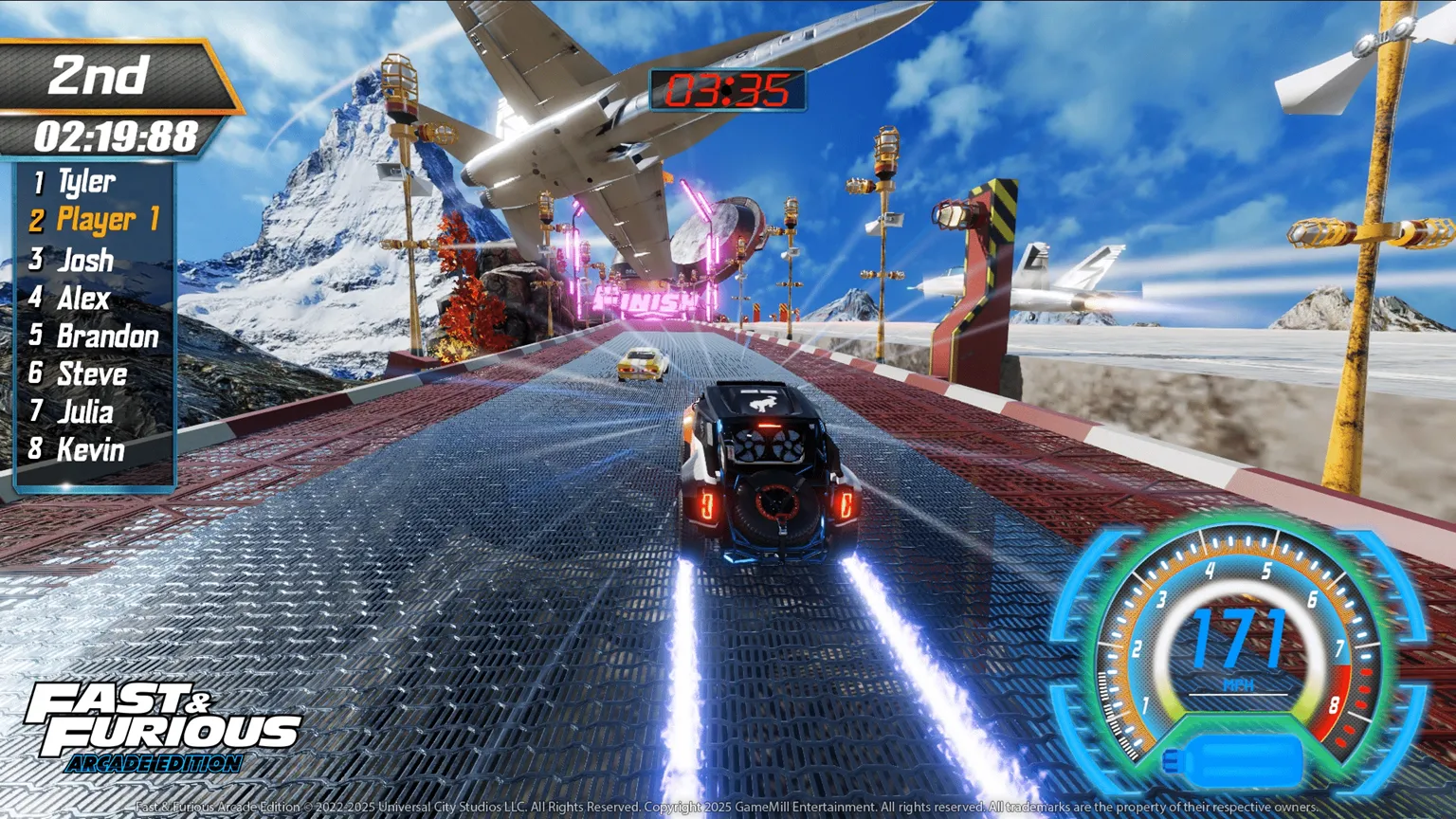
Presentation choices echo the arcade origin. Visuals read as basic for current hardware and often resemble a mid-generation console look from a decade ago. That approach suits the coin-op roots yet struggles to fill a living-room screen for extended sessions. One technical strength stands out. The frame rate holds steady at high speed even when the track collapses and particle effects cover the road. The audio package lands with less punch. The techno-leaning score repeats quickly and feels thin, while the announcer lines sound generic.
Pricing places expectations in sharp relief. At £24.99 or $29.99, the offering feels paper thin for players seeking variety, depth, or a competitive online loop. What remains is a quick jolt of arcade chaos across six routes, a short list of cars, and a progression hook tied to “Furious” variants. The port supplies a brief burst of spectacle and speed without enough content or handling refinement to sustain long-term play.
The Review
Fast & Furious: Arcade Edition
This game is a case study in failed translation. Fast & Furious: Arcade Edition provides brief, chaotic fun, successfully importing the arcade cabinet's explosive spectacle. However, it fails fundamentally as a home console release. The twitchy, loose control mapping and the game's core offering of only six short tracks make its $30 retail price indefensible. While the speed is relentless, the experience offers little substance for sustained play and quickly runs out of fuel.
PROS
- Over-the-top cinematic spectacle
- Consistent high frame rate
- Explosive track design
CONS
- Minimal content (six tracks)
- Loose console controls
- High retail price
- Weak sound design